

1,000+ happy customers
Online AS Level tutoring
One-to-one online lessons for the first year of A-Level study, with a tutor matched to your subject, exam board and target grade. Lessons are booked around your schedule, and you only pay for the tutoring you have completed.
Currently serving students in
your country!

How It Works
We keep things as simple as possible. Our objective is to make
finding a tutor convenient, efficient and effective.
Fill out an online form
Complete an application online which will be received by one of our dedicatedLearning Advisors
Get matched with a tutor
Our experienced Learning Advisor will review your application, and match youwith the most appropriate tutor based on your application
Tutor makes contact
Once we confirm with the tutor, the tutor will make contact to organise yourfirst session.
Have your first lesson
Our tutors will work around your schedule to organise a session whenever youwould like. Only pay for tutoring you have completed.
Why AS Level needs the right tutor
AS Level is where the step up from GCSE actually happens. Marks are won on application, technique and timing rather than recall, and the habits built in this first year decide how the second one goes.
What makes AS Level hard to prepare for alone
AS Level moves faster and goes deeper than anything students have done before, and it is studied alongside two or three other subjects at the same level. Classes are taught to the middle of the room, so gaps formed in the first term are easy to carry forward unnoticed.
- A sharp step up in difficulty from GCSE
- Marks decided by technique, not recall
- Grades that determine university options
How tutoring changes the outcome
One-to-one tutoring targets the two things a classroom cannot: exam technique and the specific topics a student keeps getting wrong. A tutor marks work the way an examiner would, shows where the marks went, and then drills those areas until they hold. Confidence follows from that, not the other way round.
- Exam technique built on real past papers
- Targeted work on areas of weakness
- Confidence going into the exam
Check whether your AS grades count
Depending on your exam board and the route your school has chosen, your AS subjects may count towards your final A-Level grade. Worth confirming early, because it changes how much rests on the Year 12 exams.
Choose between top performing students or qualified teachers
Either way, we use our bespoke matching process to find you a tutor based on your preferences, exam board and location.
Academic Tutors
from $60 USD/hr
Top performing graduates who achieved A*/A grades in the subject they teach.
- We accept only the top 5% of tutor applicants.
- Each tutor is chosen for their academic results, teaching ability, and connection with students.
Relatable role model: work with a tutor who is similar in age and can be a peer
Affordability: academic tutors are more cost-effective than professional tutors
First-hand experience: they sat these papers recently and know what worked
Professional Tutors
from $85 USD/hr
Current or past qualified teachers and examiners with 5+ years professional teaching experience.
- We only select highly experienced, qualified A-Level teachers.
- Every teacher is assessed on their teaching expertise, subject knowledge, and ability to engage students.
Quality assurance: trained and accredited teaching qualifications
Guaranteed track record: years of experience helping students succeed
Subject expertise: deep understanding of content and exam board requirements
Due to our international operations we quote our prices in USD. Pound amounts are an indicative conversion and you will be invoiced in USD.
Academic Tutors
from £47 GBP/hr
Top performing graduates who achieved A*/A grades in the subject they teach.
Relatable role model: work with a tutor who is similar in age and can be a peer
Affordability: academic tutors are more cost-effective than professional tutors
First-hand experience: they sat these papers recently and know what worked
Professional Tutors
from £67 GBP/hr
Current or past qualified teachers and examiners with 5+ years professional teaching experience.
Quality assurance: trained and accredited teaching qualifications
Guaranteed track record: years of experience helping students succeed
Subject expertise: deep understanding of content and exam board requirements
Meet our AS Level tutors
Our team is a combination of A-Level graduates who sat these exams recently and qualified teachers with years of classroom and examining experience.

18
Samuel has three masters degrees - MSc Energy and Sustainable Management, MSc Advanced Chemical Engineering and LLM International Business and Commercial Law. Samuel's first degree was in BSc Petrochemical Engineering (First Class). Samuel is also a Qualified Teacher in the UK and has been teaching for over 10 years. Samuel also has several years of examining experience, and hence highly specialised and skilled in tutoring students. Samuel had A in mathematics, A in chemistry, A Biology and A in Physics. Samuel has been an A Level Maths and Further Mathematics Examiner since 2024. I tutor A Level and Further Mathematics as well as Chemistry, Physics and Biology.

10
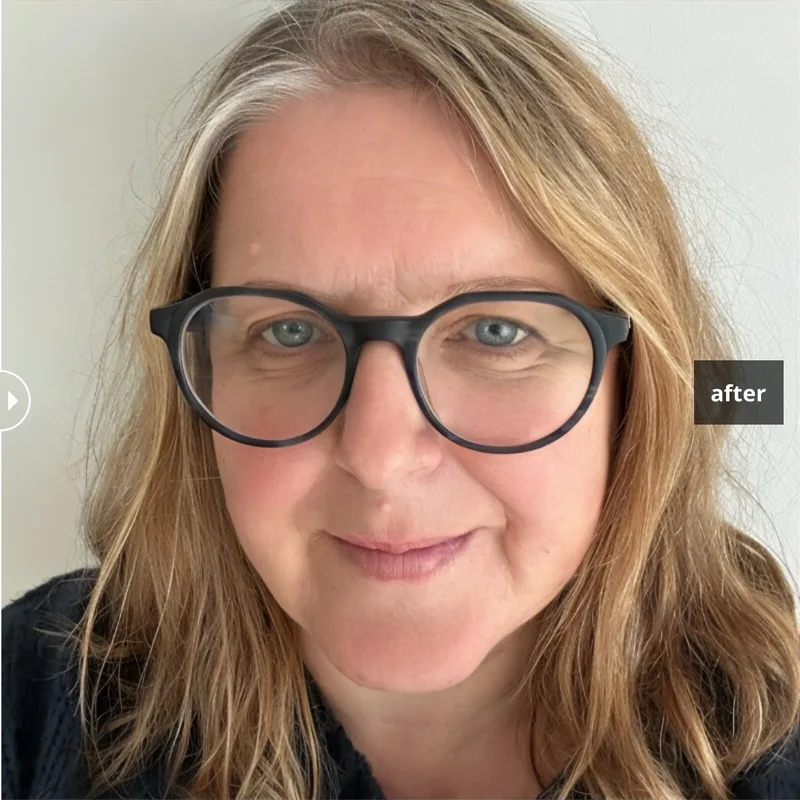
T. Sana is an experienced English and Humanities tutor specializing in supporting IGCSE, GCSE and A-Level students, as well as ESL/EFL learners from diverse international backgrounds, including students from Malaysia, Singapore, India, China, Japan, the UAE, and Saudi Arabia.
She provides academic support in English Language, English Literature, Business Studies, Sociology and Humanities, helping students develop the subject knowledge, analytical skills and exam techniques required for secondary and advanced-level study.
For IGCSE and GCSE learners, T. Sana focuses on reading comprehension, language analysis, structured writing, vocabulary development, grammar, essay planning and effective examination responses. Students receive targeted practice designed to strengthen weaker areas and build confidence in approaching examination-style questions.
For A-Level students, lessons place greater emphasis on critical thinking, textual and contextual analysis, developing arguments, academic writing, evaluation skills and producing well-structured, evidence-based responses. Support can be adapted to the student's syllabus, examination board and individual learning objectives.
T. Sana also has experience supporting IB-style academic work, including essay writing and Extended Essay guidance, with particular attention to research, organization, clarity, critical analysis and academic expression.
Her background in research-based academic writing enables her to guide students in developing coherent arguments, selecting and organizing evidence, improving written expression and approaching extended academic responses systematically.
She is particularly committed to students who require additional time, repetition and structured support. Rather than using a one-size-fits-all approach, lessons are adapted to each learner's pace, current ability and academic goals. Customized lesson plans, targeted practice and engaging activities help students make steady and measurable progress.
T. Sana creates a positive and encouraging learning environment where students can strengthen their foundations, develop effective examination strategies and progressively build the confidence and independence needed for IGCSE, GCSE and A-Level examinations.
15
Over the last twenty years I have gained significant classroom and management experience at several State, Grammar and Independent Schools. I have been out of the classroom environment recently but continue to keep up to date with Education Policy and support students away from the school environment via home tutoring.
I am an experienced teacher with a passion towards my subject and have a great desire that all pupils across the ability range are inspired by Science; there is no greater job satisfaction for me than when that inspiration leads to students excelling in examinations or pursuing a career in medicine. As Head of Biology at Kingston Grammar School I managed a team of four experienced teachers- as well as being actively involved in the overall management of the Science department.
I was successful in improving both A-Level and GCSE results year on year. I was responsible for co-ordinating Community Service placements for students in the wider community. I also worked closely with Brunel University with their PGCE programme and was part of a team inspected by OFSTED and I was awarded as ‘outstanding’ in my mentoring work with PGCE students at Kingston Grammar.
Whilst my teaching specialism is Biology I have also taught Chemistry and Physics at key stage three, four and A Level. I have a broad knowledge of the science curriculum and how it fits in to schools academic policies and wider educational policies. I also have a good understanding of International Baccalaureate programs and Vocational courses. I have written schemes of work and working policies for a department as well as full risk assessments for practical work. I also have experience of intake of student new to a school be it a state school or an 11+ or Common Entrance at 13+. I have administered 11+ and 13+ examinations as well as being part of a team of interviewers assessing a student’s suitability for the school.

36
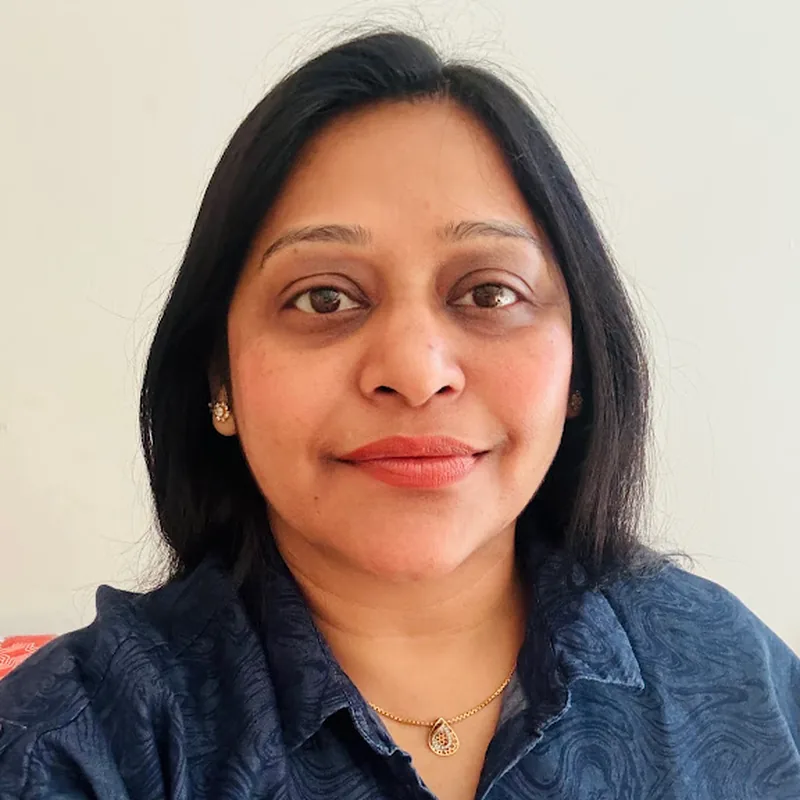
Shanze is an academic tutor with over four years of experience supporting students across IB, AP, A Levels, IGCSE, and SAT/ACT. She holds a Bachelor of Science with Honors from New York University and has worked with students in US, UK, Canada, and China.
She tutors a wide range of subjects, including Mathematics, English, Biology, Physics, Chemistry, Business and Psychology along with academic writing, research skills, and standardized test preparation. Her philosophy centers on breaking down challenging concepts into steps that feel intuitive, manageable, and genuinely understandable. Many of her students have raised their scores by more than 60%, often surpassing their own expectations.
Shanze also encourages students and parents to think intentionally about academic goals and long term growth. By aligning expectations and creating an open line of communication, she aims to make tutoring a collaborative experience that supports students beyond classroom.
16
Smita C is experienced Cambridge educator with extensive teaching experience in History and Global Perspectives, including Cambridge IGCSE, AS Level, and A Level programmes. She is fully trained in the Cambridge curriculum and have served as a Cambridge examiner for IGCSE History, AS & A Level History, and Global Perspectives. Her experience as both a teacher and examiner has provided her with a strong understanding of Cambridge curriculum frameworks, assessment objectives, examination standards, and assessment criterias.

12
I’m Taiwo, a tutor with ten years of teaching and tutoring experience and a B.Sc. in Electronic and Electrical Engineering from Obafemi Awolowo University. I teach A-level, GCSE and IGCSE students, bringing together subject knowledge, classroom experience and a patient, practical approach to learning.
My subjects include Mathematics, Further Mathematics, Physics, Chemistry, Biology, English Language and Computer Science. My current GCSE teaching includes AQA Mathematics at Foundation and Higher levels and AQA English Language. My engineering background strengthens my teaching of Mathematics and Physics, while my professional software development experience allows me to connect computing concepts with practical applications.
I plan lessons around what each student needs. Some need to rebuild foundations; others understand the content but struggle to apply it in unfamiliar exam questions. I identify those gaps, explain ideas clearly and guide students towards solving problems independently. In Mathematics, that means understanding why a method works and recognising when to use it. In Science, it means connecting concepts, calculations and experimental evidence. In English, it means moving beyond identifying techniques to developing thoughtful analysis supported by precise examples.
Students can expect structured lessons, personalised homework and detailed feedback. I use past papers and mark schemes to help them understand what questions demand, improve the clarity of their answers and develop effective revision habits. I track difficulties across lessons so that we revisit what needs attention rather than simply move through topics.
I currently work with international learners, including students in the UK and Hong Kong, and understand the importance of adapting explanations to different educational and language backgrounds. I want students to feel comfortable asking questions, willing to attempt challenging work and able to recognise their own progress. My aim is to build secure understanding, greater independence and confident exam preparation.

41
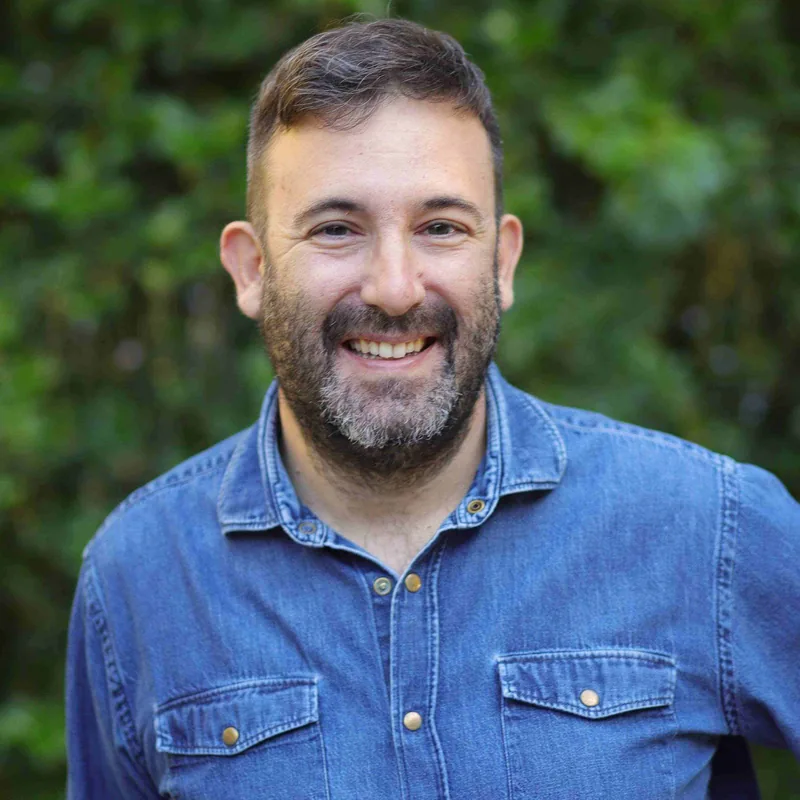
I have overall 10+ years of experience teaching various streams, ranging from IGCSE and A level. I teach both Cambridge and Edexcel A level Mathematics. I have thousands of hours of teaching A level and SAT students across the globe with amazing students and parents' feedback. Other than teaching, I use mathematical equations to sketch faces, shapes on geogebra which helps students to relate Math with Art.
38
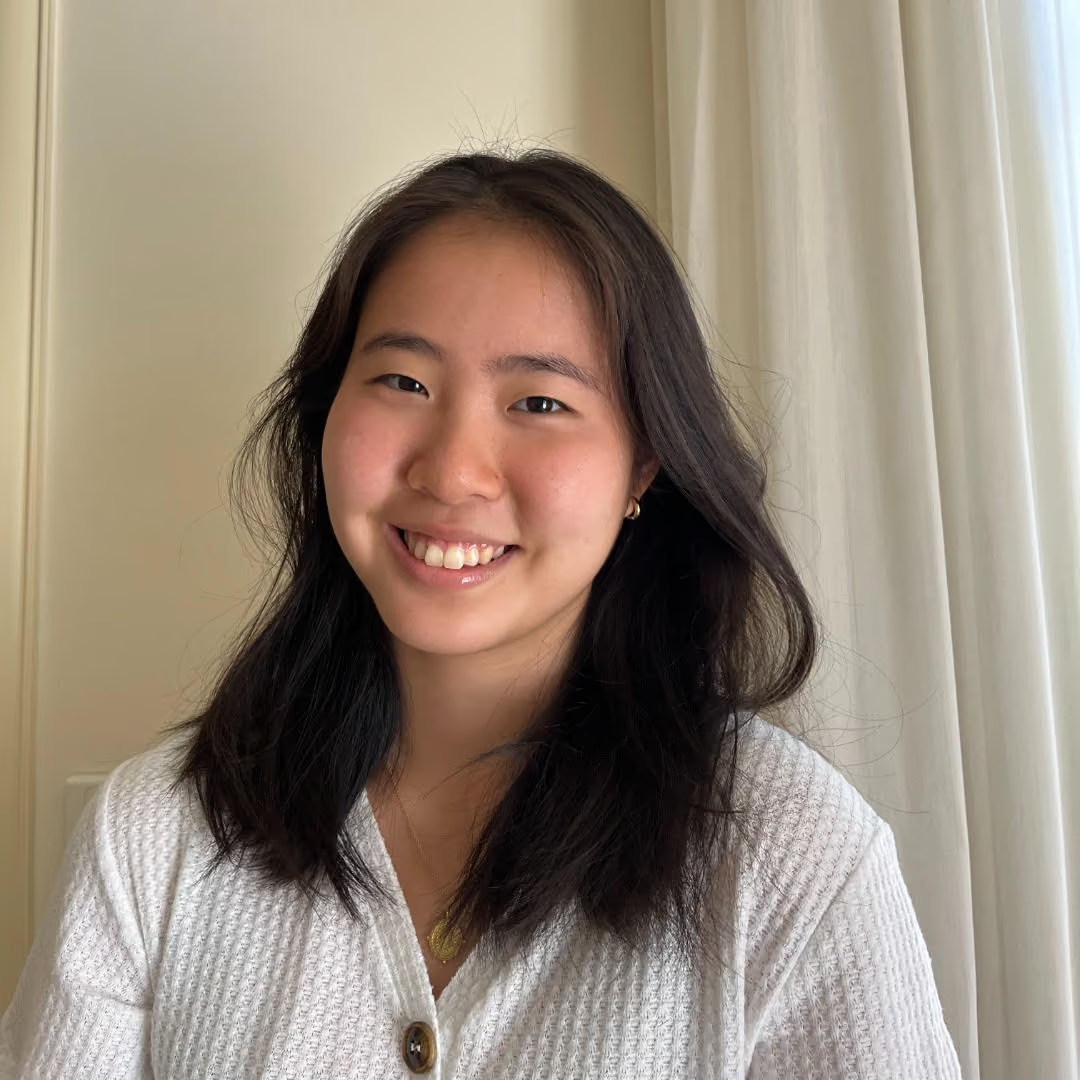
Thanassis D had always seen learning as a map—layered, dynamic, and waiting to be explored. His studies in Computer Science and Earth Observation had sparked a lifelong pursuit: to bridge the technical with the human, the satellite with the classroom.
Each morning, he stepped into the American College of Greece not just as a teacher, but as a mentor within the International Baccalaureate (IB) program. His students didn’t just memorize code—they trained AI models, analyzed real-world datasets, and asked big questions. Under his guidance, classrooms transformed into innovation labs.
Thanassis D has more than six years of experience providing private tuition in Computer Science and Information Technology, including support for GCSE, IGCSE and A-Level students. He teaches core areas such as programming, algorithms, computational thinking, data structures, databases, computer systems, networking and data representation, with a strong emphasis on problem solving, exam preparation and developing students’ confidence with programming. He is comfortable adapting his teaching to different specifications and assessment formats.
By afternoon, Thanassis shifted roles, contributing to cutting-edge projects at the National Observatory of Athens. There, amidst servers and satellite feeds, he designed algorithms to predict floods, track wildfires, and model crop growth. His work wasn’t theoretical—it helped shape the response to real disasters across Europe.
Evenings often brought a different challenge: leading software architecture and engineering efforts at OpenGIS, where he helped build and scale QFieldCloud—a platform empowering geospatial scientists and NGOs worldwide. He balanced usability with scientific power, always pushing toward open, accessible Earth Observation tools.
In the summer of 2024, Thanassis co-designed and mentored at the IGARSS Summer School in Athens, welcoming students from around the globe. With warmth and clarity, he taught them how to turn noisy satellite data into environmental insight. His sessions were among the most remembered—where theory met purpose.
Beyond fieldwork and programming, Thanassis was a writer. His research papers explored the intersection of AI and remote sensing, published in reputable journals and presented at international conferences.
But perhaps his most heartfelt work was in education. He organized workshops on AI in Education, helping fellow teachers harness machine learning not as a buzzword, but as a meaningful classroom tool. In spring 2025, he led a school-wide professional development series for the entire American College of Greece, where educators from every department explored what it meant to teach in the age of algorithms.
Some knew him as a scientist, others as a teacher, a mentor, or a developer. But to everyone who crossed his path, Thanassis D was someone who believed in making knowledge practical—and empowering others to do the same.

38
I have 10 years of tutoring experience in Biology, specializing in GCSE and A-Level preparation. I teach across all major exam boards, including AQA, Edexcel, OCR, and WJEC, covering both Foundation and Higher tiers at GCSE. My lessons focus on core topics such as cell biology, genetics, homeostasis, ecology, and required practicals, with a strong emphasis on exam technique, data analysis, and command-word practice. I have consistently helped students improve their grades, with many achieving grades 7–9 at GCSE and A–A* at A-Level.
The tutors you see here are just a selection from our team of hundreds of tutors. Please contact our Learning Advisors to discuss tutoring options.
Ready to start?
Tell us the subject, exam board and target grade. A Learning Advisor reviews it the same day.
What does AS Level involve?
AS Level is the first year of A-Level study, taken in Year 12. On some boards it can be certificated as a standalone qualification; on others it is simply the first half of the two-year course. Either way, it is where the foundation for the final grade is built. Here's how it works.
How AS Level works
Students choose three or four subjects and study the first half of each in Year 12. There are no compulsory core subjects: you pick the subjects that fit the degree and career you are aiming for. Some students drop a subject after AS and carry three through to A2.
- Three or four subjects, chosen freely
- Year 12, the first half of the A-Level course
- Standalone qualification on some boards
- A natural point to narrow subject choices
How you're assessed
AS Level is marked by the exam board, not by teachers, and the grade rests mainly on written exams. Some subjects add a practical element or coursework, but exam performance is what counts. AS grades run from A, the top grade, down to E, with U for ungraded.
- Externally examined, not teacher-marked
- Mainly final written exams
- Practical or coursework in some subjects
- Graded A to E (U = ungraded)
Why they matter
AS results are the strongest evidence a school has when setting predicted grades, and predicted grades are what university offers are made against through UCAS. A strong AS year widens the range of courses worth applying to; a weak one narrows it before the application is even written.
- The basis for predicted grades
- Shapes which courses are realistic
- Sets the trajectory into Year 13
- A recoverable point to fix weak areas
Exam boards we cover
Each exam board sets its own papers and mark schemes. Tell us yours and we'll match you with a tutor who teaches that exact specification.
A-Level subjects we cover
Each subject has its own page with topic coverage, tutors and exam board detail.
Continuing into Year 13?
Every subject listed here is also tutored at A-Level, so students carrying a subject through to Year 13 keep the same tutor and the same plan. See A-Level tutoring.
Why parents trust us
4.9/5 from 312 reviews · used by students at 500+ schools





What does sitting AS Level involve?
AS Level is a one year course with exams at the end of Year 12. The exact shape depends on your subject and the exam board.
Format and structure
Most A-Level subjects are assessed by two or three written papers sat at the end of Year 13. Papers usually split the content between them, with one often synoptic, drawing on the whole course. Question types range from short answer and structured questions through to essays, depending on the subject.
- Typically two or three written papers
- Question types vary by subject and board
- Coursework or NEA in some subjects
- Sciences carry a separate practical endorsement
Timing and marking
Papers usually run between 1½ and 2½ hours. Marking is done externally by the exam board, and grades are awarded against boundaries set each year rather than a fixed percentage. Boundaries move slightly with the difficulty of the paper, which is why raw marks alone tell you little.
- Papers commonly 1½ to 2½ hours
- Externally marked by the exam board
- Grade boundaries set each year
- A* to E, with U for ungraded
Where and when it's sat
Exams are sat in fixed series set by the exam board, and are normally taken at the school or college teaching the course. Private candidates, including students resitting, register with an approved exam centre themselves. Entries close months in advance, so the timetable is worth checking early.
- Fixed exam series set by the board
- Results published on a set date
- Entries close months in advance
- Private candidates register with an approved centre
The AS year sets up the A2 year
Year 13 builds directly on the content and technique established in Year 12, and a gap left unfixed at AS tends to widen rather than close. Getting the foundations right now is what makes the second year manageable.
How we prepare you for AS Level
The AS year is where study habits are set, and the ones a student carries into Year 13 matter as much as the content they cover. The first session is about understanding where the student is now: the tutor discusses goals with the student and parent, sets measurable outcomes, and develops a roadmap with them. From there, lessons follow a cycle of guided work, independent practice and review, which is how habits get built rather than talked about.
Key skills tutors focus on
Content knowledge is the starting point, not the goal. AS papers reward applying what you know to something you have not seen before, and saying it in the words the mark scheme is looking for. Learning that now means arriving at the final exams with the technique already in place.
- Reading the command word and answering the question asked
- Applying a known method to an unfamiliar context
- Structuring extended answers so every mark is earned
- Working accurately under exam timing
Materials and practice used
Practice comes from real past papers for your board, marked against the official mark scheme. Lessons run on a shared online whiteboard, so worked solutions are saved and can be revisited between sessions. Students leave each lesson with specific work to do, which is how independent study habits get built rather than talked about.
- Past papers and mark schemes for your board
- Timed papers under exam conditions
- Examiner-style feedback on written work
- Set work between lessons to build independence
Common mistakes we help students avoid
Most lost marks are predictable, and the habits behind them form early. Students revise by rereading rather than answering questions, write everything they know instead of what was asked, and treat AS as a warm-up rather than the foundation of the final grade. Each one is far easier to fix in Year 12 than in Year 13.
- Revising content instead of practising questions
- Ignoring the wording of the mark scheme
- Leaving long-answer questions until last
- Treating the AS year as a warm-up
AS Level tutoring FAQs
Vetting, pricing and how the online classroomworks. Anything not answered here, ask a LearningAdvisor.
Yes. Your tutor is matched to your subject and exam board, so they can carry on with you into Year 13 and the full A-Level. That keeps continuity, because they already know your strengths and the topics you find hardest. Learn more about online A-Level tutoring.
AS Level is where the real step up from GCSE happens. Marks depend on application and exam technique rather than recall, and habits formed in Year 12 shape Year 13. An AS Level tutor targets weak topics before they carry forward, and helps build the results that predicted grades are based on.
Online AS Level tutoring is priced the same as A-Level: from $60 USD (£45) per hour with an academic tutor. Pay as you go, invoiced only after each lesson, or buy a package upfront and save up to 15%. There are no lock-in contracts. Professional tutors (qualified teachers and examiners) cost from $85 USD (£64) per hour. See our pricing.
Late cancellations and no-shows are charged at half the lesson fee. That applies if you cancel less than one hour before the start time, or don't turn up. You can still change a session time whenever you need to, as long as you give your tutor notice.
It depends on your exam board and the route your school has chosen. In some cases, AS results count towards the final A-Level grade. In others, they don't. Either way, schools use AS results to set predicted grades for UCAS. Check with your school early, because it changes how much rests on your Year 12 exams.
AS Level is the first year of A-Level study, taken in Year 12. On some exam boards it can be certified as a standalone qualification; on others it's simply the first half of the two-year course. AS grades run from A to E, while full A-Levels go up to A*. Find out more about online A-Level tutoring.
A Learning Advisor reviews every application the same day it comes in. Once a suitable tutor is confirmed, they contact you directly to arrange your first lesson. Matching is based on subject, exam board, target grade and availability, including your time zone.
We don't offer a free trial. Instead, every student gets our first session satisfaction guarantee: if you're not happy after your first lesson, we refund it in full and find you another tutor at no cost. See our pricing for what's included.
Our other services
We tutor the whole school-exam ladder, plus targeted support for students resitting a paper.
Online A-Level Tutoring
Service Description
Online AS Level Tutoring
Service Description
Online GCSE Tutoring
Service Description
Online IGCSE Tutoring
Service Description
Resits & Retakes for A-Levels and GCSE
Service Description
From Blog


Ready to find your AS Level tutor?
Tell us your subject, exam board and target grade. We will come back with a shortlist of tutors, and you only pay for lessons you have completed.