


How It Works
We keep things as simple as possible. Our objective is to make finding a tutor convenient, efficient and effective.
Fill out an online form
Complete an application online which will be received by one of our dedicated Learning Advisors
Get matched with a tutor
Our experienced Learning Advisor will review your application, and match you with the most appropriate tutor based on your application
Tutor makes contact
Once we confirm with the tutor, the tutor will make contact to organise your first session.
Have your first lesson
Our tutors will work around your schedule to organise a session whenever you would like. Only pay for tutoring you have completed.
Choose between top performing students or qualified A-Level teachers
Either way, we use our bespoke matching process to find you a tutor based on your preferences, exam board and location.
Academic Tutors
from $60 USD/hr
Top performing graduates who achieved A*/A grades in the subject they teach.
- We accept only the top 5% of tutor applicants.
- Each tutor is chosen for their academic results, teaching ability, and connection with students.
Relatable role model: work with a tutor who is similar in age and can be a peer
Affordability: academic tutors are more cost-effective than professional tutors
First-hand experience: they sat these papers recently and know what worked
Professional Tutors
from $85 USD/hr
Current or past qualified teachers and examiners with 5+ years professional teaching experience.
- We only select highly experienced, qualified A-Level teachers.
- Every teacher is assessed on their teaching expertise, subject knowledge, and ability to engage students.
Quality assurance: trained and accredited teaching qualifications
Guaranteed track record: years of experience helping students succeed
Subject expertise: deep understanding of content and exam board requirements
Due to our international operations we quote our prices in USD. Pound amounts are an indicative conversion and you will be invoiced in USD.
Academic Tutors
from £47 GBP/hr
Top performing graduates who achieved A*/A grades in the subject they teach.
Relatable role model: work with a tutor who is similar in age and can be a peer
Affordability: academic tutors are more cost-effective than professional tutors
First-hand experience: they sat these papers recently and know what worked
Professional Tutors
from £67 GBP/hr
Current or past qualified teachers and examiners with 5+ years professional teaching experience.
Quality assurance: trained and accredited teaching qualifications
Guaranteed track record: years of experience helping students succeed
Subject expertise: deep understanding of content and exam board requirements
Meet our A-Level Geography tutors
Our team is a combination of A-Level graduates who sat these exams recently and qualified teachers with years of classroom and examining experience.

48
Aster is an experienced international educator with a Bachelor's degree in Physics and several years of experience teaching and tutoring students across a range of international curricula, including Cambridge, Australian, and other globally recognised programs. She specialises in Physics, Mathematics, Science, English, and academic skills development, and has worked with students from primary school through to senior secondary levels.
Throughout her career, Aster has taught students from diverse cultural and educational backgrounds, including Australian students in online learning environments. Her experience extends beyond subject content to helping students develop critical thinking, problem-solving, exam techniques, academic writing, and independent learning skills. She is also experienced in supporting students with essay writing, research projects, and assessment preparation.
Aster's teaching approach focuses on making complex concepts clear, engaging, and accessible. She adapts lessons to each student's learning style and believes that strong understanding is built through curiosity, confidence, and active participation. Students and parents appreciate her patient, supportive, and encouraging manner, as well as her ability to explain challenging topics in a simple and relatable way.
With a strong background in science education and a passion for helping students achieve their academic goals, Aster is committed to helping every student build confidence, improve performance, and enjoy the learning process.

17
I am an accomplished educator, NERC/QUADRAT-funded PhD scientist, and Certified Senior Examiner specialising in Biology, Chemistry, Geography, Environmental Science/Management, and Earth Sciences across A-Level, IGCSE, and GCSE levels. I earned my PhD in Environmental Sciences with distinction, an MSc in Biodiversity and Conservation with a PGCE equivalent, and a BSc (Hons) in Geography and Bioscience supported by the Repsol Sinopec Excellence Scholarship from the University of Aberdeen. With over 15,000 hours of total instructional experience spanning top international schools, leading universities, and global online platforms, my career bridges elite academic research with highly effective 1:1 student mentoring.
My scientific research focuses on high-altitude tropical and montane ecosystem resilience, biogeochemistry, and geophysics, leading to peer-reviewed contributions in leading academic journals such as Geosciences, features in The Economist, and presentations at major climate summits such as COP 26 through COP 30. As an active Certified Examiner for major secondary specifications, I provide students with an insider understanding of marking schemes, structural assessment shifts, and syllabus nuances. Combined with multilingual fluency in English (C2), Spanish (C2), Polish (Native), Italian (B2), German (B1), and Portuguese (B1), I deliver an intellectually rigorous, globally contextualised learning experience that empowers students to excel.
Tutor Experience
Over the past several years, I have logged over 15,000 total instructional hours, including more than 14,000 hours of direct 1:1 online tutoring and specialised digital learning environments. My pedagogical scope covers secondary, pre-university, and undergraduate levels across Biology, Chemistry, Environmental Science, Physical and Human Geography, Geology, and Earth Sciences. I possess extensive experience with all major exam specifications, including AQA, Pearson Edexcel (UK & IAL), OCR (A & B), Cambridge International (CIE), WJEC/Eduqas, and CCEA.
My institutional background includes four years as an academic lecturer and reader across leading UK universities, including the University of Aberdeen and the University of Edinburgh, alongside teaching cycles in top-tier international school environments. In these roles, I have directed coursework, designed geological and ecological field expeditions, and mentored students through independent geographical investigations, lab reports, and Non-Exam Assessment (NEA) coursework.
This rigorous background drives consistent student performance: 80–85%+ of my A-Level and GCSE/IGCSE tutees achieve top grades (A/A* or Grade 8/9), while my university students achieve average grade improvements of 30–40%+. Whether preparing high schoolers for competitive university entry or guiding them through high-stakes modular exams, I tailor every session to ensure total syllabus mastery and exam confidence.
Teaching Approach
My teaching philosophy is built upon an innovative, empirical framework that synthesises advanced scientific inquiry, diagnostic assessment architecture, and metacognitive learning strategies. Designed to transform passive memorisation into active analytical mastery, my approach elevates student performance across four core pillars:
Diagnostic Micro-Assessment Architecture — To guarantee complete syllabus coverage, every unit concludes with a mandatory diagnostic topic test. Built around rigorous targeted questioning, this system systematically identifies and resolves micro-gaps in knowledge before they impact official examination performance.
Examiner-Grade Assessment Mechanics — Drawing directly on my role as a Certified Senior Examiner, I train students to interpret command terms, structure high-scoring responses, and decode complex mark schemes. I provide specialised coaching on critical exam mechanics, including mastering extended 6- and 9-mark analytical questions and navigating board-specific scoring criteria.
Intradisciplinary Scientific & Applied Research Integration — I bridge theoretical syllabus content with real-world scientific methodologies derived from active research in high-altitude tropical ecology, geophysics, and environmental management. This intradisciplinary model deepens conceptual understanding, strengthens analytical data-response essays, and prepares students for top-tier academic rigour.
Adaptive Metacognitive Mentorship — Every learning pathway is customised to the student's unique cognitive profile, integrating high-yield active recall and structured problem-solving with dedicated academic mentorship. By cultivating both conceptual clarity and strategic resilience under exam conditions, I help students reach their highest academic potential.
15
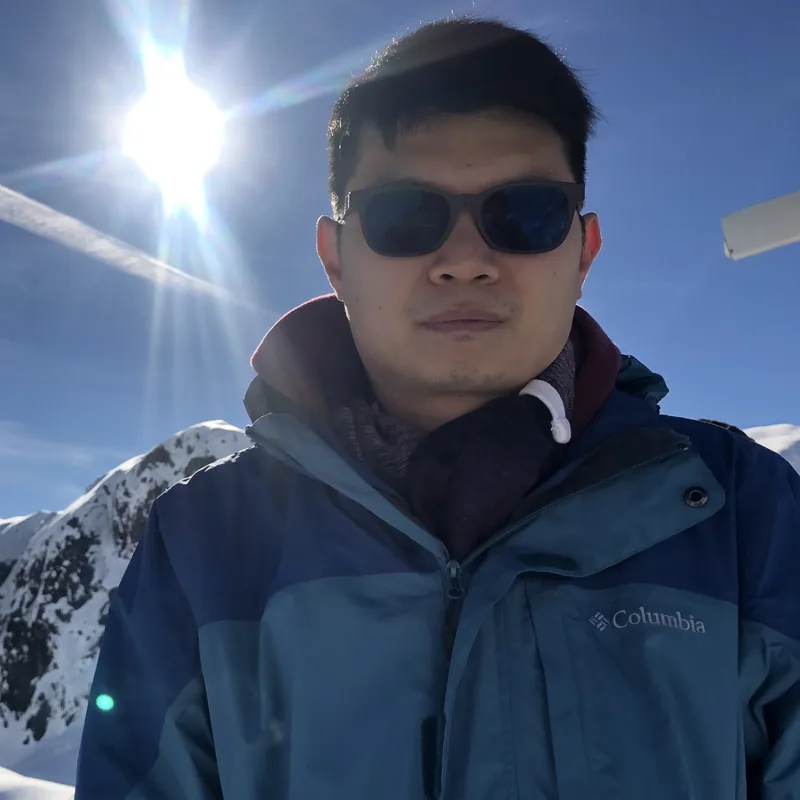
Jason is a seasoned humanities subject teacher, teaching across a variety of subjects, including History, Geography, Sociology, Philosophy, Religious Studies, Law and other humanities subject for different exam boards. Jason was awarded a Second Class Degree in Bachelor of Social Sciences (Government and Laws) and Bachelor of Laws, while I spent most of teaching career in Geography, especially appreciating the dimensions of human geography. Jason aims at building a solid knowledge foundation to be built upon, and equipping students with the exam techniques to be successful. Jason’s sessions are structured, focused, always questioning so that students are prompted to think more and are given the opportunities to articulate themselves, essential skills to be successful in IBDP.
The tutors you see here are just a selection from our team of hundreds of tutors, please contact our Learning Advisors to discuss tutoring options
Why A-Level Geography needs the right tutor
What makes A-Level Geography hard
A-Levels move faster and go deeper than anything students have done before, and they are studied alongside two or three other subjects at the same level. Classes are taught to the middle of the room, so gaps are easy to carry forward unnoticed until the exam.
- A sharp step up in difficulty from GCSE
- Marks decided by technique, not recall
- Grades that determine university options
How tutoring changes the outcome
One-to-one tutoring targets the two things a classroom cannot: exam technique and the specific topics a student keeps getting wrong. A tutor marks work the way an examiner would, shows where the marks went, and then drills those areas until they hold. Confidence follows from that, not the other way round.
- Exam technique built on real past papers
- Targeted work on areas of weakness
- Confidence going into the exam
What you'll learn in A-Level Geography tutoring
Core skills developed
Every A-Level Geography specification marks a progression from knowing places and processes, to applying that knowledge to analyse and evaluate information and issues, to using quantitative, qualitative and fieldwork skills to investigate questions and reach conclusions. On the UK boards these objectives are set by Ofqual and the weightings are close together. AQA gives knowledge and application 30–40% each, and OCR, Edexcel and WJEC and Eduqas each give application and analysis the largest share, between 37% and 40%. Cambridge uses its own objectives, with knowledge and understanding carrying half of the A Level and evaluation rising to 40% of the second-year papers. OxfordAQA gives knowledge and understanding the largest share, at 43%. We work through past-paper questions objective by objective, so you can see which skill is costing you marks rather than just seeing a lower total.
- Explaining physical processes and systems precisely, with accurate terminology and annotated diagrams
- Interpreting unfamiliar maps, graphs, photographs and data sets in the exam
- Statistical and quantitative techniques, and explaining what a result does and does not show
- Planning, carrying out and evaluating a fieldwork investigation
- Writing extended evaluations that weigh evidence and viewpoints and reach a supported judgement
How are students assessed
On the UK specifications, AQA, OCR, Edexcel and WJEC and Eduqas, 80% of the A-Level comes from written exams and 20% from an independent investigation of 3,000–4,000 words, marked by your teacher and moderated by the board. The international boards have no coursework. Edexcel International and OxfordAQA examine fieldwork and research in a written paper instead, and Cambridge is assessed entirely through four written papers. Edexcel International, OxfordAQA and Cambridge also let you sit the AS papers first and bank the result.
- Short and data-response questions on unseen resources: we practise reading and using the figures until it becomes routine
- Extended essays and evaluations: marked on argument and judgement, so we rewrite answers until an examiner could award full marks
- Fieldwork: for the investigation we work on question design, methods and evaluation, and for exam-based fieldwork questions we drill both your own and unfamiliar enquiries
What A-Level Geography topics do we cover?
Five units, each a 1 hour 30 minute written paper worth 20% of the A-level. Units 1 to 4 are 80 marks each and Unit 5 is 60 marks. Units 1 and 2 make up the International AS, and Units 3, 4 and 5 complete the International A-level. Exams are available in January and May/June, you can sit the AS units first or take all five together, and any unit can be resat with the best result counting.
International AS
- Unit 1: Physical geography 1 · Living with hazards, with either Hot desert systems and landscapes (Unit 1a) or Coastal systems and landscapes (Unit 1b)
- Unit 2: Human geography 1 · Global systems and governance; Resource security
International A-level
- Unit 3: Physical geography 2 · Water, carbon and life on Earth; Ecosystems under stress
- Unit 4: Human geography 2 · Changing places; People and contemporary urban environments
- Unit 5: Fieldwork and geographical skills
OxfordAQA has no coursework. Fieldwork is examined in Unit 5 through questions on your own investigation and on unfamiliar fieldwork scenarios, and you must still carry out a personal fieldwork investigation. As in its other subjects, the AS is worth 40% of the A-level rather than 50%. Sessions on this board treat Unit 5 as a full paper in its own right, with practice on both familiar and unfamiliar fieldwork questions.
WJEC Eduqas offers the A level in England and WJEC offers it in Wales. Both cover the same themes and both include a 3,000–4,000 word independent investigation worth 20%, but the papers are arranged differently.
Eduqas (England)
Three written components and a non-exam assessment, sat in the summer at the end of the course. Component 1 is 1 hour 45 minutes and 20.5%, Component 2 is 2 hours and 27.5%, Component 3 is 2 hours 15 minutes and 32%, and Component 4, the Independent Investigation, is 20%.
- Component 1: Changing Landscapes and Changing Places
- Component 2: Global Systems and Global Governance
- Component 3: Contemporary Themes in Geography
- Component 4: Independent Investigation
WJEC (Wales)
Five units, sat in the summer. AS Unit 1 (2 hours, 24%) and AS Unit 2 (1 hour 30 minutes, 16%) make up the AS, worth 40% of the A level. A2 Unit 3 (2 hours, 24%), A2 Unit 4 (2 hours, 16%) and the A2 Unit 5 Independent Investigation (20%) complete the A level.
- AS Unit 1: Changing Landscapes
- AS Unit 2: Changing Places
- A2 Unit 3: Global Systems and Global Governance
- A2 Unit 4: Contemporary Themes in Geography
- A2 Unit 5: Independent Investigation
Themes on both
- Coastal Landscapes or Glaciated Landscapes
- Changing Places
- Tectonic Hazards
- Water and Carbon Cycles
- Global Governance: Change and Challenges
- Two of: Ecosystems; Economic Growth and Challenge: India or China or Development in an African Context; Energy Challenges and Dilemmas; Weather and Climate
Both versions include a 21st Century Challenges section: one extended response question with resource material that draws on the earlier papers or units. In the WJEC version, Tectonic Hazards is examined at AS in Unit 1 and again, at a harder level, in Unit 4, and AS Unit 2 includes questions on your own fieldwork. Sessions on this board prepare the 21st Century Challenges question as a separate skill.
Four units, each a separate written exam available in January and June. Units 1 and 2 make up the International AS and Units 3 and 4 complete the IAL. Unit 1 is 1 hour 45 minutes and 90 marks, Unit 2 is 1 hour 30 minutes and 60 marks, Unit 3 is 2 hours and 90 marks, and Unit 4 is 1 hour 30 minutes and 60 marks. Units 1 and 3 are each worth 30% of the IAL and Units 2 and 4 are each worth 20%. There is no coursework, and units can be resat.
Unit 1 · Global Challenges (IAS)
- Topic 1: World at Risk
- Topic 2: Going Global
Unit 2 · Geographical Investigations (IAS)
- Topic 1: Crowded Coasts
- Topic 2: Urban Problems, Planning and Regeneration
Unit 3 · Contested Planet (IA2)
- Topic A1: Atmosphere and Weather Systems
- Topic A2: Biodiversity Under Threat
- Topic B1: Energy Security or Topic B2: Water Conflicts
- Topic C1: Superpower Geographies or Topic C2: Bridging the Development Gap
Unit 4 · Researching Geography (IA2) · one option
- Option 1: Tectonic Activity and Hazards
- Option 2: Feeding the World's People
- Option 3: Cultural Diversity: People and Landscapes
- Option 4: Human Health and Disease
Edexcel IAL replaces coursework with exam questions on research and fieldwork. Unit 2 includes compulsory questions on research and fieldwork investigation followed by a fieldwork question on Crowded Coasts or Urban Problems, Planning and Regeneration, and Unit 4 is based on pre-release research focus questions for each option, with one question answered in the exam. Sessions on this board prepare the Unit 4 research in advance and rehearse the fieldwork questions in Unit 2.
Three externally examined papers and a non-examination assessment, with all assessment completed in May/June of one year. Papers 1 and 2 are each 2 hours 15 minutes, 105 marks and 30% of the qualification. Paper 3 is 2 hours 15 minutes, 70 marks and 20%. The Independent Investigation is a 3,000–4,000 word report worth 70 marks and 20%, internally assessed and externally moderated.
Paper 1
- Topic 1: Tectonic Processes and Hazards
- Topic 2: Landscape Systems, Processes and Change: 2A: Glaciated Landscapes and Change or 2B: Coastal Landscapes and Change
- Topic 5: The Water Cycle and Water Insecurity
- Topic 6: The Carbon Cycle and Energy Security
Paper 2
- Topic 3: Globalisation
- Topic 4: Shaping Places: 4A: Regenerating Places or 4B: Diverse Places
- Topic 7: Superpowers
- Topic 8: Global Development and Connections: 8A: Health, Human Rights and Intervention or 8B: Migration, Identity and Sovereignty
Paper 3 · synoptic investigation
- Synoptic themes: Players; Attitudes and actions; Futures and uncertainties
- A geographical issue in a place-based context, set out in a resource booklet
Paper 3 is built around an unseen place and issue presented in a resource booklet, with 8-, 18- and 24-mark extended questions that draw on the compulsory content from across the course. Application and analysis carry the largest share of Edexcel's marks, at 40%. Sessions on this board practise working through an unseen resource booklet and planning the 18- and 24-mark answers to time.
Three written papers and a non-exam assessment, all taken at the end of the course. Physical systems (01) and Human interactions (02) are each 1 hour 30 minutes, 66 marks and 22% of the A Level. Geographical debates (03) is 2 hours 30 minutes, 108 marks and 36%. Investigative geography is an independent investigation of 3,000–4,000 words, worth 60 marks and 20%. Each paper comes with a separate Resource Booklet.
Physical systems (01)
- Landscape Systems: one of Coastal Landscapes, Glaciated Landscapes or Dryland Landscapes
- Earth's Life Support Systems
Human interactions (02)
- Changing Spaces; Making Places
- Global Connections: one of Trade in the Contemporary World or Global Migration, and one of Human Rights or Power and Borders
Geographical debates (03) · two from five
- Climate Change
- Disease Dilemmas
- Exploring Oceans
- Future of Food
- Hazardous Earth
Investigative geography (04/05)
- Independent Investigation
Geographical debates is the largest paper and includes synoptic and extended-response sections on both of your chosen debates, so two topics account for over a third of the grade. OCR also asks for case studies chosen from the 21st century. Sessions on this board build depth in the two chosen debates and practise working from the Resource Booklet.
Three components. Physical geography and Human geography are each a 2 hour 30 minute, 120-mark written exam worth 40% of the A-level, sat in the same summer at the end of the course. The Geography fieldwork investigation is an individual investigation of 3,000–4,000 words, worth 60 marks and 20%, marked by teachers and moderated by AQA. It must include data collected in the field and be based on a question or issue you define yourself.
Component 1 · Physical geography
- Water and carbon cycles (compulsory)
- One of: Hot desert systems and landscapes, Coastal systems and landscapes, or Glacial systems and landscapes
- One of: Hazards, or Ecosystems under stress
Component 2 · Human geography
- Global systems and global governance (compulsory)
- Changing places (compulsory)
- One of: Contemporary urban environments, Population and the environment, or Resource security
Component 3 · Geography fieldwork investigation
- Fieldwork requirements
- Investigation requirements
Each paper ends with a 48-mark optional section, Section C, so the topic you choose there carries more marks than either compulsory section. AQA also sets out a geographical skills checklist that is meant to be developed through the topics rather than taught as a separate unit, with a roughly equal balance of quantitative and qualitative methods. Sessions on this board give extra time to the Section C options and build the checklist skills into every topic.
Four papers, each 1 hour 30 minutes and 60 marks. AS Level candidates sit Papers 1 and 2, each worth 50% of the AS Level. A Level candidates also sit Papers 3 and 4, and each of the four papers is worth 25% of the A Level. You can take the AS first and carry the result forward, or sit all four papers in one series. Exams run in June and November. The topics below are from the revised syllabus for exams in 2027, 2028 and 2029.
AS Level · Paper 1 Physical Geography
- Topic 1 Hydrology, river processes and hazards
- Topic 2 Atmospheric processes and global climate change
- Topic 3 Earth processes and mass movements
AS Level · Paper 2 Human Geography
- Topic 4 Population and migration
- Topic 5 Water resources and management
- Topic 6 Urban areas and management
A Level · Paper 3 Global Environments · two from four
- Topic 7 Tropical environments
- Topic 8 Coastal environments
- Topic 9 Hazardous environments
- Topic 10 Arid environments
A Level · Paper 4 Global Themes · two from four
- Topic 11 Climate change impacts and governance
- Topic 12 Environmental issues and management
- Topic 13 Trade, aid and tourism
- Topic 14 Disease and geography
Cambridge has no coursework or fieldwork component. In Papers 3 and 4, each chosen topic has a 10-mark structured question and a 20-mark essay, and evaluation carries 40% of those papers. The 2027 syllabus also brings in new content, including climate change impacts and governance and disease and geography, so older past papers do not cover everything. Sessions on this board focus on the 20-mark essays and on detailed examples from 2000 to the present day, as the syllabus recommends.
Ready to start?
Tell us the subject, exam board and target grade. A Learning Advisor reviews it the same day.
Why parents trust us
4.9/5 from 312 reviews · used by students at 500+ schools







FAQs
We have answers to your most frequently asked questions. Anything not answered here, please reach out to our team.
A-Level Geography with an academic tutor costs from $60 USD (£45) per hour. Packages save 5–15%, or pay as you go, invoiced after each lesson. No lock-in contracts, so you can add sessions around your investigation deadline. Professional tutors (qualified teachers and examiners) cost from $85 USD (£64) per hour.
Late cancellations and no-shows are charged at half the lesson fee. That applies if you cancel less than one hour before the start time, or don't turn up. You can still change a session time whenever you need to, as long as you give your tutor notice.
Our academic tutors achieved an A* or A in A-Level Geography, and our professional tutors are qualified teachers or examiners with 5+ years' experience. We accept the top 5% of applicants and match you to a tutor who knows your board, from AQA's Section C options to Cambridge's Global Themes essays. Read about our tutors.
Each lesson is one-to-one and online, with a tutor matched to your subject, exam board and target grade, using past paper questions from your board to target weak topics. For Geography that means analysing resources rather than describing them, making case studies specific to a named place, and tightening the methods, sampling and evaluation in your investigation. Find out how it works or apply.
It can be, because it is really two subjects examined as one. Physical geography is marked like a science, so processes and feedback loops must be explained precisely. Human geography is marked like an essay subject, where you argue and reach a judgement. Most students are stronger at one. You also have to interpret unseen maps, graphs and data under time pressure, and use detailed, located case studies. Our online A-Level tutoring works on both sides.
In summer 2026, 5.9% of UK A-Level Geography entries achieved an A*, and 24.7% achieved A* or A (JCQ), from 34,128 entries. Reaching the top grade means being strong at both halves of the subject: precise process explanations in physical geography, and sustained, well-judged essays in human geography. A carefully planned investigation also matters, because on AQA and Edexcel it is worth 20% of the A-Level.
Boundaries are set after each exam series and change every year. In June 2026, AQA's A* boundary was 246 out of 300 (82%), and Pearson Edexcel's was 268 out of 350 (77%), both including the investigation. Cambridge's June 2026 A* threshold was 153 out of 240 (64%) for one standard paper combination. Official figures: AQA, Pearson and Cambridge.
Yes, on the UK boards. AQA and Pearson Edexcel both require an independent investigation of 3,000–4,000 words, worth 20% of the A-Level. It is based on fieldwork and a question you define yourself, marked by your teacher and moderated by the board: 60 marks on AQA and 70 on Edexcel. There is no practical endorsement. Cambridge has no coursework or fieldwork component, so its grade comes entirely from exams. Requirements are set out in the AQA specification.
On AQA and Pearson Edexcel, A-Level Geography is 80% written exams and 20% independent investigation, all completed by the end of the course. AQA sets two 2 hour 30 minute papers of 120 marks, each worth 40%. Edexcel sets three 2 hour 15 minute papers worth 30%, 30% and 20%. Cambridge differs most: four 1 hour 30 minute papers, each 25% of the A Level, with no coursework and the option to bank AS first. See AQA's A-level Geography specification.
All A-Level subjects
Ready to find your A-Level Geography tutor?
We will findf you a tutor in 24 hours and if you are not happy after the first session, we will give you a full refund and find you another tutor for no extra charge.
Resources for A Level Students
Free content to help you become a a master, more informed A Levels student


