

1,000+ happy customers
Private A-Level English Literature tutors
We will find you an A-Level English Literature tutor who will help you get an A* and boost your confidence.
Currently serving students in
your country!

How It Works
We keep things as simple as possible. Our objective is to make finding a tutor convenient, efficient and effective.
Fill out an online form
Complete an application online which will be received by one of our dedicated Learning Advisors
Get matched with a tutor
Our experienced Learning Advisor will review your application, and match you with the most appropriate tutor based on your application
Tutor makes contact
Once we confirm with the tutor, the tutor will make contact to organise your first session.
Have your first lesson
Our tutors will work around your schedule to organise a session whenever you would like. Only pay for tutoring you have completed.
Choose between top performing students or qualified A-Level teachers
Either way, we use our bespoke matching process to find you a tutor based on your preferences, exam board and location.
Academic Tutors
from $60 USD/hr
Top performing graduates who achieved A*/A grades in the subject they teach.
- We accept only the top 5% of tutor applicants.
- Each tutor is chosen for their academic results, teaching ability, and connection with students.
Relatable role model: work with a tutor who is similar in age and can be a peer
Affordability: academic tutors are more cost-effective than professional tutors
First-hand experience: they sat these papers recently and know what worked
Professional Tutors
from $85 USD/hr
Current or past qualified teachers and examiners with 5+ years professional teaching experience.
- We only select highly experienced, qualified A-Level teachers.
- Every teacher is assessed on their teaching expertise, subject knowledge, and ability to engage students.
Quality assurance: trained and accredited teaching qualifications
Guaranteed track record: years of experience helping students succeed
Subject expertise: deep understanding of content and exam board requirements
Due to our international operations we quote our prices in USD. Pound amounts are an indicative conversion and you will be invoiced in USD.
Academic Tutors
from £47 GBP/hr
Top performing graduates who achieved A*/A grades in the subject they teach.
Relatable role model: work with a tutor who is similar in age and can be a peer
Affordability: academic tutors are more cost-effective than professional tutors
First-hand experience: they sat these papers recently and know what worked
Professional Tutors
from £67 GBP/hr
Current or past qualified teachers and examiners with 5+ years professional teaching experience.
Quality assurance: trained and accredited teaching qualifications
Guaranteed track record: years of experience helping students succeed
Subject expertise: deep understanding of content and exam board requirements
Meet our A-Level English Literature tutors
Our team is a combination of A-Level graduates who sat these exams recently and qualified teachers with years of classroom and examining experience.

22
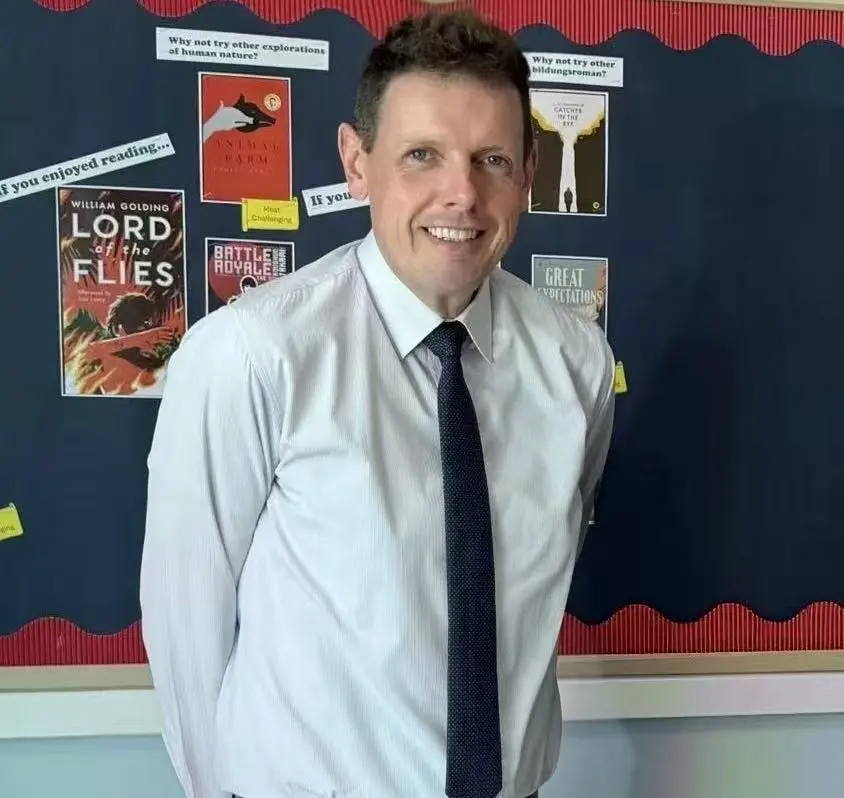
Dexter H is an English specialist, examiner and international teacher with over a decade of experience preparing students for IB, Cambridge IGCSE and Pearson A-level English qualifications. He has worked with learners across Europe, Asia and Latin America, supporting students in developing the close analysis, essay writing and exam technique needed to succeed in demanding English courses.
Alongside his IB work, Dexter teaches Cambridge IGCSE English, Cambridge ESL and Pearson A-level English, bringing examiner training and assessment insight to each course. As a trained examiner for Cambridge IGCSE English/ESL and Pearson A-level English, he understands how assessment criteria are applied and helps students move beyond general commentary into precise, evidence-based analysis. His support covers unseen analysis, comparative writing, coursework, literary interpretation, language responses and examination technique.
Dexter’s students have consistently achieved strong results across international English qualifications, including a 100% pass rate in Cambridge and IELTS examinations. He supports students in improving predicted grades, strengthening coursework, refining analytical writing and developing the confidence needed to perform under timed examination conditions.
Dexter is an English Language A and Language B specialist, IB Examiner and Workshop Leader. He has marked official IB, IGCSE and A-Level assessments, trained teachers in the Diploma Programme and helped students approach the various assessments with confidence and clarity.
Beyond the classroom, Dexter has authored major sections of Kognity’s Language and Literature digital textbook and designed IB-aligned resources for Revision Village, two of the most widely used platforms supporting IB students around the world. His work has helped shape the learning experiences of thousands of students internationally.
Formerly Head of English at Colegio Suizo de México, Dexter brings together classroom expertise, examiner insight and curriculum leadership. Known for his structured, supportive and engaging approach, he turns complex assessment tasks into clear, practical strategies that students can apply with confidence. His aim is not only to help students achieve excellent academic results, but also to develop the independence, analytical skills and self-belief that will serve them far beyond the exam.
15
I tutor English at A level and IGCSE, across both Cambridge and Pearson Edexcel. One to one, built around what the mark scheme actually rewards rather than what students assume it does.Tell me where you are and where you want to be, and we'll work out how to get there.

31
Kate is a highly accomplished English Literature and Language specialist, focusing predominantly on (I)GCSE, A-Level, and IAL pathways across the Edexcel, AQA and OCR exam boards. With over eight years of dedicated experience in the classroom and in personalised tutoring, she has established a strong reputation for elevating student performance across demanding secondary curricula. As a former Head of English at an international school, Kate possesses a thorough understanding of exam specifications, Assessment Objectives, and mark schemes. Her empathetic, student-centred approach builds deep subject confidence, nurtures critical analysis, and consistently enables learners to achieve top grades.

45
I have taught and tutored A level and GCSE English language, English language and literature and English literature for many years.
I bring the wealth of my experience and passion for the subject to my students by building their confidence through step by step approach in analysing individual needs, gaps in knowledge, identifying and making the most of students' strengths whilst carefully and thoughtfully addressing and transforming weaknesses into success.
I have taught across the main examination boards - AQA, Eduqas, Edexcel.

41
Mico is a licensed professional teacher from the Philippines with over 14 years of experience teaching English and Literature across secondary, pre-university, and international school settings. He holds a Bachelor of Secondary Education major in English and has taught Cambridge A Level English Language, ESL, and university entrance examination courses, as well as IGCSE Literature in English and English as an Additional Language (EAL).
Mico currently teaches IGCSE Literature in English and IGCSE EAL, preparing students for their Cambridge examinations. His experience includes teaching students from diverse linguistic and academic backgrounds, helping them develop the skills required for success in GCSE/IGCSE and A Level English and Literature. His teaching expertise covers close textual analysis, essay writing, language analysis, comparative responses, examination technique, and academic writing.
With extensive experience in international curricula, Mico understands that strong examination performance comes from more than memorising techniques. He helps students understand how to approach a question, select relevant evidence, develop an argument, and communicate ideas with precision. His sessions are structured and personalised, combining guided analysis, writing practice, exam-style questions, and targeted feedback.
Mico’s tutoring approach is supportive but academically rigorous. He works with students to identify specific areas for improvement, build confidence, and develop the independence needed to tackle unfamiliar texts and examination questions. Whether a student is strengthening foundational English skills, preparing for IGCSE/GCSE examinations, or developing more advanced A Level analytical and essay-writing skills, his goal is to help them become confident, thoughtful, and effective readers and writers.

38
Rachel F holds a BA and MA degree in English Literature from the University of London, and is a qualified secondary school teacher in the UK with 15 years' teaching experience in UK state, independent and international schools. Rachel has extensive experience of teaching GCSE, IGCSE and A Level English Language and English Literature across a range of examination boards, with her most recent cohort of IGCSE students all receiving 8s and 9s. Rachel is also an academic, publishing research on English teaching, and has written two books for English teachers on teaching practice, with a third currently on the way. Warm, patient and caring, Rachel is passionate about supporting all students to fulfil their potential and feel confident in their abilities. Rachel is experienced at supporting students with additional needs such as dyslexia, and her many years of teaching experience means she has a range of strategies up her sleeve to support all students, no matter what they are struggling with. Sessions are always structured around individual students' needs, and focused on both analytical and writing skills to ensure students are ready to perform their best in their exams.
The tutors you see here are just a selection from our team of hundreds of tutors, please contact our Learning Advisors to discuss tutoring options
Why A-Level English Literature needs the right tutor
What makes A-Level English Literature hard
A-Levels move faster and go deeper than anything students have done before, and they are studied alongside two or three other subjects at the same level. Classes are taught to the middle of the room, so gaps are easy to carry forward unnoticed until the exam.
- A sharp step up in difficulty from GCSE
- Marks decided by technique, not recall
- Grades that determine university options
How tutoring changes the outcome
One-to-one tutoring targets the two things a classroom cannot: exam technique and the specific topics a student keeps getting wrong. A tutor marks work the way an examiner would, shows where the marks went, and then drills those areas until they hold. Confidence follows from that, not the other way round.
- Exam technique built on real past papers
- Targeted work on areas of weakness
- Confidence going into the exam
What you'll learn in A-Level English Literature tutoring
Core skills developed
On the UK boards and Edexcel International, A-Level English Literature is marked against the same five assessment objectives: an informed, personal and well-expressed response (AO1), analysis of how meanings are shaped (AO2), the significance of context (AO3), connections across texts (AO4) and different interpretations (AO5). How they are weighted varies. OCR and Eduqas give analysis (AO2) 30%, while AQA puts the most weight on AO1 and gives AO2 24%. Cambridge uses its own five objectives, weighted equally at A Level, with evaluating other opinions assessed only at A Level. OxfordAQA uses three equally weighted objectives. We work through past-paper questions objective by objective, so you can see which skill is costing you marks rather than just seeing a lower total.
- Close analysis of language, form and structure in poetry, prose and drama
- Building a sustained, personal argument in response to a question
- Using historical, literary and social context to support a reading
- Comparing texts across genres and periods in a single integrated essay
- Weighing critical interpretations against the student's own reading
How are students assessed
On AQA, OCR, Edexcel and WJEC and Eduqas, written exams make up 80% of the A-Level and a coursework essay the other 20%. Cambridge and Edexcel International are assessed entirely by exams, and OxfordAQA lets the school choose between an unseen exam and two coursework essays for the final unit. Rules on taking texts into the exam differ: Edexcel papers are open book, Cambridge does not allow set texts in the exam room, and several boards mix open and closed-book sections.
- Extract-based questions: we practise moving from close analysis of the passage to the text as a whole
- Single-text and comparative essays: we plan to the board's question styles and rewrite answers until an examiner could award the top band
- Unseen poetry and prose: we build a reliable method for timed analysis of texts the student has never seen
What A-Level English Literature topics do we cover?
Four units. AS Units 1 and 2 are 2-hour, 50-mark exams that make up the International AS, each worth 20% of the International A-level. Units 3 and 4 complete it, each worth 30%. For Unit 4 the school chooses either a 2 hour 30 minute unseen exam or two coursework essays. Units can be taken in stages or all in one series.
International AS
- Unit 1: Aspects of dramatic tragedy (closed book; Elizabethan and Jacobean tragedy and a later dramatic tragedy)
- Unit 2: Place in literary texts (open book; one prose and one poetry text)
International A2
- Unit 3: Elements of crime and mystery (closed book; two essays on two texts)
- Unit 4a: Literary representations (exam: unseen prose and unseen poetry)
- Unit 4b: Literary representations (non-exam assessment: two essays of 1,250–1,500 words, one on poetry and one on prose)
OxfordAQA marks against three equally weighted assessment objectives, and the AS is worth 40% of the International A-level, so the A2 units decide most of the grade. A revised specification starts with first teaching in 2027: the current version has its last AS exams in 2027 and last A2 exams in 2028, and the revised one renames Unit 1 Elements of dramatic tragedy and updates the set texts. Sessions on this board confirm which version and texts your child is sitting before planning the course.
Both boards offer this A level: WJEC in Wales and Eduqas in England. We match tutors to the board on your child's exam entry.
Eduqas (England) · linear, four components sat in the summer at the end of the course
- Component 1: Poetry (2 hours, 30%; pre-1900 and post-1900 poetry, open book)
- Component 2: Drama (2 hours, 30%; Shakespeare and a pair of pre- and post-1900 plays, closed book)
- Component 3: Unseen Texts (2 hours, 20%; unseen prose and unseen poetry)
- Component 4: Prose Study (non-exam assessment, 2500–3500 words on one pre-2000 and one post-2000 prose text, 20%)
WJEC (Wales) · five units, each 20% of the A level
- AS Unit 1: Prose and Drama (closed-book)
- AS Unit 2: Poetry Post-1900 (open-book, clean copy)
- A2 Unit 3: Poetry pre-1900 and Unseen Poetry (open-book, clean copy)
- A2 Unit 4: Shakespeare (closed-book)
- A2 Unit 5: Prose Study (non-exam assessment, 2500–3500 words)
Eduqas sets a whole paper on unseen texts, and its unseen prose passage comes from one of two set periods, 1880–1910 or 1918–1939, so students read widely in those periods. In WJEC's unitised version the AS units count for 40% of the A level. Sessions on these boards build period reading for the Eduqas unseen paper and quotation recall for the closed-book Shakespeare and drama exams.
Four units, each a 2-hour, 50-mark open-book exam worth 25% of the IAL, sat in January or June. Units 1 and 2 make up the International AS, and Units 3 and 4 complete the full IAL. There is no coursework, and any unit can be resat.
IAS
- Unit 1: Post-2000 Poetry and Prose
- Unit 2: Drama (one pre-1900 and one post-1900 play)
IA2
- Unit 3: Poetry and Prose (unseen post-1900 poetry, and two prose texts on one theme: Growing Up, Colonisation and After, Science and Society, or Women and Society)
- Unit 4: Shakespeare and Pre-1900 Poetry
Edexcel IAL starts with contemporary writing: Unit 1 uses the Poems of the Decade anthology and a post-2000 novel, and pre-1900 poetry is left until Unit 4. Every unit is open book, and Unit 3 begins with a 20-mark essay on an unseen poem. Sessions on this board build comparative poetry essays early and practise unseen poetry against the clock.
Three open-book written papers and a non-exam assessment, all completed in the May/June series of a single year. The course covers eight texts plus unseen poetry. Component 1 and Component 3 are 2 hour 15 minute papers worth 30% each, Component 2 is a 1 hour 15 minute paper worth 20%, and the coursework essay is worth 20%.
- Component 1: Drama (Section A: Shakespeare, tragedy or comedy; Section B: Other Drama)
- Component 2: Prose (two thematically linked texts, at least one pre-1900)
- Component 3: Poetry (Section A: Post-2000 Specified Poetry, compared with an unseen poem; Section B: Specified Poetry Pre- or Post-1900)
- Non-examination assessment (one comparative essay of 2500–3000 words on two freely chosen texts)
Component 2 prose themes
- Childhood
- Colonisation and its Aftermath
- Crime and Detection
- Science and Society
- The Supernatural
- Women and Society
Edexcel's Shakespeare question draws on its Critical Anthology of essays, which has to be studied but cannot be taken into the exam, while clean copies of the set texts can. The coursework allows a free choice of two texts in any genre, excluding texts in translation. Sessions on this board train students to use critical ideas from the anthology in their own argument and to find evidence quickly in an open-book exam.
Three components: two closed-text written papers, each 2 hours 30 minutes, 60 marks and 40% of the A Level, and a non-exam assessment worth 40 marks and 20%. Exams are sat in the May/June series, and both papers must be taken in the same series at the end of the course.
Drama and poetry pre-1900 (01)
- Section 1: Shakespeare
- Section 2: Drama and poetry pre-1900
Comparative and contextual study (02), one topic from
- American Literature 1880–1940
- The Gothic
- Dystopia
- Women in Literature
- The Immigrant Experience
Literature post-1900 (03)
- Task 1: Close reading, or Re-creative writing with commentary
- Task 2: Comparative essay
OCR's Component 02 opens with an unseen prose extract from the chosen topic, so wide reading in that topic area is assessed directly. Both papers are closed text, and the set text lists are changing: a revised Shakespeare list applies from 2027 and a new list of pre-1900 drama and poetry from 2029. Sessions on this board check your child's set texts against the current list and build quotation recall for the closed-text papers.
AQA runs two separate A-levels, English Literature A (7712) and English Literature B (7717). Both have the same structure: two written papers, each 75 marks and 40% of the A-level, and a non-exam assessment worth 50 marks and 20%. Both are linear, with all exams sat in the summer at the end of the course. We match tutors to the specification code on your child's exam entry.
English Literature A · 7712
- Paper 1: Love through the ages (3 hours; Shakespeare, unseen poetry, and a comparison of a poetry and a prose text; open book in Section C only)
- Paper 2: Texts in shared contexts (2 hours 30 minutes, open book; Option 2A: WW1 and its aftermath, or Option 2B: Modern times: literature from 1945 to the present day)
- Non-exam assessment: Independent critical study: texts across time (one 2,500-word comparative essay on two texts, at least one pre-1900)
English Literature B · 7717
- Paper 1: Literary genres (2 hours 30 minutes, closed book; Option 1A: Aspects of tragedy, or Option 1B: Aspects of comedy)
- Paper 2: Texts and genres (3 hours, open book; Option 2A: Elements of crime writing, or Option 2B: Elements of political and social protest writing)
- Non-exam assessment: Theory and independence (two essays of 1250–1500 words informed by AQA's Critical Anthology; one can be re-creative writing with a commentary)
Literature A groups texts by historical period and theme, so context drives the reading. Literature B groups them by genre and builds literary theory into the coursework through the Critical Anthology. Both include an unseen text in the exams, and AQA expects all five assessment objectives in every answer. Sessions on this board are built around the specification your school follows, with closed-book quotation practice for Literature B Paper 1.
Four papers, each 2 hours and 50 marks. AS Level candidates sit Papers 1 and 2. Full A Level candidates also sit Papers 3 and 4, and each paper is worth 25% of the A Level. You can sit the AS first and carry the result forward, or take all four papers in one series. Exams run in June and November. Set texts are not allowed in the examination room, and the set text lists differ for 2027 and 2028.
AS Level
- Paper 1: Drama and Poetry (Section A: Drama; Section B: Poetry)
- Paper 2: Prose and Unseen (Section A: Prose; Section B: Unseen)
A Level
- Paper 3: Shakespeare and Drama (Section A: Shakespeare; Section B: Drama)
- Paper 4: Pre- and Post-1900 Poetry and Prose (Section A: Pre-1900 Poetry and Prose; Section B: Post-1900 Poetry and Prose)
On every Cambridge set text, students choose between an essay question and a question on a passage printed in the paper, so both have to be prepared. Evaluation of other opinions and interpretations is assessed only in Papers 3 and 4. Sessions on this board check which year's set text list applies to your child, practise both question types, and build quotation recall for the closed-book papers.
Ready to start?
Tell us the subject, exam board and target grade. A Learning Advisor reviews it the same day.
Why parents trust us
4.9/5 from 312 reviews · used by students at 500+ schools





FAQs
We have answers to your most frequently asked questions. Anything not answered here, please reach out to our team.
A-Level English Literature with an academic tutor costs from $60 USD (£45) per hour, and packages save 5–15%, useful for regular essay feedback. Pay as you go is invoiced after each lesson, with no lock-in contracts. Professional tutors (qualified teachers and examiners) cost from $85 USD (£64) per hour. See pricing.
Late cancellations and no-shows are charged at half the lesson fee. That applies if you cancel less than one hour before the start time, or don't turn up. You can still change a session time whenever you need to, as long as you give your tutor notice.
Our academic tutors achieved an A* or A in A-Level English Literature, and our professional tutors are qualified teachers or examiners with 5+ years' experience. We accept only the top 5% of applicants. You are matched to a tutor who knows your board and set texts, including whether you sit AQA Literature A or B and which Cambridge set text list applies. See our tutors and how we select tutors.
Lessons are one-to-one and online, with a tutor matched to A-Level English Literature, your exam board and your target grade. Sessions focus on weak areas using past paper questions from your board, and essays are planned and marked the way an examiner would mark them. Typical work includes replacing plot retelling with argument, tying context into analysis, writing integrated comparisons and building a reliable method for unseen texts. See how it works or start with the student application.
It is harder than it looks, because the subject stops rewarding you for knowing what a text means and starts rewarding you for arguing a reading of it. Each essay has to combine close analysis, context, links to other texts and other readers' views while still reading as one argument. The reading load is wide, some papers are closed book so quotations must be learned, and unseen poetry or prose has to be analysed from scratch. Our online A-Level tutoring builds those skills essay by essay.
In summer 2026, 9.3% of UK A-Level English Literature entries achieved an A*, and 24.9% achieved A* or A (JCQ), from 36,196 entries. An A* goes to essays that argue a reading rather than explain the text: close analysis of language, form and structure, context tied into the argument, comparisons that weave texts together, and critical interpretations that are debated rather than simply quoted. Knowing the texts well is necessary but not enough.
Grade boundaries are set after each exam series and change every year. In June 2026, AQA's A* boundary for English Literature A was 313 out of 375 (83%), and Pearson Edexcel's was 231 out of 300 (77%). Cambridge's June 2026 A* threshold for Literature in English 9695 was 169 out of 200 (85%). On Edexcel International, an A* needs an overall A plus at least 90% of the uniform marks across the IA2 units. Sources: AQA, Pearson, Cambridge and Pearson International.
Yes on the UK boards: AQA, OCR and Pearson Edexcel each include a non-exam assessment worth 20% of the A-Level, and Eduqas has a prose study coursework component. On AQA Literature A it is one 2,500-word comparative essay on two texts, at least one written before 1900. Pearson Edexcel asks for a comparative essay of 2500–3000 words on two freely chosen texts. There is no practical endorsement. Cambridge and Edexcel International have no coursework, while OxfordAQA lets schools choose coursework essays or an unseen exam for its final unit. See the Pearson Edexcel specification.
On AQA, OCR and Pearson Edexcel, A-Level English Literature is 80% written exams and 20% coursework essay. AQA Literature A sets Love through the ages (3 hours, 40%) and Texts in shared contexts (2 hours 30 minutes, 40%), and OCR sets two closed-text papers of 2 hours 30 minutes, each worth 40%. The biggest difference is Cambridge 9695, which is exam-only: four two-hour papers, each worth 25% of the A Level, and you can sit the AS papers first. See the AQA specification.
All A-Level subjects
Ready to find your A-Level English Literature tutor?
We will findf you a tutor in 24 hours and if you are not happy after the first session, we will give you a full refund and find you another tutor for no extra charge.
Resources for A Level Students
Free content to help you become a a master, more informed A Levels student


