


How It Works
We keep things as simple as possible. Our objective is to make finding a tutor convenient, efficient and effective.
Fill out an online form
Complete an application online which will be received by one of our dedicated Learning Advisors
Get matched with a tutor
Our experienced Learning Advisor will review your application, and match you with the most appropriate tutor based on your application
Tutor makes contact
Once we confirm with the tutor, the tutor will make contact to organise your first session.
Have your first lesson
Our tutors will work around your schedule to organise a session whenever you would like. Only pay for tutoring you have completed.
Choose between top performing students or qualified A-Level teachers
Either way, we use our bespoke matching process to find you a tutor based on your preferences, exam board and location.
Academic Tutors
from $60 USD/hr
Top performing graduates who achieved A*/A grades in the subject they teach.
- We accept only the top 5% of tutor applicants.
- Each tutor is chosen for their academic results, teaching ability, and connection with students.
Relatable role model: work with a tutor who is similar in age and can be a peer
Affordability: academic tutors are more cost-effective than professional tutors
First-hand experience: they sat these papers recently and know what worked
Professional Tutors
from $85 USD/hr
Current or past qualified teachers and examiners with 5+ years professional teaching experience.
- We only select highly experienced, qualified A-Level teachers.
- Every teacher is assessed on their teaching expertise, subject knowledge, and ability to engage students.
Quality assurance: trained and accredited teaching qualifications
Guaranteed track record: years of experience helping students succeed
Subject expertise: deep understanding of content and exam board requirements
Due to our international operations we quote our prices in USD. Pound amounts are an indicative conversion and you will be invoiced in USD.
Academic Tutors
from £47 GBP/hr
Top performing graduates who achieved A*/A grades in the subject they teach.
Relatable role model: work with a tutor who is similar in age and can be a peer
Affordability: academic tutors are more cost-effective than professional tutors
First-hand experience: they sat these papers recently and know what worked
Professional Tutors
from £67 GBP/hr
Current or past qualified teachers and examiners with 5+ years professional teaching experience.
Quality assurance: trained and accredited teaching qualifications
Guaranteed track record: years of experience helping students succeed
Subject expertise: deep understanding of content and exam board requirements
Meet our A-Level History tutors
Our team is a combination of A-Level graduates who sat these exams recently and qualified teachers with years of classroom and examining experience.

13
I am Hans K and a native from Rotterdam, The Netherlands. I have been teaching IB/DP , IGCSE and 'O' and 'A' levels for the last 20 years on a variety of internationals schools, both in Europe and the U.S. I carry degrees from Leiden Uni. in Leiden, The Netherlands, and completed my doctors course work at Carnegie-Mellon Uni. in Pittsburgh, PA, USA. I have played First Division Amateur soccer in Holland and have coached for the last 20 years as well. Besides being a soccer fanatic, I am also a wolf conservationist supporter being associated with Wild Spirit Wolf Sanctuary in Ramah, NM. I read quite a lot as well and try and link my readings to what I teach in History. Finally, looking at the A-Level curriculum, I have extended experience in working with sources corresponding to the Unit of European History with specifics in World War I and II, the Interbellum Period, and the Cold War., the same applies for my IGCSE teachings. I think it was the Cambridge Assessment Exam Board where the exams were forwarded to by the school.

15
Jason is a seasoned humanities subject teacher, teaching across a variety of subjects, including History, Geography, Sociology, Philosophy, Religious Studies, Law and other humanities subject for different exam boards. Jason was awarded a Second Class Degree in Bachelor of Social Sciences (Government and Laws) and Bachelor of Laws, while I spent most of teaching career in Geography, especially appreciating the dimensions of human geography. Jason aims at building a solid knowledge foundation to be built upon, and equipping students with the exam techniques to be successful. Jason’s sessions are structured, focused, always questioning so that students are prompted to think more and are given the opportunities to articulate themselves, essential skills to be successful in IBDP.

23
Natasha W is an experienced educator and academic coach with over 25 years in education, including 14 years at an IB World School. She holds a Master of Education in Teaching and Innovation and currently serves as an adjunct professor, where she supports college students in academic writing, critical thinking, and research-based assignments.
In her early years of learning under the British system, she attended a high school where A- level GSCE subjects were taught. Also as an adjunct professor, she helped students to achieve outstanding results in A-level GSCE. Natasha specializes in English, Literature, English as a Second Language, History, Biblical Studies and Religious Studies. She has worked with students from over 40 nationalities and is highly skilled in supporting multilingual learners to develop clarity, confidence, and precision in their communication. Her students consistently improve in essay structure, argument development, and overall academic performance.
In addition to her teaching experience, Natasha has worked with schools and organizations to strengthen communication and engagement across diverse teams, bringing a global and practical perspective to her work with students.
Natasha’s teaching style is structured, supportive, and empowering. She focuses on building independent thinkers by breaking down complex tasks, aligning work with IB assessment criteria, and gradually releasing responsibility to the student. She ensures that each session is purposeful, engaging, and tailored to help students achieve both academic success and long-term confidence
16
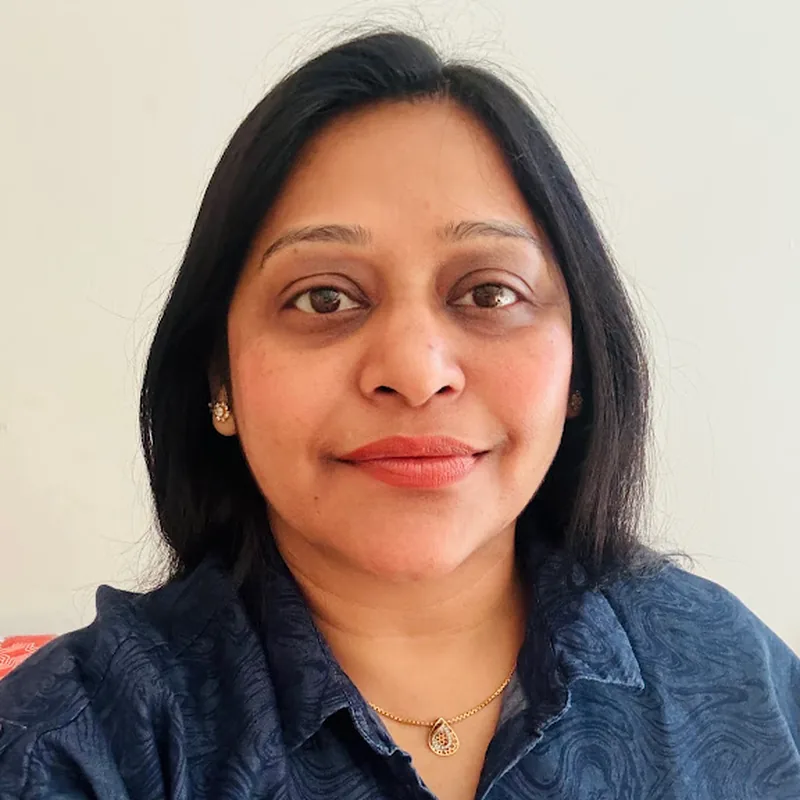
Smita C is experienced Cambridge educator with extensive teaching experience in History and Global Perspectives, including Cambridge IGCSE, AS Level, and A Level programmes. She is fully trained in the Cambridge curriculum and have served as a Cambridge examiner for IGCSE History, AS & A Level History, and Global Perspectives. Her experience as both a teacher and examiner has provided her with a strong understanding of Cambridge curriculum frameworks, assessment objectives, examination standards, and assessment criterias.
The tutors you see here are just a selection from our team of hundreds of tutors, please contact our Learning Advisors to discuss tutoring options
Why A-Level History needs the right tutor
What makes A-Level History hard
A-Levels move faster and go deeper than anything students have done before, and they are studied alongside two or three other subjects at the same level. Classes are taught to the middle of the room, so gaps are easy to carry forward unnoticed until the exam.
- A sharp step up in difficulty from GCSE
- Marks decided by technique, not recall
- Grades that determine university options
How tutoring changes the outcome
One-to-one tutoring targets the two things a classroom cannot: exam technique and the specific topics a student keeps getting wrong. A tutor marks work the way an examiner would, shows where the marks went, and then drills those areas until they hold. Confidence follows from that, not the other way round.
- Exam technique built on real past papers
- Targeted work on areas of weakness
- Confidence going into the exam
What you'll learn in A-Level History tutoring
Core skills developed
Every A-Level History specification on the UK boards is marked against the same three Ofqual objectives: using knowledge to analyse and reach substantiated judgements, evaluating primary and contemporary sources, and evaluating historians' interpretations. Knowledge and analysis always carry the majority. On AQA and OCR it is 60%, on Edexcel and WJEC 55%, and on Edexcel International 50%. Edexcel and Edexcel International put more weight on interpretations, at 25%. Cambridge uses its own four objectives, with historical knowledge at 45% of the A Level and source evaluation and interpretations together at 25%. We work through past-paper questions objective by objective, so you can see which skill is costing you marks rather than just seeing a lower total.
- Planning analytical essays with a clear line of argument and a substantiated judgement
- Evaluating sources for provenance, content and context, and their value for a specific question
- Assessing historians' interpretations against your own knowledge
- Selecting precise evidence quickly from a large body of content
- Researching, structuring and referencing an extended independent investigation
How are students assessed
On the UK specifications, AQA, OCR, Edexcel and WJEC, 80% of the A-Level comes from written exams and 20% from an independently researched essay or investigation, marked by your teacher and moderated by the board. Edexcel International and Cambridge have no coursework and let you sit the AS papers first and bank the result. Every board chooses its topics through options, so the content you study depends on the route your school has chosen.
- Essays: marked on argument and judgement, so we rewrite answers until an examiner could award full marks
- Source questions: we practise evaluating provenance and content against the question, using real past-paper sources
- Interpretations and the investigation: we work on testing historians' arguments and on structuring and evidencing an extended piece of writing
What A-Level History topics do we cover?
WJEC offers the A level in Wales only. Eduqas does not offer A level History in England. Five units, sat in the summer: two AS units, worth 40% of the A level, and three A2 units. Each unit is worth 20% and 60 marks.
- AS Unit 1: Period Study (1 hour 30 minutes, one of eight options)
- AS Unit 2: Depth Study Part 1 (1 hour 45 minutes, one of eight options)
- A2 Unit 3: Breadth Study (1 hour 45 minutes, one of ten options)
- A2 Unit 4: Depth Study Part 2 (1 hour 45 minutes, continuing the Unit 2 depth study)
- A2 Unit 5: Historical Interpretations (non-examination assessment, 3,000–4,000 words)
WJEC splits one depth study across both years: you study the first half for AS Unit 2 and the second half for A2 Unit 4. If your period study is on the history of Wales and England, your depth study must be on a country outside Wales and England, and the reverse. Sessions on this board revisit the Unit 2 content in the second year, so the depth study is examined as one continuous topic.
Four units, each a 2 hour, 50-mark written exam worth 25% of the IAL, available in January and June. Units 1 and 2 make up the International AS and Units 3 and 4 complete the IAL. There is no coursework, and any unit can be resat.
International AS
- Unit 1: Depth Study with Interpretations (two 25-mark essays from a choice of four)
- Unit 2: Breadth Study with Source Evaluation (a two-part source question and an essay)
International A2
- Unit 3: Thematic Study with Source Evaluation (a source-based essay and a breadth essay)
- Unit 4: International Study with Historical Interpretations (an interpretations question and a depth essay)
Each unit offers four options, and some combinations are forbidden where the content overlaps, such as Russia in both Unit 1 and Unit 2. Units 2 to 4 come with a source booklet, and each unit tests a different pairing of skills. Sessions on this board match practice to the skill each unit rewards, rather than treating every paper as an essay paper.
Three externally examined papers and coursework, with all assessment completed in May/June of one year. Paper 1 is 2 hours 15 minutes, 60 marks and 30%. Paper 2 is 1 hour 30 minutes, 40 marks and 20%. Paper 3 is 2 hours 15 minutes, 60 marks and 30%. The coursework is a single assignment on a question set by the centre, with 3,000–4,000 words recommended, worth 20%.
Papers and coursework
- Paper 1: Breadth study with interpretations (options 1A–1H)
- Paper 2: Depth study (two options in each route)
- Paper 3: Themes in breadth with aspects in depth (options 30–39)
- Coursework: historical enquiry analysing and evaluating historical interpretations
Routes for Papers 1 and 2
- Route A: Conquest, control and resistance in the medieval world
- Route B: Religion and the state in early modern Europe
- Route C: Revolutions in early modern and modern Europe
- Route D: Challenges to the authority of the state in the late eighteenth and nineteenth centuries
- Route E: Communist states in the twentieth century
- Route F: Searching for rights and freedoms in the twentieth century
- Route G: Nationalism, dictatorship and democracy in twentieth-century Europe
- Route H: Democracies in change: Britain and the USA in the twentieth century
Edexcel links Papers 1 and 2 in eight themed routes, and your route determines which Paper 3 options are available. Paper 3 combines a source question with depth and breadth essays across a long period, and interpretations carry 25% of the marks overall, more than on AQA or OCR. Sessions on this board build the Paper 3 breadth essays and the Paper 1 interpretations question early, since they need the most practice.
Four units: one from each of three unit groups plus the Topic based essay, all taken in the same series at the end of the course. Unit group 1 is a 1 hour 30 minute, 50-mark paper worth 25%. Unit group 2 is a 1 hour, 30-mark paper worth 15%. Unit group 3 is a 2 hour 30 minute, 80-mark paper worth 40%. The Topic based essay (Y100) is a 3,000–4,000 word non-exam assessment worth 40 marks and 20%.
Unit group 1 · British period study and enquiry (Y101–Y113)
- One of 13 units: a period study of British history paired with a source-based enquiry that immediately precedes or follows it
Unit group 2 · Non-British period study (Y201–Y224)
- One of 24 units on a period of non-British history
Unit group 3 · Thematic study and historical interpretations (Y301–Y321)
- One of 21 units: a theme across at least 100 years plus three in-depth studies used to evaluate interpretations
Topic based essay (Y100)
- A 3,000–4,000 word essay on a topic of your choice
OCR offers 58 units across the three examined groups, and schools must check their combination with OCR's Specification Creator tool against the 200-year rule and other restrictions. The essay title must also be submitted to OCR through its Title(s) Proposal tool. Sessions on this board give most time to the thematic paper, which carries 40% of the grade, and to the one-hour non-British paper, which leaves little time per question.
Three components, all assessed in the same series at the end of the course. Component 1 (Breadth study) and Component 2 (Depth study) are each a 2 hour 30 minute, 80-mark written exam worth 40% of the A-level. Component 3 (Historical investigation) is a personal study of 3,500–4,500 words, worth 40 marks and 20%, marked by teachers and moderated by AQA.
Component 1 · Breadth study
- One of 11 options (1A–1L), each covering around 100 years
- Section A: one compulsory question linked to historical interpretations (30 marks)
- Section B: two from three essays (2 x 25 marks)
Component 2 · Depth study
- One of 19 options (2A–2T)
- Section A: one compulsory question linked to primary sources or sources contemporary to the period (30 marks)
- Section B: two from three essays (2 x 25 marks)
Component 3 · Historical investigation
- A personal study framed as a question in the context of approximately 100 years, not duplicating the content of Components 1 and 2
AQA requires one British and one non-British option across Components 1 and 2, and the three components together must cover at least 200 years. Its interpretations question sits in the breadth paper, so you evaluate historians' views on a period of around 100 years rather than a short depth period. Sessions on this board practise the 30-mark Section A questions on both papers as distinct skills from the 25-mark essays.
Four papers. AS Level candidates sit Paper 1 (Historical Sources, 1 hour 15 minutes, 40 marks) and Paper 2 (Outline Study, 1 hour 45 minutes, 60 marks), worth 40% and 60% of the AS Level. A Level candidates also sit Paper 3 (Historical Interpretations, 1 hour 15 minutes, 40 marks, 20%) and Paper 4 (Depth Study, 1 hour 45 minutes, 60 marks, 30%). You can take the AS first and carry the result forward, or sit all four papers in one series. Exams run in June and November. The structure below is from the syllabus for exams in 2027, 2028 and 2029. Candidates sitting in November 2026 follow the 2026 syllabus, which has a different AS European option (Modern Europe, 1750–1921, including the Industrial Revolution in Britain).
AS Level · Papers 1 and 2 · one option
- European option: Modern Europe, 1774–1924
- American option: The history of the USA, 1820–1941
- International option: International history, 1870–1939
A Level · Paper 3 · one topic
- Topic 1: The origins of the First World War
- Topic 2: The Holocaust
- Topic 3: The origins and development of the Cold War
A Level · Paper 4 · one option
- European option: European history, 1919–41
- American option: The USA, 1945–93
- International option: International history, 1909–94
Each AS option has three topics that rotate every year: one is prescribed for the Paper 1 sources question and is not examined in Paper 2. In 2027, for example, the European option's Paper 1 topic is France, 1774–1814. Paper 3 is a single question on a historian's interpretation. Sessions on this board check the prescribed Paper 1 topic for your exam year and prepare it separately for source work.
Ready to start?
Tell us the subject, exam board and target grade. A Learning Advisor reviews it the same day.
Why parents trust us
4.9/5 from 312 reviews · used by students at 500+ schools






FAQs
We have answers to your most frequently asked questions. Anything not answered here, please reach out to our team.
An academic tutor for A-Level History costs from $60 USD (£45) per hour. Packages save 5 to 15%, or pay as you go, invoiced after each lesson, with no lock-in contracts. Essay marking included. Professional tutors (qualified teachers and examiners) cost from $85 USD (£64) per hour.
Late cancellations and no-shows are charged at half the lesson fee. That applies if you cancel less than one hour before the start time, or don't turn up. You can still change a session time whenever you need to, as long as you give your tutor notice.
Our academic tutors achieved an A* or A in A-Level History, and our professional tutors are qualified teachers or examiners with 5+ years' experience. Only the top 5% of applicants are accepted. We match you to a tutor who knows your board, whether AQA, OCR, Edexcel, WJEC, Cambridge or Edexcel International, and the options your school teaches. Meet our tutors or read how we select tutors.
Tutoring is one-to-one and online, with a tutor matched to your board, your options and your target grade. Lessons focus on weak areas using past paper questions from your board. In History that means planning essays around a judgement argued from the first paragraph, linking source provenance to the question set, and testing historians' interpretations against your own knowledge. UK students also get help structuring the investigation, within board rules. Read how it works or apply for a tutor.
It is demanding because it rewards argument, not recall. You need exact names, dates and evidence across long periods, but marks only come when that knowledge supports a clear judgement about causes, change or significance. The other common losses are source answers that paraphrase instead of judging provenance, and interpretation answers that summarise a historian rather than testing the case. UK boards add an extended independent investigation too. Our online A-Level tutoring works on each of these skills separately.
In summer 2026, 5.8% of UK A-Level History entries achieved an A*, and 24.7% achieved A* or A (JCQ). Knowing the content is not enough for the top grade. Examiners reward a sustained, well-supported judgement in every essay, source answers that weigh provenance and context against the question, and interpretation answers that test a historian's argument against your own knowledge. Students who narrate events tend to stall in the middle bands.
Grade boundaries are set after each series and change every year, and in History they also depend on your options. In June 2026, AQA's A* boundary was 157 out of 200 (79%) for one option combination, with A* boundaries across AQA's routes ranging from 153 to 168. Cambridge's June 2026 A* threshold was 148 out of 200 (74%). Find the row for your options in AQA's grade boundaries or Cambridge's threshold table.
Yes on the UK boards. AQA, OCR, Edexcel and WJEC all include an independently researched piece worth 20% of the A-Level, marked by your school and moderated by the board. AQA's historical investigation is 3,500 to 4,500 words, OCR's topic based essay and WJEC's historical interpretations unit are 3,000 to 4,000 words, and Edexcel recommends 3,000 to 4,000 words. Cambridge and Edexcel International have no coursework, so everything is examined. See OCR's specification.
A-Level History is mainly assessed by written exams testing essays, sources and historians' interpretations, plus a 20% independent investigation on the UK boards. On AQA, two 2 hour 30 minute, 80-mark papers are each worth 40%. Edexcel sets three papers worth 30%, 20% and 30%, lasting 2 hours 15 minutes, 1 hour 30 minutes and 2 hours 15 minutes. Cambridge differs most: four exam papers, no coursework, and the option to sit the AS first. Topics depend on your school's options. See the official AQA specification.
All A-Level subjects
Ready to find your A-Level History tutor?
We will findf you a tutor in 24 hours and if you are not happy after the first session, we will give you a full refund and find you another tutor for no extra charge.
Resources for A Level Students
Free content to help you become a a master, more informed A Levels student


