

How It Works
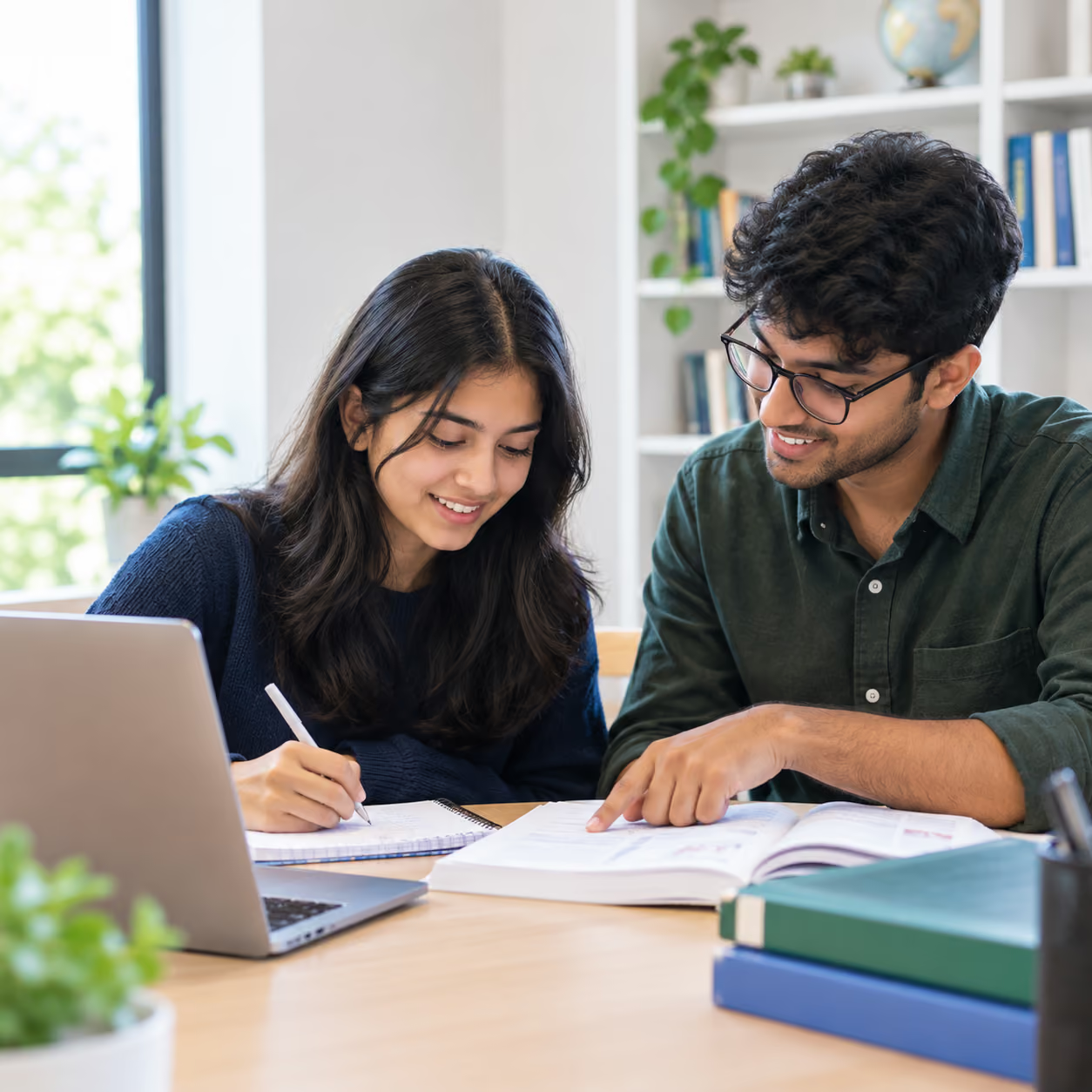
We keep things as simple as possible. Our objective is to make finding a tutor convenient, efficient and effective.
Fill out an online form
Complete an application online which will be received by one of our dedicated Learning Advisors
Get matched with a tutor
Our experienced Learning Advisor will review your application, and match you with the most appropriate tutor based on your application
Tutor makes contact
Once we confirm with the tutor, the tutor will make contact to organise your first session.
Have your first lesson
Our tutors will work around your schedule to organise a session whenever you would like. Only pay for tutoring you have completed.
Choose between top performing students or qualified A-Level teachers
Either way, we use our bespoke matching process to find you a tutor based on your preferences, exam board and location.
Academic Tutors
from $60 USD/hr
Top performing graduates who achieved A*/A grades in the subject they teach.
- We accept only the top 5% of tutor applicants.
- Each tutor is chosen for their academic results, teaching ability, and connection with students.
Relatable role model: work with a tutor who is similar in age and can be a peer
Affordability: academic tutors are more cost-effective than professional tutors
First-hand experience: they sat these papers recently and know what worked
Professional Tutors
from $85 USD/hr
Current or past qualified teachers and examiners with 5+ years professional teaching experience.
- We only select highly experienced, qualified A-Level teachers.
- Every teacher is assessed on their teaching expertise, subject knowledge, and ability to engage students.
Quality assurance: trained and accredited teaching qualifications
Guaranteed track record: years of experience helping students succeed
Subject expertise: deep understanding of content and exam board requirements
Due to our international operations we quote our prices in USD. Pound amounts are an indicative conversion and you will be invoiced in USD.
Academic Tutors
from £47 GBP/hr
Top performing graduates who achieved A*/A grades in the subject they teach.
Relatable role model: work with a tutor who is similar in age and can be a peer
Affordability: academic tutors are more cost-effective than professional tutors
First-hand experience: they sat these papers recently and know what worked
Professional Tutors
from £67 GBP/hr
Current or past qualified teachers and examiners with 5+ years professional teaching experience.
Quality assurance: trained and accredited teaching qualifications
Guaranteed track record: years of experience helping students succeed
Subject expertise: deep understanding of content and exam board requirements
Meet our A-Level Chinese tutors
Our team is a combination of A-Level graduates who sat these exams recently and qualified teachers with years of classroom and examining experience.

43
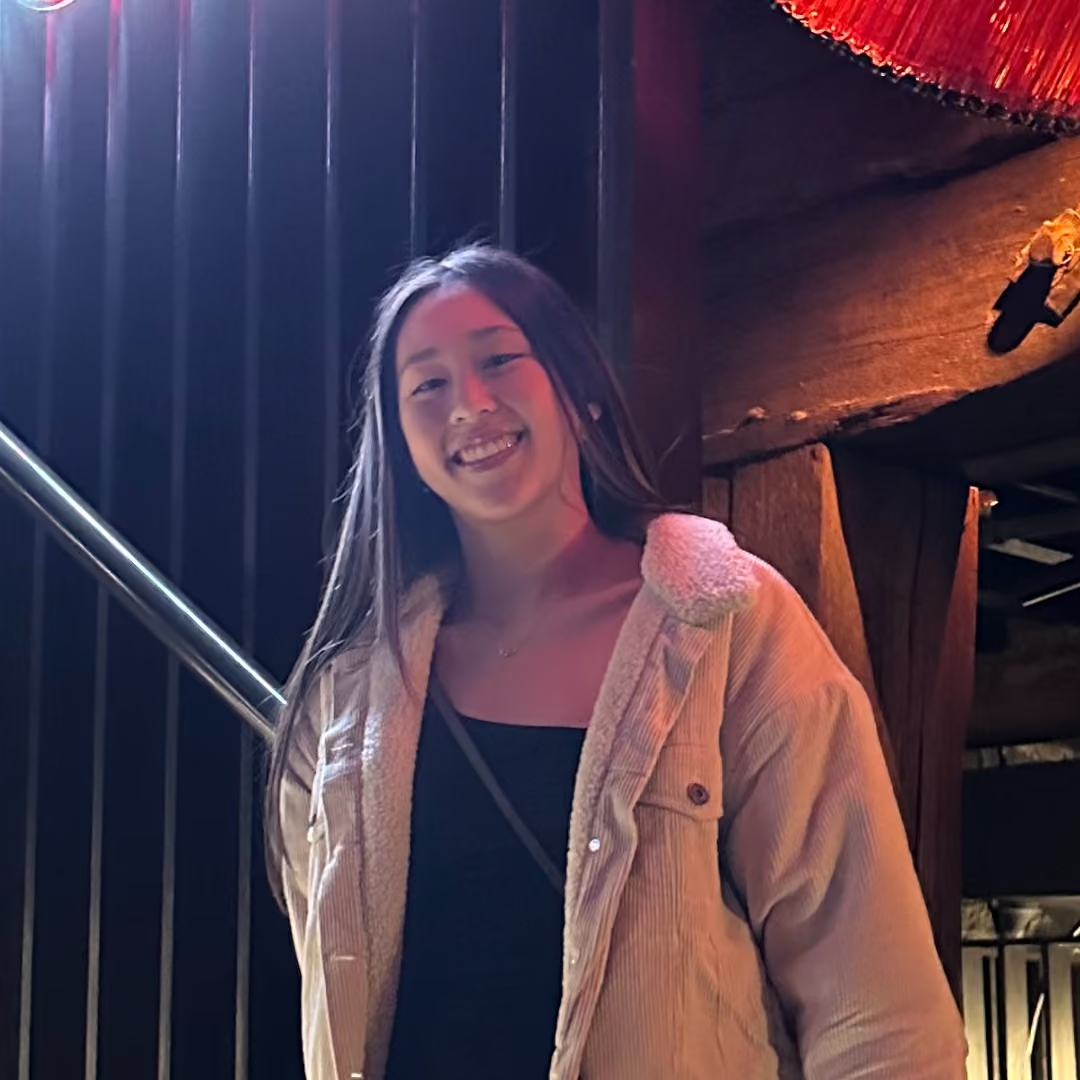
Haiyan W is a native Mandarin speaker with over 20 years of experience teaching Chinese in universities and secondary schools in China and the UK. She has previous experience teaching A-Level Chinese at St Leonards School and Madras College, and currently teaches IGCSE Chinese at St Leonards School. She has taught both native and non-native Chinese learners with a wide range of abilities and backgrounds.
Haiyan gained her undergraduate and MA degrees in China and also taught as a lecturer at a Chinese university. She has extensive experience preparing students for Chinese examinations and supporting them in developing accurate language, strong communication skills and effective examination techniques. Her IGCSE students have achieved consistently strong results, with most achieving A or A* grades.
Her teaching style is patient, structured and supportive. She carefully adapts lessons to individual students' needs and focuses on building confidence, improving language skills and developing independent learning.
40
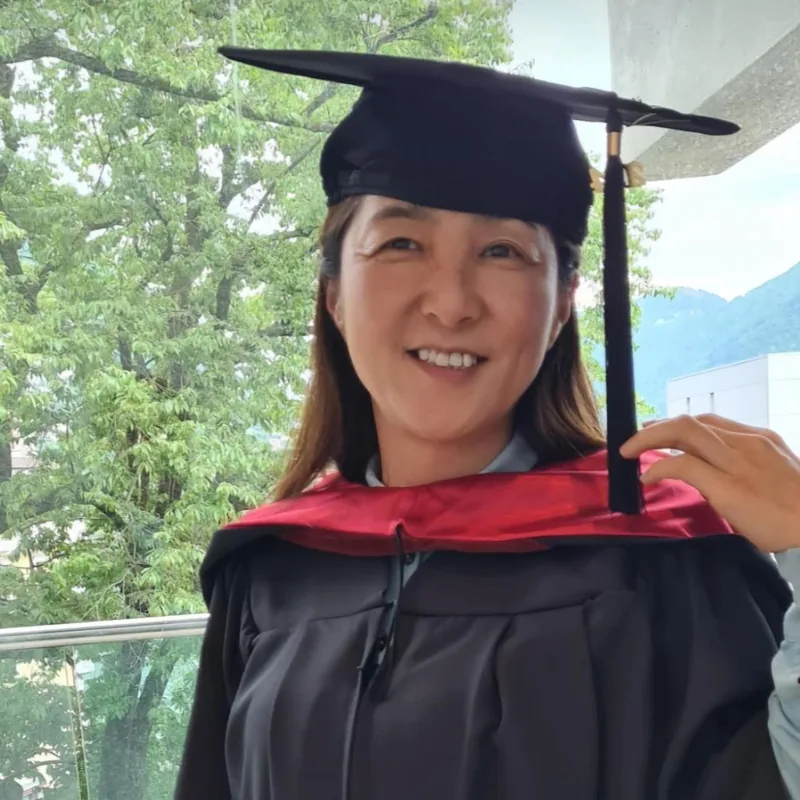
Lili is an experienced international educator specialising in IGCSE and A-Level Mandarin Chinese and Economics, with a strong combination of academic qualifications, professional teaching credentials, examiner experience, and more than 15 years of subject-specific teaching experience. She has worked in international education since 1999, teaching students from diverse linguistic and cultural backgrounds in international school environments.
For Mandarin Chinese, Lili holds a professional teaching qualification and has an academic background in Chinese Language and Literature. She has taught Chinese for more than 15 years and has extensive experience preparing students for international examinations, including IGCSE and A-Level Chinese. She has also served as a Chinese examiner in Switzerland, giving her first-hand understanding of assessment criteria, examination standards, and the skills students need to achieve strong results. Her teaching covers speaking, listening, reading and writing, as well as advanced vocabulary, grammar, cultural understanding, literary analysis, academic writing and examination techniques.
For Economics, Lili holds a Master’s degree in Political Economy of Money and Development and has several years of experience teaching Economics in international school settings. She is familiar with IGCSE and A-Level Economics, including microeconomics, macroeconomics, international economics, economic development, data interpretation, structured responses, essay writing and examination preparation. Her academic background enables her to connect economic theory with contemporary global issues and help students develop strong analytical and evaluative skills.
Lili also holds IB Educator Certificates and has experience with the IB Diploma Programme at both Standard Level (SL) and Higher Level (HL). She is familiar with IB assessment requirements, including examinations, Internal Assessments (IA), Extended Essays (EE), and Theory of Knowledge (TOK). This broader international curriculum experience allows her to support students transitioning between or working across different academic systems.
Throughout her career, Lili has supported students from international schools through classroom teaching, private tutoring, and established tutoring organisations. She is particularly experienced in working with secondary and sixth-form students preparing for IGCSE and A-Level examinations.
Her teaching is highly student-centred and examination-focused. She adapts lessons to each learner’s current level, strengths, areas for development, examination board requirements, and target grades. Alongside subject knowledge, she places strong emphasis on exam technique, analytical thinking, academic writing, independent learning and confidence, enabling students to make measurable progress and work effectively towards their desired IGCSE and A-Level results.
The tutors you see here are just a selection from our team of hundreds of tutors, please contact our Learning Advisors to discuss tutoring options
Why A-Level Chinese needs the right tutor
What makes A-Level Chinese hard
A-Levels move faster and go deeper than anything students have done before, and they are studied alongside two or three other subjects at the same level. Classes are taught to the middle of the room, so gaps are easy to carry forward unnoticed until the exam.
- A sharp step up in difficulty from GCSE
- Marks decided by technique, not recall
- Grades that determine university options
How tutoring changes the outcome
One-to-one tutoring targets the two things a classroom cannot: exam technique and the specific topics a student keeps getting wrong. A tutor marks work the way an examiner would, shows where the marks went, and then drills those areas until they hold. Confidence follows from that, not the other way round.
- Exam technique built on real past papers
- Targeted work on areas of weakness
- Confidence going into the exam
What you'll learn in A-Level Chinese tutoring
Core skills developed
The assessment objectives for A-Level Chinese differ by board more than in most subjects. Edexcel uses the four UK modern-language objectives: understanding and responding to spoken language (20%), understanding and responding to written language (30%), manipulating the language accurately (30%), and critical knowledge of the culture and society of Chinese-speaking countries and communities (20%). Cambridge splits its A Level roughly equally between reading, writing and literature. OxfordAQA uses five objectives, with coherent writing (35%) and analysis of the written works (30%) carrying the most weight and listening only 8%. We work through past-paper questions objective by objective, so you can see which skill is costing you marks rather than just seeing a lower total.
- Reading authentic and literary Chinese quickly and accurately, including inference and attitude
- Writing accurate characters with a wide range of vocabulary, structures and idioms
- Argumentative, discursive, descriptive and narrative writing to the length and register each task sets
- Analysing poems, short stories, novels and films, with evidence from the work
- For Edexcel, translating in both directions and speaking spontaneously about a theme and your own research
How are students assessed
Chinese is assessed entirely by exams, but the mix of skills depends on the board. Only Edexcel has a speaking exam: a 21–23 minute oral worth 30%, taken in Mandarin or Cantonese, alongside a listening, reading and translation paper (40%) and a paper of translation and essays on set works (30%), all in one summer. Cambridge sets three written papers of equal weight on reading, writing and literature, taken in a single series. OxfordAQA is modular, with four written units including a listening section, and the International AS can be banked after the first year.
- Reading and listening: multiple-choice, matching and short-answer questions, practised on authentic past-paper material
- Writing: argumentative, discursive, descriptive, narrative and open-letter tasks, marked against each board's content, range and accuracy criteria
- Literature: passage-based and essay questions on the set works, rewritten until they analyse with evidence rather than narrate
What A-Level Chinese topics do we cover?
OxfordAQA International AS and A-level Chinese – First Language (9680) is a new modular specification, taught from September 2026 with first exams in May/June 2027, and exams available in January and May/June. Four written units: the two AS units make up the International AS and are each worth 20% of the A-level, and the two A2 units are each worth 30%. Units can be taken across two years or together at the end, and resat.
International AS
- Unit 1: Listening and writing (1 hour 15 minutes, 50 marks)
- Unit 2: Reading (1 hour 45 minutes, 50 marks)
International A2
- Unit 3: Short-form literature and writing (2 hours, 60 marks)
- Unit 4: The novel and writing (2 hours, 60 marks)
Themes
- Theme one: Society
- Theme two: Education and work
- Theme three: Culture
- Theme four: Science and technology
- Theme five: Global issues
This is a first-language course: Unit 2 tests Chinese idioms directly, and the A2 units examine either eight set poems or three short stories, plus one of three novels (《边城》, 《活着》 or 《家》), alongside an open letter and a narrative composition. There is no speaking exam, listening is in Mandarin only, papers are in simplified characters, and answers can be in simplified or traditional characters used consistently, but not pinyin. Sessions on this board build idiom knowledge and timed literary essays from the start of the course.
Pearson Edexcel A level Chinese (spoken Mandarin/spoken Cantonese), 9CN0. Three papers, all in one year: the speaking assessment in April/May and both written papers in May/June. Paper 1 (Listening, reading and translation) is a two-hour, 80-mark exam worth 40% of the A level, with recordings in Mandarin and Cantonese and a translation into English. Paper 2 (Written response to works and translation) lasts 2 hours 40 minutes, carries 120 marks and is worth 30%: a translation into Chinese plus two essays on either two literary texts or one literary text and one film. Paper 3 (Speaking) lasts 21–23 minutes including 5 minutes' preparation, carries 72 marks and is worth 30%, and is entered as Mandarin (9CN0/03M) or Cantonese (9CN0/03C). Question papers print every text in both traditional and simplified characters.
Theme 1: 当代华人社会变迁
- 家庭
- 教育与工作
Theme 2: 中国文化
- 传统
- 文化活动
Theme 3: 演变中的华人社会
- 通讯与科技
- 经济与环境
Theme 4: 1978 年改革开放对中国的影响
- 变革
- 中英关系
Prescribed literary texts and films
- Literary texts: 《北京折叠》 Folding Beijing (Hao Jingfang); 《一只叫凤的鸽子》 A Very Special Pigeon (Cao Wenxuan); 《城南旧事》 Memories of Peking, two stories (Lin Haiyin); 《故乡》 Hometown (Lu Xun)
- Films: 《一个都不能少》 Not One Less (Zhang Yimou); 《请投我一票》 Please Vote for Me (Chen Weijun); 《十七岁的单车》 Beijing Bicycle (Wang Xiaoshuai); 《天水围的日与夜》 The Way We Are (Ann Hui)
Following Pearson's recent amendments, listening and reading questions are set and answered in English, and the Paper 2 essay questions are printed in both English and Chinese but must be answered in Chinese, with a choice of two questions for each work. Essays are recommended at 250–350 characters, and Theme 4 needs real knowledge of the 1978 reform and opening up, including relations between China and the UK. Sessions on this board build accurate translation into Chinese and practise the oral in the variety you are entered for.
Cambridge offers Chinese as a full A Level through Chinese Language & Literature (9868), which replaced A Level Chinese (9715) after November 2023. There are three compulsory papers, each worth 40 marks and about a third of the A Level, all taken in the same series, with exams in June and November. All assessment material is in simplified characters, and results from AS Level Chinese Language (8238) cannot be carried forward. The 2024–2026 syllabus applies to 2026 exams, and the 2027–2029 syllabus keeps the same structure with updated set texts. 9868 is not available in every Cambridge administrative zone.
- Paper 1 Reading (1 hour 30 minutes): 40 multiple-choice and matching questions
- Paper 2 Writing (2 hours): one argumentative/discursive essay and one descriptive or narrative essay, each 350–500 characters
- Paper 3 Literature (2 hours): one passage-based question and one essay question on the set texts
A Level topic areas
- 1 Culture
- 2 Health and well-being
- 3 Education and future plans
- 4 Community and society
- 5 Our responsibility for the planet
- 6 Science and technology
Set texts for examination in 2026
- Section A: 《余光中诗选》 余光中 (fifteen poems); 《龙须沟》 老舍; 《丁玲全集》 丁玲 (three stories)
- Section B: 《我城》 西西; 《没有纽扣的红衬衫》 铁凝; 《围城》 钱钟书
Cambridge 9868 has no speaking, listening or translation, so the grade rests on reading, writing and literature. Candidates take their set texts into the literature exam, as long as they are unannotated, and the texts rotate: for 2027, 李碧华's 《霸王别姬》 replaces 《我城》. Sessions on this board train timed creative and argumentative writing alongside close reading of the set poems, plays, stories and novels for your exam year.
Ready to start?
Tell us the subject, exam board and target grade. A Learning Advisor reviews it the same day.
Why parents trust us
4.9/5 from 312 reviews · used by students at 500+ schools


FAQs
We have answers to your most frequently asked questions. Anything not answered here, please reach out to our team.
A-Level Chinese with an academic tutor costs from $60 USD (£45) per hour, and packages save 5–15%. Pay as you go is invoiced after each lesson, with no lock-in contracts, so oral practice is easy to add. Professional tutors (qualified teachers and examiners) cost from $85 USD (£64) per hour.
Late cancellations and no-shows are charged at half the lesson fee. That applies if you cancel less than one hour before the start time, or don't turn up. You can still change a session time whenever you need to, as long as you give your tutor notice.
Our academic tutors achieved an A* or A in A-Level Chinese, and our professional tutors are qualified teachers or examiners with 5+ years' experience. We accept the top 5% of applicants and match you to your board and set works, whether you are preparing Edexcel's oral or Cambridge's literature paper. Meet our tutors or read how we select them.
Tutoring is one-to-one and online, with a tutor matched to your subject, exam board and target grade, working from your board's past papers in the character set you write in. Lessons target miswritten characters, translations that copy English word order, essays that retell the story, and reading answers that miss an implied attitude or idiom. See how it works or apply.
Yes, in ways European languages are not. Every word has to be read and written in characters, without pinyin or a dictionary, so reading speed depends on how many characters you know. Literature and film essays must analyse a Chinese work, not summarise it, and idioms and literary language appear often. On Edexcel you also translate in both directions and need cultural and historical knowledge, such as the effects of the 1978 reform and opening up. Our online A-Level tutoring covers each of these.
JCQ doesn't publish a separate A* figure for Chinese: it is reported within a wider group of other modern languages, so there is no reliable Chinese-only rate to quote (JCQ results). What an A* requires is clearer. You need accurate characters with the right measure words and word order, translations that don't copy English structure, and literature or film essays that analyse the work with evidence rather than retell it.
Grade boundaries are set after each exam series and change every year. In June 2026, Pearson Edexcel's A* boundary for A level Chinese was 329 out of 400 (82%). Cambridge's June 2026 A* threshold for Chinese Language & Literature was 100 out of 120 (83%). OxfordAQA has no figures yet, as its first exams are in May/June 2027. Official sources: Pearson and Cambridge.
There is no coursework, but Pearson Edexcel includes a speaking exam with an independent research project. In Task 2 of the 21–23 minute oral, you present research you have chosen and carried out yourself, then discuss it, for 42 of the speaking exam's 72 marks. Cambridge sets no speaking exam, and OxfordAQA's new Chinese – First Language course is assessed through four written exams. Full details are in the Pearson specification.
A-Level Chinese is assessed entirely by exams, but the mix of skills depends on the board. Pearson Edexcel sets a listening, reading and translation paper (2 hours, 80 marks, 40%), a paper on set works and translation (2 hours 40 minutes, 120 marks, 30%) and a 21–23 minute speaking exam worth 30%. Cambridge Chinese Language & Literature sets three papers, in reading, writing and literature, each 40 marks and about a third of the grade. See Pearson's A level Chinese specification.
All A-Level subjects
Ready to find your A-Level Chinese tutor?
We will findf you a tutor in 24 hours and if you are not happy after the first session, we will give you a full refund and find you another tutor for no extra charge.
Resources for A Level Students
Free content to help you become a a master, more informed A Levels student


