

1,000+ happy customers
Private A-Level English Language tutors
We will find you an A-Level English Language tutor who will help you get an A* and boost your confidence.
Currently serving students in
your country!

How It Works
We keep things as simple as possible. Our objective is to make finding a tutor convenient, efficient and effective.
Fill out an online form
Complete an application online which will be received by one of our dedicated Learning Advisors
Get matched with a tutor
Our experienced Learning Advisor will review your application, and match you with the most appropriate tutor based on your application
Tutor makes contact
Once we confirm with the tutor, the tutor will make contact to organise your first session.
Have your first lesson
Our tutors will work around your schedule to organise a session whenever you would like. Only pay for tutoring you have completed.
Choose between top performing students or qualified A-Level teachers
Either way, we use our bespoke matching process to find you a tutor based on your preferences, exam board and location.
Academic Tutors
from $60 USD/hr
Top performing graduates who achieved A*/A grades in the subject they teach.
- We accept only the top 5% of tutor applicants.
- Each tutor is chosen for their academic results, teaching ability, and connection with students.
Relatable role model: work with a tutor who is similar in age and can be a peer
Affordability: academic tutors are more cost-effective than professional tutors
First-hand experience: they sat these papers recently and know what worked
Professional Tutors
from $85 USD/hr
Current or past qualified teachers and examiners with 5+ years professional teaching experience.
- We only select highly experienced, qualified A-Level teachers.
- Every teacher is assessed on their teaching expertise, subject knowledge, and ability to engage students.
Quality assurance: trained and accredited teaching qualifications
Guaranteed track record: years of experience helping students succeed
Subject expertise: deep understanding of content and exam board requirements
Due to our international operations we quote our prices in USD. Pound amounts are an indicative conversion and you will be invoiced in USD.
Academic Tutors
from £47 GBP/hr
Top performing graduates who achieved A*/A grades in the subject they teach.
Relatable role model: work with a tutor who is similar in age and can be a peer
Affordability: academic tutors are more cost-effective than professional tutors
First-hand experience: they sat these papers recently and know what worked
Professional Tutors
from £67 GBP/hr
Current or past qualified teachers and examiners with 5+ years professional teaching experience.
Quality assurance: trained and accredited teaching qualifications
Guaranteed track record: years of experience helping students succeed
Subject expertise: deep understanding of content and exam board requirements
Meet our A-Level English Language tutors
Our team is a combination of A-Level graduates who sat these exams recently and qualified teachers with years of classroom and examining experience.

48
Aster is an experienced international educator with a Bachelor's degree in Physics and several years of experience teaching and tutoring students across a range of international curricula, including Cambridge, Australian, and other globally recognised programs. She specialises in Physics, Mathematics, Science, English, and academic skills development, and has worked with students from primary school through to senior secondary levels.
Throughout her career, Aster has taught students from diverse cultural and educational backgrounds, including Australian students in online learning environments. Her experience extends beyond subject content to helping students develop critical thinking, problem-solving, exam techniques, academic writing, and independent learning skills. She is also experienced in supporting students with essay writing, research projects, and assessment preparation.
Aster's teaching approach focuses on making complex concepts clear, engaging, and accessible. She adapts lessons to each student's learning style and believes that strong understanding is built through curiosity, confidence, and active participation. Students and parents appreciate her patient, supportive, and encouraging manner, as well as her ability to explain challenging topics in a simple and relatable way.
With a strong background in science education and a passion for helping students achieve their academic goals, Aster is committed to helping every student build confidence, improve performance, and enjoy the learning process.
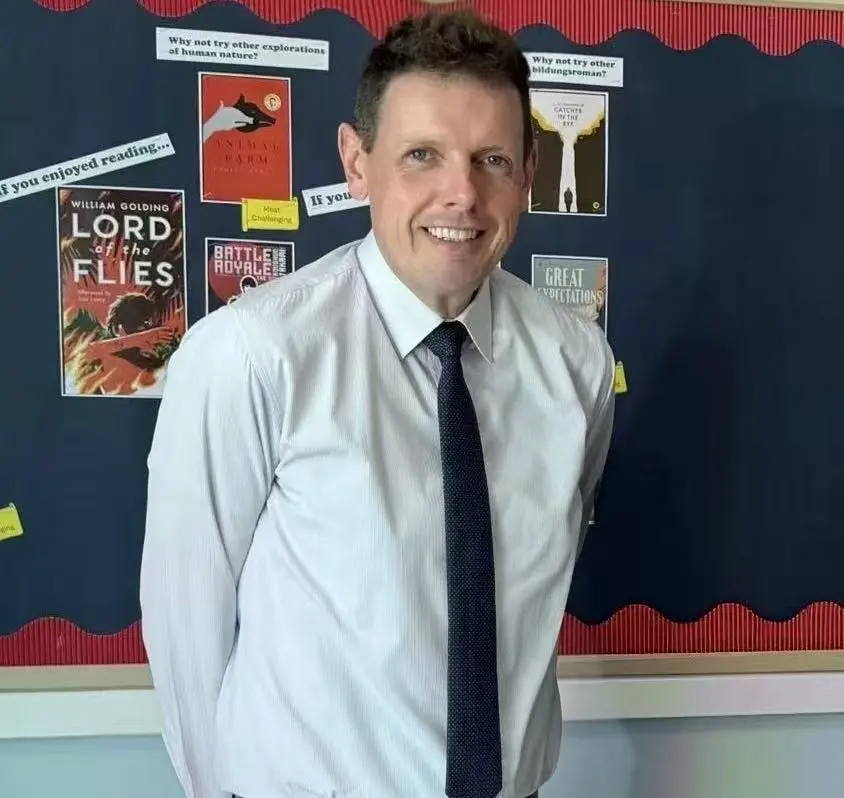
15
I tutor English at A level and IGCSE, across both Cambridge and Pearson Edexcel. One to one, built around what the mark scheme actually rewards rather than what students assume it does.Tell me where you are and where you want to be, and we'll work out how to get there.

20
Karim T is an accomplished English Language and Literature educator, English as a Second Language (ESL) specialist, and communication professional with a distinguished academic record and extensive experience in international secondary education. His professional expertise is particularly focused on IGCSE, O-Level, and A-Level English Language and English as a Second Language, with a strong commitment to developing students’ linguistic accuracy, communication skills, academic writing, critical thinking, and confidence in using English effectively.
Karim earned his Bachelor’s Degree in Translation with a Minor in Communication from the Arab Academy for Science, Technology and Maritime Transport (AASTMT), graduating Summa Cum Laude as the Valedictorian of his graduating class with a GPA of 3.72 (Excellent with Honors).
His academic excellence was established at an early stage. He graduated from Nefertari British International School under the IGCSE system with an outstanding 9 A*s, a result officially recognized by Egypt’s Central Coordination Office as equivalent to 100%, and graduated as the Valedictorian of his high school class. This achievement made Karim a two-time Valedictorian, having graduated first in both high school and university.
Professionally, Karim has developed substantial experience teaching English Language, English as a Second Language, and English Language & Literature within international secondary-school settings. His teaching experience encompasses students preparing for IGCSE and O-Level examinations, as well as advanced A-Level English Language study. He has worked extensively on developing students’ reading comprehension, writing proficiency, vocabulary, grammar, spoken communication, analytical skills, and ability to communicate effectively for both academic and real-world purposes.
Karim’s approach to IGCSE and O-Level English emphasizes building a secure foundation in language while developing the examination skills required for success. He supports students in mastering comprehension, directed writing, descriptive and narrative writing, summary skills, vocabulary, grammar, sentence construction, and effective written expression. Particular emphasis is placed on helping students understand how language choices influence meaning, tone, purpose, audience, and overall effectiveness.
At A-Level, Karim adopts a more sophisticated and analytical approach to English Language, guiding students toward advanced language analysis, discursive and argumentative writing, linguistic terminology, textual interpretation, and the ability to construct precise, coherent, and well-supported academic responses. He encourages students to move beyond simply identifying language features and instead develop the ability to explain how and why language choices create particular effects and meanings.
His experience also includes teaching within the International Baccalaureate Diploma Programme, where he taught English Language & Literature and Theory of Knowledge. This background has further strengthened his ability to cultivate higher-order thinking, academic writing, independent inquiry, and sophisticated communication skills. He has successfully guided graduating Diploma Programme cohorts through demanding academic requirements while maintaining a broader focus on intellectual development and university readiness.
As an English as a Second Language educator, Karim places particular importance on helping learners become confident, accurate, and independent users of English. His instruction combines explicit language development with meaningful communication, enabling students to strengthen their grammar, vocabulary, reading, writing, listening, and speaking skills while developing the confidence to use English in academic, professional, and everyday contexts.
Committed to continuous professional development, Karim has completed official International Baccalaureate Category 2 professional development workshops in Theory of Knowledge and English B, complementing his broader expertise in international English-language education.
Beyond teaching, Karim’s multidisciplinary background includes research and development, public speaking, strategic communication, and educational innovation. His academic training in translation and communication has given him a particularly strong understanding of language, audience, register, purpose, and effective communication—skills that directly inform his approach to English Language and ESL instruction.
Karim is driven by the belief that effective English education extends beyond examination preparation. His goal is to equip students with the language proficiency, analytical ability, academic confidence, and communication skills necessary to succeed in IGCSE, O-Level, and A-Level examinations while preparing them for higher education and an increasingly interconnected global environment.

45
I have taught and tutored A level and GCSE English language, English language and literature and English literature for many years.
I bring the wealth of my experience and passion for the subject to my students by building their confidence through step by step approach in analysing individual needs, gaps in knowledge, identifying and making the most of students' strengths whilst carefully and thoughtfully addressing and transforming weaknesses into success.
I have taught across the main examination boards - AQA, Eduqas, Edexcel.

41
Mico is a licensed professional teacher from the Philippines with over 14 years of experience teaching English and Literature across secondary, pre-university, and international school settings. He holds a Bachelor of Secondary Education major in English and has taught Cambridge A Level English Language, ESL, and university entrance examination courses, as well as IGCSE Literature in English and English as an Additional Language (EAL).
Mico currently teaches IGCSE Literature in English and IGCSE EAL, preparing students for their Cambridge examinations. His experience includes teaching students from diverse linguistic and academic backgrounds, helping them develop the skills required for success in GCSE/IGCSE and A Level English and Literature. His teaching expertise covers close textual analysis, essay writing, language analysis, comparative responses, examination technique, and academic writing.
With extensive experience in international curricula, Mico understands that strong examination performance comes from more than memorising techniques. He helps students understand how to approach a question, select relevant evidence, develop an argument, and communicate ideas with precision. His sessions are structured and personalised, combining guided analysis, writing practice, exam-style questions, and targeted feedback.
Mico’s tutoring approach is supportive but academically rigorous. He works with students to identify specific areas for improvement, build confidence, and develop the independence needed to tackle unfamiliar texts and examination questions. Whether a student is strengthening foundational English skills, preparing for IGCSE/GCSE examinations, or developing more advanced A Level analytical and essay-writing skills, his goal is to help them become confident, thoughtful, and effective readers and writers.

23
Natasha W is an experienced educator and academic coach with over 25 years in education, including 14 years at an IB World School. She holds a Master of Education in Teaching and Innovation and currently serves as an adjunct professor, where she supports college students in academic writing, critical thinking, and research-based assignments.
In her early years of learning under the British system, she attended a high school where A- level GSCE subjects were taught. Also as an adjunct professor, she helped students to achieve outstanding results in A-level GSCE. Natasha specializes in English, Literature, English as a Second Language, History, Biblical Studies and Religious Studies. She has worked with students from over 40 nationalities and is highly skilled in supporting multilingual learners to develop clarity, confidence, and precision in their communication. Her students consistently improve in essay structure, argument development, and overall academic performance.
In addition to her teaching experience, Natasha has worked with schools and organizations to strengthen communication and engagement across diverse teams, bringing a global and practical perspective to her work with students.
Natasha’s teaching style is structured, supportive, and empowering. She focuses on building independent thinkers by breaking down complex tasks, aligning work with IB assessment criteria, and gradually releasing responsibility to the student. She ensures that each session is purposeful, engaging, and tailored to help students achieve both academic success and long-term confidence

10
T. Sana is an experienced English and Humanities tutor specializing in supporting IGCSE, GCSE and A-Level students, as well as ESL/EFL learners from diverse international backgrounds, including students from Malaysia, Singapore, India, China, Japan, the UAE, and Saudi Arabia.
She provides academic support in English Language, English Literature, Business Studies, Sociology and Humanities, helping students develop the subject knowledge, analytical skills and exam techniques required for secondary and advanced-level study.
For IGCSE and GCSE learners, T. Sana focuses on reading comprehension, language analysis, structured writing, vocabulary development, grammar, essay planning and effective examination responses. Students receive targeted practice designed to strengthen weaker areas and build confidence in approaching examination-style questions.
For A-Level students, lessons place greater emphasis on critical thinking, textual and contextual analysis, developing arguments, academic writing, evaluation skills and producing well-structured, evidence-based responses. Support can be adapted to the student's syllabus, examination board and individual learning objectives.
T. Sana also has experience supporting IB-style academic work, including essay writing and Extended Essay guidance, with particular attention to research, organization, clarity, critical analysis and academic expression.
Her background in research-based academic writing enables her to guide students in developing coherent arguments, selecting and organizing evidence, improving written expression and approaching extended academic responses systematically.
She is particularly committed to students who require additional time, repetition and structured support. Rather than using a one-size-fits-all approach, lessons are adapted to each learner's pace, current ability and academic goals. Customized lesson plans, targeted practice and engaging activities help students make steady and measurable progress.
T. Sana creates a positive and encouraging learning environment where students can strengthen their foundations, develop effective examination strategies and progressively build the confidence and independence needed for IGCSE, GCSE and A-Level examinations.

12
I’m Taiwo, a tutor with ten years of teaching and tutoring experience and a B.Sc. in Electronic and Electrical Engineering from Obafemi Awolowo University. I teach A-level, GCSE and IGCSE students, bringing together subject knowledge, classroom experience and a patient, practical approach to learning.
My subjects include Mathematics, Further Mathematics, Physics, Chemistry, Biology, English Language and Computer Science. My current GCSE teaching includes AQA Mathematics at Foundation and Higher levels and AQA English Language. My engineering background strengthens my teaching of Mathematics and Physics, while my professional software development experience allows me to connect computing concepts with practical applications.
I plan lessons around what each student needs. Some need to rebuild foundations; others understand the content but struggle to apply it in unfamiliar exam questions. I identify those gaps, explain ideas clearly and guide students towards solving problems independently. In Mathematics, that means understanding why a method works and recognising when to use it. In Science, it means connecting concepts, calculations and experimental evidence. In English, it means moving beyond identifying techniques to developing thoughtful analysis supported by precise examples.
Students can expect structured lessons, personalised homework and detailed feedback. I use past papers and mark schemes to help them understand what questions demand, improve the clarity of their answers and develop effective revision habits. I track difficulties across lessons so that we revisit what needs attention rather than simply move through topics.
I currently work with international learners, including students in the UK and Hong Kong, and understand the importance of adapting explanations to different educational and language backgrounds. I want students to feel comfortable asking questions, willing to attempt challenging work and able to recognise their own progress. My aim is to build secure understanding, greater independence and confident exam preparation.
The tutors you see here are just a selection from our team of hundreds of tutors, please contact our Learning Advisors to discuss tutoring options
Why A-Level English Language needs the right tutor
What makes A-Level English Language hard
A-Levels move faster and go deeper than anything students have done before, and they are studied alongside two or three other subjects at the same level. Classes are taught to the middle of the room, so gaps are easy to carry forward unnoticed until the exam.
- A sharp step up in difficulty from GCSE
- Marks decided by technique, not recall
- Grades that determine university options
How tutoring changes the outcome
One-to-one tutoring targets the two things a classroom cannot: exam technique and the specific topics a student keeps getting wrong. A tutor marks work the way an examiner would, shows where the marks went, and then drills those areas until they hold. Confidence follows from that, not the other way round.
- Exam technique built on real past papers
- Targeted work on areas of weakness
- Confidence going into the exam
What you'll learn in A-Level English Language tutoring
Core skills developed
On the UK boards and Edexcel International, A-Level English Language is marked against the same five assessment objectives: applying methods of language analysis with accurate terminology (AO1), understanding concepts and issues in language use (AO2), analysing how context and language features construct meaning (AO3), making connections across texts (AO4) and writing with expertise and creativity (AO5). Analysis carries most of the marks on these boards, and the writing objective, AO5, is the smallest: about 10% on AQA and 17.5% on Edexcel International. Cambridge uses its own five objectives, and writing carries 45% of its AS. OxfordAQA uses three. We work through past-paper questions objective by objective, so you can see which skill is costing you marks rather than just seeing a lower total.
- Analysing unseen written, spoken and multimodal texts using the language levels
- Explaining how context, audience and purpose shape language choices
- Evaluating theories and research on child language acquisition, language change and language and identity
- Writing for a specified audience, form and purpose, and commenting critically on that writing
- Planning and writing up an independent investigation of real language data
How are students assessed
On AQA, OCR, Edexcel and WJEC and Eduqas, written exams make up 80% of the A-Level and non-exam assessment the other 20%. That coursework is a language investigation on most of these boards, and a portfolio of original writing with a commentary on Edexcel. Cambridge and Edexcel International are assessed entirely by exams. OxfordAQA lets the school choose between a final exam and a coursework investigation for its last unit.
- Analysis of unseen texts and data: we practise timed analysis on real past-paper sources and mark it against the board's levels
- Discursive essays on topics such as child language, language change and language diversity: we build answers that apply theory to evidence rather than list it
- Original and directed writing with commentary: we draft, mark and redraft until the writing and the commentary both meet the top band
What A-Level English Language topics do we cover?
Four units. AS Units 1 and 2 are 2-hour, 50-mark exams that make up the International AS, each worth 20% of the International A-level. Units 3 and 4 complete it, each worth 30%. For Unit 4 the school chooses either a 2 hour 30 minute exam or a non-exam language investigation. Exams are available in January and May/June, and units can be taken in stages or all in one series.
International AS
- Unit 1: Language and context (Section A: Understanding texts; Section B: Directed writing)
- Unit 2: Language and society (texts and writing on language and social groups)
International A2
- Unit 3: Language variation (Section A: Learning language; Section B: International English)
- Unit 4a: Language exploration (exam: an investigation of data provided, written up as a report)
- Unit 4b: Language exploration (non-exam assessment: a 2,500–3,000 word investigation using the student's own data)
OxfordAQA marks against three assessment objectives rather than the five used by UK boards, and the AS is worth 40% of the International A-level, so Units 3 and 4 decide most of the grade. Its A2 content focuses on how language is learned and on English as an international language. Sessions on this board give priority to the A2 units and, for Unit 4a, practise turning unfamiliar data into a structured report under time pressure.
Both boards offer this A level: WJEC in Wales and Eduqas in England. We match tutors to the board on your child's exam entry.
Eduqas (England) · linear, four components sat in the summer at the end of the course
- Component 1: Language Concepts and Issues (2 hours, 30%)
- Component 2: Language Change Over Time (2¼ hours, 30%)
- Component 3: Creative and Critical Use of Language (1¾ hours, 20%)
- Component 4: Language and Identity (non-exam assessment, 2500–3500 word investigation, 20%)
WJEC (Wales) · five units, each 20% of the A level
- AS Unit 1: Exploring Language (1¾ hours)
- AS Unit 2: Language Issues and Original and Critical Writing (2 hours)
- A2 Unit 3: Language over Time (1½ hours)
- A2 Unit 4: Spoken Language and Creative Re-casting (2 hours)
- A2 Unit 5: Language and Identity (non-exam assessment, 2500–3500 words)
Both versions give language change a full exam, with short questions on archaic language features in texts from different periods as well as an essay. The investigation is chosen from four areas: language and self-representation, language and gender, language and culture, and language diversity. In WJEC's unitised version the AS units count for 40% of the A level. Sessions on these boards drill the short archaic-language questions and help students choose an investigation topic that can be researched well.
Four units, each a 50-mark written exam worth 25% of the IAL, sat in January or June. Units 1 and 2 (1 hour 45 minutes each) make up the International AS, and Units 3 and 4 (2 hours each) complete the full IAL. There is no coursework, and any unit can be resat.
IAS
- Unit 1: Language: Context and Identity
- Unit 2: Language in Transition
IA2
- Unit 3: Crafting Language (writing)
- Unit 4: Investigating Language (one topic from Contemporary Global English, Children's Language Development, Language and Power, and Language and Technology)
Edexcel IAL tests original writing under exam conditions: in Unit 3 students turn unseen source texts into a new text in a given genre, then write a 30-mark commentary on their own choices. Unit 2 looks at English in a global context: the influence of other languages on English, pidgins and creoles, and English outside the British Isles. Sessions on this board practise the Unit 3 writing and commentary to time and prepare the Unit 4 pre-release subtopic as soon as it is published.
Three written exams and a non-exam assessment, all completed in the May/June series of a single year. Component 1 is a 2 hour 15 minute paper worth 35%, Component 2 a 1 hour 15 minute paper worth 20%, Component 3 a 1 hour 45 minute paper worth 25%, and the coursework is worth 20%.
- Component 1: Language Variation (Section A: Individual Variation; Section B: Variation over Time)
- Component 2: Child Language
- Component 3: Investigating Language
- Non-examination assessment: Crafting Language
Component 3 topic areas (one is chosen)
- Global English
- Language and Gender Identity
- Language and Journalism
- Language and Power
- Regional Language Variation
Edexcel's language investigation is done for an exam rather than as coursework: a subtopic for each topic area is released on 1 December, students research it, and then answer questions on unseen data from it in Component 3. The coursework is instead two pieces of original writing in one genre with a 1,000-word commentary. Sessions on this board plan the research from the December pre-release onwards and give the creative portfolio the same weight as the exams.
Three components: two written papers, each 2 hours 30 minutes, 80 marks and 40% of the A Level, and a non-exam assessment worth 40 marks and 20%. Exams are sat in the May/June series, and both examined components must be taken in the same series at the end of the course.
Exploring language (01)
- Section A: Language under the microscope
- Section B: Writing about a topical language issue
- Section C: Comparing and contrasting texts
Dimensions of linguistic variation (02)
- Section A: Child language acquisition
- Section B: Language in the media
- Section C: Language change
Independent language research (03)
- Section A: An independent investigation of language
- Section B: The academic poster
OCR's child language section covers spoken language from 0 to 7 years, and some of the transcript is given in the International Phonetic Alphabet, so students need to read phonemic symbols with confidence. The coursework ends with an academic poster presenting the investigation, a format no other board uses. Sessions on this board build fluency with phonemic transcription and treat the poster as a separate skill from the investigation write-up.
Two written papers, each 2 hours 30 minutes, 100 marks and 40% of the A-level, plus a non-exam assessment worth 20%. The A-level is linear, so both papers are sat in the summer at the end of the course. AQA's AS English Language (7701) is a separate, stand-alone qualification. Methods of language analysis run through every component.
Paper 1 · Language, the Individual and Society
- 4.1.1 Textual variations and representations
- 4.1.3 Children's language development
Paper 2 · Language Diversity and Change
- 4.2.1 Language diversity and change
- 4.2.3 Language discourses
- 4.2.4 Writing skills
Non-exam assessment · Language in Action
- 4.3.1 Language Investigation (2,000 words excluding data)
- 4.3.2 Original writing (a piece of original writing and commentary, 1,500 words in total)
AQA's Paper 1 opens with two linked texts, one contemporary and one older, so analysis of a text from an earlier period is part of the first section, and children's language development is studied from birth to 11 years, a wider age range than most boards. Paper 2 ends with a 40-mark analysis of texts about a language debate, followed by a 30-mark piece of directed writing on the same debate. Sessions on this board practise the analysis and the directed writing as a pair, against the clock.
Four papers, each worth 50 marks. AS Level candidates sit Paper 1 (2 hours 15 minutes) and Paper 2 (2 hours). Full A Level candidates also sit Papers 3 and 4 (2 hours 15 minutes each), and each paper is worth 25% of the A Level. You can sit the AS first and carry the result forward, or take all four papers in one series. Exams run in June and November. This is the syllabus for exams in 2027 and 2028.
AS Level
- Paper 1: Reading (Section A: Directed response; Section B: Text analysis)
- Paper 2: Writing (Section A: Shorter writing and reflective commentary; Section B: Extended writing)
A Level
- Paper 3: Language Analysis (Section A: Language change; Section B: Child language acquisition)
- Paper 4: Language Topics (Section A: English in the world; Section B: Language and the self)
Cambridge's AS is weighted heavily towards writing: writing effectively for different audiences and purposes carries 45% of the AS marks, and Paper 2 includes a 600–900 word piece of extended writing. At A Level, the language change question pairs an older prose text with an n-gram graph and a table of corpus data. Sessions on this board build extended writing alongside analysis and practise reading corpus data and n-gram graphs.
Ready to start?
Tell us the subject, exam board and target grade. A Learning Advisor reviews it the same day.
Why parents trust us
4.9/5 from 312 reviews · used by students at 500+ schools





FAQs
We have answers to your most frequently asked questions. Anything not answered here, please reach out to our team.
An academic tutor for A-Level English Language costs from $60 USD (£45) per hour. Packages save 5 to 15%, or pay as you go, invoiced after each lesson, with no lock-in contracts. Coursework feedback included. Professional tutors (qualified teachers and examiners) cost from $85 USD (£64) per hour.
Late cancellations and no-shows are charged at half the lesson fee. That applies if you cancel less than one hour before the start time, or don't turn up. You can still change a session time whenever you need to, as long as you give your tutor notice.
Our academic tutors achieved an A* or A in A-Level English Language, and our professional tutors are qualified teachers or examiners with 5+ years' experience. We accept only the top 5% of applicants. You are matched to a tutor who knows your board, from AQA, OCR, Edexcel and WJEC/Eduqas to Cambridge, Edexcel International and OxfordAQA, including its coursework rules. Meet our tutors or see how we select tutors.
Tutoring is one-to-one and online, with a tutor matched to your board, target grade and weakest skills. Lessons use past paper questions and unseen data from your board, marked against its levels. For English Language that means timed analysis that explains effects rather than naming features, essays on child language or language change that test theory against evidence, and redrafting original writing and commentaries until both meet the top band. Read how it works or apply for a tutor.
Yes. It is much closer to linguistics than GCSE English: you learn a technical toolkit covering phonology, lexis, grammar, pragmatics and discourse, then apply it live to texts and transcripts you have never seen. There is no set text to revise. Marks are commonly lost on misidentified word classes or clause types, theories summarised instead of applied to data, and original writing that drifts from its brief. Our online A-Level tutoring trains analysis and writing side by side.
In summer 2026, 2.5% of UK A-Level English Language entries achieved an A*, and 12.3% achieved A* or A (JCQ). The top grade goes to students who use terminology accurately on unseen data, explain the effect of each feature in context instead of feature-spotting, and test theories against the data in front of them. Their own writing and commentaries also have to control audience, purpose and form, so strong analysis alone is not enough.
Grade boundaries are set after each series and change every year. In June 2026, AQA's A* boundary for A-Level English Language was 432 out of 500 (86%), and Cambridge's A* threshold was 159 out of 200 (80%). Edexcel International and OxfordAQA use uniform marks: an A is fixed at 80%, and an A* needs an overall A plus at least 180 uniform marks at A2 (Edexcel International) or 216 across Units 3 and 4 (OxfordAQA). See AQA's boundaries and Cambridge's table.
Yes on the UK boards, where non-exam assessment is worth 20%. AQA's is a 2,000-word language investigation (excluding data) plus original writing and a commentary of 1,500 words in total. OCR's is an independent investigation presented with an academic poster, Eduqas sets a 2,500 to 3,500 word investigation, and Edexcel asks for two pieces of original writing with a commentary. Cambridge and Edexcel International have no coursework, and OxfordAQA lets schools choose an exam or an investigation for Unit 4. See Edexcel's specification.
On the UK boards, A-Level English Language is 80% written exams and 20% non-exam assessment. AQA sets two 2 hour 30 minute, 100-mark papers worth 40% each, and OCR two 2 hour 30 minute, 80-mark papers worth 40% each. International boards differ most: Cambridge uses four 50-mark exam papers, each 25% of the A Level, with no coursework and the option to sit the AS first, and Edexcel International is also assessed only by exams. See the official AQA specification.
All A-Level subjects
Ready to find your A-Level English Language tutor?
We will findf you a tutor in 24 hours and if you are not happy after the first session, we will give you a full refund and find you another tutor for no extra charge.
Resources for A Level Students
Free content to help you become a a master, more informed A Levels student


