

1,000+ happy customers
Online IGCSE tutoring
One-to-one online lessons for students at international and independent schools, with a tutor matched to your board, subject and target grade. Lessons are scheduled in your timezone, and you only pay for the tutoring you have completed.
Currently serving students in
your country!
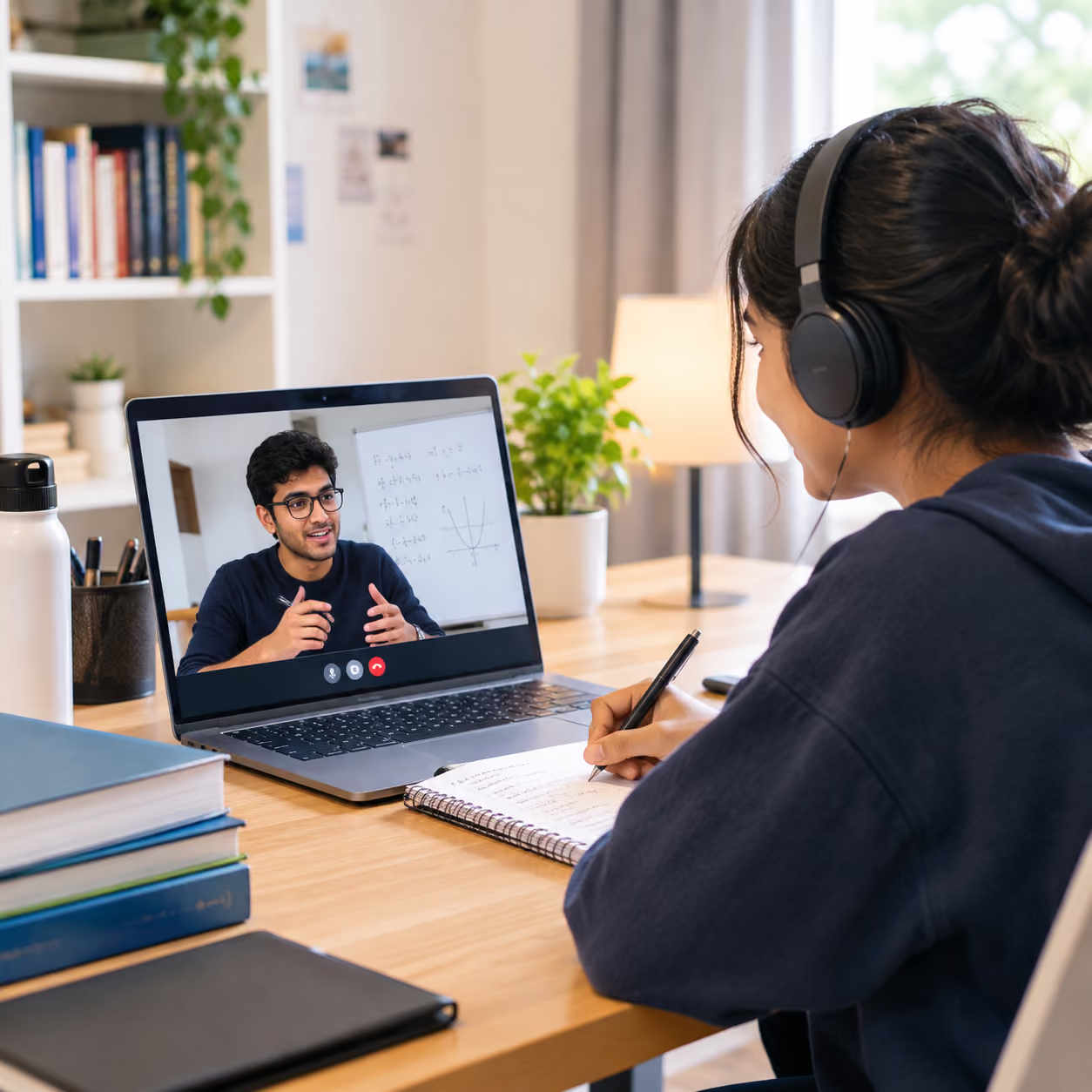
How It Works
We keep things as simple as possible. Our objective is to make
finding a tutor convenient, efficient and effective.
Fill out an online form
Complete an application online which will be received by one of our dedicatedLearning Advisors
Get matched with a tutor
Our experienced Learning Advisor will review your application, and match youwith the most appropriate tutor based on your application
Tutor makes contact
Once we confirm with the tutor, the tutor will make contact to organise yourfirst session.
Have your first lesson
Our tutors will work around your schedule to organise a session whenever youwould like. Only pay for tutoring you have completed.
Meet our IGCSE tutors
Our team is a combination of recent graduates who sat these exams themselves and qualified teachers with years of classroom and examining experience.

26
Experienced GCSE and A Level English Language & Literature tutor, specialising in exam preparation, analytical writing and building students’ confidence. I use clear scaffolding, model answers and targeted feedback to help students understand what examiners are looking for and improve their grades. As an experienced examiner, I bring valuable insight into mark schemes and assessment objectives to help students reach their full potential.
13
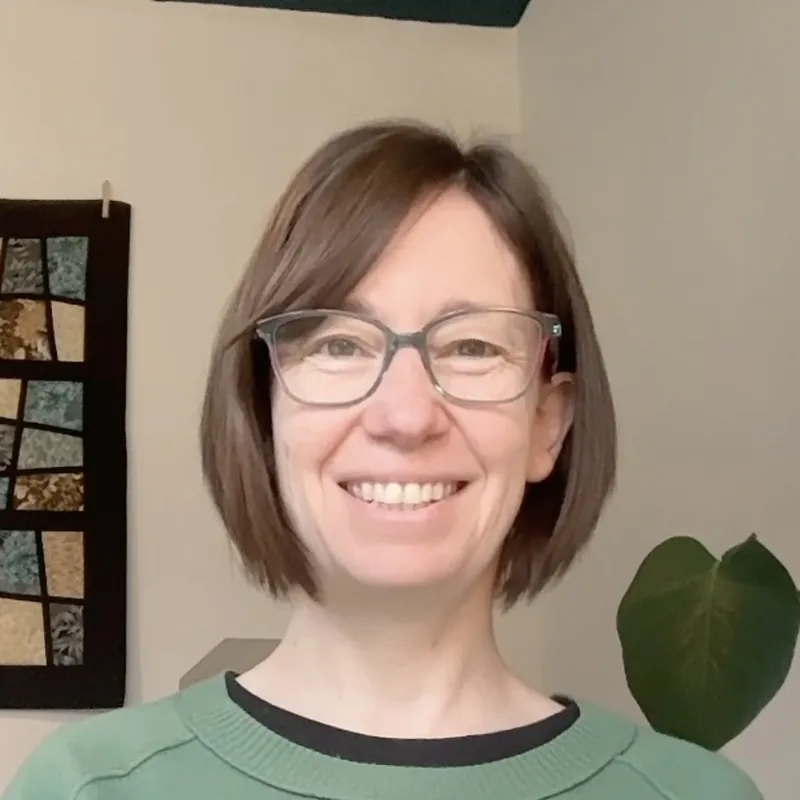
Louise B has taught/tutored A level and GCSE/IGCSE Biology for over 10 years and is experienced at preparing students to perform well during their exams. Several of her A level students have gone on to study Medicine and many of her GCSE students have achieved a 9, but her biggest driver is to build the confidence in the young people she works with. Helping her students realised that they are more capable than they previously believed is what, she believes, enables them to make the fastest progress towards their goal.
At university Louise initially began studying Biochemistry but quickly realised that Microbiology was a bigger passion. She therefore has an excellent understanding of metabolic processes that students tend to find tricky. Her PhD in life sciences demonstrates that she understands the research process and is able to pass these skills onto her students.
Finally, Louise's teaching qualification was attained at the University of Oxford meaning that she is equipped with teaching skills that will allow her to get the best from her students. Her approach is to work with students with empathy and an open mind so that students grow in confidence and feel that they can achieve more than they previously thought possible.

43
DJ has extensive experience working with private colleges in the UK particularly helping students prepare for their GCSE and A-level examinations. He is familiar with all of the exam boards and has the most amount of experience with AQA and Edexcel. He emphasizes the importance of interactive lessons with students to help improve their confidence and enjoyability of the subject matter. He also believes in practicing the concepts discussed in between tutoring sessions to help consolidate their level of understanding.

13
I am Hans K and a native from Rotterdam, The Netherlands. I have been teaching IB/DP , IGCSE and 'O' and 'A' levels for the last 20 years on a variety of internationals schools, both in Europe and the U.S. I carry degrees from Leiden Uni. in Leiden, The Netherlands, and completed my doctors course work at Carnegie-Mellon Uni. in Pittsburgh, PA, USA. I have played First Division Amateur soccer in Holland and have coached for the last 20 years as well. Besides being a soccer fanatic, I am also a wolf conservationist supporter being associated with Wild Spirit Wolf Sanctuary in Ramah, NM. I read quite a lot as well and try and link my readings to what I teach in History. Finally, looking at the A-Level curriculum, I have extended experience in working with sources corresponding to the Unit of European History with specifics in World War I and II, the Interbellum Period, and the Cold War., the same applies for my IGCSE teachings. I think it was the Cambridge Assessment Exam Board where the exams were forwarded to by the school.

21
Maja is an experienced Physics and Mathematics teacher and tutor with over 25 years of experience in international education. She has taught students across a wide range of curricula and levels, including GCSE, A Level, IB and AP, and has experience working with different exam boards.
With a strong background in both classroom teaching and individual tutoring, Maja focuses on helping students build a solid understanding of concepts, develop problem-solving skills, and gain confidence in applying their knowledge to exam-style questions. She adapts her teaching to each student’s individual needs, whether they need help with specific topics, regular academic support, or focused exam preparation.
Maja is also an experienced IB Physics examiner and has previously worked as an AP Physics Reader, giving her a strong understanding of assessment and examination requirements. Her degree in Mechanical Engineering provides her with a strong analytical and mathematical foundation, which she brings into her teaching of both Physics and Mathematics.
Maja is passionate about education and enjoys helping students become more confident, independent learners. She believes that patience, consistency and perseverance are key to making progress, values she developed through her years of practicing karate and continues to bring to her teaching.
Outside of teaching, Maja enjoys fitness, ice skating, hiking, walking in nature, traveling, and crocheting, which she finds to be a relaxing and creative hobby.

48
Aster is an experienced international educator with a Bachelor's degree in Physics and several years of experience teaching and tutoring students across a range of international curricula, including Cambridge, Australian, and other globally recognised programs. She specialises in Physics, Mathematics, Science, English, and academic skills development, and has worked with students from primary school through to senior secondary levels.
Throughout her career, Aster has taught students from diverse cultural and educational backgrounds, including Australian students in online learning environments. Her experience extends beyond subject content to helping students develop critical thinking, problem-solving, exam techniques, academic writing, and independent learning skills. She is also experienced in supporting students with essay writing, research projects, and assessment preparation.
Aster's teaching approach focuses on making complex concepts clear, engaging, and accessible. She adapts lessons to each student's learning style and believes that strong understanding is built through curiosity, confidence, and active participation. Students and parents appreciate her patient, supportive, and encouraging manner, as well as her ability to explain challenging topics in a simple and relatable way.
With a strong background in science education and a passion for helping students achieve their academic goals, Aster is committed to helping every student build confidence, improve performance, and enjoy the learning process.

27
Maria Beatrice teaches maths, biology and french and prepares students for admission in prestigious universities and faculties (such as medicine, economics, engineering and architecture).
She is a med student currently in her sixth year of studies, she has attended Bocconi university for one year before realizing that medicine was the right path for her.
Before university she completed high school diplomas (American, French and Italian), she graduated with honors and 4 AP exams (in which she got the scores 5,5,5,4) in Los Angeles and then got a double diploma in Milan.
Maria Beatrice has a deep interest in scientific subjects and in emergency medicine; she, indeed, volunteers as an ambulance rescuer.
Maria Beatrice has a long experience with tutoring, she started tutoring while still in high school because she loved sharing her knowledge with her peers.
She has been teaching A-level students for 5 years and has helped go through SAT and University admission tests preparation for more than 4 years.
She loves discovering new and different methods personally adjusted for each individual students, she also treasures being challenged every day and her main goal is to make students feel understood since she went through the same experiences and knows how pressured they can feel.

20
Daniel is a passionate, high-achieving tutor currently pursuing his Medical Degree at the University of Nicosia. He holds a Bachelor’s degree in Chemistry with honors from the prestigious American University of Beirut (AUB), where he built a strong foundation in the physical sciences, analytical reasoning, and academic research.
In recognition of his scientific potential, Daniel was awarded the URE 2023–2024 grant for his work in organic chemistry. He is also a Senior Research Assistant at Operation 12 at the University of California, San Diego (UCSD), where he contributes to groundbreaking research in psychology, exploring the intersections between cognition, behavior, and mental health.
Daniel’s academic excellence began early. He completed the International Baccalaureate (IB) Diploma Programme with a score of 41 out of 45, achieving perfect 7s in Higher Level Biology, Chemistry, and Business, and strong performance in his Standard Level subjects.
Daniel teaches Chemistry and Biology for the A-level and GCSE. he has helped students excel and achieve the highest marks, with most of his students scoring A* in the A-levels and Grades 8 and 9 in GCSE, with many of his students moving on to attending top ranked international schools.
With years of tutoring experience, Daniel has helped students across high school and university levels master difficult subjects, prepare for major exams, and build long-term academic confidence. His teaching style is clear, strategic, and empowering. He breaks down complex ideas into manageable steps, adapts his methods to suit each student's learning style, and always aims to make learning engaging, meaningful, and enjoyable.
Daniel believes that with the right support, every student is capable of excellence. He brings that belief into every session

46
Cheryl is a highly qualified Biologist. She holds a First Class Honours degree in Anatomy and Cell Biology from the University of Sheffield and a PhD (focusing on the oxytocin receptor in the male reproductive tract) from the University of Bristol.
For the last 26 years, Cheryl has taught in independent schools around the globe (including the UK, NZ and Egypt). She has taught Biology at the following levels: (I)GCSE and A level and is familiar with all of the examination boards offering these subjects. Human Biology and Chemistry GCSE is also something Cheryl is familiar with.
Keeping up to date with the courses through professional development, Cheryl's understanding of the mentioned courses is current.
Cheryl's students have consistently achieved grades greater than their CEM data predictions. This means that Cheryl always adds 'value' to the achievement of her students.
Cheryl also likes to aid students with study and revision skills. She has a Master's degree in Education and Psychology from the University of Cambridge. Her thesis investigated the impact of graphic organisers on metacognition and learning.
Cheryl has been described as approachable and good humored and builds working relationships easily. She uses a constructivist approach in her teaching which means that her students are not passive but active learners.
The tutors you see here are just a selection from our team of hundreds of tutors. Please contact our Learning Advisors to discuss tutoring options.
Ready to start?
Tell us the subject, exam board and target grade. A Learning Advisor reviews it the same day.
Two kinds of GCSE tutor
Choose between top-performing recent graduates or qualified teachers. Either way, our matching process finds you a tutor based on subject, exam board, target grade and availability.
Academic Tutors
from $50 USD/hr
Top performing graduates who achieved A*/A grades in the subject they teach.
- We accept only the top 5% of tutor applicants.
- Each tutor is chosen for their academic results, teaching ability, and connection with students.
Relatable role model: work with a tutor who is similar in age and can be a peer
Affordability: academic tutors are more cost-effective than professional tutors
First-hand experience: they sat these papers recently and know what worked
Professional Tutors
from $75 USD/hr
Current or past qualified teachers and examiners with 5+ years professional teaching experience.
- We only select highly experienced, qualified A-Level teachers.
- Every teacher is assessed on their teaching expertise, subject knowledge, and ability to engage students.
Quality assurance: trained and accredited teaching qualifications
Guaranteed track record: years of experience helping students succeed
Subject expertise: deep understanding of content and exam board requirements
Due to our international operations we quote our prices in USD. Pound amounts are an indicative conversion and you will be invoiced in USD.
Academic Tutors
from £37 GBP/hr
Top performing graduates who achieved A*/A grades in the subject they teach.
Relatable role model: work with a tutor who is similar in age and can be a peer
Affordability: academic tutors are more cost-effective than professional tutors
First-hand experience: they sat these papers recently and know what worked
Professional Tutors
from £56 GBP/hr
Current or past qualified teachers and examiners with 5+ years professional teaching experience.
Quality assurance: trained and accredited teaching qualifications
Guaranteed track record: years of experience helping students succeed
Subject expertise: deep understanding of content and exam board requirements
Why IGCSE needs the right tutor
IGCSE is the first set of exams that follows a student for the rest of their education, and it is sat by students in over 150 countries. Grades decide sixth-form and college options, and the volume of subjects makes it easy for one or two to slip.
What makes IGCSE hard to prepare for alone
Students sit eight or more IGCSEs at once, each with its own content and exam technique to manage. Teaching quality and class sizes vary widely between international schools, and families who have moved country mid-course often arrive on a different board or partway through a syllabus. A weak topic rarely gets the individual attention it needs before the exam.
- Eight or more subjects sat at once
- Marks decided by technique, not recall
- Grade 4 and 5 thresholds in English and Maths
How tutoring changes the outcome
One-to-one tutoring targets the two things a classroom cannot: exam technique and the specific topics a student keeps getting wrong. Our tutors work to your syllabus code, whether that is Cambridge or Edexcel International, and mark work the way an examiner would. Confidence follows from that, not the other way round.
- Tutors matched to your school’s specification
- Targeted work on areas of weakness
- Confidence going into the exam
What does IGCSE involve?
IGCSEs are the international version of GCSEs, taken at the end of secondary school, usually at 16. They are taught in over 150 countries by international and independent schools, set mainly by Cambridge and Pearson Edexcel International, and recognised by universities and schools worldwide in exactly the same way as UK GCSEs. Here's how the qualification works.
How IGCSEs work
Students take around eight to ten subjects over two years, usually Year 10 and Year 11. English, Maths and Science form the core, with the remaining subjects chosen from option blocks. Schools have more freedom than in the UK system over which subjects they offer and when students sit them.
- Around eight to ten subjects
- Two years: Year 10 and Year 11
- English, Maths and Science compulsory
- Subject offering varies by school
How you're assessed
IGCSEs are marked by the exam board, not by teachers, and the grade rests on written exams. Cambridge IGCSEs are graded A* to G, while Pearson Edexcel International uses the 9 to 1 scale, so which scale you are working to depends on your board. Some subjects add a practical or spoken element.
- Externally examined, not teacher-marked
- Mainly final written exams
- Practical or spoken element in some subjects
- A*–G on Cambridge, 9–1 on Edexcel
Why they matter
IGCSE grades decide which A-Levels or IB subjects a student can take, and which sixth forms and colleges will accept them, with most courses setting minimum grades in English and Maths. Because they are recognised internationally, they also travel with a student who changes school system or country. Getting them right keeps every later option open.
- Decide which A-Levels or IB subjects you can take
- Recognised by schools and universities worldwide
- English and Maths required by most courses
- Travel with you if you change country
Exam boards we cover
Each exam board sets its own papers and mark schemes. Tell us yours and we'll match you with a tutor who teaches that exact specification.
Will my child get 9–1 or A*–G?
Both are in use, which is a common source of confusion. Cambridge IGCSEs are traditionally graded A*–G, though 9–1 is now offered on some syllabuses. Pearson Edexcel International has moved to 9–1 across the board. Check the syllabus code on your child's timetable. It tells you which scale applies, and your tutor will work to it.
Sitting UK GCSEs instead?
If your school follows AQA, OCR, Pearson Edexcel or WJEC, you are sitting UK GCSEs rather than IGCSEs. The teaching overlaps heavily, but the papers and grading differ. See GCSE tutoring.
Core or Extended: which tier is your child entered for?
In Maths, the Sciences and modern languages, students are entered for one of two tiers. The tier decides which paper they sit and caps the grade available, so it is the single most important thing to confirm before tutoring starts.
Core tier
Covers the essential syllabus content. Grades are capped, so the top grades are not available on this tier. Edexcel International calls the equivalent Foundation.
- Essential syllabus content only
- Top grades not available
- Called Foundation on Edexcel International
Extended tier
Covers the full syllabus and gives access to the top grades. Harder papers, and the tier required for most A-Level and IB courses. Edexcel International calls the equivalent Higher.
- Full syllabus, harder papers
- Top grades available
- Usually required for A-Level or IB
Students entered for Core who are aiming at A-Level often need to move up a tier. Tell us at enquiry and we will build the plan around closing that gap.
IGCSE subjects we cover
Each subject has its own page with topic coverage, tutors and exam board detail.
Why parents trust us
4.9/5 from 312 reviews · used by students at 500+ schools





What does sitting IGCSEs involve?
IGCSEs are a two year process of learning content with exams at the end. The exact shape depends on your subject and the exam board.
Format and structure
Most IGCSE subjects are assessed by two or three written papers. Maths, Science and modern languages are tiered, with core and extended papers covering different grade ranges. IGCSE sciences commonly use an alternative-to-practical written paper rather than assessed practical work, and IGCSEs carry less coursework overall than UK GCSEs. Which route applies depends on what your school has entered you for.
- Typically two or three written papers
- Question types vary by subject and board
- Core and extended tiers in several subjects
- Alternative-to-practical paper in sciences
Timing and marking
Papers usually run between 1 and 2 hours. Marking is done externally by the exam board, and grades are awarded against boundaries set for each series rather than a fixed percentage. On tiered subjects, the tier a student is entered for caps the grade available.
- Papers commonly 1 to 2 hours
- Externally marked by the exam board
- Grade boundaries set each year
- A*–G or 9–1, depending on your board
Where and when it's sat
IGCSEs run in more than one series a year, which gives students more flexibility over when they sit a subject and when they resit. Exams are normally taken at the school teaching the course; private candidates register with an approved international exam centre themselves. Entries close months in advance, so the timetable is worth checking early.
- More than one exam series each year
- Results published on a set date
- Entries close months in advance
- Private candidates use an approved international centre
How we prepare you for IGCSE
The first session is about understanding where the student is now. The tutor discusses goals with the student and parent, sets measurable outcomes, and develops a roadmap with them. From there, lessons follow a cycle: identify the gaps, work through problems together, then hand over to independent practice, revisiting topics in later sessions until they hold.
Key skills tutors focus on
Content knowledge is the starting point, not the goal. IGCSE papers reward applying what you know to something you have not seen before, and saying it in the words the mark scheme is looking for. Those are trainable skills, and they move faster than content.
- Reading the command word and answering the question asked
- Applying a known method to an unfamiliar context
- Structuring extended answers so every mark is earned
- Working accurately under exam timing
Materials and practice used
Practice comes from real past papers for your board, marked against the official mark scheme. Lessons run on a shared online whiteboard, so worked solutions are saved and can be revisited between sessions, wherever the student is based. Closer to the exam, papers are sat under full timed conditions.
- Past papers and mark schemes for your syllabus code
- Timed papers under exam conditions
- Examiner-style feedback on written work
- Session notes saved after every lesson
Common mistakes we help students avoid
Most lost marks are predictable. Students revise by rereading rather than answering questions, write everything they know instead of what was asked, and leave the long-answer questions until there is no time left. Each one is fixable well before the exam.
- Revising content instead of practising questions
- Ignoring the wording of the mark scheme
- Leaving long-answer questions until last
- Never sitting a full paper against the clock
IGCSE tutoring FAQs
We have answers to your most frequently asked questions. Anything not answered here, please reach out to our team.
Yes. Our GCSE tutors teach both tiers in every tiered subject, including Maths, the sciences and languages. They also teach Cambridge IGCSE Core and Extended, and OxfordAQA Core and Extension. Tell us which tier your child is entered for when you enquire, and we will match a tutor who knows those papers.
Yes. Families who move mid-course often arrive on a different exam board or partway through a syllabus. An IGCSE tutor maps what's already been covered against the new syllabus, fills the gaps and teaches to the new board's exam format.
IGCSEs are the international version of GCSEs. They're taught in over 150 countries and recognised in exactly the same way by universities and schools. Schools have more freedom over which subjects they offer. Cambridge IGCSEs are graded A* to G, and Pearson Edexcel International uses the 9 to 1 scale. Looking for UK GCSEs? See online GCSE tutoring.
Our IGCSE tutors teach the two main international boards: Cambridge International (CIE), Pearson Edexcel International and OxfordAQA International. Tutors work to your syllabus code, so lessons follow exactly what your school teaches and the way your exam is marked.
Tell us your subject, exam board and syllabus in our online form. A Learning Advisor matches you with an IGCSE tutor who teaches that syllabus in your time zone, and the tutor contacts you to book the first lesson. All lessons are one-to-one in our virtual classroom. See how it works.
Online GCSE and IGCSE tutoring with an academic tutor starts from $50 USD (£38) per hour. You can pay as you go, invoiced after each lesson, or buy a package upfront and save between 5% and 15% depending on its size. There are no lock-in contracts or hidden fees. Professional tutors (qualified teachers and examiners) cost from $75 USD (£56) per hour. See our GCSE tutoring prices.
Late cancellations and no-shows are charged at half the lesson fee. That applies if you cancel less than one hour before the start time, or don't turn up. You can still change a session time whenever you need to, as long as you give your tutor notice.
Yes. We tutor students studying UK and international A-Levels and IGCSEs in many countries. Your availability and time zone are recorded when you apply, and you're only matched with a tutor who can teach at times that suit you. You then agree a regular weekly slot that fits around school.
Yes. After every lesson, the tutor logs what was covered and what comes next, and the notes are visible to the family.
A Learning Advisor reviews every application the same day it comes in. Once a suitable tutor is confirmed, they contact you directly to arrange your first lesson. Matching is based on subject, exam board, target grade and availability, including your time zone.
We don't offer a free trial. Instead, every student gets our first session satisfaction guarantee: if you're not happy after your first lesson, we refund it in full and find you another tutor at no cost. See our pricing for what's included.
Our other services
We tutor the whole school-exam ladder, plus targeted support for students resitting a paper.
Online A-Level Tutoring
Service Description
Online AS Level Tutoring
Service Description
Online GCSE Tutoring
Service Description
Online IGCSE Tutoring
Service Description
Resits & Retakes for A-Levels and GCSE
Service Description
From Blog


Ready to find your IGCSE tutor?
Tell us your subject, exam board and target grade. We will come back with a shortlist of tutors, and you only pay for lessons you have completed.