
How It Works
We keep things as simple as possible. Our objective is to make finding a tutor convenient, efficient and effective.
Fill out an online form
Complete an application online which will be received by one of our dedicated Learning Advisors
Get matched with a tutor
Our experienced Learning Advisor will review your application, and match you with the most appropriate tutor based on your application
Tutor makes contact
Once we confirm with the tutor, the tutor will make contact to organise your first session.
Have your first lesson
Our tutors will work around your schedule to organise a session whenever you would like. Only pay for tutoring you have completed.
Two kinds of GCSE tutor
Choose between top-performing recent graduates or qualified teachers. Either way, our matching process finds you a tutor based on subject, exam board, target grade and availability.
Academic Tutors
from $50 USD/hr
Top performing graduates who achieved top grades in the subject they teach.
- We accept only the top 5% of tutor applicants.
- Each tutor is chosen for their academic results, teaching ability, and connection with students.
Relatable role model: work with a tutor who is similar in age and can be a peer
Affordability: academic tutors are more cost-effective than professional tutors
First-hand experience: they sat these papers recently and know what worked
Professional Tutors
from $75 USD/hr
Current or past qualified teachers and examiners with 5+ years professional teaching experience.
- We only select highly experienced, qualified GSCE teachers.
- Every teacher is assessed on their teaching expertise, subject knowledge, and ability to engage students.
Quality assurance: trained and accredited teaching qualifications
Guaranteed track record: years of experience helping students succeed
Subject expertise: deep understanding of content and exam board requirements
Due to our international operations we quote our prices in USD. Pound amounts are an indicative conversion and you will be invoiced in USD.
Academic Tutors
from £37 GBP/hr
Top performing graduates who achieved top grades in the subject they teach.
Relatable role model: work with a tutor who is similar in age and can be a peer
Affordability: academic tutors are more cost-effective than professional tutors
First-hand experience: they sat these papers recently and know what worked
Professional Tutors
from £56 GBP/hr
Current or past qualified teachers and examiners with 5+ years professional teaching experience.
Quality assurance: trained and accredited teaching qualifications
Guaranteed track record: years of experience helping students succeed
Subject expertise: deep understanding of content and exam board requirements
Meet our GCSE Physics tutors
Our team is a combination of GCSE graduates who sat these exams recently and qualified teachers with years of classroom and examining experience.

32
Özgür is completing his M.Sc. in Physics at Heidelberg University, Germany’s oldest university, with research in computational quantum physics. He holds a B.Sc. in Physics from Boğaziçi University, one of Turkey’s top universities, where he studied on a national merit scholarship and all teaching was in English.
He has tutored mathematics and physics since 2019, including GCSE and IGCSE students, and teaches A-Level Mathematics, Further Mathematics and Physics across all major exam boards, including AQA, Edexcel, OCR and Cambridge International. A-Level content such as calculus, mechanics, electricity and statistics is the basis of his own degrees and research, so he can explain not just how to solve a problem but why the method works.
He has written exam-style mathematics questions for Oxford University Press and created maths and physics learning material for online platforms, so he knows how good exam questions are built and how to prepare students for them. As a former university teaching assistant for Mathematical Methods in Physics, he knows where students tend to get stuck and how to get them past it. His research also gives him real strength in data analysis and uncertainties, a big help with A-Level Physics practical work.
Özgür’s lessons are clear, structured and patient. He finds the exact point where a student’s reasoning goes wrong, rebuilds the idea step by step, and builds the exam technique and confidence students need for top grades.
32
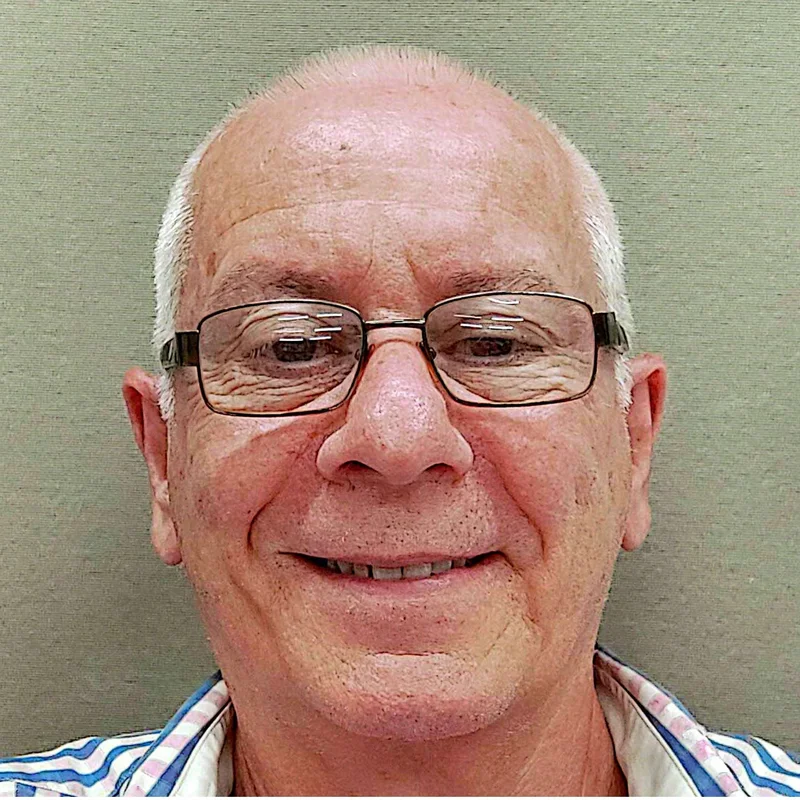
Curious by nature, engineer by training, teacher by heart.
Hi! I was born in Güines, a big village in Cuba, where I grew up surrounded by nature—probably why I still love being outside. I went to a high-tech secondary school, where I fell in love with Physics, Mathematics, science, and electronics. Later, I moved to Europe and got my Bachelor's and Master's degrees in Electronic Engineering. Seven years in different European cities gave me a love for art, history, and museums, and friends from all over the world.
I worked first as an engineer in a biotechnology research center, and later taught IGCSE Math, Physics, and Science for over 10 years at an international school in Havana (ISH). I also tutored students in A-level Physics online. Tutoring and classroom teaching taught me what inclusiveness, active learning, differentiation, and inquiry really mean.
Now I'm retired from in-person teaching and living in Buenos Aires with my wife and my daughter's family. I'm excited to keep teaching and learning with you!

12
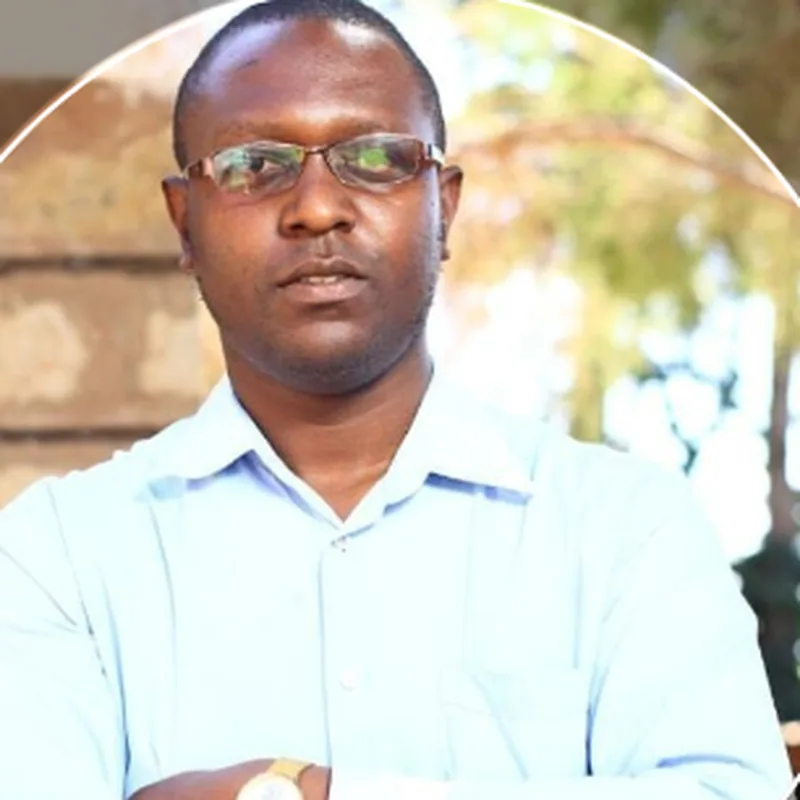
I’m Taiwo, a tutor with ten years of teaching and tutoring experience and a B.Sc. in Electronic and Electrical Engineering from Obafemi Awolowo University. I teach A-level, GCSE and IGCSE students, bringing together subject knowledge, classroom experience and a patient, practical approach to learning.
My subjects include Mathematics, Further Mathematics, Physics, Chemistry, Biology, English Language and Computer Science. My current GCSE teaching includes AQA Mathematics at Foundation and Higher levels and AQA English Language. My engineering background strengthens my teaching of Mathematics and Physics, while my professional software development experience allows me to connect computing concepts with practical applications.
I plan lessons around what each student needs. Some need to rebuild foundations; others understand the content but struggle to apply it in unfamiliar exam questions. I identify those gaps, explain ideas clearly and guide students towards solving problems independently. In Mathematics, that means understanding why a method works and recognising when to use it. In Science, it means connecting concepts, calculations and experimental evidence. In English, it means moving beyond identifying techniques to developing thoughtful analysis supported by precise examples.
Students can expect structured lessons, personalised homework and detailed feedback. I use past papers and mark schemes to help them understand what questions demand, improve the clarity of their answers and develop effective revision habits. I track difficulties across lessons so that we revisit what needs attention rather than simply move through topics.
I currently work with international learners, including students in the UK and Hong Kong, and understand the importance of adapting explanations to different educational and language backgrounds. I want students to feel comfortable asking questions, willing to attempt challenging work and able to recognise their own progress. My aim is to build secure understanding, greater independence and confident exam preparation.
20
I'm an A-Level and GCSE tutor in Physics, Chemistry, Biology and Accounting, with many years of experience teaching students one-to-one on platforms including Varsity Tutors and Wyzant, and privately. I hold a degree in Management Information Systems and an MBA with a specialization in Project Management, and I'm currently pursuing a PhD in Information Systems Management. I also studied English Literature and History at an advanced level, achieving top marks, which helps me teach students to write clear, well-structured exam answers.
Over the years I've worked with students from beginners through to exam preparation, and I tailor each lesson to the specification and exam style they are working toward, whether that's AQA, Edexcel, OCR or another board. My approach is simple and personal. I explain difficult topics in plain language with everyday examples, such as using a car journey to teach velocity, acceleration and graphs, so students understand why the methods work and not just how to use them. I teach step-by-step methods for calculations and exam questions, with past-paper-style practice and time management. Every lesson is built around the student's needs and learning style, so they understand the material and enjoy learning it.

19
Manish R is an elite educator with over 27 years of experience inspiring high-ability learners and shaping top-tier mathematics programs. Holding an MS in Gifted Education and a Master’s in Pure Mathematics, I perfectly bridges deep academic theory with specialized pedagogical strategies.
Core Strengths & Pillars of Success
27+ Years of Classroom Mastery: A lifelong learner dedicated to cultivating critical thinking, logical reasoning, and a passion for numbers in high school students.
Experience GCSE Physics teaching experience connect to Mathematics for GCSE A level at international boards students
Tutor GCSE A level Math courses to UK boards like AQA and OCR.
A level Math courses for international boards students with great success.
Passion-Driven Philosophy: Believes in learning through teaching, empowering students to take ownership of their education, and unlocking the maximum potential of profoundly gifted minds.

34
Hello! I am Dr. K. I have a PhD in Engineering, and I specialise in Math and Science (Physics/Chemistry) Tuition. I have successfully tutored/coached hundreds of young adults across several examination boards such as A-levels/ATAR/O-levels, CIE, IGCSE, and towards the SAT exams both via face-to-face and online modes. The background of my students vary across a wide spectrum, from neighbourhood schools to independent/international schools and even Homeschooled/Private Candidates. I am also at ease with both neurotypical and neurodivergent learners (ADHD, mild Autism etc.). One of my students topped the ATAR for physics and currently at Oxford.
I am also an ex-adjunct Assistant Professor of Physics at Embry Riddle Aeronautical University in Department of Math and Science with expertise in pedogogy, androgogy and also a motivational speaker with experience running courses in JCs (High Schools)
I believe in empowering every student to do his/her best! No student has ever been turned away!

21
Maja is an experienced Physics and Mathematics teacher and tutor with over 25 years of experience in international education. She has taught students across a wide range of curricula and levels, including GCSE, A Level, IB and AP, and has experience working with different exam boards.
With a strong background in both classroom teaching and individual tutoring, Maja focuses on helping students build a solid understanding of concepts, develop problem-solving skills, and gain confidence in applying their knowledge to exam-style questions. She adapts her teaching to each student’s individual needs, whether they need help with specific topics, regular academic support, or focused exam preparation.
Maja is also an experienced IB Physics examiner and has previously worked as an AP Physics Reader, giving her a strong understanding of assessment and examination requirements. Her degree in Mechanical Engineering provides her with a strong analytical and mathematical foundation, which she brings into her teaching of both Physics and Mathematics.
Maja is passionate about education and enjoys helping students become more confident, independent learners. She believes that patience, consistency and perseverance are key to making progress, values she developed through her years of practicing karate and continues to bring to her teaching.
Outside of teaching, Maja enjoys fitness, ice skating, hiking, walking in nature, traveling, and crocheting, which she finds to be a relaxing and creative hobby.

48
Aster is an experienced international educator with a Bachelor's degree in Physics and several years of experience teaching and tutoring students across a range of international curricula, including Cambridge, Australian, and other globally recognised programs. She specialises in Physics, Mathematics, Science, English, and academic skills development, and has worked with students from primary school through to senior secondary levels.
Throughout her career, Aster has taught students from diverse cultural and educational backgrounds, including Australian students in online learning environments. Her experience extends beyond subject content to helping students develop critical thinking, problem-solving, exam techniques, academic writing, and independent learning skills. She is also experienced in supporting students with essay writing, research projects, and assessment preparation.
Aster's teaching approach focuses on making complex concepts clear, engaging, and accessible. She adapts lessons to each student's learning style and believes that strong understanding is built through curiosity, confidence, and active participation. Students and parents appreciate her patient, supportive, and encouraging manner, as well as her ability to explain challenging topics in a simple and relatable way.
With a strong background in science education and a passion for helping students achieve their academic goals, Aster is committed to helping every student build confidence, improve performance, and enjoy the learning process.

47
Dr Rahul C holds a PhD in Physics, specialising in Hadron Physics (Phenomenology), and has over 7 years of teaching experience across the Cambridge and IB curricula, including 5 years of IGCSE Physics and 2 years of full time AS & A Level Physics teaching. He has extensive experience preparing students for Cambridge examinations through a strong focus on conceptual understanding, problem-solving, practical skills, and effective exam technique.
His students have consistently achieved outstanding results, including A* grades in IGCSE Physics and excellent performances in AS & A Level examinations. Dr C has successfully mentored students through investigative practical work, coursework, and advanced physics problem-solving, helping them build both confidence and academic excellence.
Holding Qualified Teacher Status (QTS), England, Dr C combines deep subject expertise with inquiry based teaching strategies and a clear understanding of Cambridge assessment expectations. As an accomplished researcher, he has published multiple papers in international peer reviewed journals and presented his research at academic institutions and conferences in France and the USA. His teaching is structured, engaging, and highly focused on developing critical thinking, analytical skills, and the confidence students need to excel in IGCSE and AS/A Level Physics.
The tutors you see here are just a selection from our team of hundreds of tutors, please contact our Learning Advisors to discuss tutoring options
Why GCSE Physics needs the right tutor
What makes GCSE Physics hard
GCSE Physics is where maths meets science. Most questions need a student to pick the right equation, rearrange it, convert the units and give a sensible answer, and then explain what the number means. A student who understands the ideas can still lose most of a calculation's marks through one unit slip, and a student who is confident with numbers can lose marks on explanations that need exact physics vocabulary. The course is also broad, running from forces and circuits to waves, radioactivity and space.
Other things that make it hard:
- Recalling or selecting the right equation and rearranging it under time pressure, with equation provision differing by board
- Unit conversions and standard form, such as kilo, mega, milli and micro prefixes or minutes into seconds
- Reading and drawing graphs, including gradients and areas on distance-time and velocity-time graphs
- Circuit questions that combine series and parallel rules with resistance, current, potential difference and power
- Explaining practical work: variables, sources of error and how to make measurements more accurate
How tutoring changes the outcome
Our Physics tutors work from your board's own past papers, mark schemes and examiners' reports, so students learn exactly how calculations and explanations are credited. Sessions target where Physics marks are actually lost:
- calculations with unconverted units or no working, so method marks are lost along with the answer
- equations recalled wrongly or rearranged incorrectly
- explanations that mix up terms such as energy and power, or current and potential difference
- practical questions on variables, measurements and improvements for the required or core practicals
What you'll learn in GCSE Physics tutoring
Core skills developed
Every GCSE Physics specification tests the same progression: knowing the physics, applying it, and analysing and evaluating data and experimental evidence. On AQA, OCR, Edexcel and WJEC, the split is about 40% knowledge, 40% application and 20% analysis and evaluation, and OCR and WJEC state that at least 30% of the marks assess mathematical skills. Edexcel International uses the same broad 40/40/20 split. Cambridge puts 50% on knowledge with understanding, 30% on handling information and problem-solving and 20% on experimental skills, all examined in its practical paper, and OxfordAQA adds a fourth objective, selecting, describing and evaluating scientific procedures, worth about 10%. We work through past-paper questions objective by objective, so you can see which skill is costing you marks rather than just seeing a lower total.
- Selecting, rearranging and applying equations with correct units and standard form
- Forces and motion: resultant forces, Newton's laws, momentum and motion graphs
- Electricity: circuits, resistance, power and energy transfer
- Waves, the electromagnetic spectrum and radioactive decay
- Practical skills: measuring, recording, plotting graphs and evaluating methods
How are students assessed
Physics is assessed almost entirely by written exams. AQA, OCR, Edexcel and OxfordAQA set compulsory practicals, but the marks come from exam questions about them, and Edexcel International examines experimental skills in its two written papers. Cambridge examines practical skills in a paper of their own worth 20%: either Paper 5, a hands-on Practical Test, or Paper 6, a written Alternative to Practical. WJEC in Wales is the only board with a practical unit, worth 10%, carried out in school and marked by WJEC. Equations are handled differently too: for UK GCSE Physics in England, Ofqual has confirmed that an equations sheet comes with every paper, while Edexcel International lists relationships that students must recall. Most courses are linear, but WJEC is unitised and Edexcel International's modular 4XPH1 lets students sit and resit each unit separately.
- Multiple-choice and short-answer questions: drilled against real past papers for speed and exact terminology
- Calculations: setting out equation, substitution, rearrangement and units so that method marks are kept even when the final answer is wrong
- Practical and six-mark questions: rehearsed and rewritten until each step is linked and an examiner could award full marks
What GCSE Physics topics do we cover?
OxfordAQA GCSE Physics
Eight sections examined in two papers taken in the same series at the end of the course, in May/June or November. Paper 1 and Paper 2 are each 1 hour 30 minutes and 90 marks, worth 50% each, with structured and open questions, and either paper can assess any part of the specification. There are no tiers, and grades 9–1 are available to everyone.
- 3.1 Forces and their effects
- 3.2 Energy
- 3.3 Waves
- 3.4 Particle model of matter
- 3.5 Electricity and magnetism
- 3.6 Generating and distributing electricity and household use
- 3.7 Nuclear physics
- 3.8 Space physics
OxfordAQA adds a fourth assessment objective, the ability to select, describe and evaluate scientific procedures, worth about 10% and weighted more heavily in Paper 2. It also includes topics such as safety in public transport and lenses and the eye, and its five required practicals, from force and extension for a spring to the V-I characteristics of a filament lamp, a diode and a resistor, are examined in the written papers. Sessions on this board practise procedure questions on every required practical and prepare both papers across the whole specification.
WJEC GCSE Physics
WJEC GCSE Physics is offered in Wales; Eduqas no longer offers a GCSE in Physics in England. The course is unitised. Unit 1 and Unit 2 are each a 1 hour 45 minute written exam worth 80 marks and 45% of the qualification, set at Foundation or Higher tier and sat in the summer series. Unit 3: Practical Assessment, worth 10% (30 marks), is untiered and takes place in school in the first half of the spring term, then is marked by WJEC. WJEC has said the current separate science GCSEs remain available until summer 2031.
Unit 1: Electricity, Energy and Waves
- 1.1 Electric circuits
- 1.2 Generating electricity
- 1.3 Making use of energy
- 1.4 Domestic electricity
- 1.5 Features of waves
- 1.6 The total internal reflection of waves
- 1.7 Seismic waves
- 1.8 Kinetic theory
- 1.9 Electromagnetism
Unit 2: Forces, Space and Radioactivity
- 2.1 Distance, speed and acceleration
- 2.2 Newton's laws
- 2.3 Work and energy
- 2.4 Further motion concepts
- 2.5 Stars and planets
- 2.6 The Universe
- 2.7 Types of radiation
- 2.8 Half-life
- 2.9 Nuclear decay and nuclear energy
WJEC grades on the A* to G scale used in Wales, not 9 to 1, and states that at least 30% of the marks assess mathematical skills. Unit 3 has two sections: obtaining results in a group (6 marks) and individually analysing and evaluating them under supervision (24 marks). WJEC has amended Unit 3 for students starting the course in September 2026, to follow the practical approach of the new GCSE The Sciences (Double Award); Units 1 and 2 are unchanged. Sessions on this board prepare the analysis and evaluation section of Unit 3 as carefully as the written units.
IAL GCSE Physics
Eight topics examined in two untiered papers taken in the same series at the end of the course, in June or November. Paper 1 (2 hours, 110 marks, 61.1%) assesses the core content. Paper 2 (1 hour 15 minutes, 70 marks, 38.9%) assesses all the content, including the bold statements with a P reference that go beyond the Science (Double Award). Every student sits the same papers, graded 9–1. Pearson also offers a modular version, 4XPH1, first examined in June 2025: two units, each 1 hour 40 minutes, 90 marks and 50%, that can be sat and resat in any order in June and November.
- 1 Forces and motion
- 2 Electricity
- 3 Waves
- 4 Energy resources and energy transfers
- 5 Solids, liquids and gases
- 6 Magnetism and electromagnetism
- 7 Radioactivity and particles
- 8 Astrophysics
Edexcel International states that the physics relationships listed in its specification will not be provided in the exam, either as given or rearranged, so equations have to be learned. Paper 2 is the only paper that tests the P-referenced content, and practical investigations are written into the content as specification points in italics and examined in both papers. Sessions on this board drill the listed relationships until they are automatic and give the P-referenced content dedicated time.
EDEXCEL GCSE Physics
Fifteen topics examined in two papers sat in May/June of the same year, both at Foundation or both at Higher tier. Paper 1 covers Topics 1–7 and Paper 2 covers Topic 1 and Topics 8–15. Each is a 1 hour 45 minute written exam worth 100 marks and 50% of the qualification, with multiple-choice, short-answer, calculation and extended open-response questions. Students must complete eight mandatory core practicals.
- Topic 1: Key concepts of physics
- Topic 2: Motion and forces
- Topic 3: Conservation of energy
- Topic 4: Waves
- Topic 5: Light and the electromagnetic spectrum
- Topic 6: Radioactivity
- Topic 7: Astronomy
- Topic 8: Energy - Forces doing work
- Topic 9: Forces and their effects
- Topic 10: Electricity and circuits
- Topic 11: Static electricity
- Topic 12: Magnetism and the motor effect
- Topic 13: Electromagnetic induction
- Topic 14: Particle model
- Topic 15: Forces and matter
Topic 1, Key concepts of physics, is examined on both papers, so units, prefixes and standard form come up throughout. The specification lists the equations students are expected to recall, and its eight core practicals range from force, mass and acceleration with trolleys to the specific heat capacity of water and the extension of a spring. Sessions on this board build Topic 1 skills from the start and link each core practical to the questions set on it.
OCR GCSE Physics
OCR offers two GCSE Physics specifications, and each school chooses one. Both are linear and tiered: students sit two papers at Foundation tier (grades 5–1) or two at Higher tier (grades 9–4), each 1 hour 45 minutes, 90 marks and 50% of the GCSE, all in the same May/June series. Practical skills are examined in the papers, and learners must complete at least eight practicals covering OCR's Practical Activity Groups. We match tutors to the specification code on your exam entry.
Physics A (Gateway Science) · J249
- Topic P1: Matter
- Topic P2: Forces
- Topic P3: Electricity
- Topic P4: Magnetism and magnetic fields
- Topic P5: Waves in matter
- Topic P6: Radioactivity
- Topic P7: Energy
- Topic P8: Global challenges
- Topic P9: Practical skills
Physics B (Twenty First Century Science) · J259
- Chapter P1: Radiation and waves
- Chapter P2: Sustainable energy
- Chapter P3: Electric circuits
- Chapter P4: Explaining motion
- Chapter P5: Radioactive materials
- Chapter P6: Matter, models and explanations
- Chapter P7: Ideas about Science
- Chapter P8: Practical Skills
On Gateway, the first paper of each tier covers Topics P1–P4 and the second covers Topics P5–P8, with P1–P4 assumed and synoptic questions included. Twenty First Century Science splits each tier into a Breadth paper of short-answer questions and a Depth paper with at least two 6-mark extended response questions, both drawing on all eight chapters. OCR states that at least 30% of the marks assess mathematical skills. Sessions on this board follow your specification's order and build calculation fluency topic by topic.
AQA GCSE Physics
Eight topics plus a Key ideas section, examined in two papers sat at the end of the course. Paper 1 covers Topics 1–4 and Paper 2 covers Topics 5–8, and Paper 2 can also draw on energy changes and transfers from Energy and Electricity. Each paper is a 1 hour 45 minute written exam worth 100 marks and 50% of the GCSE, set at Foundation or Higher tier, with multiple-choice, structured, closed short-answer and open-response questions. Students carry out ten required practicals, and questions drawing on them count for at least 15% of the marks.
- 4.1 Energy
- 4.2 Electricity
- 4.3 Particle model of matter
- 4.4 Atomic structure
- 4.5 Forces
- 4.6 Waves
- 4.7 Magnetism and electromagnetism
- 4.8 Space physics (physics only)
- 4.9 Key ideas
Space physics and two of the ten required practicals are in GCSE Physics only, not in AQA's Combined Science. AQA provides the Physics Equations Sheet as an insert with both papers in 2027, and under Ofqual's decision equations sheets continue for exams from 2028, when standard-demand questions that only ask students to write down an equation from the sheet will no longer be set. Sessions on this board practise using the sheet in multi-step problems and work through all ten required practicals.
CIE GCSE Physics
Six topics, with Core content for all candidates and Supplement content for Extended candidates. Everyone sits three papers: a 45-minute paper of 40 multiple-choice questions (30%), a 1 hour 15 minute theory paper of short-answer and structured questions (80 marks, 50%) and a practical paper (40 marks, 20%). Core candidates take Papers 1 and 3 and Extended candidates take Papers 2 and 4. 0625 is graded A* to G and 0972 is graded 9 to 1. Exams run in June and November, with a March series in India for 0625. Cambridge has republished the syllabus for 2029 with no significant changes that affect teaching.
1 Motion, forces and energy
- 1.1 Physical quantities and measurement techniques
- 1.2 Motion
- 1.3 Mass and weight
- 1.4 Density
- 1.5 Forces
- 1.6 Momentum
- 1.7 Energy, work and power
- 1.8 Pressure
2 Thermal physics
- 2.1 Kinetic particle model of matter
- 2.2 Thermal properties and temperature
- 2.3 Transfer of thermal energy
3 Waves
- 3.1 General properties of waves
- 3.2 Light
- 3.3 Electromagnetic spectrum
- 3.4 Sound
4 Electricity and magnetism
- 4.1 Simple phenomena of magnetism
- 4.2 Electrical quantities
- 4.3 Electric circuits
- 4.4 Electrical safety
- 4.5 Electromagnetic effects
5 Nuclear physics
- 5.1 The nuclear model of the atom
- 5.2 Radioactivity
6 Space physics
- 6.1 The Earth and the Solar System
- 6.2 Stars and the Universe
Cambridge examines practical skills directly. Paper 5 is a hands-on Practical Test in the laboratory (1 hour 15 minutes) and Paper 6 is a written Alternative to Practical (1 hour). Both test the same experimental skills, such as taking readings, plotting graphs and suggesting improvements, and both are worth 20%. Your school decides which one you sit. Sessions on this board give the practical paper regular timed practice alongside the theory.
Ready to start?
Tell us the subject, exam board and target grade. A Learning Advisor reviews it the same day.
Why parents trust us
4.9/5 from 312 reviews · used by students at 500+ schools




GCSE Physics tutoring for both tiers
Whichever tier you are entered for, we match you with a tutor who knows those papers and the grades they lead to. Not sure which tier is right? Your tutor will help you decide before entries close.
Foundation (or core) tier tutoring
Foundation papers cover most of the same topics without the Higher-only content, and the highest grade available is a 5.
- Secure the core topics, from energy and forces to electricity and waves
- Learn the equations you need to recall, and use them step by step
- Learn the required practicals, which England’s boards draw on for at least 15% of the marks
Higher (or extended) tier tutoring
Higher papers add Higher-only content and open grades up to a 9, but on UK boards a result below a 3 is ungraded.
- Master the Higher-only content, such as momentum
- Rearranging equations and multi-step calculations under time pressure
- Six-mark extended answers, structured the way examiners mark them
We teach Foundation and Higher for AQA, OCR, Edexcel and WJEC, Core and Extended for Cambridge IGCSE, and the untiered Edexcel International GCSE and OxfordAQA courses.
FAQs
We have answers to your most frequently asked questions. Anything not answered here, please reach out to our team.
Yes. Our GCSE Physics tutors teach both tiers on AQA, OCR, Pearson Edexcel and WJEC, and Core and Extended for Cambridge IGCSE. On Foundation, lessons secure the core topics and the required practicals. On Higher, they add the Higher-only content, such as momentum, and the six-mark extended answers that decide the top grades. If your child is between tiers, their tutor will help you choose before entries close.
On AQA, OCR and Pearson Edexcel, Foundation covers grades 1–5 and Higher covers 4–9. A Higher student who narrowly misses grade 4 can be given an allowed grade 3, but below that the result is U. In June 2026 the Higher grade 4 boundary was 67 out of 200 on AQA and 71 on Pearson Edexcel, so it pays to check where your mock marks sit against your own board. Anyone who needs a 6 or 7 for A-Level Physics has to sit Higher, while students working below grade 4 are usually safer on Foundation. On Cambridge IGCSE, Core is capped at grade C and Extended runs from A* to G, so a weaker Extended paper still earns a grade; Edexcel International GCSE is untiered. Schools usually decide the tier after mocks, so ask early. Sources: AQA and Pearson.
GCSE Physics means the UK specifications from AQA, OCR, Pearson Edexcel or WJEC, while IGCSE Physics means Cambridge IGCSE 0625 (0972 on the 9–1 scale) or Edexcel International GCSE 4PH1. The main differences are tiering and practical assessment. The UK GCSEs are tiered and examine required practicals inside the written papers; Edexcel International is untiered, so every grade is open to everyone; and Cambridge has Core and Extended papers plus a separate practical paper worth 20%. The core content of forces, energy, electricity, waves and atomic physics is very similar on all of them. Universities and sixth forms accept both. The UK GCSE is sat in May and June only, while Cambridge IGCSE and Edexcel International GCSE also run a full November series, which suits students outside the UK and anyone who needs a resit. Read more about online IGCSE tutoring.
Each sixth form and college sets its own entry requirements, so check the prospectus of the one you're applying to. As a guide, most ask for at least a grade 6 in GCSE Physics, or 6-6 in Combined Science, for A-Level Physics, and selective schools often ask for a 7. Most also ask for a grade 6 or 7 in GCSE Maths, and many recommend taking A-Level Mathematics alongside, because A-Level Physics is heavily mathematical. You need the Higher tier, because Foundation caps the grade at 5. If you take Cambridge IGCSE on the A*–G scale, a grade A is broadly equivalent to a 7 and a C to a 4, the points that were aligned when the 9–1 scale was introduced (GOV.UK grading factsheets), so a requirement of grade 6 usually means a strong B. See A-Level Physics.
GCSE Physics tutoring with an academic tutor costs from $50 USD (£38) per hour, and packages save 5–15%, which suits steady weekly lessons through Years 10 and 11, then extra past paper sessions before mocks and the summer exams. Pay as you go is invoiced after each lesson, with no lock-in contracts. Professional tutors (qualified teachers and examiners) cost from $75 USD (£56) per hour. See pricing.
Late cancellations and no-shows are charged at half the lesson fee. That applies if you cancel less than one hour before the start time, or don't turn up. You can still change a session time whenever you need to, as long as you give your tutor notice.
Our academic tutors are high-achieving graduates and undergraduates who scored in the top band in Physics themselves, and our professional tutors are qualified teachers or examiners with 5+ years' experience. We accept only the top 5% of applicants. You are matched to a tutor who knows your board, so they can teach the equations you must recall or apply for your board, set out calculations the way examiners award method marks, and rehearse every required practical in your specification. Read more about our GCSE tutors and how we select tutors.
Lessons are one-to-one and online, with a tutor matched to GCSE Physics, your exam board and your target grade. Each session works on your weakest areas using past paper questions from your own board, whether that is AQA, OCR, Pearson Edexcel, Edexcel International GCSE or Cambridge IGCSE 0625. For Physics that usually means calculations set out with equation, substitution, rearrangement and units so that method marks are kept, unit conversions drilled until they are automatic, and six-mark explanations rewritten until each step is linked. See how it works or start with the student application.
Physics carries the most maths of the three sciences: at least 30% of the marks test maths skills, including rearranging equations, converting units and using standard form. Students who are comfortable with algebra usually find it logical, but those who are not lose marks quickly. The other challenge is explaining abstract ideas such as forces, fields and energy transfers in precise language, especially in six-mark questions and questions about the required practicals. Our online GCSE tutoring focuses on exactly those areas.
In summer 2026, 13.8% of GCSE Physics entries in England achieved a grade 9 and 45.9% achieved a 7 or above (JCQ), from 159,630 entries. Those figures reflect a strong cohort, because separate Physics is mostly taken in triple science sets. Internationally, 22.9% of Edexcel International GCSE Physics candidates achieved a 9 (provisional figures from Pearson), and 20.9% of Cambridge IGCSE Physics candidates achieved an A* (Cambridge). A 9 needs accurate multi-step calculations with units, and six-mark explanations that link cause and effect without gaps.
Grade boundaries are set after each exam series and change every year, so older figures are only a guide. In June 2026, AQA's Higher tier grade 9 boundary for Physics was 157 out of 200 (79%), and Pearson Edexcel's was 163 out of 200 (82%). Grade 4 on Higher needed 67 marks on AQA and 71 on Pearson Edexcel. Edexcel International GCSE 4PH1 set grade 9 at 138 out of 180 (77%), or 134 on the alternative R papers used in some time zones, and Cambridge IGCSE 0625's Extended A* threshold was 156 to 165 out of 200 (78–82%), depending on the paper variant. Sources: AQA, Pearson, Pearson International and Cambridge.
There is no coursework, but practical work is compulsory. On AQA you complete ten required practicals, on Pearson Edexcel eight core practicals and on OCR at least eight practical activities, and the written exams then ask about them, for example on method, variables, errors and results. Cambridge IGCSE examines practical skills in a separate paper worth 20%: either Paper 5, a hands-on Practical Test, or Paper 6, a written Alternative to Practical. WJEC in Wales has a practical unit worth 10%, carried out in school and marked by WJEC. See the Cambridge IGCSE Physics 0625 syllabus.
GCSE Physics is assessed by written exams, with no coursework. On AQA, OCR and Pearson Edexcel you sit two papers of 1 hour 45 minutes, each worth 50%, at either Foundation or Higher tier, all at the end of the course. Edexcel International GCSE 4PH1 is untiered, with a 2-hour Paper 1 (61.1%) and a 1 hour 15 minute Paper 2 (38.9%). Cambridge IGCSE 0625 sets a multiple-choice paper (30%), a theory paper (50%) and a practical paper (20%), at Core or Extended. For the UK GCSEs in England, an equations sheet is provided in every paper, while Edexcel International lists equations that students must recall. See the AQA specification.
All GCSE subjects
Ready to find your GCSE Physics tutor?
We will find you a tutor in 24 hours and if you are not happy after the first session, we will give you a full refund and find you another tutor for no extra charge.
Resources for GCSE students
Check out our free content about the GCSE