1,000+ happy customers
Private GCSE English Language tutors
We will find you a GCSE English Language tutor who will help you get a 9 and boost your confidence.
Currently serving students in
your country!

How It Works
We keep things as simple as possible. Our objective is to make finding a tutor convenient, efficient and effective.
Fill out an online form
Complete an application online which will be received by one of our dedicated Learning Advisors
Get matched with a tutor
Our experienced Learning Advisor will review your application, and match you with the most appropriate tutor based on your application
Tutor makes contact
Once we confirm with the tutor, the tutor will make contact to organise your first session.
Have your first lesson
Our tutors will work around your schedule to organise a session whenever you would like. Only pay for tutoring you have completed.
Two kinds of GCSE tutor
Choose between top-performing recent graduates or qualified teachers. Either way, our matching process finds you a tutor based on subject, exam board, target grade and availability.
Academic Tutors
from $50 USD/hr
Top performing graduates who achieved top grades in the subject they teach.
- We accept only the top 5% of tutor applicants.
- Each tutor is chosen for their academic results, teaching ability, and connection with students.
Relatable role model: work with a tutor who is similar in age and can be a peer
Affordability: academic tutors are more cost-effective than professional tutors
First-hand experience: they sat these papers recently and know what worked
Professional Tutors
from $75 USD/hr
Current or past qualified teachers and examiners with 5+ years professional teaching experience.
- We only select highly experienced, qualified GSCE teachers.
- Every teacher is assessed on their teaching expertise, subject knowledge, and ability to engage students.
Quality assurance: trained and accredited teaching qualifications
Guaranteed track record: years of experience helping students succeed
Subject expertise: deep understanding of content and exam board requirements
Due to our international operations we quote our prices in USD. Pound amounts are an indicative conversion and you will be invoiced in USD.
Academic Tutors
from £37 GBP/hr
Top performing graduates who achieved top grades in the subject they teach.
Relatable role model: work with a tutor who is similar in age and can be a peer
Affordability: academic tutors are more cost-effective than professional tutors
First-hand experience: they sat these papers recently and know what worked
Professional Tutors
from £56 GBP/hr
Current or past qualified teachers and examiners with 5+ years professional teaching experience.
Quality assurance: trained and accredited teaching qualifications
Guaranteed track record: years of experience helping students succeed
Subject expertise: deep understanding of content and exam board requirements
Meet our GCSE English Language tutors
Our team is a combination of GCSE graduates who sat these exams recently and qualified teachers with years of classroom and examining experience.
42
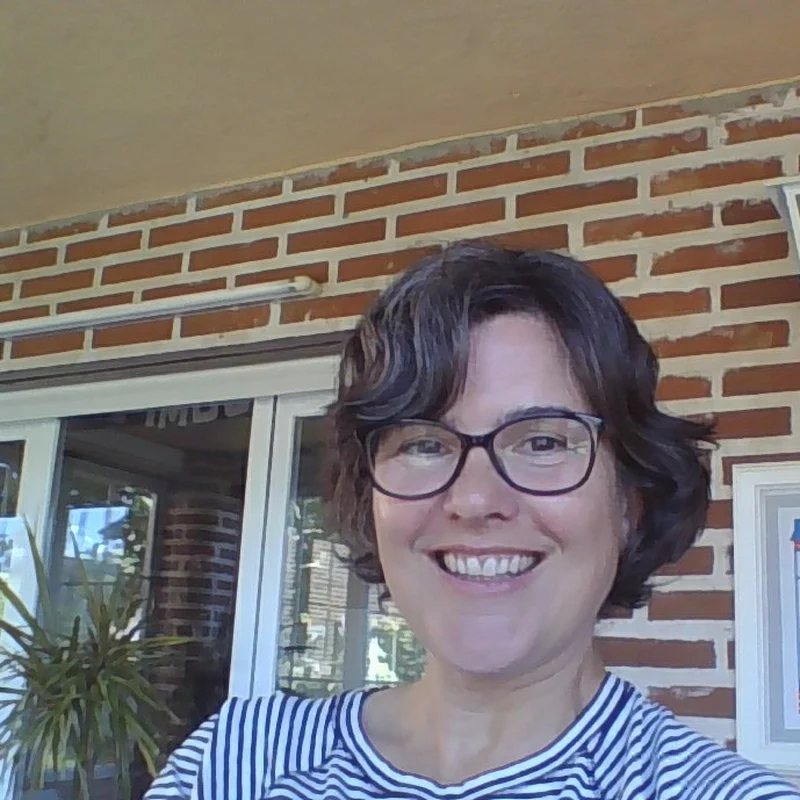
Kate is a qualified English teacher with 20 years' experience both in the UK and internationally. Kate is trained to teach IGCSE (both English Language and English Literature) and A-Level English and has in previous roles been Head of English, coordinating departments in their teaching and structuring courses.
Kate's style is innovative and adaptive to each student's individual needs, tailoring resources to students' specific levels and requirements. Kate is known for giving extensive practical feedback, aimed directly at raising the grade level for each student.
Kate is trained to teach students whose first language is not English, as well as native speakers, and is accustomed to teaching a wide variety of abilities. She has worked all over the world, in Asia and in Europe, as well as in the UK. Kate's proactive and energetic teaching style motivates and inspires students to achieve their utmost potential.

12
I’m Taiwo, a tutor with ten years of teaching and tutoring experience and a B.Sc. in Electronic and Electrical Engineering from Obafemi Awolowo University. I teach A-level, GCSE and IGCSE students, bringing together subject knowledge, classroom experience and a patient, practical approach to learning.
My subjects include Mathematics, Further Mathematics, Physics, Chemistry, Biology, English Language and Computer Science. My current GCSE teaching includes AQA Mathematics at Foundation and Higher levels and AQA English Language. My engineering background strengthens my teaching of Mathematics and Physics, while my professional software development experience allows me to connect computing concepts with practical applications.
I plan lessons around what each student needs. Some need to rebuild foundations; others understand the content but struggle to apply it in unfamiliar exam questions. I identify those gaps, explain ideas clearly and guide students towards solving problems independently. In Mathematics, that means understanding why a method works and recognising when to use it. In Science, it means connecting concepts, calculations and experimental evidence. In English, it means moving beyond identifying techniques to developing thoughtful analysis supported by precise examples.
Students can expect structured lessons, personalised homework and detailed feedback. I use past papers and mark schemes to help them understand what questions demand, improve the clarity of their answers and develop effective revision habits. I track difficulties across lessons so that we revisit what needs attention rather than simply move through topics.
I currently work with international learners, including students in the UK and Hong Kong, and understand the importance of adapting explanations to different educational and language backgrounds. I want students to feel comfortable asking questions, willing to attempt challenging work and able to recognise their own progress. My aim is to build secure understanding, greater independence and confident exam preparation.

34
My experience in tutoring started during my psychology studies, where I taught English as a Foreign Language. After completing an MSc in Performance Psychology, I worked as a sports psychologist and was invited to contribute as a consultant on national radio several times. I spent 2 years teaching English as a Second Language accross schools in Austria and Germany. I then gained a PGDE and went on to teach in both Scottish primary schools and international settings. I currently tutor English and Psychology online at A Level and GSCE level, bringing together strong academic standards with a warm, encouraging style.
My tutoring is rooted in a person-centred approach. In our initial session, we will identify your goals and develop a clear, achievable plan to work towards them. As learners have different strengths and preferences, I tailor each lesson to suit individual learning styles, incorporating structured explanations, active learning, and constructive feedback. I have extensive experience supporting students with additional support needs and adapt the pace, resources, and teaching strategies to ensure all learners feel supported, confident, and prepared for exams.

31
Kate is a highly accomplished English Literature and Language specialist, focusing predominantly on (I)GCSE, A-Level, and IAL pathways across the Edexcel, AQA and OCR exam boards. With over eight years of dedicated experience in the classroom and in personalised tutoring, she has established a strong reputation for elevating student performance across demanding secondary curricula. As a former Head of English at an international school, Kate possesses a thorough understanding of exam specifications, Assessment Objectives, and mark schemes. Her empathetic, student-centred approach builds deep subject confidence, nurtures critical analysis, and consistently enables learners to achieve top grades.

22
Dexter H is an English specialist, examiner and international teacher with over a decade of experience preparing students for IB, Cambridge IGCSE and Pearson A-level English qualifications. He has worked with learners across Europe, Asia and Latin America, supporting students in developing the close analysis, essay writing and exam technique needed to succeed in demanding English courses.
Alongside his IB work, Dexter teaches Cambridge IGCSE English, Cambridge ESL and Pearson A-level English, bringing examiner training and assessment insight to each course. As a trained examiner for Cambridge IGCSE English/ESL and Pearson A-level English, he understands how assessment criteria are applied and helps students move beyond general commentary into precise, evidence-based analysis. His support covers unseen analysis, comparative writing, coursework, literary interpretation, language responses and examination technique.
Dexter’s students have consistently achieved strong results across international English qualifications, including a 100% pass rate in Cambridge and IELTS examinations. He supports students in improving predicted grades, strengthening coursework, refining analytical writing and developing the confidence needed to perform under timed examination conditions.
Dexter is an English Language A and Language B specialist, IB Examiner and Workshop Leader. He has marked official IB, IGCSE and A-Level assessments, trained teachers in the Diploma Programme and helped students approach the various assessments with confidence and clarity.
Beyond the classroom, Dexter has authored major sections of Kognity’s Language and Literature digital textbook and designed IB-aligned resources for Revision Village, two of the most widely used platforms supporting IB students around the world. His work has helped shape the learning experiences of thousands of students internationally.
Formerly Head of English at Colegio Suizo de México, Dexter brings together classroom expertise, examiner insight and curriculum leadership. Known for his structured, supportive and engaging approach, he turns complex assessment tasks into clear, practical strategies that students can apply with confidence. His aim is not only to help students achieve excellent academic results, but also to develop the independence, analytical skills and self-belief that will serve them far beyond the exam.

26
Experienced GCSE and A Level English Language & Literature tutor, specialising in exam preparation, analytical writing and building students’ confidence. I use clear scaffolding, model answers and targeted feedback to help students understand what examiners are looking for and improve their grades. As an experienced examiner, I bring valuable insight into mark schemes and assessment objectives to help students reach their full potential.

48
Aster is an experienced international educator with a Bachelor's degree in Physics and several years of experience teaching and tutoring students across a range of international curricula, including Cambridge, Australian, and other globally recognised programs. She specialises in Physics, Mathematics, Science, English, and academic skills development, and has worked with students from primary school through to senior secondary levels.
Throughout her career, Aster has taught students from diverse cultural and educational backgrounds, including Australian students in online learning environments. Her experience extends beyond subject content to helping students develop critical thinking, problem-solving, exam techniques, academic writing, and independent learning skills. She is also experienced in supporting students with essay writing, research projects, and assessment preparation.
Aster's teaching approach focuses on making complex concepts clear, engaging, and accessible. She adapts lessons to each student's learning style and believes that strong understanding is built through curiosity, confidence, and active participation. Students and parents appreciate her patient, supportive, and encouraging manner, as well as her ability to explain challenging topics in a simple and relatable way.
With a strong background in science education and a passion for helping students achieve their academic goals, Aster is committed to helping every student build confidence, improve performance, and enjoy the learning process.

23
Natasha W is an experienced educator and academic coach with over 25 years in education, including 14 years at an IB World School. She holds a Master of Education in Teaching and Innovation and currently serves as an adjunct professor, where she supports college students in academic writing, critical thinking, and research-based assignments.
In her early years of learning under the British system, she attended a high school where A- level GSCE subjects were taught. Also as an adjunct professor, she helped students to achieve outstanding results in A-level GSCE. Natasha specializes in English, Literature, English as a Second Language, History, Biblical Studies and Religious Studies. She has worked with students from over 40 nationalities and is highly skilled in supporting multilingual learners to develop clarity, confidence, and precision in their communication. Her students consistently improve in essay structure, argument development, and overall academic performance.
In addition to her teaching experience, Natasha has worked with schools and organizations to strengthen communication and engagement across diverse teams, bringing a global and practical perspective to her work with students.
Natasha’s teaching style is structured, supportive, and empowering. She focuses on building independent thinkers by breaking down complex tasks, aligning work with IB assessment criteria, and gradually releasing responsibility to the student. She ensures that each session is purposeful, engaging, and tailored to help students achieve both academic success and long-term confidence

47
Roger achieved 11 A*s at GCSE in the UK and is currently pursuing a degree in Economics at Columbia University and Sciences Po Paris. He tutors GCSE and iGCSE students, with a particular focus on Economics and related subjects. He is fluent in Italian, Spanish and French, and is comfortable working with students for whom English is not their first language. Roger is a rigorous and dedicated tutor who aims to make lessons engaging while building students’ confidence and interest in the subject.
The tutors you see here are just a selection from our team of hundreds of tutors, please contact our Learning Advisors to discuss tutoring options
Why GCSE English Language needs the right tutor
What makes GCSE English Language hard
GCSE and IGCSE English Language has no content to memorise, and that is exactly what makes it hard. Every reading text is unseen, so marks depend on how quickly and precisely a student can read, select evidence and explain how a writer creates an effect, all against the clock. Half the marks go to writing, where examiners reward control of structure, vocabulary and sentence variety, and a fixed share of marks goes to technical accuracy, so careless spelling and punctuation cost marks on every writing task.
Other things that make it hard:
- Language and structure analysis questions that are marked on how the effect is explained, not on how many techniques are named
- Comparison questions across two texts, often from different centuries, that need ideas and methods compared, not two separate summaries
- Nineteenth-century non-fiction and fiction extracts with unfamiliar vocabulary and long sentences
- Time pressure: two-hour papers that mix short retrieval questions with long analytical and writing responses
- Summary and directed writing tasks on Cambridge and Edexcel International GCSE that must use the source material without copying it
How tutoring changes the outcome
Our English Language tutors work from your board's own past papers, mark schemes and examiners' reports, so every answer is shaped to the question type and level descriptors the examiner is actually using. Sessions target where English Language marks are actually lost:
- analysis answers that spot techniques but do not explain their effect on the reader
- comparison and evaluation questions answered as two separate commentaries
- creative and transactional writing that lacks a planned structure or a convincing voice for the audience
- timing across the paper, and technical accuracy errors that examiners' reports repeatedly flag
What you'll learn in GCSE English Language tutoring
Core skills developed
Every English Language specification splits its marks equally between reading and writing, but the papers carry them differently. On AQA, OCR and Edexcel's 1EN2, two equally weighted papers each mix reading and writing. On Edexcel 1EN0 and Eduqas, the second paper is worth 60%. On Cambridge, Paper 1 is mostly reading and Paper 2 or the coursework is mostly writing, while Edexcel International and OxfordAQA weight their first paper at 60%. We work through past questions objective by objective, so you can see whether reading analysis, comparison or writing accuracy is costing you marks.
- Retrieving and inferring explicit and implicit information from unseen texts
- Analysing how writers use language and structure to achieve effects
- Comparing and evaluating writers' ideas and perspectives across two texts
- Writing descriptively, narratively and persuasively for a specified audience, purpose and form
- Accurate spelling, punctuation and grammar, with a varied range of vocabulary and sentence structures
How are students assessed
On the UK boards English Language is assessed entirely by exams sat at the end of the course, with a compulsory spoken language presentation reported separately, and a November resit series for students aged 16 or over. The international boards add choice: Cambridge, Edexcel International and OxfordAQA each offer a coursework or non-exam option in place of the second paper, and speaking is an optional endorsement.
- Short retrieval and inference questions: practised against past papers for speed and precision, so they do not eat into time for the longer answers
- Extended analysis and comparison: planned and rewritten against the level descriptors until each paragraph explains effect and method
- Creative, transactional and directed writing: timed planning routines and redrafting, with technical accuracy checked against the mark scheme
What GCSE English Language topics do we cover?
OxfordAQA GCSE English Language
Paper 1 (2 hours, 80 marks, 60%) is compulsory, followed by either Paper 2 (2 hours, 80 marks, 40%) or a non-exam assessment project worth 40%. Speaking and listening is an optional endorsement. Exams run in May/June and November, and the qualification is graded 9–1.
- Paper 1: Literary non-fiction and composition. Section A: Literary non-fiction (40 marks); Section B: Composition (40 marks)
- Paper 2: Source-based reading and directed writing. Section A: Reading (40 marks); Section B: Writing (40 marks)
- Non-exam assessment project: a researched written task with a commentary (60 marks)
- Speaking and listening (optional endorsement): a presentation or an interview with extended turns
OxfordAQA's Paper 1 reading is a single literary non-fiction text, such as autobiography, letters or travel writing, divided into sections with questions, while Paper 2 gives five or six short texts on modern world themes, some of them visual. The non-exam project, built on independent research, is a genuine alternative to Paper 2 for students who write well outside timed conditions. Sessions on this board practise reading across multiple short sources quickly and, for project students, plan the research and commentary.
WJEC GCSE English Language
Eduqas GCSE English Language (England) has two written components and a separately reported Spoken Language component. Component 1 is 1 hour 45 minutes and worth 40%, and Component 2 is 2 hours and worth 60%; each has a 40-mark reading section and a 40-mark writing section. Exams are in the summer, with a November series for students aged 16 or over. In Wales, WJEC's separate GCSE English Language is being replaced by GCSE English Language and Literature (Single Award 3750QS, Double Award 3750QD), first awarded in 2027, which combines both subjects in one qualification.
- Component 1: 20th Century Literature Reading and Creative Prose Writing
- Component 2: 19th and 21st Century Non-fiction Reading and Transactional/Persuasive Writing
- Component 3: Spoken Language (one presentation or speech, including responses to questions and feedback)
Eduqas has two distinctive features. Component 1 reading is a single 20th-century literary prose extract of about 60–100 lines, and Component 2 writing is two compulsory 20-mark transactional or persuasive tasks rather than one long piece, so students must plan and write two complete texts against the clock. The creative writing must be a narrative or recount, as purely descriptive answers cannot reach the full mark range. Sessions on this board drill the two-task writing section and keep creative writing in narrative form.
IAL GCSE English Language
Pearson offers two International GCSE English Language specifications. Both are untiered, graded 9–1, sat in June or November, and have an optional spoken language endorsement reported separately.
English Language A (4EA1): students take Component 1 plus either Component 2 or Component 3. Components 1 and 2 are available on paper or on screen. A modular version (4XEA1) has the same two exams as separate units that can be sat in different series, with no coursework option.
- Component 1: Non-fiction Texts and Transactional Writing (2 hours 15 minutes, 90 marks, 60%)
- Component 2: Poetry and Prose Texts and Imaginative Writing (1 hour 30 minutes, 60 marks, 40%)
- Component 3: Poetry and Prose Texts and Imaginative Writing (coursework, 60 marks, 40%)
English Language B (4EB1): one 3-hour, 100-mark paper worth 100%.
- Section A: reading questions on two unseen extracts (40 marks)
- Section B: directed writing based on the source texts (30 marks)
- Section C: one writing task from a choice of discursive, narrative or descriptive (30 marks)
English Language A is built on the Pearson Edexcel International GCSE English Anthology: the Component 1 reading includes a non-fiction anthology text alongside an unseen extract, and Component 2 sets an essay on a poetry or prose anthology text, so students who know the anthology well have a real advantage. The coursework route replaces Component 2 with two 30-mark assignments. Sessions on this board work through the anthology texts in depth and, for coursework students, plan and redraft the assignments within the rules.
EDEXCEL GCSE English Language
Edexcel offers two GCSE English Language specifications, and schools choose one. Both are untiered, graded 9–1, sat in May/June with a November series for students aged 16 or over, and include a separately reported Spoken Language Endorsement graded Pass, Merit or Distinction.
1EN0: two papers weighted 40% and 60%.
- Component 1: Fiction and Imaginative Writing (1 hour 45 minutes, 64 marks, 40%): an unseen 19th-century fiction extract and a choice of two imaginative writing tasks
- Component 2: Non-fiction and Transactional Writing (2 hours 5 minutes, 96 marks, 60%): two thematically linked unseen 20th- and 21st-century non-fiction extracts and a choice of two transactional writing tasks
1EN2 (English Language 2.0): two equally weighted papers of 1 hour 55 minutes and 80 marks.
- Paper 1: Non-Fiction Texts: two linked, unseen 19th-century non-fiction extracts and a transactional writing task
- Paper 2: Contemporary Texts: two linked, unseen 20th- and 21st-century fiction and literary non-fiction extracts and an imaginative writing task
On 1EN0, Component 2 carries 60% of the grade and includes a comparison of two non-fiction texts, so the non-fiction paper decides most of the result. 1EN2 was designed to suit students taking English Language as a standalone GCSE, and examines evaluation only on non-fiction in Paper 1. Sessions on this board start by confirming which specification your school uses, then focus on the longer non-fiction paper and its writing task.
OCR GCSE English Language
Two examined components, each a 2-hour, 80-mark paper worth 50% of the GCSE, plus a compulsory Spoken language endorsement that is reported separately. Both papers have a 40-mark Section A of reading questions on unseen texts and a 40-mark Section B with a choice of two writing tasks linked to the reading. Exams are in June, with a November series for students aged 16 or over.
- Communicating information and ideas (01): two unseen non-fiction texts, one from the 19th century, and non-fiction writing
- Exploring effects and impact (02): two unseen 20th or 21st century prose fiction or literary non-fiction texts, and creative writing
- Spoken language (03 or 04): non-exam assessment, reported separately
OCR is distinctive in putting the 19th-century non-fiction on the paper that ends with non-fiction writing, and creative writing on the paper with modern fiction, so each paper has a clear identity. Its two-hour papers give slightly more time than most UK boards, but each reading section still has four questions to cover. Sessions on this board practise reading 19th-century non-fiction quickly and build a plan for both writing styles.
AQA GCSE English Language
Two equally weighted papers, each 1 hour 45 minutes, 80 marks and 50% of the GCSE, sat at the end of the course in May/June, with a November series for students aged 16 or over. All texts in the exam are unseen. Each paper has a 40-mark reading section and a 40-mark writing section, and on both the writing task carries 24 marks for content and 16 for technical accuracy. Spoken Language is a separate, teacher-assessed endorsement.
Paper 1: Explorations in Creative Reading and Writing
- Section A: Reading (one literature fiction text)
- Section B: Writing (descriptive or narrative writing)
Paper 2: Writers' Viewpoints and Perspectives
- Section A: Reading (one non-fiction text and one literary non-fiction text)
- Section B: Writing (writing to present a viewpoint)
Non-examination Assessment: Spoken Language
- Presenting, responding to questions and feedback, and use of Standard English
AQA's question sequence is fixed and predictable: each reading section moves from a 4-mark retrieval question to an extended evaluation (Paper 1) or comparison (Paper 2), and the same skill is tested at the same question number every series. Paper 2 always pairs two linked texts from different time periods. Sessions on this board drill each question number as a separate skill and practise the Paper 2 comparison question until it is automatic.
CIE GCSE English Language
All candidates take Paper 1 and either Paper 2 or Component 3, each worth 50%. 0500 is graded A* to G and 0990 is graded 9–1; the content and papers are the same. Exams run in June and November, with a March series in India for 0500. The optional Speaking and Listening Test is separately endorsed with grades 1 to 5. Cambridge has revised the syllabus for first examination in 2027, restructuring Paper 1 into four compulsory 20-mark questions.
- Paper 1: Reading (2 hours, 80 marks): four compulsory questions on three texts, covering comprehension, a summary task, short-answer questions with a language task, and an extended response to reading
- Paper 2: Directed Writing and Composition (2 hours, 80 marks): Section A Directed Writing (40 marks) and Section B Composition (40 marks), chosen from two descriptive and two narrative titles
- Component 3: Coursework Portfolio (80 marks): three assignments, writing to discuss, argue and/or persuade in response to a text, writing to describe, and writing to narrate
- Component 4: Speaking and Listening Test (optional, about 10–12 minutes, 40 marks): an individual talk and conversation
Cambridge puts the heaviest emphasis on handling source material: Paper 1 is built on three reading texts of about 1,400 words in total, and the summary and directed writing tasks reward selecting and reshaping ideas in your own words rather than analysing technique alone. Word guides for each writing task are part of the discipline. Sessions on this board practise the restructured 2027 Paper 1 questions to time and train summary and directed writing against the mark scheme.
Ready to start?
Tell us the subject, exam board and target grade. A Learning Advisor reviews it the same day.
Why parents trust us
4.9/5 from 312 reviews · used by students at 500+ schools





FAQs
We have answers to your most frequently asked questions. Anything not answered here, please reach out to our team.
GCSE English Language means the UK specifications from AQA, Pearson Edexcel, OCR and Eduqas, while IGCSE English usually means Cambridge IGCSE First Language English 0500 (0990 on the 9–1 scale) or Edexcel International GCSE English Language A 4EA1. Both test unseen reading and your own writing, but the UK GCSEs are 100% exam with a separate Spoken Language endorsement, while the IGCSEs offer coursework in place of one exam. Students for whom English is not a first language may instead take IGCSE English as a Second Language. Universities and sixth forms accept both. The UK GCSE is sat in May and June, with a November resit series only for students aged 16 or over, while Cambridge IGCSE and Edexcel International GCSE also run a full November series, which suits students outside the UK and anyone who needs a resit. Read more about online IGCSE tutoring.
Each sixth form and college sets its own entry requirements, so check the prospectus of the one you're applying to. As a guide, most ask for a grade 6 in GCSE English Language for A-Level English Language, and many ask for a 6 in English Literature as well; selective schools often ask for a 7. A grade 4 or 5 in English Language is also part of the general entry requirement for most sixth form courses. If you take Cambridge IGCSE on the A*–G scale, a grade A is broadly equivalent to a 7 and a C to a 4, the points that were aligned when the 9–1 scale was introduced (GOV.UK grading factsheets), so a requirement of grade 6 usually means a strong B. See A-Level English Language and A-Level English Language and Literature.
GCSE English Language tutoring with an academic tutor costs from $50 USD (£38) per hour, and packages save 5–15%, which suits regular lessons spent on timed reading and writing practice, with extra sessions before mocks and the summer exams. Pay as you go is invoiced after each lesson, with no lock-in contracts. Professional tutors (qualified teachers and examiners) cost from $75 USD (£56) per hour. See pricing.
Late cancellations and no-shows are charged at half the lesson fee. That applies if you cancel less than one hour before the start time, or don't turn up. You can still change a session time whenever you need to, as long as you give your tutor notice.
Our academic tutors are high-achieving graduates and undergraduates who scored in the top band in English Language themselves, and our professional tutors are qualified teachers or examiners with 5+ years' experience. We accept only the top 5% of applicants. You are matched to a tutor who knows your board, so they can mark your answers against your board's level descriptors and show you exactly what moves a response up a band. Read more about our GCSE tutors and how we select tutors.
Lessons are one-to-one and online, with a tutor matched to GCSE English Language, your exam board and your target grade. Each session works on your weakest areas using past paper questions from your own board, whether that is AQA, Pearson Edexcel, OCR, Edexcel International GCSE or Cambridge IGCSE 0500. For English Language that usually means timed answers on unseen extracts, analysis paragraphs rewritten until they explain effect and method, and creative and transactional writing redrafted against the level descriptors. See how it works or start with the student application.
Yes, because there is no content to revise in the usual sense. Every reading text is unseen, so the marks depend on skills: analysing the effect of language and structure, comparing writers' viewpoints and evaluating a text critically, all under time pressure. Half the marks are for your own writing, where examiners reward ambitious vocabulary and varied sentences but also accurate technical skills. Many students find it hard to see how to improve, which is why practice against the mark scheme matters. Our online GCSE tutoring focuses on exactly those areas.
It is one of the hardest 9s to get. In summer 2026 only 2.2% of GCSE English Language entries in England achieved a grade 9, and 15.2% achieved a 7 or above (JCQ), from 819,199 entries. Internationally, 11.5% of Edexcel International GCSE English Language A candidates achieved a 9 (provisional figures from Pearson), and 14.6% of Cambridge IGCSE First Language English candidates achieved an A* (Cambridge). A 9 needs perceptive analysis of how writers use language and structure, and original, controlled writing with accurate spelling, punctuation and grammar throughout.
Grade boundaries are set after each exam series and change every year, so older figures are only a guide. In June 2026, AQA's grade 9 boundary for English Language was 122 out of 160 (76%), with grade 4 at 75 (47%). Pearson Edexcel's grade 9 was 132 out of 160 (83%), with grade 4 at 87 (54%). Edexcel International GCSE 4EA1 set grade 9 between 113 and 126 out of 150 (75–84%), depending on the route and papers taken, and Cambridge IGCSE 0500's A* threshold was 107 to 121 out of 160 (67–76%), depending on the components. Sources: AQA, Pearson, Pearson International and Cambridge.
On the UK boards there is no coursework, but every student must complete a Spoken Language assessment: a presentation to the teacher, with questions afterwards. It is reported separately as Pass, Merit or Distinction and does not change the 9–1 grade. The international boards are more flexible. Cambridge IGCSE 0500 offers a Coursework Portfolio in place of Paper 2 and an optional Speaking and Listening Test graded 1 to 5, Edexcel International GCSE 4EA1 offers coursework worth 40% in place of Component 2, and OxfordAQA offers a non-exam project. See the Cambridge IGCSE 0500 syllabus.
On the UK boards GCSE English Language is assessed entirely by exams sat at the end of the course. AQA sets two papers of 1 hour 45 minutes, each worth 50%: one on fiction reading and creative writing, and one on non-fiction reading and writing to present a viewpoint. Pearson Edexcel, OCR and Eduqas follow the same pattern of reading unseen texts and producing your own writing. The international boards offer more choice: Cambridge IGCSE 0500 and Edexcel International GCSE 4EA1 each let schools replace the second exam with a coursework portfolio. See the AQA specification.
All GCSE subjects
Ready to find your GCSE English Language tutor?
We will find you a tutor in 24 hours and if you are not happy after the first session, we will give you a full refund and find you another tutor for no extra charge.
Resources for GCSE students
Check out our free content about the GCSE