
How It Works
We keep things as simple as possible. Our objective is to make finding a tutor convenient, efficient and effective.
Fill out an online form
Complete an application online which will be received by one of our dedicated Learning Advisors
Get matched with a tutor
Our experienced Learning Advisor will review your application, and match you with the most appropriate tutor based on your application
Tutor makes contact
Once we confirm with the tutor, the tutor will make contact to organise your first session.
Have your first lesson
Our tutors will work around your schedule to organise a session whenever you would like. Only pay for tutoring you have completed.
Two kinds of GCSE tutor
Choose between top-performing recent graduates or qualified teachers. Either way, our matching process finds you a tutor based on subject, exam board, target grade and availability.
Academic Tutors
from $50 USD/hr
Top performing graduates who achieved top grades in the subject they teach.
- We accept only the top 5% of tutor applicants.
- Each tutor is chosen for their academic results, teaching ability, and connection with students.
Relatable role model: work with a tutor who is similar in age and can be a peer
Affordability: academic tutors are more cost-effective than professional tutors
First-hand experience: they sat these papers recently and know what worked
Professional Tutors
from $75 USD/hr
Current or past qualified teachers and examiners with 5+ years professional teaching experience.
- We only select highly experienced, qualified GSCE teachers.
- Every teacher is assessed on their teaching expertise, subject knowledge, and ability to engage students.
Quality assurance: trained and accredited teaching qualifications
Guaranteed track record: years of experience helping students succeed
Subject expertise: deep understanding of content and exam board requirements
Due to our international operations we quote our prices in USD. Pound amounts are an indicative conversion and you will be invoiced in USD.
Academic Tutors
from £37 GBP/hr
Top performing graduates who achieved top grades in the subject they teach.
Relatable role model: work with a tutor who is similar in age and can be a peer
Affordability: academic tutors are more cost-effective than professional tutors
First-hand experience: they sat these papers recently and know what worked
Professional Tutors
from £56 GBP/hr
Current or past qualified teachers and examiners with 5+ years professional teaching experience.
Quality assurance: trained and accredited teaching qualifications
Guaranteed track record: years of experience helping students succeed
Subject expertise: deep understanding of content and exam board requirements
Meet our GCSE History tutors
Our team is a combination of GCSE graduates who sat these exams recently and qualified teachers with years of classroom and examining experience.

13
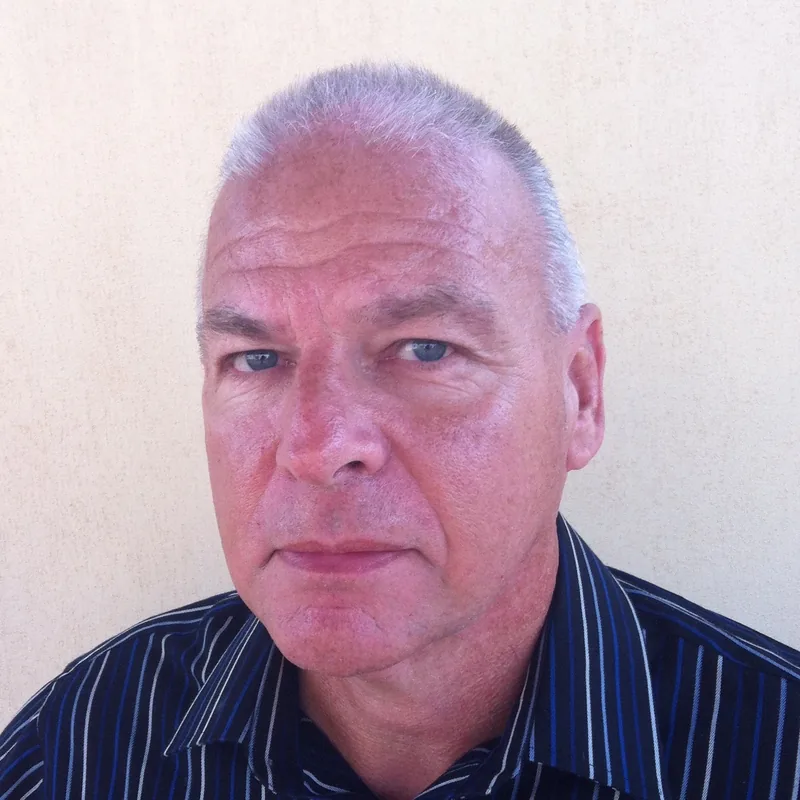
I am Hans K and a native from Rotterdam, The Netherlands. I have been teaching IB/DP , IGCSE and 'O' and 'A' levels for the last 20 years on a variety of internationals schools, both in Europe and the U.S. I carry degrees from Leiden Uni. in Leiden, The Netherlands, and completed my doctors course work at Carnegie-Mellon Uni. in Pittsburgh, PA, USA. I have played First Division Amateur soccer in Holland and have coached for the last 20 years as well. Besides being a soccer fanatic, I am also a wolf conservationist supporter being associated with Wild Spirit Wolf Sanctuary in Ramah, NM. I read quite a lot as well and try and link my readings to what I teach in History. Finally, looking at the A-Level curriculum, I have extended experience in working with sources corresponding to the Unit of European History with specifics in World War I and II, the Interbellum Period, and the Cold War., the same applies for my IGCSE teachings. I think it was the Cambridge Assessment Exam Board where the exams were forwarded to by the school.
16
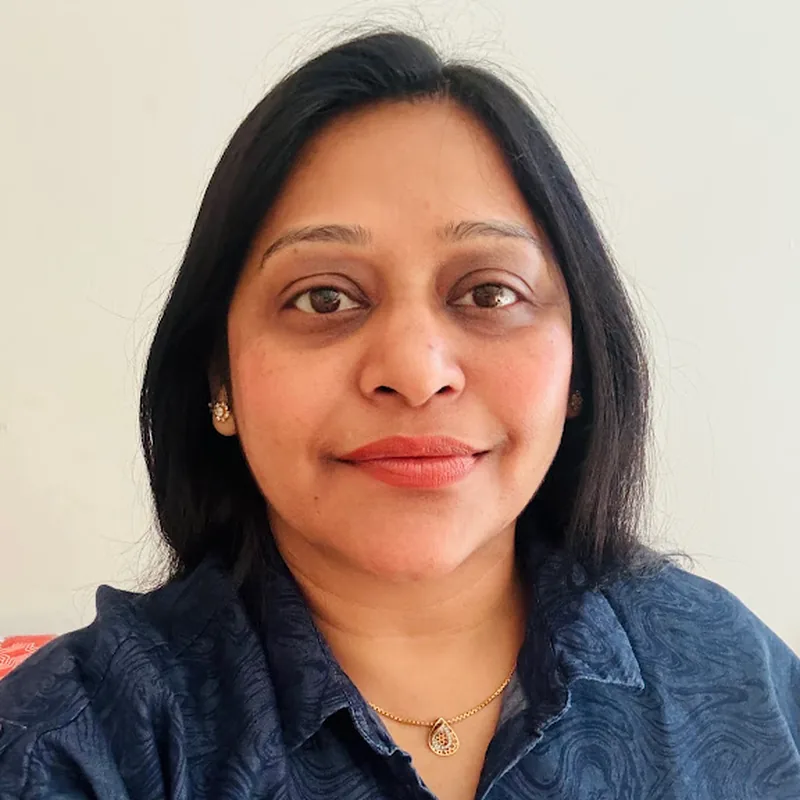
Smita C is experienced Cambridge educator with extensive teaching experience in History and Global Perspectives, including Cambridge IGCSE, AS Level, and A Level programmes. She is fully trained in the Cambridge curriculum and have served as a Cambridge examiner for IGCSE History, AS & A Level History, and Global Perspectives. Her experience as both a teacher and examiner has provided her with a strong understanding of Cambridge curriculum frameworks, assessment objectives, examination standards, and assessment criterias.
39
Marcus M is an experienced international educator with over 30 years of teaching Economics and Business Management in IB Diploma, A-level and IGCSE programs. He recently taught DP Economics and DP Business Management at the American International School of Kingston, Jamaica, and has previously taught in schools across Asia, Europe, Africa, and South America. Marcus holds an MA in Education from the University of Bath and has served as both a Head of Humanities and DP Coordinator. Since 2021, he has also worked as an IB Examiner for DP Economics. He also has experience teaching A level in both subjects. He taught A level in both UK and HK before switching to IB.His extensive classroom experience, leadership background in, and passion for global learning make him an engaging and effective tutor for students pursuing success in both the IB and A level programmes.

15
Jason is a seasoned humanities subject teacher, teaching across a variety of subjects, including History, Geography, Sociology, Philosophy, Religious Studies, Law and other humanities subject for different exam boards. Jason was awarded a Second Class Degree in Bachelor of Social Sciences (Government and Laws) and Bachelor of Laws, while I spent most of teaching career in Geography, especially appreciating the dimensions of human geography. Jason aims at building a solid knowledge foundation to be built upon, and equipping students with the exam techniques to be successful. Jason’s sessions are structured, focused, always questioning so that students are prompted to think more and are given the opportunities to articulate themselves, essential skills to be successful in IBDP.
The tutors you see here are just a selection from our team of hundreds of tutors, please contact our Learning Advisors to discuss tutoring options
Why GCSE History needs the right tutor
What makes GCSE History hard
GCSE History is hard because each paper mixes several question types, and each type is marked against its own criteria. A student can know the content thoroughly and still score poorly if a source question is answered with recalled facts, or an essay describes events instead of explaining them. Mark schemes reward analysis and judgement, so the step from knowing what happened to arguing why it mattered is where most marks are won or lost.
Other things that make it hard:
- Breadth of content: most courses combine four studies across different centuries and countries, all examined at the end
- Source questions on provenance and usefulness, where students must judge what a source can tell a historian rather than summarise it
- Interpretation questions asking how and why historians' views differ, which many students find abstract
- Extended essays, the highest-mark questions on most papers, that need a sustained argument and a supported judgement under time pressure
- Second-order concepts such as change, continuity, causation and significance, which each need a different kind of answer
How tutoring changes the outcome
Our History tutors work from your board's own past papers, mark schemes and examiners' reports, so every answer is built around the question type and level descriptors an examiner uses. Sessions target where History marks are actually lost:
- source answers that describe the content instead of evaluating provenance and usefulness
- interpretation questions that summarise each view without explaining why historians differ
- essays that narrate events without a clear line of argument or a substantiated final judgement
- timing across papers with several question types, so the highest-mark questions are not rushed
What you'll learn in GCSE History tutoring
Core skills developed
Every GCSE History specification in England uses the same four assessment objectives, set by Ofqual: knowledge and understanding (AO1, 35%), explanation and analysis using second-order concepts (AO2, 35%), sources (AO3, 15%) and interpretations (AO4, 15%). That applies to AQA, OCR, Edexcel and Eduqas. Edexcel International weights the same four objectives at 34%, 36%, 15% and 15%. Cambridge has only three: knowledge 30%, explanation 45% and sources 25%, with no separate interpretations objective. OxfordAQA puts 37.5% each on knowledge and explanation and 25% on sources and interpretations together, while the new WJEC specification in Wales gives 30% to sources, interpretations and debates and 20% to historical enquiry skills. We work through past-paper questions objective by objective, so you can see which skill is costing you marks rather than just seeing a lower total.
- Secure, accurate knowledge of the periods, people and events studied
- Explaining causes, consequences, change and significance as a linked argument
- Evaluating contemporary sources for content, provenance and usefulness
- Analysing and comparing historians' interpretations and explaining why they differ
- Planning and writing extended answers that reach a substantiated judgement
How are students assessed
History is assessed mainly by written exams. AQA, OCR, Edexcel and Eduqas are linear: every paper is sat in May/June at the end of the course, and the historic environment is examined in the written papers rather than assessed as coursework. Edexcel International and Cambridge also run a November series. Cambridge is the only board with an optional coursework route, where schools choose between a coursework essay and Paper 4. WJEC in Wales is the exception, with two non-exam assessment units worth 40% of the grade.
- Source and interpretation questions: practised on unseen extracts against the board's mark scheme until evaluation becomes a habit
- Short explanation questions: drilled for precise, supported points that earn the marks quickly
- Extended essays: planned and rewritten until every paragraph argues towards a substantiated judgement
What GCSE History topics do we cover?
OxfordAQA GCSE History
Two papers, each 1 hour 45 minutes, 60 marks and 50% of the International GCSE. This is a new specification, taught from September 2026 with first exams in May/June 2028. Each paper has two 30-mark sections, and students study one option for each section.
Paper 1: International Relations depth studies: conflict and peace in the 20th Century
- Section A (one of): Peacemaking and the League of Nations, c1919–1939
- Section A (one of): Crises of the Cold War, 1960–1975
- Section B (one of): The origins of the First World War, c1890–1915
- Section B (one of): Hitler's foreign policy and the origins of the Second World War, 1933–1941
- Section B (one of): The origins and development of the Cold War, 1945–1960
- Section B (one of): Détente and the collapse of communism, c1969–1991
Paper 2: Studies in change
- Section A (one of): Life in Germany, 1919–1949
- Section A (one of): Life in Russia and the USSR, 1914–1953
- Section A (one of): Life in the USA, 1920–1968
- Section B (one of): Technology and change, c800–present day
- Section B (one of): Medicine and change, c800–present day
Paper 1 Section A is entirely source-based: a booklet of three sources is released in advance (on 1 February for the May/June series), and two unseen sources are added in the exam. OxfordAQA has three assessment objectives rather than four, with sources and interpretations combined at 25%. Sessions on this board work through the pre-released sources as soon as they are published and practise linking them to the unseen ones.
WJEC GCSE History
Eduqas (England) and WJEC (Wales) offer separate GCSE History qualifications with different structures. We match tutors to the board on your exam entry.
Eduqas · England
Two components, each 50% of the GCSE, sat in May/June at the end of the course. Component 1: Studies in Depth is two 1-hour papers. Component 2: Studies in Breadth is a 45-minute Period Study paper and a 1 hour 15 minute Thematic Study paper. Schools choose one British and one non-British depth study from different eras, one period study and one thematic study.
Component 1: Studies in Depth
- 1A. Conflict and Upheaval: England, 1337–1381
- 1B. The Elizabethan Age, 1558–1603
- 1C. Empire, Reform and War: Britain, 1890–1918
- 1D. Austerity, Affluence and Discontent: Britain, 1951–1979
- 1E. The Crusades, c.1095–1149
- 1F. The Voyages of Discovery and Conquest of the Americas, 1492–1522
- 1G. Germany in Transition, 1919–1939
- 1H. The USA: A Nation of Contrasts, 1910–1929
Component 2: Studies in Breadth
- 2A. The Development of the USA, 1929–2000
- 2B. The Development of Germany, 1919–1991
- 2C. The Development of the USSR, 1924–1991
- 2D. The Development of the UK, 1919–1990
- 2E. Changes in Crime and Punishment in Britain, c.500 to the present day
- 2F. Changes in Health and Medicine in Britain, c.500 to the present day
- 2G. The Development of Warfare in Britain, c.500 to the present day
- 2H. Changes in Entertainment and Leisure in Britain, c.500 to the present day
WJEC · Wales
The Made-for-Wales GCSE History is taught from September 2026 and first awarded in 2028, graded A* to G. Units 1 and 3 are 1-hour written exams (60 marks, 30% each). Unit 2 is an on-screen non-exam assessment (3 hours, 80 marks, 20%) set and marked by WJEC, and Unit 4: A changing society is a non-exam assessment (4 hours 15 minutes, 80 marks, 20%) marked by the school and moderated by WJEC. Across Units 1 to 3, schools must cover one medieval, one early modern and one modern topic. Students sitting in summer 2027 take the outgoing WJEC specification, which has its final assessment that summer.
Unit 1: An in-depth study on Welsh history
- 1.1 Rhys ap Gruffudd, Prince of Deheubarth c.1132–1197
- 1.2 Owain Glyndŵr c.1354–1416
- 1.3 Wales and the early Tudors, c.1485–c.1547
- 1.4 Wales in the era of the Civil War, 1603–1660
- 1.5 Rebellions and Protest in Wales c.1831–c.1891
- 1.6 Wales in the early to mid-twentieth century c.1914–c.1959
Unit 2: An in-depth study on European and/or World history
- 2.1 Genghis Khan c.1162–c.1227: a case study in medieval imperialism
- 2.2 The Black Death c.1330–c.1360: a case study in medieval society
- 2.3 The Spanish Conquest of the Aztecs c.1492–c.1525: a case study in early modern colonialism
- 2.4 Süleyman I c.1520–c.1566: a case study in early modern imperialism
- 2.5 The Third Reich c.1933–c.1945: a case study in modern nationalism
- 2.6 Afghanistan c.1979–c.2001: a case study in modern international relations
Unit 3: A study of a period in world history
- 3.1 The Vikings c.750–c.1066
- 3.2 The Crusades, c.1095–c.1291
- 3.3 The Songhai Empire, c.1464–c.1591
- 3.4 The Mughal Empire, c.1526–c.1707
- 3.5 Russia and the Soviet Union c.1861–c.1953
- 3.6 Changes in US society c.1880–c.1980
Eduqas's thematic study includes a nominated historic site that changes every two years, and Component 1 leans heavily on the analysis of sources and interpretations. WJEC's new specification puts 40% of the grade into enquiry-based non-exam assessment, with Unit 2 completed on screen between January and March. Sessions on this board prepare the current Eduqas site for English students and build enquiry and source skills for the WJEC assessments.
IAL GCSE History
Two papers, each 1 hour 30 minutes, 60 marks and 50% of the qualification, sat in June or November at the end of the course. Both papers can be taken on paper or onscreen. In Paper 1, students answer one question on each of two depth studies. In Paper 2, they answer one question on a historical investigation and one on a breadth study in change.
Paper 1: Depth Studies (at least two of)
- 1 The French Revolution, c1780–99
- 2 Development of a nation: unification of Italy, 1848–70
- 3 Germany: development of dictatorship, 1918–45
- 4 Colonial rule and the nationalist challenge in India, 1919–47
- 5 Dictatorship and conflict in the USSR, 1924–53
- 6 A world divided: superpower relations, 1943–72
- 7 A divided union: civil rights in the USA, 1945–74
- 8 South Africa: from union to the end of apartheid, 1948–94
Paper 2: Historical investigation (one of)
- A1 The origins and course of the First World War, 1905–18
- A2 Russia and the Soviet Union, 1905–24
- A3 The USA, 1918–41
- A4 The Vietnam Conflict, 1945–75
- A5 East Germany, 1958–90
Paper 2: Breadth study in change (one of)
- B1 America: from new nation to divided union, 1783–1877
- B2 Changes in medicine, c1848–c1948
- B3 Japan in transformation, 1853–1945
- B4 China: conflict, crisis and change, 1900–89
- B5 The changing role of international organisations: the league and the UN, 1919–c2011
- B6 The changing nature of warfare and international conflict, 1919–2011
- B7 The Middle East: conflict, crisis and change, 1917–2012
- B8 Diversity, rights and equality in Britain, 1914–2010
Edexcel International has no British history requirement, so schools often build a fully international course. Source skills are tested only in Paper 2, through the historical investigation, while interpretations appear on both papers. Sessions on this board cover the depth studies your school has chosen and practise the investigation's source questions to time.
EDEXCEL GCSE History
Three papers, all sat in May/June of the same year, for a total of 168 marks including 8 for spelling, punctuation, grammar and specialist terminology. Paper 1: Thematic study and historic environment is 1 hour 20 minutes, 52 marks and 30%. Paper 2: Period study and British depth study is 1 hour 50 minutes, 64 marks and 40%, answered in two separate booklets. Paper 3: Modern depth study is 1 hour 30 minutes, 52 marks and 30%.
Paper 1 · Thematic study and historic environment (one of)
- 10: Crime and punishment in Britain, c1000–present and Whitechapel, c1870–c1900: crime, policing and the inner city
- 11: Medicine in Britain, c1250–present and The British sector of the Western Front, 1914–18: injuries, treatment and the trenches
- 12: Warfare and British society, c1250–present and London and the Second World War, 1939–45
- 13: Migrants in Britain, c800–present and Notting Hill, c1948–c1970
Paper 2 · British depth study (one of)
- B1: Anglo-Saxon and Norman England, c1060–88
- B2: The reigns of King Richard I and King John, 1189–1216
- B3: Henry VIII and his ministers, 1509–40
- B4: Early Elizabethan England, 1558–88
Paper 2 · Period study (one of)
- P1: Spain and the 'New World', c1490–c1555
- P2: British America, 1713–83: empire and revolution
- P3: The American West, c1835–c1895
- P4: Superpower relations and the Cold War, 1941–91
- P5: Conflict in the Middle East, 1945–95
Paper 3 · Modern depth study (one of)
- 30: Russia and the Soviet Union, 1917–41
- 31: Weimar and Nazi Germany, 1918–39
- 32: Mao's China, 1945–76
- 33: The USA, 1954–75: conflict at home and abroad
Each thematic study comes with its own historic site, examined through source questions in Section A of Paper 1. Interpretations are tested only in Paper 3, where Section B is a single four-part question on two sources and two interpretations, ending with an evaluation of one interpretation that also carries the SPaG marks. Sessions on this board give the Paper 3 interpretation sequence dedicated practice and prepare the historic site alongside the thematic study.
OCR GCSE History
OCR offers two GCSE History specifications, each with three papers sat in May/June at the end of the course. History A (Explaining the Modern World) sets a period study with a non-British depth study (1 hour 45 minutes, 105 marks including 5 for spelling, punctuation and grammar, 50%), a thematic study (1 hour, 50 marks, 25%) and a British depth study with a study of the historic environment (1 hour 15 minutes, 55 marks including 5 for SPaG, 25%). History B (Schools History Project) sets British History (1 hour 45 minutes, 80 marks, 40%), History Around Us (1 hour, 40 marks plus 10 for SPaG, 20%) and World History (1 hour 45 minutes, 80 marks, 40%). We match tutors to the specification code on your exam entry.
History A · J410 · Period study (all candidates)
- International Relations: the changing international order 1918–1975
History A · Non-British depth study (one of)
- China 1950–1981: The People and the State
- Germany 1925–1955: The People and the State
- South Africa 1960–1994: The People and the State
- The USA 1919–1948: The People and the State
- The USA 1945–1974: The People and the State
History A · Thematic study and linked British depth study with historic environment
- Migration to Britain c.1000 to c.2010, with The Impact of Empire on Britain 1688–c.1730 and Urban Environments: Patterns of Migration
- Power: Monarchy and Democracy in Britain c.1000 to 2014, with The English Reformation c.1520–c.1550 and Castles: Form and Function c.1000–1750
- War and British Society c.790 to c.2010, with Personal Rule to Restoration 1629–1660 and Castles: Form and Function c.1000–1750
History B · J411 · British History: Thematic study (one of)
- The People's Health, c.1250 to present
- Crime and Punishment, c.1250 to present
- Migrants to Britain, c.1250 to present
History B · British History: British depth study (one of)
- The Norman Conquest, 1065–1087
- The Elizabethans, 1580–1603
- Britain in Peace and War, 1900–1918
History B · History Around Us
- A study of a local historic site chosen by the school
History B · World History: Period study and World depth study (one of each)
- Viking Expansion, c.750–c.1050
- The Mughal Empire, 1526–1707
- The Making of America, 1789–1900
- The First Crusade, c.1070–1100
- Aztecs and the Spanish Conquest, 1519–1535
- Living under Nazi Rule, 1933–1945
On History A, every student studies the same International Relations period study, and the thematic study, British depth study and historic environment come as a fixed package, so the choice of thematic study decides the rest of Paper 3. On History B, History Around Us is a whole exam on a site the school chooses and carries all 10 SPaG marks, and the British and world depth studies must come from different eras. Sessions on this board follow the exact options on your entry and give the site study its own preparation.
AQA GCSE History
Two papers, each 2 hours, 84 marks (including 4 for spelling, punctuation and grammar) and 50% of the GCSE, both sat in May/June at the end of the course. Each paper has two sections, and the school chooses one option for each section, so every student studies one period study, one wider world depth study, one thematic study and one British depth study.
Paper 1: Understanding the modern world · Section A: Period studies
- AA America, 1840–1895: Expansion and consolidation
- AB Germany, 1890–1945: Democracy and dictatorship
- AC Russia, 1894–1945: Tsardom and communism
- AD America, 1920–1973: Opportunity and inequality
Paper 1 · Section B: Wider world depth studies
- BA Conflict and tension: The First World War, 1894–1918
- BB Conflict and tension: The inter-war years, 1918–1939
- BC Conflict and tension between East and West, 1945–1972
- BD Conflict and tension in Asia, 1950–1975
- BE Conflict and tension in the Gulf and Afghanistan, 1990–2009
Paper 2: Shaping the nation · Section A: Thematic studies
- AA Britain: Health and the people: c1000 to the present day
- AB Britain: Power and the people: c1170 to the present day
- AC Britain: Migration, empires and the people: c790 to the present day
Paper 2 · Section B: British depth studies including the historic environment
- BA Norman England, c1066–c1100
- BB Medieval England: the reign of Edward I, 1272–1307
- BC Elizabethan England, c1568–1603
- BD Restoration England, 1660–1685
Paper 1 opens with questions on two written interpretations of the period study, so interpretation skills are tested before any essay. The British depth study includes a question on a historic site that AQA names in advance and changes each year: for 2027 the sites are the Battle of Hastings, the Battle of Stirling Bridge, the Spanish Armada and the Dutch Raid on the Medway, June 1667. Sessions on this board practise the interpretation questions early and prepare the named site for the exam year.
CIE GCSE History
Three components. All candidates sit Paper 1 Structured Questions (2 hours, 60 marks, 40%) and Paper 2 Document Questions (1 hour 45 minutes, 40 marks, 30%), then either Component 3 Coursework (40 marks, 30%) or Paper 4 Alternative to Coursework (1 hour, 40 marks, 30%). In Paper 1, candidates answer two questions on the Core content and one on a depth study, each split into parts (a), (b) and (c). Exams run in June and November, with a March series in India for 0470. 0470 is graded A* to G and 0977 is graded 9–1 with identical content.
Core content (one of)
- Option A: The nineteenth century: the development of modern nation states, 1848–1914
- Option B: The twentieth century: international relations since 1919
Depth studies (at least one of)
- A The First World War, 1914–18
- B Germany, 1918–45
- C Russia, 1905–41
- D The United States, 1919–41
- E The Second World War in Europe and the Asia-Pacific, 1939–c.1945
Paper 2 is built entirely from sources on one prescribed Core topic, and the prescribed topic changes every exam series, so schools prepare a different key question for each sitting. Cambridge is also the only board with a coursework option: Component 3 is a single essay of up to 2000 words on a depth study, internally assessed and externally moderated. The 2029–2030 syllabus makes no significant changes that affect teaching. Sessions on this board prepare the prescribed topic for your exam series and practise structured (a), (b) and (c) answers to time.
Ready to start?
Tell us the subject, exam board and target grade. A Learning Advisor reviews it the same day.
Why parents trust us
4.9/5 from 312 reviews · used by students at 500+ schools






FAQs
We have answers to your most frequently asked questions. Anything not answered here, please reach out to our team.
GCSE History means the UK specifications from AQA, Pearson Edexcel, OCR and Eduqas, while IGCSE History means Cambridge IGCSE 0470 (0977 on the 9–1 scale) or Edexcel International GCSE 4HI1. The UK GCSEs must include at least 40% British history, a study of a historic site, and topics from the medieval, early modern and modern eras, while the IGCSEs focus more on modern world and international history, and Cambridge offers a coursework route. Universities and sixth forms accept both. The UK GCSE is sat in May and June only, while Cambridge IGCSE and Edexcel International GCSE also run a full November series, which suits students outside the UK and anyone who needs a resit. Read more about online IGCSE tutoring.
Each sixth form and college sets its own entry requirements, so check the prospectus of the one you're applying to. As a guide, most ask for a grade 6 in GCSE History for A-Level History, or a 6 in English if you did not take History, and selective schools often ask for a 7. Strong essay writing matters more than any particular topic, so a good grade in English Language or Literature also helps. If you take Cambridge IGCSE on the A*–G scale, a grade A is broadly equivalent to a 7 and a C to a 4, the points that were aligned when the 9–1 scale was introduced (GOV.UK grading factsheets), so a requirement of grade 6 usually means a strong B. See A-Level History.
GCSE History tutoring with an academic tutor costs from $50 USD (£38) per hour, and packages save 5–15%, which suits weekly lessons that work through each study in turn, with extra exam practice before mocks and the summer exams. Pay as you go is invoiced after each lesson, with no lock-in contracts. Professional tutors (qualified teachers and examiners) cost from $75 USD (£56) per hour. See pricing.
Late cancellations and no-shows are charged at half the lesson fee. That applies if you cancel less than one hour before the start time, or don't turn up. You can still change a session time whenever you need to, as long as you give your tutor notice.
Our academic tutors are high-achieving graduates and undergraduates who scored in the top band in History themselves, and our professional tutors are qualified teachers or examiners with 5+ years' experience. We accept only the top 5% of applicants. You are matched to a tutor who knows your board, so they can teach the specific options your school studies and mark answers against your board's question types and levels. Read more about our GCSE tutors and how we select tutors.
Lessons are one-to-one and online, with a tutor matched to GCSE History, your exam board and your target grade. Each session works on your weakest areas using past paper questions from your own board, whether that is AQA, Pearson Edexcel, OCR, Edexcel International GCSE or Cambridge IGCSE 0470. For History that usually means turning each study into a revisable timeline, practising source and interpretation questions against the mark scheme, and planning essays that reach a substantiated judgement. See how it works or start with the student application.
Yes, mainly because of the amount of content: four or five separate studies, often spanning several centuries, each with its own dates, people and events. On top of knowledge, the papers test skills that take practice, such as evaluating the usefulness of a source, explaining why historians' interpretations differ, and writing a sustained argument under time pressure. Many students know plenty of history but lose marks because they describe instead of explaining and judging. Our online GCSE tutoring focuses on exactly those areas.
In summer 2026, 5.8% of GCSE History entries in England achieved a grade 9 and 26.1% achieved a 7 or above (JCQ), from 289,677 entries. Internationally, 21.3% of Edexcel International GCSE History candidates achieved a 9 (provisional figures from Pearson), and 15.3% of Cambridge IGCSE History candidates achieved an A* (Cambridge). A 9 needs precise, well-selected knowledge, source and interpretation answers that evaluate rather than describe, and essays that argue towards a clear, supported judgement.
Grade boundaries are set after each exam series and change every year, so older figures are only a guide. History boundaries also depend on the option combination your school chose. In June 2026, AQA's grade 9 boundary ranged from 115 to 130 out of 168 (68–77%), depending on the options. Pearson Edexcel's ranged from 144 to 151 out of 168 (86–90%). Edexcel International GCSE 4HI1 set grade 9 at 94 or 99 out of 120 (78–83%), depending on the papers taken, and Cambridge IGCSE 0470's A* threshold was 96 to 111 out of 150 (64–74%), depending on the components. Sources: AQA, Pearson, Pearson International and Cambridge.
On the UK boards in England there is no coursework: AQA, Pearson Edexcel, OCR and Eduqas examine everything in written papers, including the historic environment site study. Cambridge IGCSE is the only board with an optional coursework route, where schools choose between a coursework essay of up to 2,000 words and Paper 4. WJEC in Wales has two non-exam assessment units worth 40% of the grade. There is no speaking exam on any board. See the Cambridge IGCSE 0470 syllabus.
GCSE History is assessed mainly by written exams sat at the end of the course. AQA sets two 2-hour papers, Understanding the modern world and Shaping the nation, each worth 50%; Pearson Edexcel sets three papers covering a thematic study with a historic environment, a period study and a British depth study, and a modern depth study. Edexcel International GCSE 4HI1 sets two papers on depth studies and on investigation and breadth studies, and Cambridge IGCSE 0470 sets two papers plus either coursework or Paper 4. See the AQA specification.
All GCSE subjects
Ready to find your GCSE History tutor?
We will find you a tutor in 24 hours and if you are not happy after the first session, we will give you a full refund and find you another tutor for no extra charge.
Resources for GCSE students
Check out our free content about the GCSE