1,000+ happy customers
Private GCSE Accounting tutors
We will find you a GCSE Accounting tutor who will help you get a 9 and boost your confidence.
Currently serving students in
your country!
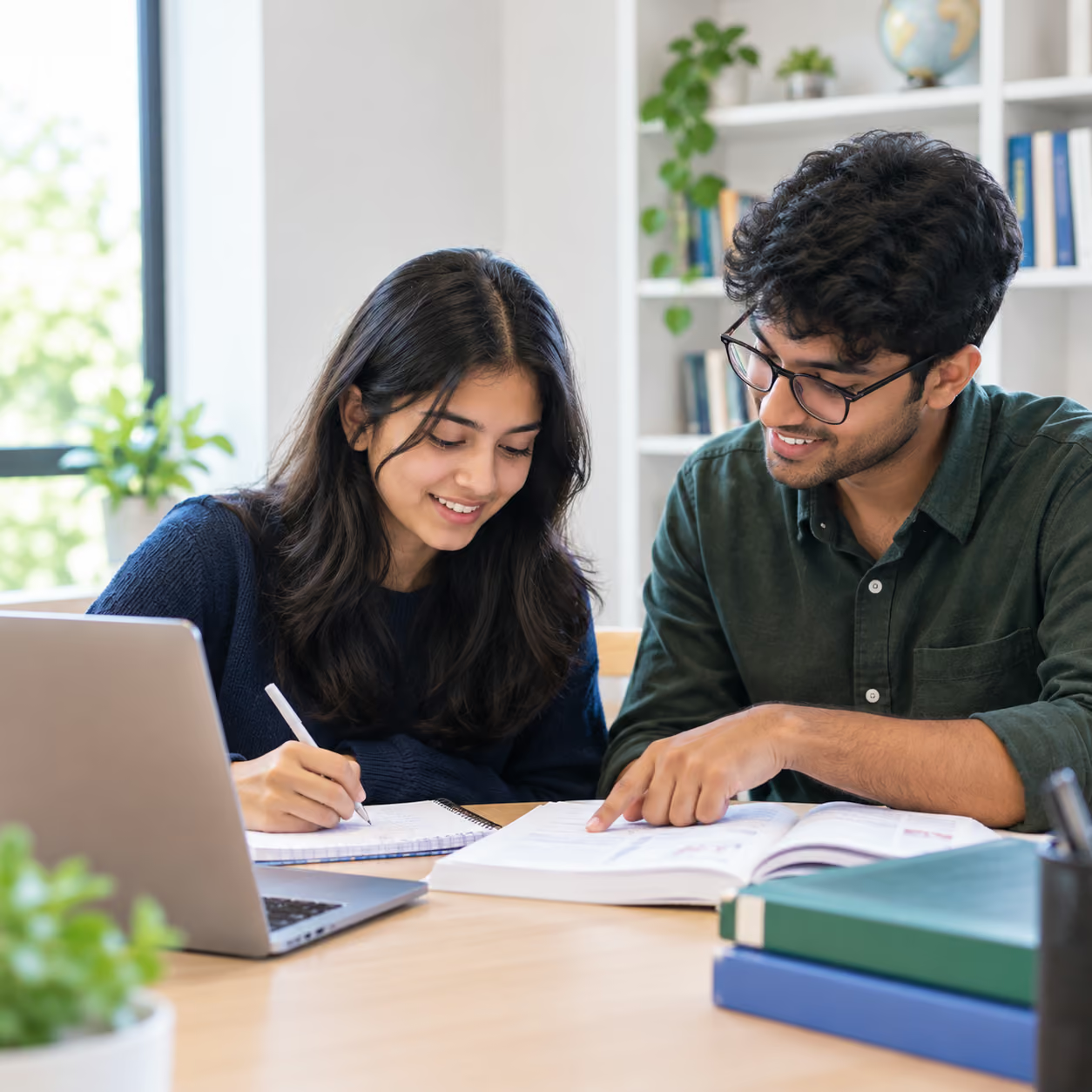
How It Works
We keep things as simple as possible. Our objective is to make finding a tutor convenient, efficient and effective.
Fill out an online form
Complete an application online which will be received by one of our dedicated Learning Advisors
Get matched with a tutor
Our experienced Learning Advisor will review your application, and match you with the most appropriate tutor based on your application
Tutor makes contact
Once we confirm with the tutor, the tutor will make contact to organise your first session.
Have your first lesson
Our tutors will work around your schedule to organise a session whenever you would like. Only pay for tutoring you have completed.
Two kinds of GCSE tutor
Choose between top-performing recent graduates or qualified teachers. Either way, our matching process finds you a tutor based on subject, exam board, target grade and availability.
Academic Tutors
from $50 USD/hr
Top performing graduates who achieved top grades in the subject they teach.
- We accept only the top 5% of tutor applicants.
- Each tutor is chosen for their academic results, teaching ability, and connection with students.
Relatable role model: work with a tutor who is similar in age and can be a peer
Affordability: academic tutors are more cost-effective than professional tutors
First-hand experience: they sat these papers recently and know what worked
Professional Tutors
from $75 USD/hr
Current or past qualified teachers and examiners with 5+ years professional teaching experience.
- We only select highly experienced, qualified GSCE teachers.
- Every teacher is assessed on their teaching expertise, subject knowledge, and ability to engage students.
Quality assurance: trained and accredited teaching qualifications
Guaranteed track record: years of experience helping students succeed
Subject expertise: deep understanding of content and exam board requirements
Due to our international operations we quote our prices in USD. Pound amounts are an indicative conversion and you will be invoiced in USD.
Academic Tutors
from £37 GBP/hr
Top performing graduates who achieved top grades in the subject they teach.
Relatable role model: work with a tutor who is similar in age and can be a peer
Affordability: academic tutors are more cost-effective than professional tutors
First-hand experience: they sat these papers recently and know what worked
Professional Tutors
from £56 GBP/hr
Current or past qualified teachers and examiners with 5+ years professional teaching experience.
Quality assurance: trained and accredited teaching qualifications
Guaranteed track record: years of experience helping students succeed
Subject expertise: deep understanding of content and exam board requirements
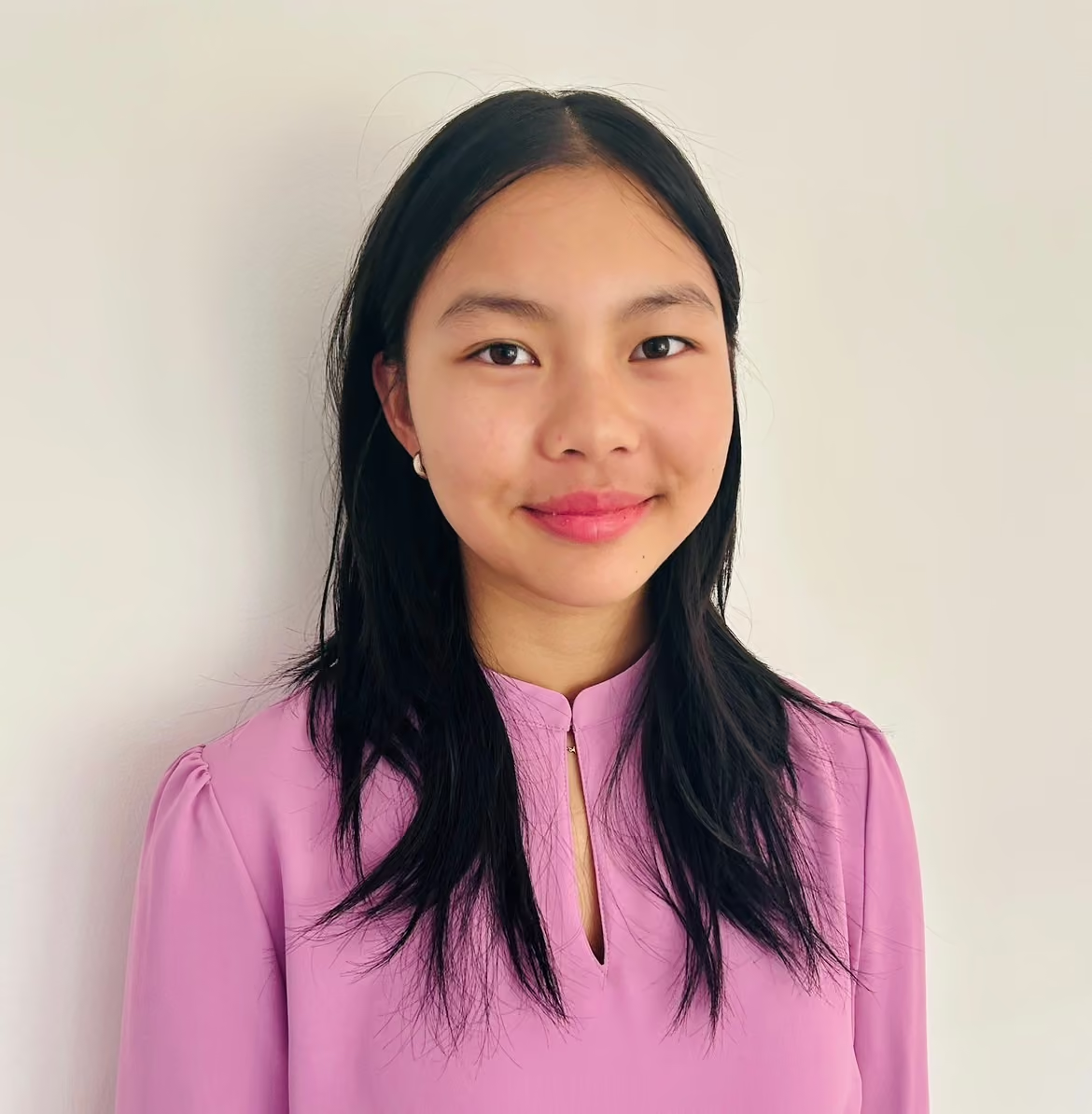
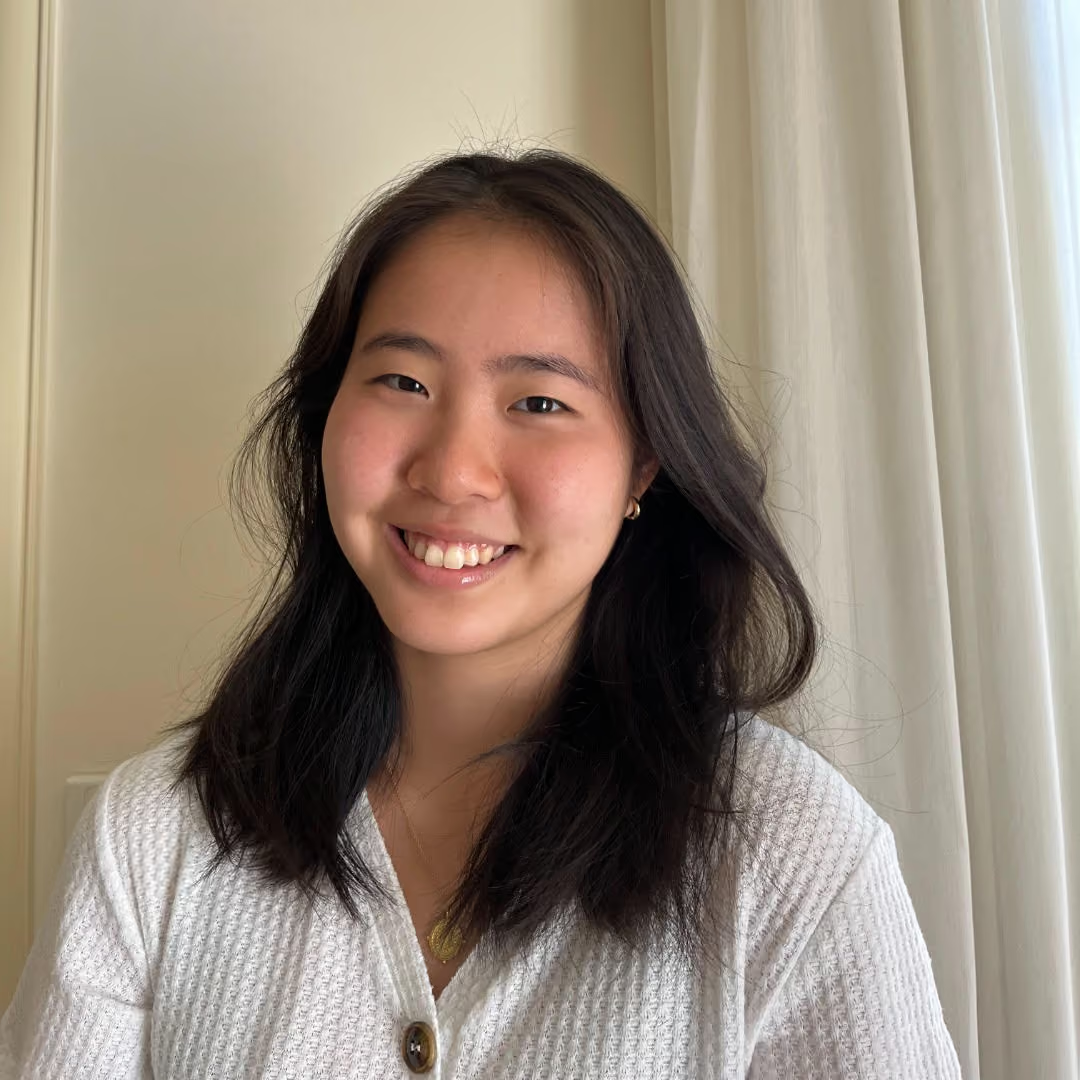
Meet our GCSE Accounting tutors
Our team is a combination of GCSE graduates who sat these exams recently and qualified teachers with years of classroom and examining experience.
20
I'm an A-Level and GCSE tutor in Physics, Chemistry, Biology and Accounting, with many years of experience teaching students one-to-one on platforms including Varsity Tutors and Wyzant, and privately. I hold a degree in Management Information Systems and an MBA with a specialization in Project Management, and I'm currently pursuing a PhD in Information Systems Management. I also studied English Literature and History at an advanced level, achieving top marks, which helps me teach students to write clear, well-structured exam answers.
Over the years I've worked with students from beginners through to exam preparation, and I tailor each lesson to the specification and exam style they are working toward, whether that's AQA, Edexcel, OCR or another board. My approach is simple and personal. I explain difficult topics in plain language with everyday examples, such as using a car journey to teach velocity, acceleration and graphs, so students understand why the methods work and not just how to use them. I teach step-by-step methods for calculations and exam questions, with past-paper-style practice and time management. Every lesson is built around the student's needs and learning style, so they understand the material and enjoy learning it.

20
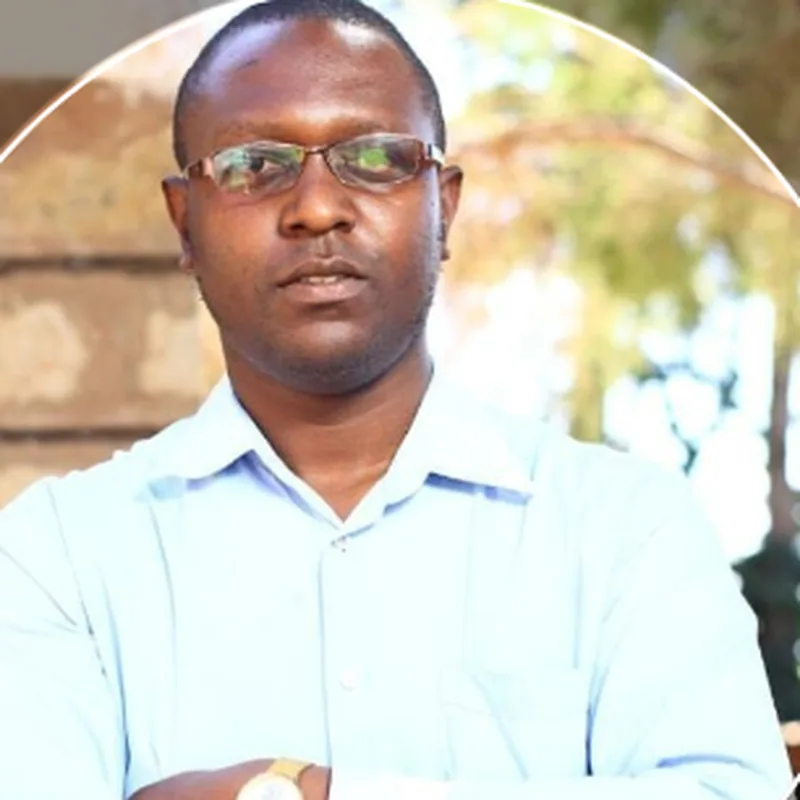
Karim T is an accomplished English Language and Literature educator, English as a Second Language (ESL) specialist, and communication professional with a distinguished academic record and extensive experience in international secondary education. His professional expertise is particularly focused on IGCSE, O-Level, and A-Level English Language and English as a Second Language, with a strong commitment to developing students’ linguistic accuracy, communication skills, academic writing, critical thinking, and confidence in using English effectively.
Karim earned his Bachelor’s Degree in Translation with a Minor in Communication from the Arab Academy for Science, Technology and Maritime Transport (AASTMT), graduating Summa Cum Laude as the Valedictorian of his graduating class with a GPA of 3.72 (Excellent with Honors).
His academic excellence was established at an early stage. He graduated from Nefertari British International School under the IGCSE system with an outstanding 9 A*s, a result officially recognized by Egypt’s Central Coordination Office as equivalent to 100%, and graduated as the Valedictorian of his high school class. This achievement made Karim a two-time Valedictorian, having graduated first in both high school and university.
Professionally, Karim has developed substantial experience teaching English Language, English as a Second Language, and English Language & Literature within international secondary-school settings. His teaching experience encompasses students preparing for IGCSE and O-Level examinations, as well as advanced A-Level English Language study. He has worked extensively on developing students’ reading comprehension, writing proficiency, vocabulary, grammar, spoken communication, analytical skills, and ability to communicate effectively for both academic and real-world purposes.
Karim’s approach to IGCSE and O-Level English emphasizes building a secure foundation in language while developing the examination skills required for success. He supports students in mastering comprehension, directed writing, descriptive and narrative writing, summary skills, vocabulary, grammar, sentence construction, and effective written expression. Particular emphasis is placed on helping students understand how language choices influence meaning, tone, purpose, audience, and overall effectiveness.
At A-Level, Karim adopts a more sophisticated and analytical approach to English Language, guiding students toward advanced language analysis, discursive and argumentative writing, linguistic terminology, textual interpretation, and the ability to construct precise, coherent, and well-supported academic responses. He encourages students to move beyond simply identifying language features and instead develop the ability to explain how and why language choices create particular effects and meanings.
His experience also includes teaching within the International Baccalaureate Diploma Programme, where he taught English Language & Literature and Theory of Knowledge. This background has further strengthened his ability to cultivate higher-order thinking, academic writing, independent inquiry, and sophisticated communication skills. He has successfully guided graduating Diploma Programme cohorts through demanding academic requirements while maintaining a broader focus on intellectual development and university readiness.
As an English as a Second Language educator, Karim places particular importance on helping learners become confident, accurate, and independent users of English. His instruction combines explicit language development with meaningful communication, enabling students to strengthen their grammar, vocabulary, reading, writing, listening, and speaking skills while developing the confidence to use English in academic, professional, and everyday contexts.
Committed to continuous professional development, Karim has completed official International Baccalaureate Category 2 professional development workshops in Theory of Knowledge and English B, complementing his broader expertise in international English-language education.
Beyond teaching, Karim’s multidisciplinary background includes research and development, public speaking, strategic communication, and educational innovation. His academic training in translation and communication has given him a particularly strong understanding of language, audience, register, purpose, and effective communication—skills that directly inform his approach to English Language and ESL instruction.
Karim is driven by the belief that effective English education extends beyond examination preparation. His goal is to equip students with the language proficiency, analytical ability, academic confidence, and communication skills necessary to succeed in IGCSE, O-Level, and A-Level examinations while preparing them for higher education and an increasingly interconnected global environment.

12
I'm a Business, Economics and Accounting teacher with over six years' experience preparing students for A Level, IGCSE and O Level exams. I teach to the Cambridge (CIE) and Pearson Edexcel specifications, so lessons are built around what each mark scheme rewards: precise definitions, application to the case, and well-supported evaluation.
At A Level, I focus on the skills that lift grades: structuring extended essay answers, applying theory to case-study data, and handling calculation-heavy Accounting questions. At IGCSE and O Level, I build secure foundations so students go into their exams confident.
My lessons are interactive and exam-focused. We work through past papers, examiner reports and mark schemes, and I connect every concept to real business examples so it sticks. Students leave with better grades and the confidence to think analytically and apply their knowledge independently.
The tutors you see here are just a selection from our team of hundreds of tutors, please contact our Learning Advisors to discuss tutoring options
Why GCSE Accounting needs the right tutor
What makes GCSE Accounting hard
IGCSE Accounting rewards precision more than almost any other subject at this level. Every transaction has two sides, and a single entry on the wrong side, or a missed adjustment, carries through the trial balance and into the financial statements. Layout matters as well: statements have to be presented in the expected format with correct headings and subtotals, and students who understand the ideas still lose marks to small recording slips under time pressure.
Other things that make it hard:
- Correction of errors and suspense account questions, where you have to work out what went wrong as well as fix it
- Year-end adjustments, such as depreciation, irrecoverable debts, accruals and prepayments, that change both the profit and the statement of financial position
- Incomplete records questions that need missing figures worked back from partial information
- Ratio formulae that Cambridge and OxfordAQA expect you to know rather than be given
- Written questions that ask you to comment on, compare or evaluate results, not just calculate them
How tutoring changes the outcome
Our Accounting tutors work from your board's own past papers, mark schemes and examiners' reports, so every ledger and statement is laid out and marked the way an examiner marks it. Sessions target where Accounting marks are actually lost:
- entries posted to the wrong side or the wrong account
- year-end adjustments applied in one statement but not the other
- incomplete records and control account questions
- comments on ratios and results that do not use the figures in the question
What you'll learn in GCSE Accounting tutoring
Core skills developed
Every Accounting specification marks a progression from knowing the principles, to applying them to prepare records and statements, to analysing and evaluating the results. The balance differs by board. On Cambridge, knowledge and understanding carries 66% of the marks, analysis 24% and evaluation 10%. On Edexcel International, applying procedures to accounting problems is the largest share at 41–47%, with analysing, evaluating and presenting information at 17–20%. OxfordAQA gives 50–60% to application. We work through past-paper questions objective by objective, so you can see which skill is costing you marks.
- Recording transactions with double entry, from business documents and books of prime entry to the ledger
- Verifying records: trial balances, correction of errors, bank reconciliations and control accounts
- Year-end adjustments: depreciation, irrecoverable debts, and other payables and receivables
- Preparing financial statements for sole traders, partnerships and other organisations, including from incomplete records
- Calculating and interpreting profitability and liquidity ratios to compare performance
How are students assessed
Accounting is assessed entirely by written exams, with no coursework, and a calculator is used throughout. Every board sets two papers sat in the same series at the end of the course, and all three include multiple-choice questions: a whole paper worth 30% on Cambridge, and a section of a paper on Edexcel International and OxfordAQA. Edexcel International also offers a modular route for international centres.
- Multiple-choice and short-answer questions: we build speed and accuracy on definitions, concepts and quick calculations
- Preparing accounts and statements from given data: we drill layouts and adjustments against real past papers and mark schemes
- Analysis and evaluation: we practise using the figures to support every comment and recommendation
What GCSE Accounting topics do we cover?
OxfordAQA GCSE Accounting
Five content areas examined in two written papers, both sat in the same series at the end of the course, with first exams in May/June 2026. Paper 1, Introduction to Book keeping and Financial Accounting, covers content areas 1–3. Paper 2, Financial Statements, covers content areas 3–5. Each paper is 1 hour 45 minutes, 75 marks and 50% of the International GCSE, and both follow the same pattern: Section A has 10 multiple-choice questions and short-answer questions (25 marks), and Section B has three structured questions worth 15, 15 and 20 marks. Exams run in May/June and November.
- 3.1 Sources and recording of data
- 3.2 Verification of accounting records
- 3.3 Development of the accounting model
- 3.4 Preparation of financial statements
- 3.5 Interpretation, analysis and communication of financial information
OxfordAQA's two papers are equally weighted and share the same structure, and content area 3 appears on both. Financial statements cover sole traders, partnerships, limited companies, manufacturing organisations, clubs and non-profit making organisations, and organisations with incomplete records, and students are expected to know the formulae used for computations. Sessions on this board treat manufacturing and club accounts as core content.
IAL GCSE Accounting
Five topics examined in two written papers, both sat in the same series at the end of the course. Paper 1, Introduction to Bookkeeping and Accounting, is 2 hours, 100 marks and 66.6% of the International GCSE, and draws only on Topics 1–3. Section A has ten 1-mark multiple-choice questions and three 5-mark short-answer questions, and Section B has five 15-mark multi-part questions. Paper 2, Financial Statements, is 1 hour 15 minutes, 50 marks and 33.3%, with two multi-part questions that build on Topics 1–3 and add Topics 4 and 5. Pearson's 2026/27 entry information lists the June and November series. International centres can also take the two papers as modular units (4WAC1 and 4WAC2) cashed in as 4XAC1.
- Topic 1: The accounting environment
- Topic 2: Introduction to bookkeeping
- Topic 3: Introduction to control processes
- Topic 4: The preparation of financial statements
- Topic 5: Accounting for end of period adjustments
Paper 1 is worth two-thirds of the grade, so bookkeeping and control processes decide most of the result. Edexcel also covers professional ethics and the use of technology in accounting, uses International Accounting Standard terminology, and tests partnership accounts against Section 24 of the Partnership Act 1890. Final accounts cover sole traders, partnerships and manufacturers, not limited companies. Sessions on this board put most of the time into Paper 1 skills and practise Paper 2's long questions to time.
CIE GCSE Accounting
Seven topics examined in two papers taken by all candidates. Paper 1 is 40 multiple-choice questions in 1 hour 30 minutes, worth 30%. Paper 2 is a structured written paper of five compulsory 20-mark questions, 1 hour 45 minutes and 100 marks, worth 70%, with every question based on stimulus material. Both papers can test any part of the syllabus. 0452 is graded A*–G and 0985 is graded 9–1. Exams run in June and November, and 0452 is also offered in March in India.
1 The fundamentals of accounting
- 1.1 The purpose of accounting
- 1.2 The accounting equation
2 Sources and recording of data
- 2.1 The double entry system of book-keeping
- 2.2 Business documents
- 2.3 Books of prime entry
3 Verification of accounting records
- 3.1 The trial balance
- 3.2 Correction of errors
- 3.3 Bank reconciliation
- 3.4 Control accounts
4 Accounting procedures
- 4.1 Capital and revenue expenditure and receipts
- 4.2 Accounting for depreciation and disposal of non-current assets
- 4.3 Other payables and other receivables
- 4.4 Irrecoverable debts and allowance for irrecoverable debts
- 4.5 Valuation of inventory
5 Preparation of financial statements
- 5.1 Sole traders
- 5.2 Partnerships
- 5.3 Limited companies
- 5.4 Manufacturing accounts
- 5.5 Clubs and societies
- 5.6 Incomplete records
6 Analysis and interpretation
- 6.1 Calculation and understanding of accounting ratios
- 6.2 Interpretation of accounting ratios
- 6.3 Inter-business comparison
- 6.4 Interested parties
- 6.5 Limitations of accounting statements
7 Accounting concepts and modern practice
- 7.1 Accounting concepts
- 7.2 Ethical considerations
- 7.3 Technology and sustainability
Cambridge revised this syllabus for first examination in 2027, adding 7.2 Ethical considerations and 7.3 Technology and sustainability and updating the accounting ratios, so older textbooks and past papers need checking against it. It covers a wide range of organisations, including limited companies, manufacturers and clubs and societies, and candidates are expected to know the ratios listed in the syllabus. The multiple-choice paper is worth almost a third of the grade. Sessions on this board drill the syllabus ratios and multiple-choice technique and practise Paper 2's stimulus-based questions to time.
Ready to start?
Tell us the subject, exam board and target grade. A Learning Advisor reviews it the same day.
Why parents trust us
4.9/5 from 312 reviews · used by students at 500+ schools




FAQs
We have answers to your most frequently asked questions. Anything not answered here, please reach out to our team.
Yes. Private candidates enter through an exam centre that accepts them, such as a school or a British Council office, rather than directly with the exam board: you register with the centre, pay its fees and sit the exams there. Accounting is well suited to private candidates because it is assessed only by written papers, with no coursework or practical component. Check that your centre offers the board and syllabus you are studying before you start. See the private candidate guidance from Pearson, Cambridge and the British Council.
Each sixth form and college sets its own entry requirements, so check the prospectus of the one you're applying to. As a guide, IGCSE Accounting is not usually required for A-Level Accounting, and many students start the subject at A-Level. Most sixth forms ask for a grade 5 or 6 in Mathematics, and a grade 6 or above in IGCSE Accounting is a strong sign that you are ready. If you take Cambridge IGCSE on the A*–G scale, a grade A is broadly equivalent to a 7 and a C to a 4, the points that were aligned when the 9–1 scale was introduced (GOV.UK grading factsheets), so a requirement of grade 6 usually means a strong B. See A-Level Accounting.
IGCSE Accounting tutoring with an academic tutor costs from $50 USD (£38) per hour, and packages save 5–15%, which suits weekly lessons that build double-entry skills steadily, with extra past paper sessions before the exams. Pay as you go is invoiced after each lesson, with no lock-in contracts. Professional tutors (qualified teachers and examiners) cost from $75 USD (£56) per hour. See pricing.
Late cancellations and no-shows are charged at half the lesson fee. That applies if you cancel less than one hour before the start time, or don't turn up. You can still change a session time whenever you need to, as long as you give your tutor notice.
Our academic tutors are high-achieving graduates and undergraduates who scored in the top band in Accounting themselves, and our professional tutors are qualified teachers or examiners with 5+ years' experience. We accept only the top 5% of applicants. You are matched to a tutor who knows your board, so they can teach the layouts your board expects and mark your accounts the way an examiner would. Read more about our GCSE tutors and how we select tutors.
Lessons are one-to-one and online, with a tutor matched to IGCSE Accounting, your exam board and your target grade. Each session works on your weakest areas using past paper questions from your own board, whether that is Edexcel International GCSE 4AC1, Cambridge IGCSE 0452 or OxfordAQA 9215. For Accounting that usually means drilling layouts and adjustments against real past papers and mark schemes, building speed on multiple-choice and short calculations, and practising analysis questions. See how it works or start with the student application.
Accounting is logical, and students who are careful and organised often do well, but it is unforgiving. One error in a ledger or trial balance can carry through a whole set of accounts, and marks depend on using the correct layout and terminology. Adjustments such as depreciation, accruals and prepayments are where most students struggle, along with the analysis questions that ask you to interpret the figures. Our online IGCSE tutoring focuses on exactly those areas.
In June 2026, 7.5% of international candidates achieved a 9 in Edexcel International GCSE Accounting, and 32.0% achieved a 7 or above (provisional figures from Pearson). On Cambridge IGCSE Accounting, 17.3% of candidates worldwide achieved an A* (Cambridge). With grade 9 needing around 88% of the marks on Edexcel International, the top grade needs accurate layouts, no arithmetic slips and confident answers to the analysis questions.
Grade boundaries are set after each exam series and change every year, so older figures are only a guide. In June 2026, Edexcel International GCSE Accounting set grade 9 at 131 or 133 out of 150 (87–89%), depending on the papers taken, with grade 4 at 72 or 76. Cambridge IGCSE 0452's A* threshold was 100 to 111 out of 143 (70–78%), depending on the paper variant. Sources: Pearson International and Cambridge.
No. IGCSE Accounting has no coursework, practical or speaking assessment on any board, so the whole grade comes from the written papers. Instead, the papers test practical accounting skills on paper: recording transactions, preparing ledger accounts and financial statements in the correct layout, and analysing the results. See the Edexcel International specification.
IGCSE Accounting is assessed entirely by written exams, with a calculator used throughout. Cambridge IGCSE 0452 sets a 1 hour 30 minute multiple-choice paper worth 30% and a 1 hour 45 minute structured paper worth 70%. Edexcel International GCSE 4AC1 sets Paper 1 Introduction to Bookkeeping and Accounting (2 hours, 66.6%) and Paper 2 Financial Statements (1 hour 15 minutes, 33.3%), and OxfordAQA 9215 sets two papers worth 50% each. See the Cambridge IGCSE 0452 syllabus.
All GCSE subjects
Ready to find your GCSE Accounting tutor?
We will find you a tutor in 24 hours and if you are not happy after the first session, we will give you a full refund and find you another tutor for no extra charge.
Resources for GCSE students
Check out our free content about the GCSE