1,000+ happy customers
Private GCSE Science Double Award tutors
We will find you a GCSE Science Double Award tutor who will help you get a 9 and boost your confidence.
Currently serving students in
your country!

How It Works
We keep things as simple as possible. Our objective is to make finding a tutor convenient, efficient and effective.
Fill out an online form
Complete an application online which will be received by one of our dedicated Learning Advisors
Get matched with a tutor
Our experienced Learning Advisor will review your application, and match you with the most appropriate tutor based on your application
Tutor makes contact
Once we confirm with the tutor, the tutor will make contact to organise your first session.
Have your first lesson
Our tutors will work around your schedule to organise a session whenever you would like. Only pay for tutoring you have completed.
Two kinds of GCSE tutor
Choose between top-performing recent graduates or qualified teachers. Either way, our matching process finds you a tutor based on subject, exam board, target grade and availability.
Academic Tutors
from $50 USD/hr
Top performing graduates who achieved top grades in the subject they teach.
- We accept only the top 5% of tutor applicants.
- Each tutor is chosen for their academic results, teaching ability, and connection with students.
Relatable role model: work with a tutor who is similar in age and can be a peer
Affordability: academic tutors are more cost-effective than professional tutors
First-hand experience: they sat these papers recently and know what worked
Professional Tutors
from $75 USD/hr
Current or past qualified teachers and examiners with 5+ years professional teaching experience.
- We only select highly experienced, qualified GSCE teachers.
- Every teacher is assessed on their teaching expertise, subject knowledge, and ability to engage students.
Quality assurance: trained and accredited teaching qualifications
Guaranteed track record: years of experience helping students succeed
Subject expertise: deep understanding of content and exam board requirements
Due to our international operations we quote our prices in USD. Pound amounts are an indicative conversion and you will be invoiced in USD.
Academic Tutors
from £37 GBP/hr
Top performing graduates who achieved top grades in the subject they teach.
Relatable role model: work with a tutor who is similar in age and can be a peer
Affordability: academic tutors are more cost-effective than professional tutors
First-hand experience: they sat these papers recently and know what worked
Professional Tutors
from £56 GBP/hr
Current or past qualified teachers and examiners with 5+ years professional teaching experience.
Quality assurance: trained and accredited teaching qualifications
Guaranteed track record: years of experience helping students succeed
Subject expertise: deep understanding of content and exam board requirements
Meet our GCSE Science Double Award tutors
Our team is a combination of GCSE graduates who sat these exams recently and qualified teachers with years of classroom and examining experience.
32
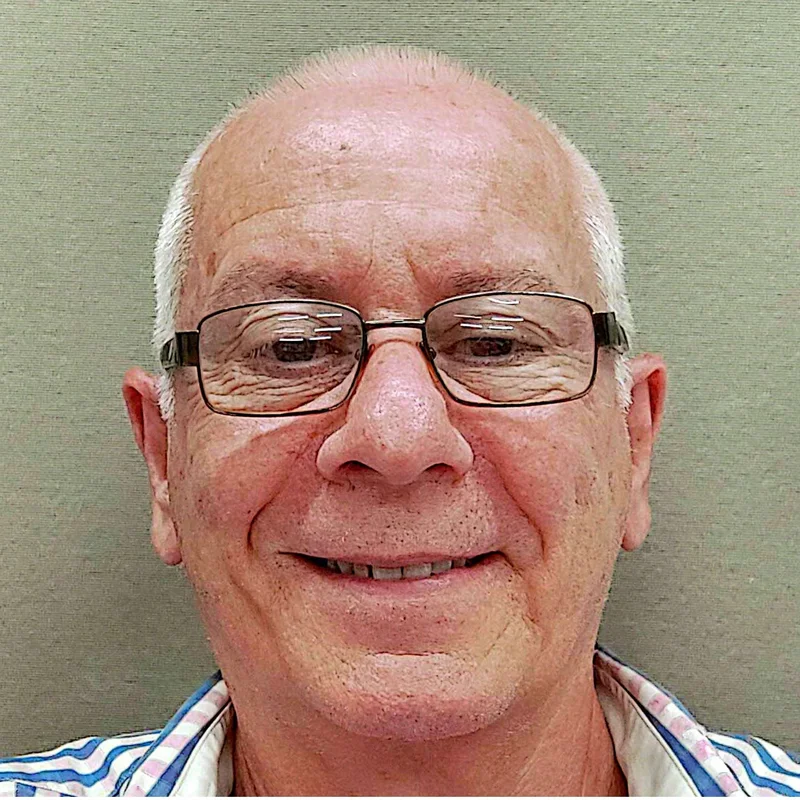
Curious by nature, engineer by training, teacher by heart.
Hi! I was born in Güines, a big village in Cuba, where I grew up surrounded by nature—probably why I still love being outside. I went to a high-tech secondary school, where I fell in love with Physics, Mathematics, science, and electronics. Later, I moved to Europe and got my Bachelor's and Master's degrees in Electronic Engineering. Seven years in different European cities gave me a love for art, history, and museums, and friends from all over the world.
I worked first as an engineer in a biotechnology research center, and later taught IGCSE Math, Physics, and Science for over 10 years at an international school in Havana (ISH). I also tutored students in A-level Physics online. Tutoring and classroom teaching taught me what inclusiveness, active learning, differentiation, and inquiry really mean.
Now I'm retired from in-person teaching and living in Buenos Aires with my wife and my daughter's family. I'm excited to keep teaching and learning with you!

48
Aster is an experienced international educator with a Bachelor's degree in Physics and several years of experience teaching and tutoring students across a range of international curricula, including Cambridge, Australian, and other globally recognised programs. She specialises in Physics, Mathematics, Science, English, and academic skills development, and has worked with students from primary school through to senior secondary levels.
Throughout her career, Aster has taught students from diverse cultural and educational backgrounds, including Australian students in online learning environments. Her experience extends beyond subject content to helping students develop critical thinking, problem-solving, exam techniques, academic writing, and independent learning skills. She is also experienced in supporting students with essay writing, research projects, and assessment preparation.
Aster's teaching approach focuses on making complex concepts clear, engaging, and accessible. She adapts lessons to each student's learning style and believes that strong understanding is built through curiosity, confidence, and active participation. Students and parents appreciate her patient, supportive, and encouraging manner, as well as her ability to explain challenging topics in a simple and relatable way.
With a strong background in science education and a passion for helping students achieve their academic goals, Aster is committed to helping every student build confidence, improve performance, and enjoy the learning process.
30
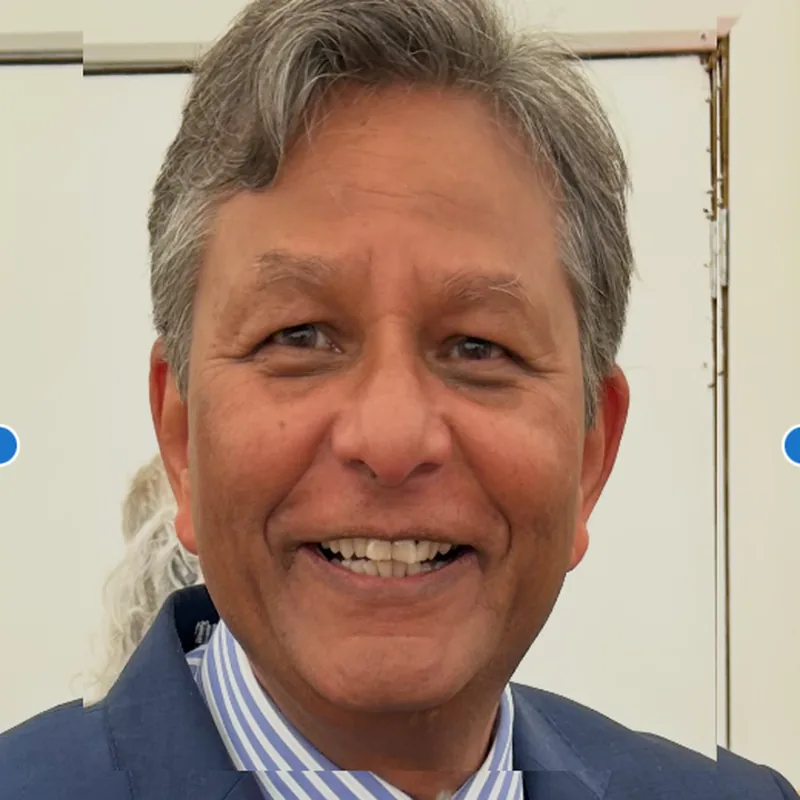
David G graduated in Biological Chemistry with honours from the University of Essex in 1980. He has been a qualified teacher of Chemistry since 1983 and he has taught across many examination boards and syllabi. He is a vastly experienced teacher, having taught mainly in the UK until 2013 when he decided to venture into international schools in China, Singapore and Dubai.
Whilst in the UK, he has taught both GCSE and A level Chemistry for different examination boards ( AQA, Edexcel, CIE). Whilst overseas, he has taught both the IGCSE Chemistry CIE and Edexcel syllabi.
He is deeply committed to his students where he encourages, debate, deep thinking, understanding of concepts rather than memorising facts. His lessons are engaging, demanding, challenging and fun. He has the ability to bring out the best in his students.

15
Over the last twenty years I have gained significant classroom and management experience at several State, Grammar and Independent Schools. I have been out of the classroom environment recently but continue to keep up to date with Education Policy and support students away from the school environment via home tutoring.
I am an experienced teacher with a passion towards my subject and have a great desire that all pupils across the ability range are inspired by Science; there is no greater job satisfaction for me than when that inspiration leads to students excelling in examinations or pursuing a career in medicine. As Head of Biology at Kingston Grammar School I managed a team of four experienced teachers- as well as being actively involved in the overall management of the Science department.
I was successful in improving both A-Level and GCSE results year on year. I was responsible for co-ordinating Community Service placements for students in the wider community. I also worked closely with Brunel University with their PGCE programme and was part of a team inspected by OFSTED and I was awarded as ‘outstanding’ in my mentoring work with PGCE students at Kingston Grammar.
Whilst my teaching specialism is Biology I have also taught Chemistry and Physics at key stage three, four and A Level. I have a broad knowledge of the science curriculum and how it fits in to schools academic policies and wider educational policies. I also have a good understanding of International Baccalaureate programs and Vocational courses. I have written schemes of work and working policies for a department as well as full risk assessments for practical work. I also have experience of intake of student new to a school be it a state school or an 11+ or Common Entrance at 13+. I have administered 11+ and 13+ examinations as well as being part of a team of interviewers assessing a student’s suitability for the school.
The tutors you see here are just a selection from our team of hundreds of tutors, please contact our Learning Advisors to discuss tutoring options
Why GCSE Science Double Award needs the right tutor
What makes GCSE Science Double Award hard
Double award science is three subjects taught in the time of two. A student can move from cell biology to moles to electric circuits in the same week, and the exams test each science at full GCSE depth. The hard part is rarely one topic: it is keeping all three sciences live at once, so that the definitions, equations and practicals learned at the start of the course are still secure when they are examined alongside the last topics taught. Mark schemes are precise, so an explanation that is nearly right or an answer without units loses the mark.
Other things that make it hard:
- Physics equations that have to be recalled, rearranged and used with unit conversions such as kJ to J or minutes to seconds
- Chemistry calculations on relative formula mass, moles and concentration, where one early slip carries through
- Extended-response questions marked on a logical chain of reasoning rather than a list of keywords
- Questions on required or core practicals: variables, controls, sources of error and how to improve a method
- Data questions that combine reading a graph, doing a calculation and drawing a conclusion in one part
How tutoring changes the outcome
Our Science Double Award tutors work from your board's own past papers, mark schemes and examiners' reports, so every answer is practised against what examiners actually credit in biology, chemistry and physics. Sessions target where Science Double Award marks are actually lost:
- equations recalled wrongly, rearranged badly or used without converting units
- extended answers that skip a step in the explanation
- practical questions on variables, controls and improving a method
- the weakest of the three sciences dragging down a grade that counts twice
What you'll learn in GCSE Science Double Award tutoring
Core skills developed
Every double award specification marks a similar progression: knowing the science, applying it, and analysing and evaluating data and experiments. On AQA, OCR and Edexcel the split is fixed at 40% knowledge, 40% application and 20% analysis and evaluation, and AQA and OCR state that at least 15% of the marks come from questions on practical work. Edexcel International uses a similar balance. Cambridge puts 50% on knowledge with understanding, 30% on handling information and problem-solving, and reserves 20% for experimental skills, all examined in the practical paper. WJEC gives half of the marks to application, and OxfordAQA adds a fourth objective for selecting, describing and evaluating scientific procedures. We work through past-paper questions objective by objective, so you can see which skill is costing you marks rather than just seeing a lower total.
- Recalling and using physics equations with correct units and rearrangement
- Quantitative chemistry: relative formula mass, moles, concentrations and yields
- Explaining processes such as photosynthesis, respiration and homeostasis as a clear sequence of steps
- Planning, analysing and evaluating practical work
- Reading graphs and tables and drawing conclusions the data actually supports
How are students assessed
Double award science is assessed mainly by written exams. Practical skills are tested through exam questions on the required practicals at AQA, OCR, Edexcel, Edexcel International and OxfordAQA, through a separate practical or alternative to practical paper at Cambridge, and through an externally marked Scientific Enquiry unit at WJEC. Every board except WJEC is linear, with all papers sat in one series at the end of the course. WJEC is unitised, with units spread across Years 10 and 11.
- Multiple-choice and short-answer questions: we drill definitions and equations until recall is fast and exact
- Calculations in all three sciences: we insist on full workings, which protect marks if an earlier figure is wrong
- Extended explanations and practical questions: we mark them against real mark schemes and examiners' reports and rewrite them until they would earn full marks
What GCSE Science Double Award topics do we cover?
OxfordAQA GCSE Science Double Award
Three papers, one each in biology, chemistry and physics, each 1 hour 45 minutes and 100 marks and equally weighted. The course is linear and sat in May/June; OxfordAQA no longer runs a November series from 2026. Students take Core or Extension tier and must use the same tier for all three papers. Both grades are identical, from 1–1 to 9–9.
Biology
- 3.1 Organisation
- 3.2 Bioenergetics
- 3.3 Ecology
- 3.4 Organisms’ interaction with the environment
- 3.5 Inheritance
- 3.6 Variation and evolution
Chemistry
- 3.7 Atomic structure and the periodic table
- 3.8 Structure, bonding and the properties of matter
- 3.9 Chemical changes
- 3.10 Chemical analysis
- 3.11 Acids, bases and salts
- 3.12 Quantitative chemistry
- 3.13 Trends within the periodic table
- 3.14 The rate of chemical change
- 3.15 Energy changes
- 3.16 Organic chemistry
Physics
- 3.17 Forces and their effects
- 3.18 Energy
- 3.19 Waves
- 3.20 Particle model of matter
- 3.21 Electricity and magnetism
- 3.22 Electricity and household use
- 3.23 Nuclear physics
- 3.24 Space physics
Each paper can examine any part of its science, so there is no split into first-half and second-half papers. OxfordAQA also gives 10% of the marks to a fourth objective on selecting, describing and evaluating scientific procedures, which links back to the required practicals. Extension candidates who just miss 4–4 receive an allowed 3–3. Sessions on this board revise each science as a whole and practise the procedure and evaluation questions.
WJEC GCSE Science Double Award
WJEC's GCSE The Sciences (Double Award) is the new Made-for-Wales course, taught from September 2026 and first awarded in 2028. It has seven units: six tiered written exams of 1 hour 15 minutes, with Units 1–3 worth 14.3% each (56 marks) and Units 4–6 worth 15.7% each (64 marks), plus Unit 7, a Scientific Enquiry worth 10%. Units 1–3 are taught first, Units 4–6 follow, and Unit 7 is taken in the spring term of the final year. Grades run from A*A* to GG.
- Unit 1: Biology, Basis of Life
- Unit 2: Chemistry, Chemical Substances and How They Behave
- Unit 3: Physics, Forces, Motion and the Universe
- Unit 4: Biology, Continuity of Life
- Unit 5: Chemistry, Chemical Bonding, Reactions and Resources
- Unit 6: Physics, Waves, Electricity and Energy
- Unit 7: Scientific Enquiry
Each exam unit is tiered separately, so a student can sit Higher in one science and Foundation in another, and half of all marks go to applying knowledge. Unit 7 is two enquiries chosen from three, each a 1-hour practical task and a 1-hour written task, marked by WJEC. Students who started in September 2025 sit the legacy WJEC GCSE Science (Double Award) (3430QD), whose final full assessment is summer 2027. Eduqas no longer offers GCSE Combined Science in England. Sessions on this board prepare each unit as it comes up and rehearse the Scientific Enquiry tasks before the spring term.
IAL GCSE Science Double Award
Three untiered papers, Biology Paper 1, Chemistry Paper 1 and Physics Paper 1, each 2 hours, 110 marks and 33.3% of the qualification. The course is linear, so all three are sat in the same series at the end, in June or November. Grades run from 9–9 to 1–1. Pearson also offers a modular version (4XSD1) with six 1 hour 10 minute unit papers that can be sat and resat in any order.
Biology
- 1 The nature and variety of living organisms
- 2 Structure and functions in living organisms
- 3 Reproduction and inheritance
- 4 Ecology and the environment
- 5 Use of biological resources
Chemistry
- 1 Principles of chemistry
- 2 Inorganic chemistry
- 3 Physical chemistry
- 4 Organic chemistry
Physics
- 1 Forces and motion
- 2 Electricity
- 3 Waves
- 4 Energy resources and energy transfers
- 5 Solids, liquids and gases
- 6 Magnetism and electromagnetism
- 7 Radioactivity and particles
- 8 Astrophysics
The Double Award papers are the same Paper 1 that students taking the separate International GCSE Biology, Chemistry and Physics sit, so the questions are set at full single-science standard; Double Award students simply do not take Paper 2. With no tiers, each paper is written to be accessible to all abilities, so it also has to stretch the strongest students. Practical investigations are listed in the specification and examined only through written questions. Sessions on this board build stamina for three two-hour papers and practise the experimental questions that examiners' reports highlight.
EDEXCEL GCSE Science Double Award
Six papers, each 1 hour 10 minutes, 60 marks and 16.67% of the GCSE: two in biology, two in chemistry and two in physics. Every paper is set at Foundation or Higher tier, all six must be the same tier, and all are sat in May/June of the same year. Topic 1 in each science (key concepts) can be examined on both of that science's papers.
Biology
- Topic 1: Key concepts in biology
- Topic 2: Cells and control
- Topic 3: Genetics
- Topic 4: Natural selection and genetic modification
- Topic 5: Health, disease and the development of medicines
- Topic 6: Plant structures and their functions
- Topic 7: Animal coordination, control and homeostasis
- Topic 8: Exchange and transport in animals
- Topic 9: Ecosystems and material cycles
Chemistry
- Topic 1: Key concepts in chemistry
- Topic 2: States of matter and mixtures
- Topic 3: Chemical changes
- Topic 4: Extracting metals and equilibria
- Topic 6: Groups in the periodic table
- Topic 7: Rates of reaction and energy changes
- Topic 8: Fuels and Earth science
Physics
- Topic 1: Key concepts of physics
- Topic 2: Motion and forces
- Topic 3: Conservation of energy
- Topic 4: Waves
- Topic 5: Light and the electromagnetic spectrum
- Topic 6: Radioactivity
- Topic 8: Energy, forces doing work
- Topic 9: Forces and their effects
- Topic 10: Electricity and circuits
- Topic 12: Magnetism and the motor effect
- Topic 13: Electromagnetic induction
- Topic 14: Particle model
- Topic 15: Forces and matter
The topic numbers are shared with Edexcel's separate science GCSEs, which is why some numbers are missing: those topics are separate science only. Students must complete 18 mandatory core practicals, which the school confirms to Pearson before the exams, and the papers ask about them directly. Sessions on this board work through each core practical method and the key concepts topics, which can appear on either paper.
OCR GCSE Science Double Award
OCR offers two combined science courses, both tiered at Foundation or Higher and sat in May/June. Combined Science A (Gateway Science, J250) has six papers, two per science, each 1 hour 10 minutes, 60 marks and 16.7% of the GCSE. Combined Science B (Twenty First Century Science, J260) has four papers of 1 hour 45 minutes: one each for biology, chemistry and physics (95 marks, 26.4% each) and a 75-mark combined science paper worth 20.8% that can assess any content.
Combined Science A (Gateway Science) · J250
- Topic B1: Cell level systems
- Topic B2: Scaling up
- Topic B3: Organism level systems
- Topic B4: Community level systems
- Topic B5: Genes, inheritance and selection
- Topic B6: Global challenges
- Topic C1: Particles
- Topic C2: Elements, compounds and mixtures
- Topic C3: Chemical reactions
- Topic C4: Predicting and identifying reactions and products
- Topic C5: Monitoring and controlling chemical reactions
- Topic C6: Global challenges
- Topic P1: Matter
- Topic P2: Forces
- Topic P3: Electricity and magnetism
- Topic P4: Waves and radioactivity
- Topic P5: Energy
- Topic P6: Global challenges
- Topic CS7: Practical skills
Combined Science B (Twenty First Century Science) · J260
- Chapter B1: You and your genes
- Chapter B2: Keeping healthy
- Chapter B3: Living together: food and ecosystems
- Chapter B4: Using food and controlling growth
- Chapter B5: The human body: staying alive
- Chapter B6: Life on Earth: past, present and future
- Chapter C1: Air and water
- Chapter C2: Chemical patterns
- Chapter C3: Chemicals of the natural environment
- Chapter C4: Material choices
- Chapter C5: Chemical analysis
- Chapter C6: Making useful chemicals
- Chapter P1: Radiation and waves
- Chapter P2: Sustainable energy
- Chapter P3: Electric circuits
- Chapter P4: Explaining motion
- Chapter P5: Radioactive materials
- Chapter P6: Matter: models and explanations
- Chapter BCP7: Ideas about Science
- Chapter BCP8: Practical Skills
On Gateway, the second paper in each science assumes the first paper's topics and includes synoptic questions. Twenty First Century Science is built around real-world contexts and its Ideas about Science chapter, and its final paper mixes all three sciences, so students have to connect topics rather than revise them in separate boxes. Both courses require at least 16 practicals across the Practical Activity Groups. Sessions on this board confirm which OCR course the school follows first, then practise the synoptic and mixed-science questions that each one sets.
AQA GCSE Science Double Award
AQA offers two routes to the same double award. Combined Science: Trilogy (8464) is examined in six papers, two each in biology, chemistry and physics, each 1 hour 15 minutes, 70 marks and 16.7% of the GCSE. Combined Science: Synergy (8465) uses four papers of 1 hour 45 minutes and 100 marks, each worth 25%: two on life and environmental sciences and two on physical sciences. Both are tiered at Foundation or Higher, and all papers are sat in May/June at the end of the course.
Trilogy · Biology
- 4.1 Cell biology
- 4.2 Organisation
- 4.3 Infection and response
- 4.4 Bioenergetics
- 4.5 Homeostasis and response
- 4.6 Inheritance, variation and evolution
- 4.7 Ecology
Trilogy · Chemistry
- 5.1 Atomic structure and the periodic table
- 5.2 Bonding, structure, and the properties of matter
- 5.3 Quantitative chemistry
- 5.4 Chemical changes
- 5.5 Energy changes
- 5.6 The rate and extent of chemical change
- 5.7 Organic chemistry
- 5.8 Chemical analysis
- 5.9 Chemistry of the atmosphere
- 5.10 Using resources
Trilogy · Physics
- 6.1 Energy
- 6.2 Electricity
- 6.3 Particle model of matter
- 6.4 Atomic structure
- 6.5 Forces
- 6.6 Waves
- 6.7 Magnetism and electromagnetism
Synergy
- 4.1 Building blocks
- 4.2 Transport over larger distances
- 4.3 Interactions with the environment
- 4.4 Explaining change
- 4.5 Building blocks for understanding
- 4.6 Interactions over small and large distances
- 4.7 Movement and interactions
- 4.8 Guiding Spaceship Earth towards a sustainable future
Trilogy's content and 21 required practicals also sit in AQA's separate GCSE Biology, Chemistry and Physics, and AQA states that questions drawing on the required practicals count for at least 15% of the marks. Chemistry Paper 2 can also draw on the fundamentals in Sections 5.1 to 5.3, so early chemistry has to stay revised. Synergy mixes the sciences by theme, and its Papers 2 and 4 carry most of the analysis, evaluation and required practical questions. Sessions on this board work through every required practical and use AQA past papers at the tier the student is entered for.
CIE GCSE Science Double Award
Three papers. Core candidates take Paper 1 (multiple choice, 45 minutes, 40 marks, 30%) and Paper 3 (theory, 2 hours, 120 marks, 50%); Extended candidates take Papers 2 and 4 in the same format, based on Core and Supplement content. Everyone also takes Paper 5 (Practical Test, 2 hours) or Paper 6 (Alternative to Practical, 1 hour 30 minutes), each 60 marks and 20%. Exams run in June and November. 0654 is graded A*A* to GG; 0973 covers the same content graded 9–9 to 1–1.
Biology
- B1 Characteristics of living organisms
- B2 Cells
- B3 Movement into and out of cells
- B4 Biological molecules
- B5 Enzymes
- B6 Plant nutrition
- B7 Human nutrition
- B8 Transport in plants
- B9 Transport in animals
- B10 Diseases and immunity
- B11 Gas exchange in humans
- B12 Respiration
- B13 Coordination and response
- B14 Drugs
- B15 Reproduction
- B16 Inheritance
- B17 Variation and selection
- B18 Organisms and their environment
- B19 Human influences on ecosystems
Chemistry
- C1 States of matter
- C2 Atoms, elements and compounds
- C3 Stoichiometry
- C4 Electrochemistry
- C5 Chemical energetics
- C6 Chemical reactions
- C7 Acids, bases and salts
- C8 The Periodic Table
- C9 Metals
- C10 Chemistry of the environment
- C11 Organic chemistry
- C12 Experimental techniques and chemical analysis
Physics
- P1 Motion, forces and energy
- P2 Thermal physics
- P3 Waves
- P4 Electricity and magnetism
- P5 Nuclear physics
- P6 Space physics
Co-ordinated Sciences covers more than Cambridge's single award Combined Science, adding coordination and response, inheritance, variation and selection, magnetism and nuclear physics. All of the experimental skills marks sit in Paper 5 or 6, and the theory papers are weighted towards knowledge with understanding. Cambridge has published a revised syllabus for first examination in 2028, with no significant changes to teaching. Sessions on this board practise Paper 6 planning and data questions alongside the long theory paper.
Ready to start?
Tell us the subject, exam board and target grade. A Learning Advisor reviews it the same day.
Why parents trust us
4.9/5 from 312 reviews · used by students at 500+ schools





GCSE Science Double Award tutoring for both tiers
Whichever tier you are entered for, we match you with a tutor who knows those papers and the grades they lead to. Not sure which tier is right? Your tutor will help you decide before entries close.
Foundation (or core) tier tutoring
Foundation papers cover the core of all three sciences, and the highest grade available is 5-5.
- Balance revision across biology, chemistry and physics, so no single science pulls the grade down
- Learn the required practicals, which England’s boards draw on for at least 15% of the marks
- Build confidence with the maths and equations, especially in physics
Higher (or extended) tier tutoring
Higher papers add harder content and open grades up to 9-9, but a result below 4-3 is unclassified on UK boards.
- Master the Higher-only content across all three sciences
- Multi-step calculations and six-mark answers, structured the way examiners mark them
- Aim for the grades sixth forms ask for to take a science at A-Level
We teach Foundation and Higher for AQA, OCR, Edexcel and WJEC, Core and Extended for Cambridge IGCSE, Core and Extension for OxfordAQA, and the untiered Edexcel International GCSE.
FAQs
We have answers to your most frequently asked questions. Anything not answered here, please reach out to our team.
Yes. Our Combined Science tutors teach both tiers on AQA, OCR, Pearson Edexcel and WJEC, and Core and Extended for Cambridge IGCSE. On Foundation, lessons balance biology, chemistry and physics so no single science pulls the grade down. On Higher, they add the Higher-only content and the calculations that open grades up to 9-9. If your child is between tiers, their tutor will help you choose before entries close.
On AQA, OCR and Pearson Edexcel, Foundation awards 5-5 down to 1-1 and Higher awards 9-9 down to 4-4. A Higher student who narrowly misses 4-4 can be given 4-3, but below that the result is U. In June 2026, 4-4 on Higher needed 111 out of 420 on AQA Trilogy and 108 out of 360 on Pearson Edexcel. Anyone who wants to take a science at A-Level needs Higher, while students working below grade 4 are usually safer on Foundation. Cambridge IGCSE 0654 has Core (capped at CC) and Extended (A*A* to GG), and Edexcel International GCSE 4SD0 is untiered. Schools usually decide the tier after mocks, so ask early. Sources: AQA and Pearson.
Combined Science is the UK name for the double award from AQA, OCR, Pearson Edexcel and WJEC. The IGCSE equivalents are Edexcel International GCSE Science (Double Award) 4SD0 and Cambridge IGCSE Co-ordinated Sciences (Double Award) 0654 (0973 on the 9–1 scale), and both also award two grades. The main differences are tiering and practicals: the UK GCSEs are tiered and examine required practicals inside the written papers, Edexcel International is untiered with three long papers, and Cambridge adds a separate practical paper worth 20%. Universities and sixth forms accept both. The UK GCSE is sat in May and June only, while Cambridge IGCSE and Edexcel International GCSE also run a full November series, which suits students outside the UK and anyone who needs a resit. Read more about online IGCSE tutoring.
Each sixth form and college sets its own entry requirements, so check the prospectus of the one you're applying to. As a guide, most sixth forms accept Combined Science for A-Level Biology, Chemistry or Physics, usually asking for 6-6 or 7-7 on the Higher tier, and some selective schools prefer triple science. Most also ask for a grade 6 or 7 in GCSE Maths for Chemistry and Physics. You need the Higher tier, because Foundation caps the result at 5-5. If you take Cambridge IGCSE on the A*–G scale, a grade A is broadly equivalent to a 7 and a C to a 4, the points that were aligned when the 9–1 scale was introduced (GOV.UK grading factsheets), so a requirement of grade 6 usually means a strong B. See A-Level Biology, A-Level Chemistry and A-Level Physics.
GCSE Combined Science tutoring with an academic tutor costs from $50 USD (£38) per hour, and packages save 5–15%, which suits weekly lessons that rotate through the three sciences, with extra past paper sessions before mocks and the summer exams. Pay as you go is invoiced after each lesson, with no lock-in contracts. Professional tutors (qualified teachers and examiners) cost from $75 USD (£56) per hour. See pricing.
Late cancellations and no-shows are charged at half the lesson fee. That applies if you cancel less than one hour before the start time, or don't turn up. You can still change a session time whenever you need to, as long as you give your tutor notice.
Our academic tutors are high-achieving graduates and undergraduates who scored in the top band in science themselves, and our professional tutors are qualified teachers or examiners with 5+ years' experience. We accept only the top 5% of applicants. You are matched to a tutor who knows your board, so they can cover biology, chemistry and physics in one course of lessons, focus on the papers where you are dropping marks, and rehearse every required practical in your specification. Read more about our GCSE tutors and how we select tutors.
Lessons are one-to-one and online, with a tutor matched to GCSE Combined Science, your exam board and your target grade. Each session works on your weakest areas using past paper questions from your own board, whether that is AQA Trilogy, Pearson Edexcel, OCR, Edexcel International GCSE or Cambridge IGCSE 0654. For Combined Science that usually means finding your weakest of the three sciences and fixing it first, drilling calculations in chemistry and physics, and rehearsing every required practical in your specification. See how it works or start with the student application.
Combined Science covers roughly two-thirds of the content of the three separate sciences, so there is less to learn than in triple science, but you still have to be strong in biology, chemistry and physics at the same time. Your two grades come from your total across all the papers, so a weak science drags down the result even if the other two are strong. The maths content, especially in physics and chemistry, and questions on the required practicals are where most students lose marks. Our online GCSE tutoring focuses on exactly those areas.
It is very hard. In summer 2026 only 1.1% of GCSE Combined Science results in England were a 9-9, and 9.2% were 7-7 or above (JCQ). JCQ counts each double award twice, so that is from about 471,000 students. One reason is that many of the strongest science students take triple science instead, and another is that a 9-9 needs top marks across all three sciences, so one weaker science pulls the double grade down. Internationally, 9.9% of Edexcel International GCSE Science (Double Award) candidates achieved 9-9 (provisional figures from Pearson), and 20.7% of Cambridge IGCSE Co-ordinated Sciences candidates achieved the top grade (Cambridge).
Grade boundaries are set after each exam series and change every year, so older figures are only a guide. In June 2026, AQA Trilogy's Higher tier needed 298 out of 420 (71%) for 9-9 and 111 (26%) for 4-4. Pearson Edexcel's Higher tier needed 282 out of 360 (78%) for 9-9 and 108 (30%) for 4-4. Edexcel International GCSE 4SD0 set 9-9 at 257 out of 330 (78%), and Cambridge IGCSE 0654's Extended A*A* threshold was 167 to 174 out of 240 (70–72%), depending on the paper variant. Sources: AQA, Pearson, Pearson International and Cambridge.
There is no coursework, but practical work is compulsory. AQA Trilogy has 21 required practicals, Pearson Edexcel has 18 core practicals and OCR Gateway has at least 16 practicals, and the written exams then ask about them, accounting for at least 15% of the marks on AQA. Cambridge IGCSE 0654 examines practical skills in a separate paper worth 20%, either a Practical Test or an Alternative to Practical, and WJEC in Wales has a Scientific Enquiry unit worth 10%. Edexcel International GCSE 4SD0 has no practical paper; experimental skills are tested in the written papers. See the Edexcel International specification.
GCSE Combined Science covers biology, chemistry and physics and is worth two GCSEs, so you receive a double grade such as 6-5. On AQA Trilogy, Pearson Edexcel and OCR Gateway you sit six papers, two per science, at Foundation or Higher tier, all at the end of the course; AQA Synergy and OCR Twenty First Century set four longer papers. Edexcel International GCSE Science (Double Award) 4SD0 sets three untiered 2-hour papers, one per science, graded 9-9 to 1-1, and Cambridge IGCSE Co-ordinated Sciences (Double Award) 0654 sets multiple-choice, theory and practical papers at Core or Extended, graded A*A* to GG. See the AQA Trilogy specification.
All GCSE subjects
Ready to find your GCSE Science Double Award tutor?
We will find you a tutor in 24 hours and if you are not happy after the first session, we will give you a full refund and find you another tutor for no extra charge.
Resources for GCSE students
Check out our free content about the GCSE