1,000+ happy customers
Private GCSE Science Single Award tutors
We will find you a GCSE Science Single Award tutor who will help you get a 9 and boost your confidence.
Currently serving students in
your country!

How It Works
We keep things as simple as possible. Our objective is to make finding a tutor convenient, efficient and effective.
Fill out an online form
Complete an application online which will be received by one of our dedicated Learning Advisors
Get matched with a tutor
Our experienced Learning Advisor will review your application, and match you with the most appropriate tutor based on your application
Tutor makes contact
Once we confirm with the tutor, the tutor will make contact to organise your first session.
Have your first lesson
Our tutors will work around your schedule to organise a session whenever you would like. Only pay for tutoring you have completed.
Two kinds of GCSE tutor
Choose between top-performing recent graduates or qualified teachers. Either way, our matching process finds you a tutor based on subject, exam board, target grade and availability.
Academic Tutors
from $50 USD/hr
Top performing graduates who achieved top grades in the subject they teach.
- We accept only the top 5% of tutor applicants.
- Each tutor is chosen for their academic results, teaching ability, and connection with students.
Relatable role model: work with a tutor who is similar in age and can be a peer
Affordability: academic tutors are more cost-effective than professional tutors
First-hand experience: they sat these papers recently and know what worked
Professional Tutors
from $75 USD/hr
Current or past qualified teachers and examiners with 5+ years professional teaching experience.
- We only select highly experienced, qualified GSCE teachers.
- Every teacher is assessed on their teaching expertise, subject knowledge, and ability to engage students.
Quality assurance: trained and accredited teaching qualifications
Guaranteed track record: years of experience helping students succeed
Subject expertise: deep understanding of content and exam board requirements
Due to our international operations we quote our prices in USD. Pound amounts are an indicative conversion and you will be invoiced in USD.
Academic Tutors
from £37 GBP/hr
Top performing graduates who achieved top grades in the subject they teach.
Relatable role model: work with a tutor who is similar in age and can be a peer
Affordability: academic tutors are more cost-effective than professional tutors
First-hand experience: they sat these papers recently and know what worked
Professional Tutors
from £56 GBP/hr
Current or past qualified teachers and examiners with 5+ years professional teaching experience.
Quality assurance: trained and accredited teaching qualifications
Guaranteed track record: years of experience helping students succeed
Subject expertise: deep understanding of content and exam board requirements
Meet our GCSE Science Single Award tutors
Our team is a combination of GCSE graduates who sat these exams recently and qualified teachers with years of classroom and examining experience.
32
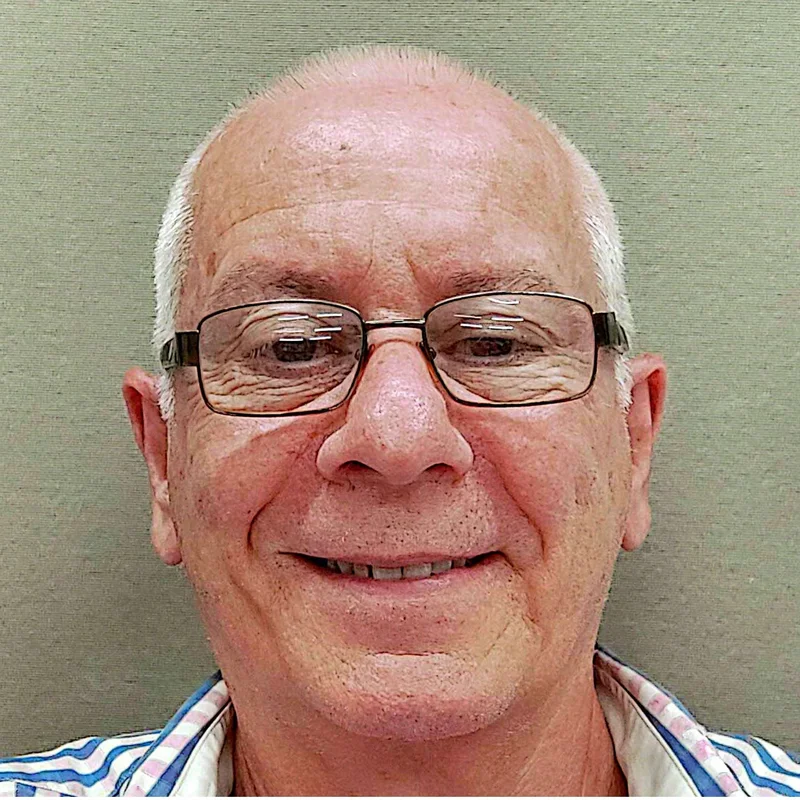
Curious by nature, engineer by training, teacher by heart.
Hi! I was born in Güines, a big village in Cuba, where I grew up surrounded by nature—probably why I still love being outside. I went to a high-tech secondary school, where I fell in love with Physics, Mathematics, science, and electronics. Later, I moved to Europe and got my Bachelor's and Master's degrees in Electronic Engineering. Seven years in different European cities gave me a love for art, history, and museums, and friends from all over the world.
I worked first as an engineer in a biotechnology research center, and later taught IGCSE Math, Physics, and Science for over 10 years at an international school in Havana (ISH). I also tutored students in A-level Physics online. Tutoring and classroom teaching taught me what inclusiveness, active learning, differentiation, and inquiry really mean.
Now I'm retired from in-person teaching and living in Buenos Aires with my wife and my daughter's family. I'm excited to keep teaching and learning with you!

48
Aster is an experienced international educator with a Bachelor's degree in Physics and several years of experience teaching and tutoring students across a range of international curricula, including Cambridge, Australian, and other globally recognised programs. She specialises in Physics, Mathematics, Science, English, and academic skills development, and has worked with students from primary school through to senior secondary levels.
Throughout her career, Aster has taught students from diverse cultural and educational backgrounds, including Australian students in online learning environments. Her experience extends beyond subject content to helping students develop critical thinking, problem-solving, exam techniques, academic writing, and independent learning skills. She is also experienced in supporting students with essay writing, research projects, and assessment preparation.
Aster's teaching approach focuses on making complex concepts clear, engaging, and accessible. She adapts lessons to each student's learning style and believes that strong understanding is built through curiosity, confidence, and active participation. Students and parents appreciate her patient, supportive, and encouraging manner, as well as her ability to explain challenging topics in a simple and relatable way.
With a strong background in science education and a passion for helping students achieve their academic goals, Aster is committed to helping every student build confidence, improve performance, and enjoy the learning process.

15
Over the last twenty years I have gained significant classroom and management experience at several State, Grammar and Independent Schools. I have been out of the classroom environment recently but continue to keep up to date with Education Policy and support students away from the school environment via home tutoring.
I am an experienced teacher with a passion towards my subject and have a great desire that all pupils across the ability range are inspired by Science; there is no greater job satisfaction for me than when that inspiration leads to students excelling in examinations or pursuing a career in medicine. As Head of Biology at Kingston Grammar School I managed a team of four experienced teachers- as well as being actively involved in the overall management of the Science department.
I was successful in improving both A-Level and GCSE results year on year. I was responsible for co-ordinating Community Service placements for students in the wider community. I also worked closely with Brunel University with their PGCE programme and was part of a team inspected by OFSTED and I was awarded as ‘outstanding’ in my mentoring work with PGCE students at Kingston Grammar.
Whilst my teaching specialism is Biology I have also taught Chemistry and Physics at key stage three, four and A Level. I have a broad knowledge of the science curriculum and how it fits in to schools academic policies and wider educational policies. I also have a good understanding of International Baccalaureate programs and Vocational courses. I have written schemes of work and working policies for a department as well as full risk assessments for practical work. I also have experience of intake of student new to a school be it a state school or an 11+ or Common Entrance at 13+. I have administered 11+ and 13+ examinations as well as being part of a team of interviewers assessing a student’s suitability for the school.
The tutors you see here are just a selection from our team of hundreds of tutors, please contact our Learning Advisors to discuss tutoring options
Why GCSE Science Single Award needs the right tutor
What makes GCSE Science Single Award hard
Single award science covers all three sciences with less teaching time and fewer exams, so each paper carries a lot of weight. On Edexcel International GCSE a whole science is examined in one 1 hour 10 minute paper, and on Cambridge one theory paper covers biology, chemistry and physics together. There is little room to recover from a weak topic, and students who see the course as the lighter option often underestimate how precisely the papers are marked.
Other things that make it hard:
- Switching between biology, chemistry and physics question by question within the same paper
- Chemistry calculations and physics equations that are tested even though the course is shorter
- Practical questions on methods, variables and results, including Cambridge's Alternative to Practical paper
- WJEC's pre-release Resource Folder for Unit 1, where 24 of the 72 marks link to material students must study in advance
- Explanations that need the correct scientific term, not an everyday description
How tutoring changes the outcome
Our Science Single Award tutors work from your board's own past papers, mark schemes and examiners' reports, so every answer is practised against what examiners actually credit across biology, chemistry and physics. Sessions target where Science Single Award marks are actually lost:
- key definitions and processes recalled loosely
- calculations with missing units, workings or rearrangements
- practical and data questions on variables, graphs and conclusions
- Core or Foundation students not pushed to the top grade their tier allows
What you'll learn in GCSE Science Single Award tutoring
Core skills developed
Every single award specification marks the same progression: knowing the science, applying it, and analysing data and experiments. Edexcel International weights knowledge and application at roughly 40% each and experimental skills and data analysis at about 20%. Cambridge puts 50% on knowledge with understanding, 30% on handling information and problem-solving, and 20% on experimental skills, all of it in the practical paper. WJEC gives half of the marks to applying knowledge and a quarter each to knowledge and to analysis and evaluation. We work through past-paper questions objective by objective, so you can see which skill is costing you marks rather than just seeing a lower total.
- Core knowledge across cells, particles, reactions, energy and forces
- Using equations and doing calculations with correct units
- Explaining processes as a clear chain of cause and effect
- Planning, analysing and evaluating practical work
- Interpreting graphs, tables and unfamiliar data
How are students assessed
Single award science is assessed mainly by written exams. Edexcel International is linear, with three papers sat in the June series at the end of the course and practical skills tested within them. Cambridge sets three papers, one of them a practical test or alternative to practical, in June or November. WJEC is unitised: one exam unit at the end of Year 10, one in Year 11, and an externally marked Scientific Enquiry.
- Multiple-choice and short-answer questions: we build fast, exact recall of definitions and key facts
- Calculations: we practise equations and workings until the method is automatic and units are never missed
- Practical and extended questions: we mark answers against real mark schemes and examiners' reports and rewrite them until they would earn full marks
What GCSE Science Single Award topics do we cover?
WJEC GCSE Science Single Award
WJEC's GCSE Integrated Science (Single Award) is a new Made-for-Wales course, taught from September 2026 and first awarded in 2028. It has three units: Unit 1 (1 hour 30 minutes, 72 marks, 45%) from summer 2027, Unit 2 (1 hour 30 minutes, 72 marks, 45%) from summer 2028, and Unit 3, a Scientific Enquiry worth 10%, in the spring term. Units 1 and 2 are tiered. Grades run from A* to G.
Unit 1: Living on Earth
- 1.1 Maintaining a healthy body
- 1.2 Using the Earth’s resources
- 1.3 Transport
Unit 2: Science in a Changing World
- 2.1 Human influence on the Earth
- 2.2 Humans in Space
- 2.3 Looking for clues
The course is organised by theme rather than by science, so a single topic such as transport draws on biology, chemistry and physics together. Unit 1 includes a pre-release Resource Folder sent to schools a month before the exam, and 24 of its 72 marks link to it. Unit 3 is one enquiry from a choice of two, a 1-hour practical task and a 1-hour written task, marked by WJEC. WJEC states the course is not designed for progression to AS or A level sciences. It replaces the legacy GCSE Applied Science (Single Award) (3440QS), whose final full assessment is summer 2027. Eduqas does not offer a single award science GCSE in England. Sessions on this board work through the Resource Folder as soon as it is released and prepare the enquiry tasks.
IAL GCSE Science Single Award
Three untiered papers, one each in biology (4SS0/1B), chemistry (4SS0/1C) and physics (4SS0/1P), each 1 hour 10 minutes, 60 marks and 33.3% of the qualification. The course is linear and examined in June only, with all three papers in the same series. Grades run from 9 to 1.
Biology
- 1 The nature and variety of living organisms
- 2 Structure and functions in living organisms
- 3 Reproduction and inheritance
- 4 Ecology and the environment
- 5 Use of biological resources
Chemistry
- 1 Principles of chemistry
- 2 Inorganic chemistry
- 3 Physical chemistry
- 4 Organic chemistry
Physics
- 1 Forces and motion
- 2 Electricity
- 3 Waves
- 4 Energy resources and energy transfers
- 5 Solids, liquids and gases
- 6 Magnetism and electromagnetism
- 7 Radioactivity and particles
- 8 Astrophysics
The topic headings match the Double Award, but the Single Award covers about half of its content with its own shorter papers, so it is important to revise from the Single Award specification rather than a Double Award textbook. Pearson does not expect it to lead directly to Level 3 science. There is only one exam series a year, so a missed or weak sitting means waiting until the following June. Sessions on this board stick closely to the Single Award content and practise full papers to time.
CIE GCSE Science Single Award
Three papers. Core candidates take Paper 1 (multiple choice, 45 minutes, 40 marks, 30%) and Paper 3 (theory, 1 hour 15 minutes, 80 marks, 50%); Extended candidates take Papers 2 and 4 in the same format, based on Core and Supplement content. Everyone also takes Paper 5 (Practical Test, 1 hour 15 minutes) or Paper 6 (Alternative to Practical, 1 hour), each 40 marks and 20%. Exams run in June and November.
Biology
- B1 Characteristics of living organisms
- B2 Cells
- B3 Movement into and out of cells
- B4 Biological molecules
- B5 Enzymes
- B6 Plant nutrition
- B7 Human nutrition
- B8 Transport in plants
- B9 Transport in animals
- B10 Diseases and immunity
- B11 Gas exchange in humans
- B12 Respiration
- B13 Drugs
- B14 Reproduction
- B15 Organisms and their environment
- B16 Human influences on ecosystems
Chemistry
- C1 States of matter
- C2 Atoms, elements and compounds
- C3 Stoichiometry
- C4 Electrochemistry
- C5 Chemical energetics
- C6 Chemical reactions
- C7 Acids, bases and salts
- C8 The Periodic Table
- C9 Metals
- C10 Chemistry of the environment
- C11 Organic chemistry
- C12 Experimental techniques and chemical analysis
Physics
- P1 Motion, forces and energy
- P2 Thermal physics
- P3 Waves
- P4 Electricity
- P5 Space physics
Combined Science shares its topics with Cambridge Co-ordinated Sciences but leaves out coordination and response, inheritance, variation and selection, magnetism and nuclear physics. All of the experimental skills marks are in Paper 5 or 6, Cambridge has published a revised syllabus for first examination in 2028, with no significant changes to teaching. Sessions on this board practise the theory paper across all three sciences and the planning and data questions in Paper 6.
Ready to start?
Tell us the subject, exam board and target grade. A Learning Advisor reviews it the same day.
Why parents trust us
4.9/5 from 312 reviews · used by students at 500+ schools



GCSE Science Single Award tutoring for both tiers
Whichever tier you are entered for, we match you with a tutor who knows those papers and the grades they lead to. Not sure which tier is right? Your tutor will help you decide before entries close.
Foundation (or core) tier tutoring
Core (Cambridge) and Foundation (WJEC) papers cover the essential content, and the highest grade available is a C.
- Secure the core content in biology, chemistry and physics
- Practise the practical and experimental skills each board assesses
- Clear, precise answers to structured questions
Higher (or extended) tier tutoring
Extended (Cambridge) and Higher (WJEC) papers add harder content and open grades up to an A*.
- Master the Extended and Higher-only content
- Data analysis and calculations across all three sciences
- Longer written answers that link ideas together
We teach Core and Extended for Cambridge IGCSE, Foundation and Higher for WJEC, and the untiered Edexcel International GCSE.
FAQs
We have answers to your most frequently asked questions. Anything not answered here, please reach out to our team.
On Cambridge IGCSE Combined Science, Core (Papers 1 and 3) caps the grade at C, while Extended (Papers 2 and 4) covers A* to G. Because Extended still awards grades down to G, there is little risk in entering a student who is close to the line. On WJEC, Units 1 and 2 are each tiered (Higher A* to D, Foundation C to G), and students can mix tiers across units. Edexcel International GCSE is untiered. If you are unsure, a tutor can look at your mock results and help you decide.
Yes. Our tutors teach Core and Extended for Cambridge IGCSE Combined Science, and Foundation and Higher for WJEC. Core and Foundation lessons secure the essential content across all three sciences. Extended and Higher lessons add the harder content, data analysis and calculations that open grades up to an A*. Edexcel International GCSE Science (Single Award) is not tiered, and we teach that too.
It depends on the board. Edexcel International GCSE 4SS0 is untiered, so everyone sits the same three papers and every grade from 9 to 1 is available. On Cambridge IGCSE 0653, Core (Papers 1 and 3) is capped at grade C, while Extended (Papers 2 and 4) covers A* to G, so a student who has a difficult day on Extended still receives a grade. Students aiming for an A or A* must take Extended, while those who are not yet secure at grade C are usually safer on Core. On WJEC, each exam unit is tiered separately. Source: Cambridge.
Yes. Private candidates enter through an exam centre that accepts them, such as a school or a British Council office, rather than directly with the exam board: you register with the centre, pay its fees and sit the exams there. Edexcel International GCSE 4SS0 suits private candidates well, because it is assessed only by written papers. On Cambridge IGCSE 0653, private candidates usually take Paper 6, the written Alternative to Practical, rather than the lab-based Practical Test, so check with your centre which papers it can offer. See the private candidate guidance from Pearson, Cambridge and the British Council.
IGCSE Single Award Science tutoring with an academic tutor costs from $50 USD (£38) per hour, and packages save 5–15%, which suits weekly lessons that rotate through the three sciences, with extra past paper sessions before the exams. Pay as you go is invoiced after each lesson, with no lock-in contracts. Professional tutors (qualified teachers and examiners) cost from $75 USD (£56) per hour. See pricing.
Late cancellations and no-shows are charged at half the lesson fee. That applies if you cancel less than one hour before the start time, or don't turn up. You can still change a session time whenever you need to, as long as you give your tutor notice.
Our academic tutors are high-achieving graduates and undergraduates who scored in the top band in science themselves, and our professional tutors are qualified teachers or examiners with 5+ years' experience. We accept only the top 5% of applicants. You are matched to a tutor who knows your board, so they can cover biology, chemistry and physics in one course of lessons and focus on the paper where you are dropping marks. Read more about our GCSE tutors and how we select tutors.
Lessons are one-to-one and online, with a tutor matched to IGCSE Single Award Science, your exam board and your target grade. Each session works on your weakest areas using past paper questions from your own board, whether that is Edexcel International GCSE 4SS0 or Cambridge IGCSE 0653. For Single Award Science that usually means finding your weakest of the three sciences and fixing it first, drilling calculations and definitions, and practising practical and data questions. See how it works or start with the student application.
Single Award Science covers less content than double award or separate sciences, but you still have to be confident in biology, chemistry and physics. On Edexcel International each science is a separate paper worth a third, so a weak science pulls the grade down, and the grade boundaries are high. Calculations, practical questions and precise scientific terms are where most marks are lost. Our online IGCSE tutoring focuses on exactly those areas.
In June 2026, 5.0% of international candidates achieved a 9 in Edexcel International GCSE Science (Single Award), 19.7% achieved a 7 or above and 46.8% achieved a 4 or above (provisional figures from Pearson). On Cambridge IGCSE Combined Science, 25.9% of candidates worldwide achieved an A* (Cambridge). On Edexcel International, the grade 9 boundary was 89% of the marks, so a 9 needs secure knowledge across all three sciences with very few slips.
Grade boundaries are set after each exam series and change every year, so older figures are only a guide. In June 2026, Edexcel International GCSE Science (Single Award) set grade 9 at 161 out of 180 (89%), grade 7 at 130 and grade 4 at 86 (48%). Cambridge IGCSE Combined Science 0653's Extended A* threshold was 145 or 146 out of 200 (72–73%), depending on the paper variant. Sources: Pearson International and Cambridge.
There is no coursework. On Edexcel International GCSE there is no practical paper, and experimental skills are tested in the three written papers. Cambridge IGCSE 0653 examines practical skills in a separate paper worth 20%: either Paper 5, a hands-on Practical Test, or Paper 6, a written Alternative to Practical. WJEC's GCSE includes a Scientific Enquiry worth 10%. There is no speaking assessment. See the Edexcel International specification.
IGCSE Single Award Science covers biology, chemistry and physics and is worth one IGCSE. Edexcel International GCSE Science (Single Award) 4SS0 sets three 1 hour 10 minute papers, one per science, each worth a third, all sat in the June series. Cambridge IGCSE Combined Science 0653 sets a multiple-choice paper (30%), a theory paper (50%) and a practical paper (20%), at Core or Extended. In Wales, WJEC offers a single award science GCSE, first awarded in 2028. See the Edexcel International specification.
All GCSE subjects
Ready to find your GCSE Science Single Award tutor?
We will find you a tutor in 24 hours and if you are not happy after the first session, we will give you a full refund and find you another tutor for no extra charge.
Resources for GCSE students
Check out our free content about the GCSE