How It Works
We keep things as simple as possible. Our objective is to make finding a tutor convenient, efficient and effective.
Fill out an online form
Complete an application online which will be received by one of our dedicated Learning Advisors
Get matched with a tutor
Our experienced Learning Advisor will review your application, and match you with the most appropriate tutor based on your application
Tutor makes contact
Once we confirm with the tutor, the tutor will make contact to organise your first session.
Have your first lesson
Our tutors will work around your schedule to organise a session whenever you would like. Only pay for tutoring you have completed.
Two kinds of GCSE tutor
Choose between top-performing recent graduates or qualified teachers. Either way, our matching process finds you a tutor based on subject, exam board, target grade and availability.
Academic Tutors
from $50 USD/hr
Top performing graduates who achieved top grades in the subject they teach.
- We accept only the top 5% of tutor applicants.
- Each tutor is chosen for their academic results, teaching ability, and connection with students.
Relatable role model: work with a tutor who is similar in age and can be a peer
Affordability: academic tutors are more cost-effective than professional tutors
First-hand experience: they sat these papers recently and know what worked
Professional Tutors
from $75 USD/hr
Current or past qualified teachers and examiners with 5+ years professional teaching experience.
- We only select highly experienced, qualified GSCE teachers.
- Every teacher is assessed on their teaching expertise, subject knowledge, and ability to engage students.
Quality assurance: trained and accredited teaching qualifications
Guaranteed track record: years of experience helping students succeed
Subject expertise: deep understanding of content and exam board requirements
Due to our international operations we quote our prices in USD. Pound amounts are an indicative conversion and you will be invoiced in USD.
Academic Tutors
from £37 GBP/hr
Top performing graduates who achieved top grades in the subject they teach.
Relatable role model: work with a tutor who is similar in age and can be a peer
Affordability: academic tutors are more cost-effective than professional tutors
First-hand experience: they sat these papers recently and know what worked
Professional Tutors
from £56 GBP/hr
Current or past qualified teachers and examiners with 5+ years professional teaching experience.
Quality assurance: trained and accredited teaching qualifications
Guaranteed track record: years of experience helping students succeed
Subject expertise: deep understanding of content and exam board requirements
Meet our GCSE Chinese tutors
Our team is a combination of GCSE graduates who sat these exams recently and qualified teachers with years of classroom and examining experience.
40
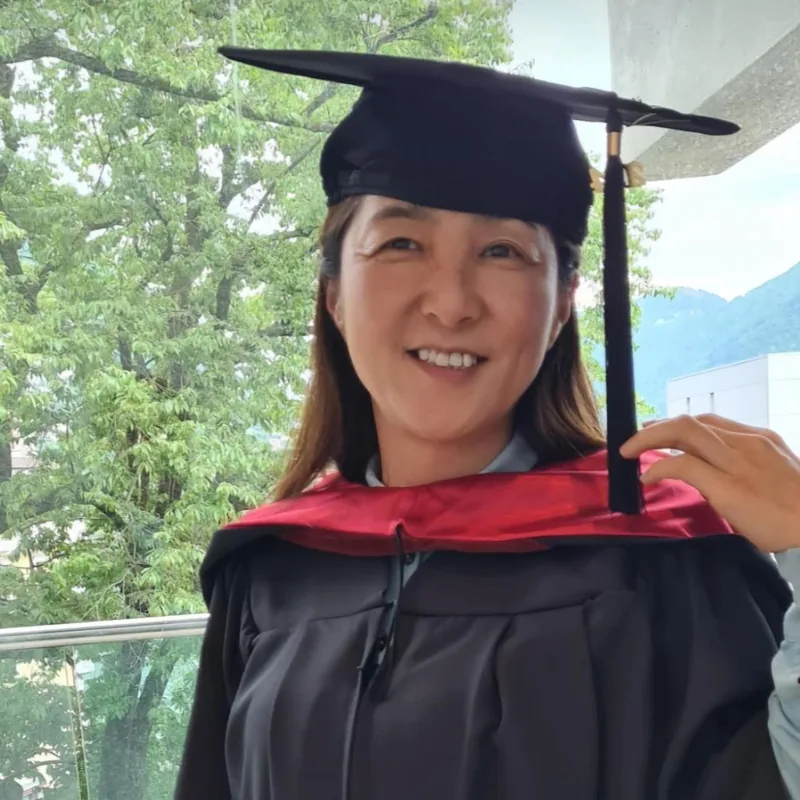
Lili is an experienced international educator specialising in IGCSE and A-Level Mandarin Chinese and Economics, with a strong combination of academic qualifications, professional teaching credentials, examiner experience, and more than 15 years of subject-specific teaching experience. She has worked in international education since 1999, teaching students from diverse linguistic and cultural backgrounds in international school environments.
For Mandarin Chinese, Lili holds a professional teaching qualification and has an academic background in Chinese Language and Literature. She has taught Chinese for more than 15 years and has extensive experience preparing students for international examinations, including IGCSE and A-Level Chinese. She has also served as a Chinese examiner in Switzerland, giving her first-hand understanding of assessment criteria, examination standards, and the skills students need to achieve strong results. Her teaching covers speaking, listening, reading and writing, as well as advanced vocabulary, grammar, cultural understanding, literary analysis, academic writing and examination techniques.
For Economics, Lili holds a Master’s degree in Political Economy of Money and Development and has several years of experience teaching Economics in international school settings. She is familiar with IGCSE and A-Level Economics, including microeconomics, macroeconomics, international economics, economic development, data interpretation, structured responses, essay writing and examination preparation. Her academic background enables her to connect economic theory with contemporary global issues and help students develop strong analytical and evaluative skills.
Lili also holds IB Educator Certificates and has experience with the IB Diploma Programme at both Standard Level (SL) and Higher Level (HL). She is familiar with IB assessment requirements, including examinations, Internal Assessments (IA), Extended Essays (EE), and Theory of Knowledge (TOK). This broader international curriculum experience allows her to support students transitioning between or working across different academic systems.
Throughout her career, Lili has supported students from international schools through classroom teaching, private tutoring, and established tutoring organisations. She is particularly experienced in working with secondary and sixth-form students preparing for IGCSE and A-Level examinations.
Her teaching is highly student-centred and examination-focused. She adapts lessons to each learner’s current level, strengths, areas for development, examination board requirements, and target grades. Alongside subject knowledge, she places strong emphasis on exam technique, analytical thinking, academic writing, independent learning and confidence, enabling students to make measurable progress and work effectively towards their desired IGCSE and A-Level results.

43
Haiyan W is a native Mandarin speaker with over 20 years of experience teaching Chinese in universities and secondary schools in China and the UK. She has previous experience teaching A-Level Chinese at St Leonards School and Madras College, and currently teaches IGCSE Chinese at St Leonards School. She has taught both native and non-native Chinese learners with a wide range of abilities and backgrounds.
Haiyan gained her undergraduate and MA degrees in China and also taught as a lecturer at a Chinese university. She has extensive experience preparing students for Chinese examinations and supporting them in developing accurate language, strong communication skills and effective examination techniques. Her IGCSE students have achieved consistently strong results, with most achieving A or A* grades.
Her teaching style is patient, structured and supportive. She carefully adapts lessons to individual students' needs and focuses on building confidence, improving language skills and developing independent learning.
The tutors you see here are just a selection from our team of hundreds of tutors, please contact our Learning Advisors to discuss tutoring options
Why GCSE Chinese needs the right tutor
What makes GCSE Chinese hard
GCSE Chinese asks you to learn two systems at once: the spoken language, with its tones, and a writing system in which every character has to be recognised and, for writing, reproduced from memory. A student can know a word when they hear it and still be unable to read or write it, so the four skills develop at different speeds. The grammar is lighter than in European languages, with no verb endings to learn, but word order and particles do the work instead, and a sentence with the right words in the wrong order loses its meaning.
Other things that make it hard:
- Writing characters accurately from memory, where a missing stroke or wrong component counts as an error
- Tones in speaking and listening, where words that look the same in pinyin mean different things
- Word order rules, such as time and place coming before the verb, and the correct use of measure words
- Showing past, present and future time with particles and time phrases rather than tenses, which the higher marks require
- Translation into Chinese, where English sentence structure has to be rebuilt rather than copied word by word
How tutoring changes the outcome
Our Chinese tutors work from your board's own past papers, mark schemes and examiners' reports, and run timed mock speaking tests in your board's format. Sessions target where Chinese marks are actually lost:
- characters written with missing strokes or the wrong component in writing and translation tasks
- word order and measure word mistakes that make a sentence unclear
- speaking answers that stay in the present and never refer to past or future events
- listening and reading answers that miss a detail such as a time, a number or a negative
What you'll learn in GCSE Chinese tutoring
Core skills developed
Every board weights the four language skills equally. On AQA, Edexcel, Edexcel International and Cambridge, listening, speaking, reading and writing are each worth 25% of the qualification. The boards differ in how those skills are tested: the UK GCSEs set separate Foundation and Higher papers with translation in both directions, Edexcel International combines reading and writing in one paper, and Cambridge sets mostly multiple-choice and matching questions in listening and reading. We work through past-paper questions skill by skill, so you can see whether characters, listening or speaking is costing you marks rather than just seeing a lower total.
- Recognising and writing the characters on your board's vocabulary list accurately from memory
- Listening for detail and opinion in recordings, using tones and context
- Building sentences in the correct word order with measure words and time phrases
- Speaking spontaneously in role plays, photo or picture tasks and conversation
- Translating between Chinese and English in both directions
How are students assessed
Chinese is assessed by exams in all four skills, with no coursework, and every paper is sat at the end of the course. The speaking test is conducted and recorded by your teacher, usually shortly before the written exams. AQA tests spoken Mandarin only, while Edexcel and Edexcel International offer the speaking test in Mandarin or Cantonese and print their reading and writing papers in both traditional and simplified characters. AQA, Edexcel and Edexcel International mark the speaking recordings themselves, while Cambridge has the teacher mark the test and moderates a sample. Cambridge examines Chinese in the June series only.
- Listening and reading comprehension: past-paper recordings and texts drilled for detail, opinions and time references
- Writing and translation: answers checked character by character for accuracy, word order and coverage of every bullet point
- Speaking: timed mock tests in your board's format, with unseen role plays, photo or picture cards and unprepared conversation questions
What GCSE Chinese topics do we cover?
IAL GCSE Chinese
Three papers, all part of the June series, with no tiers. Paper 1: Listening (30 minutes plus 5 minutes' reading time, 40 marks, 25%) has seven questions, with recordings available in Mandarin and Cantonese. Paper 2: Reading and Writing (1 hour 45 minutes, 80 marks, 50%) has a reading section and a writing section made up of a 60–75 character task, a task of up to 150 characters chosen from three, and a translation of four sentences into Chinese. Paper 3: Speaking (8–10 minutes, 40 marks, 25%) is taken between March and May in Mandarin or Cantonese, conducted by a teacher and marked by Pearson.
A. Home and abroad
- A1 Life in the town and rural life
- A2 Holidays, tourist information and directions
- A3 Services (e.g. bank, post office)
- A4 Customs
- A5 Everyday life, traditions and communities
B. Education and employment
- B1 School life and routine
- B2 School rules and pressures
- B3 School trips, events and exchanges
- B4 Work, careers and volunteering
- B5 Future plans
C. Personal life and relationships
- C1 House and home
- C2 Daily routines and helping at home
- C3 Role models
- C4 Relationships with family and friends
- C5 Childhood
D. The world around us
- D1 Environmental issues
- D2 Weather and climate
- D3 Travel and transport
- D4 The media
- D5 Information and communication technology
E. Social activities, fitness and health
- E1 Special occasions
- E2 Hobbies, interests, sports and exercise
- E3 Shopping and money matters
- E4 Accidents, injuries, common ailments and health issues
- E5 Food and drink
In the speaking test, students choose and bring their own picture for Task A, then hold two conversations on topics picked at random by Pearson, and three different topics must be covered across the three tasks. Sub-topics A3, C3, C5, D2 and E4 are not tested in speaking. Paper 2 is printed in both traditional and simplified characters, and grammatical accuracy, punctuation and character formation are all assessed in the writing section. Sessions on this board help students choose a suitable picture and practise conversations across every speaking topic.
EDEXCEL GCSE Chinese
GCSE Chinese (spoken Mandarin/spoken Cantonese): four papers, each worth 25%, all taken at the same tier. Paper 1: Listening and understanding in Chinese (35 minutes Foundation, 45 minutes Higher, including 5 minutes' reading time; 50 marks). Paper 2: Speaking in Chinese (7–9 minutes Foundation, 10–12 minutes Higher, plus 12 minutes' preparation; 70 marks) is a role play, a picture-based task and a conversation, in Mandarin or Cantonese. Paper 3: Reading and understanding in Chinese (50 minutes Foundation, 1 hour 5 minutes Higher; 50 marks) includes a translation into English. Paper 4: Writing in Chinese (1 hour 20 minutes Foundation, 1 hour 25 minutes Higher; 60 marks) includes a translation into Chinese. Speaking is completed in April/May and the other papers in May/June.
Theme 1: Identity and culture
- Who am I?
- Daily life
- Cultural life
Theme 2: Local area, holiday and travel
- Holidays
- Travel and tourist transactions
- Town, region and country
Theme 3: School
- What school is like
- School activities
Theme 4: Future aspirations, study and work
- Using languages beyond the classroom
- Ambitions
- Work
Theme 5: International and global dimension
- Bringing the world together
- Environmental issues
Edexcel offers the most choice of any board: Mandarin or Cantonese for speaking, listening recordings in both, and reading and writing papers printed in both traditional and simplified characters. In the conversation, the student chooses the first topic in advance and Pearson sets a second theme, and the picture task and conversation both require references to past, present and future events. Sessions on this board prepare the chosen conversation topic and every theme Pearson might set for the second part.
AQA GCSE Chinese
GCSE Chinese (Spoken Mandarin): four papers, each worth 25%, sat at the end of the course at either Foundation or Higher tier. Paper 1: Listening (35 minutes Foundation, 45 minutes Higher; 40 or 50 marks). Paper 2: Speaking (7–9 minutes Foundation, 10–12 minutes Higher, plus 12 minutes' supervised preparation; 60 marks) has a role-play (15 marks), a photo card (15 marks) and a general conversation (30 marks). Paper 3: Reading (45 minutes Foundation, 1 hour Higher; 60 marks) ends with a translation into English. Paper 4: Writing (1 hour Foundation, 1 hour 15 minutes Higher; 50 or 60 marks) includes a translation into Chinese. Speaking takes place in a window in April and May and the written papers in May/June.
Theme 1: Identity and culture
- Topic 1: Me, my family and friends
- Topic 2: Technology in everyday life
- Topic 3: Free-time activities
- Topic 4: Customs and festivals in Chinese-speaking countries/communities
Theme 2: Local, national, international and global areas of interest
- Topic 1: Home, town, neighbourhood and region
- Topic 2: Social issues
- Topic 3: Global issues
- Topic 4: Travel and tourism
Theme 3: Current and future study and employment
- Topic 1: My studies
- Topic 2: Life at school/college
- Topic 3: Education post-16
- Topic 4: Jobs, career choices and ambitions
The general conversation carries half of AQA's speaking marks and covers the two themes not used on the photo card, with the student choosing the first. Writing tasks are set by character count, from about 30 characters on Foundation Question 2 to about 125 on the Higher open-ended task, and pronunciation, intonation and tones are assessed in speaking. Sessions on this board prepare both conversation themes in depth and practise writing to the character counts under timed conditions.
CIE GCSE Chinese
Cambridge IGCSE Mandarin Chinese, a foreign language syllabus: four papers, all compulsory and each worth 25%, with no tiers. Paper 1 Listening (about 40 minutes, 30 marks) is 30 multiple-choice and matching questions. Paper 2 Reading (1 hour 15 minutes, 40 marks) adds questions needing short written answers. Paper 3 Speaking (about 10 minutes plus 10 minutes' preparation, 40 marks) is one role play and two topic conversations. Paper 4 Writing (1 hour 15 minutes, 45 marks) is a form-filling task, a directed writing task of about 80–100 characters and an email/letter or article/blog of about 150 characters. Exams run in the June series only. Cambridge has published a revised syllabus for first examination in 2028, in which the Writing paper is worth 40 marks and candidates may make notes during the speaking preparation time.
Topic areas
- A Everyday activities
- B Personal and social life
- C The world around us
- D The world of work
- E The international world
Cambridge is the only one of these boards where your own teacher marks the speaking test, with Cambridge moderating a sample, and the role play and topic conversations are allocated from a randomisation grid. The syllabus publishes a vocabulary list and a grammar list, and some questions test only words from that list, so learning it thoroughly pays off directly. Question 3 of the writing paper carries 28 of the 45 marks. Sessions on this board work through the vocabulary list and give the extended writing task the most time.
Ready to start?
Tell us the subject, exam board and target grade. A Learning Advisor reviews it the same day.
Why parents trust us
4.9/5 from 312 reviews · used by students at 500+ schools





GCSE Chinese tutoring for both tiers
Whichever tier you are entered for, we match you with a tutor who knows those papers and the grades they lead to. Not sure which tier is right? Your tutor will help you decide before entries close.
Foundation (or core) tier tutoring
Foundation papers use a smaller range of characters and simpler tasks, and the highest grade available is a 5.
- Recognise and write the core characters and vocabulary
- Speaking practice with a tutor, including role-play and picture-based tasks
- Accurate short writing, so simple sentences earn full marks
Higher (or extended) tier tutoring
Higher papers use a wider range of characters and more demanding tasks, and open grades up to a 9, but a result below a 3 is ungraded.
- Read and write a wider range of characters accurately
- Translation both ways, using the structures examiners reward
- Extended writing and conversation that show range and accuracy
We teach both tiers for AQA and Edexcel, as well as the untiered Cambridge IGCSE and Edexcel International GCSE.
FAQs
We have answers to your most frequently asked questions. Anything not answered here, please reach out to our team.
Yes. Our GCSE Chinese tutors teach both tiers on AQA and Pearson Edexcel. You sit all four skills at the same tier, so lessons cover listening, speaking, reading and writing at the level of your entry. On Foundation, that means recognising and writing the core characters and accurate short answers. On Higher, it means a wider range of characters, translation both ways and extended writing. If your child is between tiers, their tutor will help you choose before entries close.
On AQA and Pearson Edexcel, Foundation covers grades 1–5 and Higher covers 4–9, and you sit all four skills at the same tier. A Higher student who narrowly misses grade 4 can be given a grade 3, but below that the result is U. In June 2026 the Higher grade 4 boundary was 81 out of 240 on AQA and 103 out of 280 on Pearson Edexcel. Native and heritage speakers almost always take Higher, as does anyone who needs a 7 for A-Level, while students who started Chinese recently and are still building characters may be safer on Foundation. Edexcel International GCSE and Cambridge IGCSE are untiered. Sources: AQA and Pearson.
GCSE Chinese means the UK specifications from AQA and Pearson Edexcel, while IGCSE Chinese means Edexcel International GCSE 4CN1 or Cambridge IGCSE Mandarin Chinese 0547. The UK GCSEs are tiered, and AQA tests spoken Mandarin only, while Pearson's GCSE and International GCSE allow Mandarin or Cantonese. The IGCSEs are untiered, and Cambridge 0547 is examined in June only. Universities and sixth forms accept both. The UK GCSE is sat in May and June only, while Cambridge IGCSE and Edexcel International GCSE also run a full November series, which suits students outside the UK and anyone who needs a resit. Read more about online IGCSE tutoring.
Each sixth form and college sets its own entry requirements, so check the prospectus of the one you're applying to. As a guide, most ask for a grade 7 in GCSE Chinese for A-Level Chinese, taken at Higher tier, and many are happy to accept native or heritage speakers who show strong reading and writing. A-Level Chinese requires essays on literature or film and translation into Chinese, so written accuracy matters more than at GCSE. If you take Cambridge IGCSE on the A*–G scale, a grade A is broadly equivalent to a 7 and a C to a 4, the points that were aligned when the 9–1 scale was introduced (GOV.UK grading factsheets), so a requirement of grade 6 usually means a strong B. See A-Level Chinese.
GCSE Chinese tutoring with an academic tutor costs from $50 USD (£38) per hour, and packages save 5–15%, which suits weekly lessons that build characters and speaking confidence steadily, with extra mock speaking exams before the test window. Pay as you go is invoiced after each lesson, with no lock-in contracts. Professional tutors (qualified teachers and examiners) cost from $75 USD (£56) per hour. See pricing.
Late cancellations and no-shows are charged at half the lesson fee. That applies if you cancel less than one hour before the start time, or don't turn up. You can still change a session time whenever you need to, as long as you give your tutor notice.
Our academic tutors are high-achieving graduates and undergraduates who scored in the top band in Chinese themselves, and our professional tutors are qualified teachers or examiners with 5+ years' experience. We accept only the top 5% of applicants. You are matched to a tutor who knows your board, so they can run a mock speaking exam to your board's format and mark your writing and translations character by character, the way an examiner would. Read more about our GCSE tutors and how we select tutors.
Lessons are one-to-one and online, with a tutor matched to GCSE Chinese, your exam board and your target grade. Each session works on your weakest areas using past paper questions from your own board, whether that is AQA, Pearson Edexcel, Edexcel International GCSE or Cambridge IGCSE 0547. For Chinese that usually means character and vocabulary practice from your board's list, written answers checked character by character, and regular mock speaking exams in Mandarin or Cantonese. See how it works or start with the student application.
For students without a Chinese-speaking background, it is one of the most demanding GCSE languages. Characters have to be learned to read and write, tones matter in listening and speaking, and word order differs from English, so translation needs real precision. Heritage speakers often find speaking and listening easy but lose marks in writing, where accurate characters and coverage of every bullet point are required. Our online GCSE tutoring focuses on exactly those areas.
It depends heavily on your background. JCQ does not report GCSE Chinese separately, but in the Other Modern Languages group it belongs to, 41.0% of entries in England achieved a grade 9 in summer 2026 (JCQ), because many candidates are native or heritage speakers. Internationally, 45.8% of Edexcel International GCSE Chinese candidates achieved a 9 (provisional figures from Pearson), and 80.0% of Cambridge IGCSE Mandarin Chinese (Foreign Language) candidates achieved an A* (Cambridge). For a student learning Chinese from scratch, a 9 is much harder: it needs accurate characters, correct word order in writing and translation, and a fluent, spontaneous speaking exam.
Grade boundaries are set after each exam series and change every year, so older figures are only a guide. In June 2026, AQA's Higher tier grade 9 boundary for Chinese was 212 out of 240 (88%), with grade 4 at 81 (34%). Pearson Edexcel's Higher grade 9 was 229 out of 280 (82%), with grade 4 at 103 (37%). Edexcel International GCSE 4CN1 set grade 9 at 146 out of 160 (91%), and Cambridge IGCSE 0547's A* threshold was 162 to 164 out of 200 (81–82%), depending on the components. Sources: AQA, Pearson, Pearson International and Cambridge.
There is no coursework on any board, but every board has a speaking exam worth 25%. It is conducted and recorded by your teacher, usually shortly before the written exams, and includes role plays or picture-based tasks and an unprepared conversation. AQA, Pearson and Edexcel International mark the recordings themselves, while Cambridge has the teacher mark the test and moderates a sample. See the Edexcel International specification.
GCSE Chinese is assessed by exams in listening, speaking, reading and writing, each worth 25%, all sat at the end of the course at either Foundation or Higher tier. AQA 8673 tests spoken Mandarin, while Pearson Edexcel 1CN0 offers the speaking test in Mandarin or Cantonese and prints its papers in both traditional and simplified characters. Edexcel International GCSE 4CN1 is untiered, with listening (25%), a combined reading and writing paper (50%) and speaking (25%), and Cambridge IGCSE Mandarin Chinese 0547 sets four papers worth 25% each, in the June series only. See the Pearson Edexcel specification.
All GCSE subjects
Ready to find your GCSE Chinese tutor?
We will find you a tutor in 24 hours and if you are not happy after the first session, we will give you a full refund and find you another tutor for no extra charge.
Resources for GCSE students
Check out our free content about the GCSE