
How It Works
We keep things as simple as possible. Our objective is to make finding a tutor convenient, efficient and effective.
Fill out an online form
Complete an application online which will be received by one of our dedicated Learning Advisors
Get matched with a tutor
Our experienced Learning Advisor will review your application, and match you with the most appropriate tutor based on your application
Tutor makes contact
Once we confirm with the tutor, the tutor will make contact to organise your first session.
Have your first lesson
Our tutors will work around your schedule to organise a session whenever you would like. Only pay for tutoring you have completed.
Two kinds of GCSE tutor
Choose between top-performing recent graduates or qualified teachers. Either way, our matching process finds you a tutor based on subject, exam board, target grade and availability.
Academic Tutors
from $50 USD/hr
Top performing graduates who achieved top grades in the subject they teach.
- We accept only the top 5% of tutor applicants.
- Each tutor is chosen for their academic results, teaching ability, and connection with students.
Relatable role model: work with a tutor who is similar in age and can be a peer
Affordability: academic tutors are more cost-effective than professional tutors
First-hand experience: they sat these papers recently and know what worked
Professional Tutors
from $75 USD/hr
Current or past qualified teachers and examiners with 5+ years professional teaching experience.
- We only select highly experienced, qualified GSCE teachers.
- Every teacher is assessed on their teaching expertise, subject knowledge, and ability to engage students.
Quality assurance: trained and accredited teaching qualifications
Guaranteed track record: years of experience helping students succeed
Subject expertise: deep understanding of content and exam board requirements
Due to our international operations we quote our prices in USD. Pound amounts are an indicative conversion and you will be invoiced in USD.
Academic Tutors
from £37 GBP/hr
Top performing graduates who achieved top grades in the subject they teach.
Relatable role model: work with a tutor who is similar in age and can be a peer
Affordability: academic tutors are more cost-effective than professional tutors
First-hand experience: they sat these papers recently and know what worked
Professional Tutors
from £56 GBP/hr
Current or past qualified teachers and examiners with 5+ years professional teaching experience.
Quality assurance: trained and accredited teaching qualifications
Guaranteed track record: years of experience helping students succeed
Subject expertise: deep understanding of content and exam board requirements
Meet our GCSE Biology tutors
Our team is a combination of GCSE graduates who sat these exams recently and qualified teachers with years of classroom and examining experience.

27
Joogal is an experienced Biology and Chemistry educator with a strong focus on A-Level and IGCSE Biology and Chemistry. He currently teaches IB Biology and Chemistry at one of Singapore’s leading IB schools and has extensive experience across the A-Level, IGCSE and IB curricula.
He holds a degree in Chemistry and Microbiology from the National University of Singapore (NUS), where he also obtained a Second Class Upper Honours degree in Microbiology. He subsequently completed a Master of Education (Merit) at Nanyang Technological University (NTU).
Joogal has over two decades of teaching experience, including eight years as a lecturer at Anglo-Chinese Junior College (ACJC), where he taught A-Level Biology. He subsequently joined Anglo-Chinese School (Independent), where he taught IBDP Biology and Chemistry. His experience teaching different curricula has given him a strong understanding of the content, examination requirements and skills needed for students to perform well in A-Level and IGCSE Biology and Chemistry.
In addition to teaching, Joogal has worked with the International Baccalaureate Organisation (IBO) for 20 years, serving as an IA moderator and Theory of Knowledge examiner. He has also been trained in Environmental Systems and Societies (ESS). His extensive experience as both a classroom teacher and examiner gives him valuable insight into assessment expectations and common areas where students can improve.
As a Senior Teacher and former Head of IB Biology, Joogal has extensive experience in identifying students’ learning needs, addressing gaps in understanding and developing targeted strategies to help students achieve their academic goals. He places particular emphasis on developing a strong conceptual foundation, examination skills and the ability to apply knowledge to unfamiliar questions.
As a tutor, Joogal believes that effective tuition should go beyond simply covering content. He provides students with structured guidance, targeted resources and systematic practice to build their understanding and confidence. At the same time, he encourages students to become independent learners by attempting questions on their own, applying concepts and taking responsibility for their learning.
With his extensive experience in A-Level and IGCSE Biology and Chemistry, as well as IB Biology and Chemistry, Joogal is able to support students across different curricula and adapt his teaching approach to their individual learning needs.

30
Ala is a BSc degree holder in Biomedicine and is pursuing her master's in clinical neuroscience. Her field of study incorporates Biology, Chemistry and Mathematics – the subjects she's been tutoring for 3 years now. She has experience tutoring AQA A-levels and (I)GCSE syllabi in the aforementioned subjects, improving students' comprehension of the subjects as well as creating effective exam strategies. She helped tutees achieve top grades (A* as well as 9s in GCSE). As an IB graduate, Ala understands the challenges of a rigorous high school curriculum and the struggles of having to manage multiple subjects at a higher level simultaneously. Thus, she ensures sessions with her students are focused and flexible by creating a tailored study plan for each student and preparing for the lessons diligently. She shares her enthusiasm for the subjects and positive energy with the students, making the sessions more enjoyable and friendly.
16
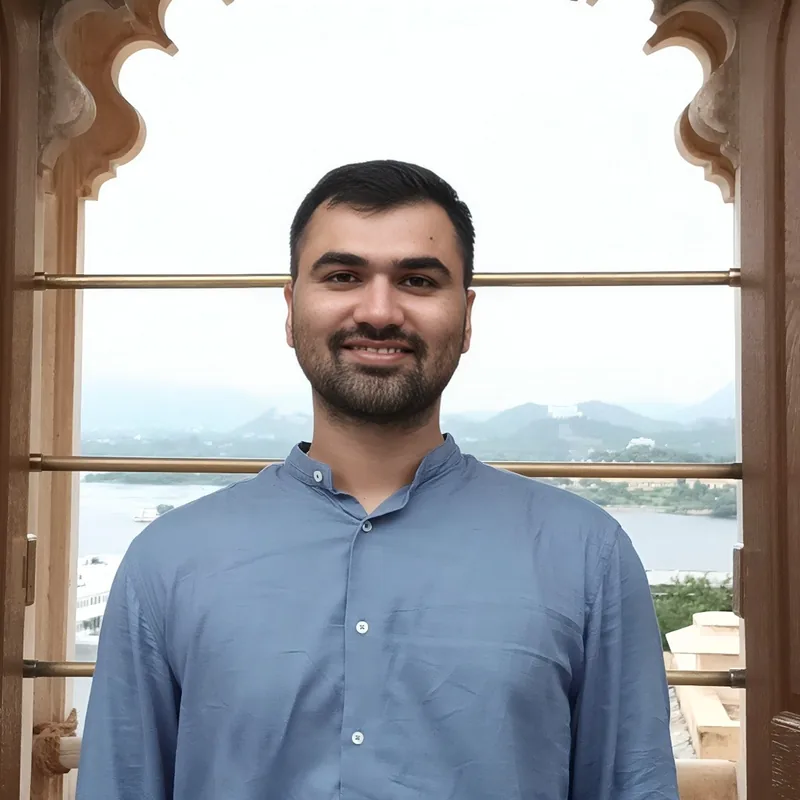
Anuraj S is an experienced Physics tutor with over 7 years of teaching experience, specialising in GCSE and international secondary-school Physics. He has taught students across major exam boards including Pearson Edexcel, Edexcel International (IAL), AQA, OCR, and Cambridge International (CIE), helping students build strong conceptual understanding and achieve their academic goals.
He holds a Ph.D. in Plasma Physics, an Integrated M.Sc. in Physics from the Central University of Rajasthan, and a Bachelor of Education (Gold Medallist, 91%). His strong academic background allows him to explain challenging Physics concepts clearly and connect theory with practical, real-world applications.
Anuraj has extensive experience preparing GCSE students for both content and exam technique. He focuses on understanding the specification, command words, mark schemes, required practicals, mathematical skills, and exam-style questions. His lessons include systematic revision, past-paper practice, identifying common mistakes, and developing the structured approach needed to gain marks consistently.
His teaching style is patient, approachable, and highly adaptable. He first makes sure students genuinely understand the underlying concept before progressing to more challenging questions. Whether a student is struggling with the fundamentals or aiming for the highest grades, he tailors lessons to their individual needs and helps them become confident, independent Physics problem-solvers.

20
Karim T is an accomplished English Language and Literature educator, English as a Second Language (ESL) specialist, and communication professional with a distinguished academic record and extensive experience in international secondary education. His professional expertise is particularly focused on IGCSE, O-Level, and A-Level English Language and English as a Second Language, with a strong commitment to developing students’ linguistic accuracy, communication skills, academic writing, critical thinking, and confidence in using English effectively.
Karim earned his Bachelor’s Degree in Translation with a Minor in Communication from the Arab Academy for Science, Technology and Maritime Transport (AASTMT), graduating Summa Cum Laude as the Valedictorian of his graduating class with a GPA of 3.72 (Excellent with Honors).
His academic excellence was established at an early stage. He graduated from Nefertari British International School under the IGCSE system with an outstanding 9 A*s, a result officially recognized by Egypt’s Central Coordination Office as equivalent to 100%, and graduated as the Valedictorian of his high school class. This achievement made Karim a two-time Valedictorian, having graduated first in both high school and university.
Professionally, Karim has developed substantial experience teaching English Language, English as a Second Language, and English Language & Literature within international secondary-school settings. His teaching experience encompasses students preparing for IGCSE and O-Level examinations, as well as advanced A-Level English Language study. He has worked extensively on developing students’ reading comprehension, writing proficiency, vocabulary, grammar, spoken communication, analytical skills, and ability to communicate effectively for both academic and real-world purposes.
Karim’s approach to IGCSE and O-Level English emphasizes building a secure foundation in language while developing the examination skills required for success. He supports students in mastering comprehension, directed writing, descriptive and narrative writing, summary skills, vocabulary, grammar, sentence construction, and effective written expression. Particular emphasis is placed on helping students understand how language choices influence meaning, tone, purpose, audience, and overall effectiveness.
At A-Level, Karim adopts a more sophisticated and analytical approach to English Language, guiding students toward advanced language analysis, discursive and argumentative writing, linguistic terminology, textual interpretation, and the ability to construct precise, coherent, and well-supported academic responses. He encourages students to move beyond simply identifying language features and instead develop the ability to explain how and why language choices create particular effects and meanings.
His experience also includes teaching within the International Baccalaureate Diploma Programme, where he taught English Language & Literature and Theory of Knowledge. This background has further strengthened his ability to cultivate higher-order thinking, academic writing, independent inquiry, and sophisticated communication skills. He has successfully guided graduating Diploma Programme cohorts through demanding academic requirements while maintaining a broader focus on intellectual development and university readiness.
As an English as a Second Language educator, Karim places particular importance on helping learners become confident, accurate, and independent users of English. His instruction combines explicit language development with meaningful communication, enabling students to strengthen their grammar, vocabulary, reading, writing, listening, and speaking skills while developing the confidence to use English in academic, professional, and everyday contexts.
Committed to continuous professional development, Karim has completed official International Baccalaureate Category 2 professional development workshops in Theory of Knowledge and English B, complementing his broader expertise in international English-language education.
Beyond teaching, Karim’s multidisciplinary background includes research and development, public speaking, strategic communication, and educational innovation. His academic training in translation and communication has given him a particularly strong understanding of language, audience, register, purpose, and effective communication—skills that directly inform his approach to English Language and ESL instruction.
Karim is driven by the belief that effective English education extends beyond examination preparation. His goal is to equip students with the language proficiency, analytical ability, academic confidence, and communication skills necessary to succeed in IGCSE, O-Level, and A-Level examinations while preparing them for higher education and an increasingly interconnected global environment.
15
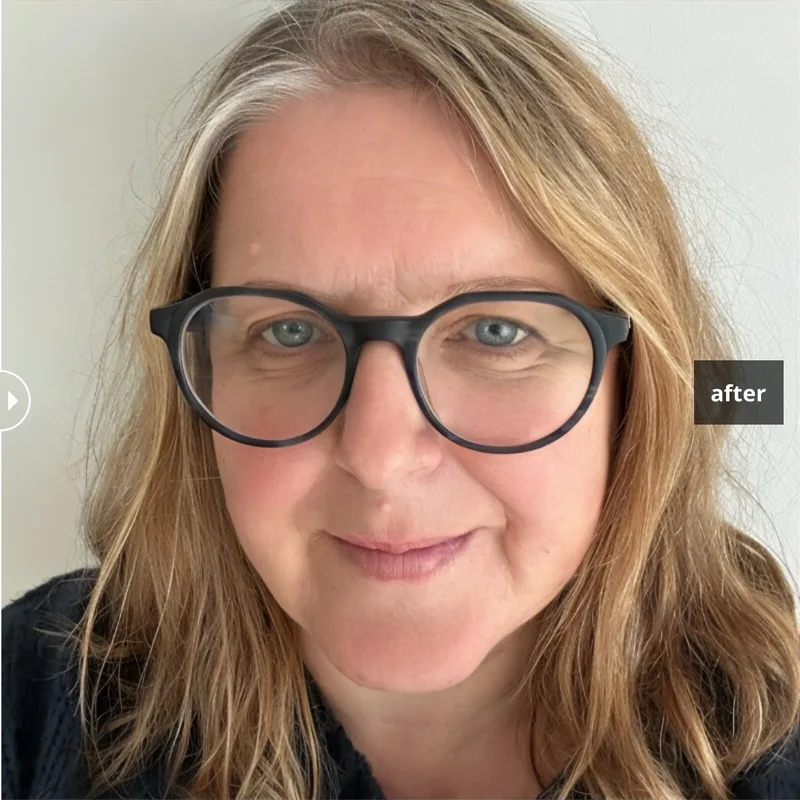
Over the last twenty years I have gained significant classroom and management experience at several State, Grammar and Independent Schools. I have been out of the classroom environment recently but continue to keep up to date with Education Policy and support students away from the school environment via home tutoring.
I am an experienced teacher with a passion towards my subject and have a great desire that all pupils across the ability range are inspired by Science; there is no greater job satisfaction for me than when that inspiration leads to students excelling in examinations or pursuing a career in medicine. As Head of Biology at Kingston Grammar School I managed a team of four experienced teachers- as well as being actively involved in the overall management of the Science department.
I was successful in improving both A-Level and GCSE results year on year. I was responsible for co-ordinating Community Service placements for students in the wider community. I also worked closely with Brunel University with their PGCE programme and was part of a team inspected by OFSTED and I was awarded as ‘outstanding’ in my mentoring work with PGCE students at Kingston Grammar.
Whilst my teaching specialism is Biology I have also taught Chemistry and Physics at key stage three, four and A Level. I have a broad knowledge of the science curriculum and how it fits in to schools academic policies and wider educational policies. I also have a good understanding of International Baccalaureate programs and Vocational courses. I have written schemes of work and working policies for a department as well as full risk assessments for practical work. I also have experience of intake of student new to a school be it a state school or an 11+ or Common Entrance at 13+. I have administered 11+ and 13+ examinations as well as being part of a team of interviewers assessing a student’s suitability for the school.
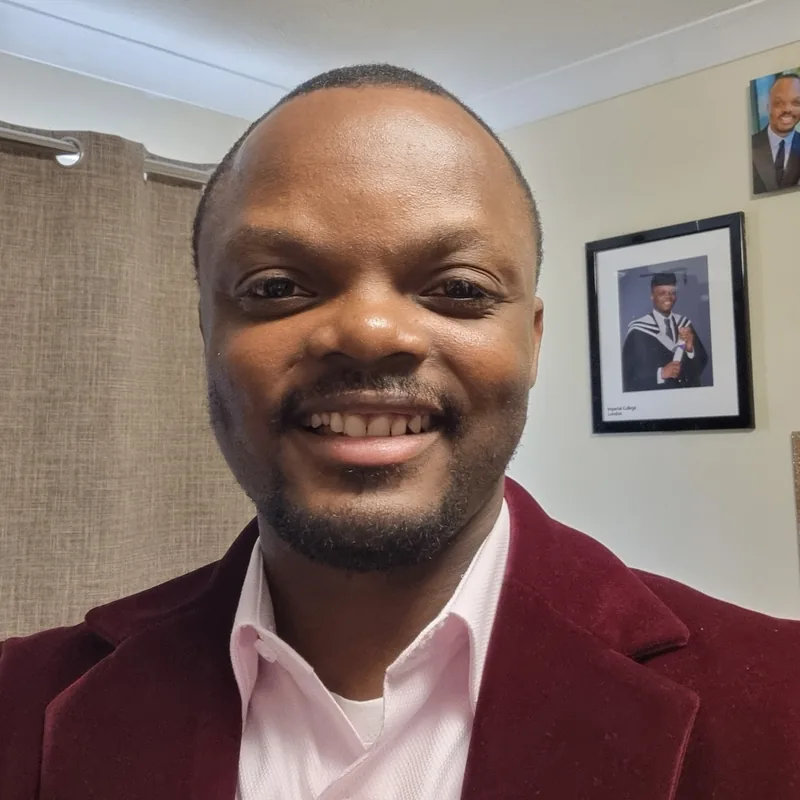
10
Teaching provides a unique opportunity to shape lives and influence young people towards a responsible future, hence, my passion for teaching. As one with a passion for Mathematics, Physics, Chemistry and Biology, I understand that many students face real challenges grasping the concepts of the subjects. Hence, teaching provides me the avenue to tackle this, while also making a contribution; giving back to the society and also challenging myself towards further growth and development. I have taught since my secondary school days; taking more than 800 students in total; at various levels (on a one-on-one basis, in groups and at mass teaching levels). I have also taught at various educational levels (secondary and tertiary) as well as to a diverse range of student ethnic backgrounds with a very high success rate in student comprehension evinced by their later performance. Having gained significant experience teaching this subject, I have a very broad understanding of what is expected of students writing the GCSEs and A-level exams. I have also prepared students for varying exams including the – 11+, 13+, 16+, and curricula - GCSE and A-levels (Edexcel, OCR, AQA), IB (SL and HL) and Scottish National with excellent results from students - most of my students achieving grades 8 and 9. My teaching success rate has been largely due to my deep and vast understanding of the subject matter, coupled with my calm, interesting and engaging manner of communication that makes even an average and uninterested student develop a desire for Maths and Science. I use diverse teaching-aids, web-resources etc. as necessary."
I hold a First Class honours degree in Chemical Engineering and a Masters degree in Advanced Chemical Engineering from the Imperial College of Science, Technology and Medicine. I am also a UK Qualified Teacher with more than 4000 hours teaching/tutoring experience over a period of 15+ years. This has provided me with diverse experience necessary for tutoring different students' backgrounds with evident successes in the exams. I am hoping to be of help and assistance to any student in need.

36
Shanze is an academic tutor with over four years of experience supporting students across IB, AP, A Levels, IGCSE, and SAT/ACT. She holds a Bachelor of Science with Honors from New York University and has worked with students in US, UK, Canada, and China.
She tutors a wide range of subjects, including Mathematics, English, Biology, Physics, Chemistry, Business and Psychology along with academic writing, research skills, and standardized test preparation. Her philosophy centers on breaking down challenging concepts into steps that feel intuitive, manageable, and genuinely understandable. Many of her students have raised their scores by more than 60%, often surpassing their own expectations.
Shanze also encourages students and parents to think intentionally about academic goals and long term growth. By aligning expectations and creating an open line of communication, she aims to make tutoring a collaborative experience that supports students beyond classroom.

29
With over 32 years of experience in education, I help students build a genuine, lasting understanding of GCSE Biology and Environmental Management rather than a fragile grasp of grade-boundary facts. Many students struggle with GCSE Biology and EM not because the content is out of reach, but because exam success demands a specific skill set: applying knowledge to unfamiliar contexts, structuring extended-response answers, and interpreting data confidently under time pressure. I work with students individually to close these gaps, breaking down topics such as cell biology, genetics, ecology, and human physiology into clear, manageable steps, while building the exam technique and confidence that turn anxiety into results.
I teach to the Cambridge IGCSE Biology and Environmental Management specification, structuring my teaching around its assessment objectives and command words, and guiding students from lower grades toward top marks through targeted revision and past-paper practice. My students have gone on to study at universities around the world, and I have tutored students across Japan, China, Geneva, Jakarta, Milan, Russia, the Netherlands, South Africa, and Dubai.
I have served as an exams officer for Cambridge International Exams, which gives me a thorough understanding of exam administration and marking expectations. I am also well-versed in the Accelerated Christian Education (ACE) programme, having worked within individualised, values-based learning environments throughout my career.
My dedication has been recognised with the Best Environmental Management Student of the Year award in South Africa in 2022.
My passion for teaching is matched by a commitment to nurturing each student's confidence and curiosity in the sciences.

18
Samuel has three masters degrees - MSc Energy and Sustainable Management, MSc Advanced Chemical Engineering and LLM International Business and Commercial Law. Samuel's first degree was in BSc Petrochemical Engineering (First Class). Samuel is also a Qualified Teacher in the UK and has been teaching for over 10 years. Samuel also has several years of examining experience, and hence highly specialised and skilled in tutoring students. Samuel had A in mathematics, A in chemistry, A Biology and A in Physics. Samuel has been an A Level Maths and Further Mathematics Examiner since 2024. I tutor A Level and Further Mathematics as well as Chemistry, Physics and Biology.
The tutors you see here are just a selection from our team of hundreds of tutors, please contact our Learning Advisors to discuss tutoring options
Why GCSE Biology needs the right tutor
What makes GCSE Biology hard
GCSE Biology looks like a memory subject, and that is why many students underestimate it. There is a large amount of content, but the exams reward using it: explaining an unfamiliar graph, applying osmosis or enzyme ideas to an experiment the student has never seen, or writing a six-mark answer that links several processes in the right order. Mark schemes are written around precise terms, so an answer that describes the right idea in everyday language often scores nothing.
Other things that make it hard:
- Exact vocabulary: diffusion, osmosis and active transport, or mitosis and meiosis, have to be used precisely and not interchangeably
- Extended answers on processes such as the immune response, the control of blood glucose or natural selection, where steps must be in sequence and linked
- Required and core practicals tested in writing, including methods, variables, errors and improvements
- Maths inside biology: magnification, percentage change, rates from graphs, and genetic crosses with ratios and probabilities
- Data questions on unfamiliar contexts, where students must describe a trend with figures before explaining it
How tutoring changes the outcome
Our Biology tutors work from your board's own past papers, mark schemes and examiners' reports, so students learn the exact terms and the order of points that examiners credit. Sessions target where Biology marks are actually lost:
- extended answers that examiners report as lists of facts rather than linked explanations
- practical questions on variables, controls, sources of error and how to improve a method
- calculations such as magnification, percentage change and rates, set out with clear working and units
- graph and data questions where trends are described without quoting figures from the data
What you'll learn in GCSE Biology tutoring
Core skills developed
Every Biology specification marks a similar progression: knowing the biology, applying it to new situations, and analysing data and experimental evidence. On AQA, OCR, Edexcel and WJEC, knowledge and application carry about 40% each and analysis and evaluation about 20%. Edexcel International uses a similar split, with its third objective focused on experimental skills. Cambridge puts more weight on knowledge, at 50%, with 30% for handling information and problem-solving and 20% for experimental skills, all assessed in the practical paper. OxfordAQA adds a fourth objective, selecting, describing and evaluating scientific procedures, worth 10%. We work through past-paper questions objective by objective, so you can see which skill is costing you marks rather than just seeing a lower total.
- Explaining cell transport, enzyme action and respiration with the correct terminology
- Linking organ systems in explanations of digestion, circulation, gas exchange and homeostasis
- Genetics: Punnett squares, family trees, ratios and probabilities
- Planning and evaluating investigations, including variables, controls and repeatability
- Reading graphs and tables, calculating rates and percentage change, and drawing conclusions from data
How are students assessed
Biology is assessed almost entirely by written exams. AQA, OCR and Edexcel set compulsory practicals that schools must confirm students have completed, but the marks come from exam questions about them. Cambridge examines practical skills in its own paper, either a hands-on Practical Test or an Alternative to Practical written paper. WJEC in Wales is the only board with a practical unit, worth 10%, carried out in school and marked by WJEC. Edexcel International and OxfordAQA examine practical skills in the written papers and offer both June and November series. Most courses are linear, with every paper sat in one series at the end, but WJEC is unitised and Edexcel International's modular 4XBI1 lets students sit and resit each unit separately.
- Multiple-choice and short-answer questions: drilled against real past papers for speed and exact terminology
- Practical and data questions: rehearsed on every required or core practical until variables, errors and improvements come automatically
- Six-mark and extended responses: planned and rewritten until each step is linked and an examiner could award full marks
What GCSE Biology topics do we cover?
OxfordAQA GCSE Biology
Six topics examined in two untiered papers sat in the same series at the end of the course, in May/June or November. Paper 1 and Paper 2 are each 1 hour 30 minutes, 90 marks and 50% of the qualification, with structured and open questions, and either paper can assess content from any part of the specification.
- 3.1 Organisation
- 3.2 Bioenergetics
- 3.3 Ecology
- 3.4 Organisms’ interaction with the environment
- 3.5 Inheritance
- 3.6 Variation and evolution
OxfordAQA overlaps with AQA's UK GCSE Biology but organises it differently, and it adds topics such as behaviour. Its fourth assessment objective, selecting, describing and evaluating scientific procedures, carries 10% of the marks and is weighted more heavily on Paper 2. Five required practicals, on osmosis, photosynthesis, digestion, exercise and microbial cultures, are examined in the written papers. Sessions on this board prepare both papers across the whole specification and practise procedure questions on every required practical.
WJEC GCSE Biology
WJEC GCSE Biology is offered in Wales; Eduqas no longer offers a GCSE in Biology in England. The course is unitised. Unit 1: Cells, Organ Systems and Ecosystems and Unit 2: Variation, Homeostasis and Micro-organisms are each a 1 hour 45 minute written exam worth 80 marks and 45% of the qualification, set at Foundation or Higher tier and sat in the summer series. Unit 3: Practical Assessment, worth 10%, is untiered and takes place in school in the first half of the spring term, then is marked by WJEC.
Unit 1
- 1.1 Cells and movement across membranes
- 1.2 Respiration and the respiratory system in humans
- 1.3 Digestion and the digestive system in humans
- 1.4 Circulatory system in humans
- 1.5 Plants and photosynthesis
- 1.6 Ecosystems, nutrient cycles and human impact on the environment
Unit 2
- 2.1 Classification and biodiversity
- 2.2 Cell division and stem cells
- 2.3 DNA and inheritance
- 2.4 Variation and evolution
- 2.5 Response and regulation
- 2.6 Kidneys and homeostasis
- 2.7 Micro-organisms and their applications
- 2.8 Disease, defence and treatment
WJEC grades on the A* to G scale used in Wales, not 9 to 1. Unit 3 has two sections: obtaining results in a group (6 marks) and individually analysing and evaluating them under supervision (24 marks). WJEC has amended Unit 3 for students starting the course in September 2026, to follow the practical approach of the new GCSE The Sciences (Double Award); Units 1 and 2 are unchanged. Sessions on this board prepare the analysis and evaluation section of Unit 3 as carefully as the written units.
IAL GCSE Biology
Edexcel offers two International GCSE Biology routes. The linear 4BI1 has two untiered papers sat in the same series at the end of the course, in June or November. Paper 1 (2 hours, 110 marks, 61.1%) assesses the core content only, and Paper 2 (1 hour 15 minutes, 70 marks, 38.9%) assesses all content, including the bold, Paper 2-only statements. The modular 4XBI1 splits the content into Unit 1 and Unit 2, each 1 hour 40 minutes, 90 marks and 50%, available in June and November, and each unit can be sat and resat in any order.
4BI1 topics
- 1 The nature and variety of living organisms
- 2 Structure and functions in living organisms
- 3 Reproduction and inheritance
- 4 Ecology and the environment
- 5 Use of biological resources
4XBI1 (Modular)
- Unit 1: The nature and variety of living organisms; Structure and functions in living organisms: Part 1
- Unit 2: Structure and functions in living organisms: Part 2; Reproduction and inheritance; Ecology and the environment; Use of biological resources
On 4BI1, the bold content appears only on Paper 2, so students who skip it limit their marks on that paper. Topic 5 covers applied biology, from glasshouses and fish farming to selective breeding, genetic modification and cloning, which receives less attention on most UK GCSEs. Practical investigations appear as italic specification points and are tested in the written papers. Sessions on this board cover the Paper 2-only content in full and practise the practical investigations as written questions.
EDEXCEL GCSE Biology
Nine topics examined in two papers, both sat in May/June of the same year at Foundation or Higher tier. Paper 1 covers Topics 1–5 and Paper 2 covers Topics 1 and 6–9. Each paper is 1 hour 45 minutes, 100 marks and 50% of the GCSE, with multiple-choice, short-answer, calculation and extended open-response questions.
- Topic 1: Key concepts in biology
- Topic 2: Cells and control
- Topic 3: Genetics
- Topic 4: Natural selection and genetic modification
- Topic 5: Health, disease and the development of medicines
- Topic 6: Plant structures and their functions
- Topic 7: Animal coordination, control and homeostasis
- Topic 8: Exchange and transport in animals
- Topic 9: Ecosystems and material cycles
Topic 1, Key concepts in biology, is examined on both papers, so cell structure, enzymes and transport across membranes underpin the whole course. Students carry out eight mandatory core practicals, including osmosis in potatoes, the rate of respiration and fieldwork with quadrats and belt transects, and the written papers test the techniques behind them. Sessions on this board secure Topic 1 early and rehearse each core practical as an exam question.
OCR GCSE Biology
OCR runs two separate GCSE Biology specifications. Each has two written papers per tier, all 1 hour 45 minutes, 90 marks and 50% of the GCSE, sat in May/June at the end of the course. Foundation tier covers grades 5–1 and Higher tier grades 9–4. We match tutors to the specification code on your exam entry.
Biology A (Gateway Science) · J247
- Topic B1: Cell level systems
- Topic B2: Scaling up
- Topic B3: Organism level systems
- Topic B4: Community level systems
- Topic B5: Genes, inheritance and selection
- Topic B6: Global challenges
- Topic B7: Practical skills
Biology B (Twenty First Century Science) · J257
- Chapter B1: You and your genes
- Chapter B2: Keeping healthy
- Chapter B3: Living together, food and ecosystems
- Chapter B4: Using food and controlling growth
- Chapter B5: The human body, staying alive
- Chapter B6: Life on Earth, past, present and future
- Chapter B7: Ideas about Science
- Chapter B8: Practical Skills
On Gateway A, Paper 1 (Foundation) or Paper 3 (Higher) covers Topics B1–B3, and Paper 2 or Paper 4 covers B4–B6 with assumed knowledge of B1–B3, so the second paper is synoptic. Twenty First Century B is built differently: both papers can test all eight chapters, the Breadth paper uses short-answer questions only, and the Depth paper includes at least two six-mark extended responses. Both specifications require at least eight practical activities, which underpin 15% of the exam questions. Sessions on this board follow your specification's topic or chapter order and, for Biology B, practise the extended responses on the Depth paper.
AQA GCSE Biology
Seven topics, plus a short section on key ideas, examined in two papers sat in May/June at the end of the course. Paper 1 covers Topics 1–4 and Paper 2 covers Topics 5–7. Each paper is 1 hour 45 minutes, 100 marks and 50% of the GCSE, with multiple-choice, structured, closed short-answer and open-response questions. Both papers are set at Foundation and Higher tier, and a student must sit both at the same tier.
- 4.1 Cell biology
- 4.2 Organisation
- 4.3 Infection and response
- 4.4 Bioenergetics
- 4.5 Homeostasis and response
- 4.6 Inheritance, variation and evolution
- 4.7 Ecology
- 4.8 Key ideas
AQA's ten required practicals, from microscopy and osmosis to the rate of decay of milk, are examined in the written papers, and questions about them make up at least 15% of the marks. The separate Biology GCSE adds content not in Combined Science, such as plant disease, plant hormones, trophic levels and food production, and Higher tier adds monoclonal antibodies. Sessions on this board work through every required practical as an exam question and give the Biology-only content its own revision time.
CIE GCSE Biology
Twenty-one topics. Every candidate sits three papers. Core candidates take Paper 1, Multiple Choice (45 minutes, 40 marks, 30%), and Paper 3, Theory (1 hour 15 minutes, 80 marks, 50%), on the Core content. Extended candidates take Paper 2 and Paper 4 in the same format on the Core and Supplement content. All candidates also take either Paper 5, Practical Test (1 hour 15 minutes, 40 marks, 20%), or Paper 6, Alternative to Practical (1 hour, 40 marks, 20%). 0610 is graded A* to G and 0970 is graded 9 to 1, with the same content and papers. Exams run in June and November, with a March series for 0610 in India.
- 1 Characteristics and classification of living organisms
- 2 Organisation of the organism
- 3 Movement into and out of cells
- 4 Biological molecules
- 5 Enzymes
- 6 Plant nutrition
- 7 Human nutrition
- 8 Transport in plants
- 9 Transport in animals
- 10 Diseases and immunity
- 11 Gas exchange in humans
- 12 Respiration
- 13 Excretion in humans
- 14 Coordination and response
- 15 Drugs
- 16 Reproduction
- 17 Inheritance
- 18 Variation and selection
- 19 Organisms and their environment
- 20 Human influences on ecosystems
- 21 Biotechnology and genetic modification
Cambridge is the only board where a fifth of the grade comes from a dedicated practical paper, marked on experimental skills alone: planning, recording observations, drawing specimens, and evaluating methods. Knowledge carries 50% of the overall marks, more than on the UK GCSEs, and the multiple-choice paper alone is worth 30%. Sessions on this board practise Paper 5 or Paper 6 skills alongside the theory and drill the multiple-choice paper to time. Cambridge has republished the syllabus for exams in 2029.
Ready to start?
Tell us the subject, exam board and target grade. A Learning Advisor reviews it the same day.
Why parents trust us
4.9/5 from 312 reviews · used by students at 500+ schools



GCSE Biology tutoring for both tiers
Whichever tier you are entered for, we match you with a tutor who knows those papers and the grades they lead to. Not sure which tier is right? Your tutor will help you decide before entries close.
Foundation (or core) tier tutoring
Foundation papers cover most of the same topics without the Higher-only content, and the highest grade available is a 5.
- Secure the core topics, from cells and organisation to inheritance and ecology
- Learn the required practicals, which England’s boards draw on for at least 15% of the marks
- Practise the maths in biology, from percentages to reading graphs
Higher (or extended) tier tutoring
Higher papers add Higher-only content and open grades up to a 9, but on UK boards a result below a 3 is ungraded.
- Master the Higher-only content in each topic
- Six-mark extended answers, structured the way examiners mark them
- Apply knowledge to unfamiliar contexts, the skill that separates a 7 from a 9
We teach Foundation and Higher for AQA, OCR, Edexcel and WJEC, Core and Extended for Cambridge IGCSE, and the untiered Edexcel International GCSE and OxfordAQA courses.
FAQs
We have answers to your most frequently asked questions. Anything not answered here, please reach out to our team.
Yes. Our GCSE Biology tutors teach both tiers on AQA, OCR, Pearson Edexcel and WJEC, and Core and Extended for Cambridge IGCSE. On Foundation, lessons secure the core topics and the required practicals. On Higher, they add the Higher-only content and the six-mark extended answers that decide the top grades. If your child is between tiers, their tutor will help you choose before entries close.
On AQA, OCR and Pearson Edexcel, Foundation covers grades 1–5 and Higher covers 4–9. A Higher student who narrowly misses grade 4 can be given an allowed grade 3, but below that the result is U. In June 2026 the Higher grade 4 boundary was 52 out of 200 on AQA and 84 on Pearson Edexcel, so it pays to check where your mock marks sit against your own board. Anyone who needs a 6 or 7 for A-Level Biology has to sit Higher, while students working below grade 4 are usually safer on Foundation. On Cambridge IGCSE, Core is capped at grade C and Extended runs from A* to G, so a weaker Extended paper still earns a grade; Edexcel International GCSE is untiered. Schools usually decide the tier after mocks, so ask early. Sources: AQA and Pearson.
GCSE Biology means the UK specifications from AQA, OCR, Pearson Edexcel or WJEC, while IGCSE Biology means Cambridge IGCSE 0610 (0970 on the 9–1 scale) or Edexcel International GCSE 4BI1. The main differences are tiering and practical assessment. The UK GCSEs are tiered and examine required practicals inside the written papers; Edexcel International is untiered, so every grade is open to everyone; and Cambridge has Core and Extended papers plus a separate practical paper worth 20%. The core content of cells, organisms, genetics and ecology is very similar on all of them. Universities and sixth forms accept both. The UK GCSE is sat in May and June only, while Cambridge IGCSE and Edexcel International GCSE also run a full November series, which suits students outside the UK and anyone who needs a resit. Read more about online IGCSE tutoring.
Each sixth form and college sets its own entry requirements, so check the prospectus of the one you're applying to. As a guide, most ask for at least a grade 6 in GCSE Biology, or 6-6 in Combined Science, for A-Level Biology, and selective schools often ask for a 7. Many also ask for a grade 5 or 6 in GCSE Maths, because A-Level Biology includes statistics and data analysis. You need the Higher tier, because Foundation caps the grade at 5. If you take Cambridge IGCSE on the A*–G scale, a grade A is broadly equivalent to a 7 and a C to a 4, the points that were aligned when the 9–1 scale was introduced (GOV.UK grading factsheets), so a requirement of grade 6 usually means a strong B. See A-Level Biology.
GCSE Biology tutoring with an academic tutor costs from $50 USD (£38) per hour, and packages save 5–15%, which suits steady weekly lessons through Years 10 and 11, then extra past paper sessions before mocks and the summer exams. Pay as you go is invoiced after each lesson, with no lock-in contracts. Professional tutors (qualified teachers and examiners) cost from $75 USD (£56) per hour. See pricing.
Late cancellations and no-shows are charged at half the lesson fee. That applies if you cancel less than one hour before the start time, or don't turn up. You can still change a session time whenever you need to, as long as you give your tutor notice.
Our academic tutors are high-achieving graduates and undergraduates who scored in the top band in Biology themselves, and our professional tutors are qualified teachers or examiners with 5+ years' experience. We accept only the top 5% of applicants. You are matched to a tutor who knows your board, so they can teach the exact wording your mark scheme rewards and rehearse every required practical in your specification. Read more about our GCSE tutors and how we select tutors.
Lessons are one-to-one and online, with a tutor matched to GCSE Biology, your exam board and your target grade. Each session works on your weakest areas using past paper questions from your own board, whether that is AQA, OCR, Pearson Edexcel, Edexcel International GCSE or Cambridge IGCSE 0610. For Biology that usually means learning key terms precisely, working through every required practical until method and variable questions come automatically, and planning six-mark answers so each step is linked. See how it works or start with the student application.
Biology uses less maths than Chemistry or Physics, so many students find it the most approachable science, but it has a large amount of content that must be learned precisely. Mark schemes reward exact terms, so a vague answer about diffusion or enzymes scores nothing, and extended answers are marked on whether each step is linked to the next. At least 10% of the marks also test maths skills, such as percentages, graphs and magnification, and questions on the required practicals and unfamiliar data catch many students out. Our online GCSE tutoring focuses on exactly those areas.
In summer 2026, 13.7% of GCSE Biology entries in England achieved a grade 9 and 43.5% achieved a 7 or above (JCQ), from 167,911 entries. Those figures look generous, but separate Biology is mostly taken by strong science students in triple science sets. Internationally, 20.8% of Edexcel International GCSE Biology candidates achieved a 9 (provisional figures from Pearson), and 14.7% of Cambridge IGCSE Biology candidates achieved an A* (Cambridge). A 9 depends on precise terminology, six-mark answers where every step is linked, and practical and data questions answered without hesitation.
Grade boundaries are set after each exam series and change every year, so older figures are only a guide. In June 2026, AQA's Higher tier grade 9 boundary for Biology was 133 out of 200 (67%), while Pearson Edexcel's was 170 out of 200 (85%), which shows how much boundaries differ between boards. Grade 4 on Higher needed 52 marks on AQA and 84 on Pearson Edexcel. Edexcel International GCSE 4BI1 set grade 9 at 142 out of 180 (79%), or 146 on the alternative R papers used in some time zones, and Cambridge IGCSE 0610's Extended A* threshold was 165 to 171 out of 200 (82–86%), depending on the paper variant. Sources: AQA, Pearson, Pearson International and Cambridge.
There is no coursework, but practical work is compulsory. On AQA you complete ten required practicals, on Pearson Edexcel eight core practicals and on OCR at least eight practical activities, and the written exams then ask about them, for example on method, variables, errors and results. Cambridge IGCSE examines practical skills in a separate paper worth 20%: either Paper 5, a hands-on Practical Test, or Paper 6, a written Alternative to Practical. WJEC in Wales has a practical unit worth 10%, carried out in school and marked by WJEC. See the Cambridge IGCSE Biology 0610 syllabus.
GCSE Biology is assessed by written exams, with no coursework. On AQA, OCR and Pearson Edexcel you sit two papers of 1 hour 45 minutes, each worth 50%, at either Foundation or Higher tier, all at the end of the course. Edexcel International GCSE 4BI1 is untiered, with a 2-hour Paper 1 (61.1%) and a 1 hour 15 minute Paper 2 (38.9%). Cambridge IGCSE 0610 sets a multiple-choice paper (30%), a theory paper (50%) and a practical paper (20%), at Core or Extended. See the AQA specification.
All GCSE subjects
Ready to find your GCSE Biology tutor?
We will find you a tutor in 24 hours and if you are not happy after the first session, we will give you a full refund and find you another tutor for no extra charge.
Resources for GCSE students
Check out our free content about the GCSE