How It Works
We keep things as simple as possible. Our objective is to make finding a tutor convenient, efficient and effective.
Fill out an online form
Complete an application online which will be received by one of our dedicated Learning Advisors
Get matched with a tutor
Our experienced Learning Advisor will review your application, and match you with the most appropriate tutor based on your application
Tutor makes contact
Once we confirm with the tutor, the tutor will make contact to organise your first session.
Have your first lesson
Our tutors will work around your schedule to organise a session whenever you would like. Only pay for tutoring you have completed.
Two kinds of GCSE tutor
Choose between top-performing recent graduates or qualified teachers. Either way, our matching process finds you a tutor based on subject, exam board, target grade and availability.
Academic Tutors
from $50 USD/hr
Top performing graduates who achieved top grades in the subject they teach.
- We accept only the top 5% of tutor applicants.
- Each tutor is chosen for their academic results, teaching ability, and connection with students.
Relatable role model: work with a tutor who is similar in age and can be a peer
Affordability: academic tutors are more cost-effective than professional tutors
First-hand experience: they sat these papers recently and know what worked
Professional Tutors
from $75 USD/hr
Current or past qualified teachers and examiners with 5+ years professional teaching experience.
- We only select highly experienced, qualified GSCE teachers.
- Every teacher is assessed on their teaching expertise, subject knowledge, and ability to engage students.
Quality assurance: trained and accredited teaching qualifications
Guaranteed track record: years of experience helping students succeed
Subject expertise: deep understanding of content and exam board requirements
Due to our international operations we quote our prices in USD. Pound amounts are an indicative conversion and you will be invoiced in USD.
Academic Tutors
from £37 GBP/hr
Top performing graduates who achieved top grades in the subject they teach.
Relatable role model: work with a tutor who is similar in age and can be a peer
Affordability: academic tutors are more cost-effective than professional tutors
First-hand experience: they sat these papers recently and know what worked
Professional Tutors
from £56 GBP/hr
Current or past qualified teachers and examiners with 5+ years professional teaching experience.
Quality assurance: trained and accredited teaching qualifications
Guaranteed track record: years of experience helping students succeed
Subject expertise: deep understanding of content and exam board requirements
Meet our GCSE Chemistry tutors
Our team is a combination of GCSE graduates who sat these exams recently and qualified teachers with years of classroom and examining experience.

27
Joogal is an experienced Biology and Chemistry educator with a strong focus on A-Level and IGCSE Biology and Chemistry. He currently teaches IB Biology and Chemistry at one of Singapore’s leading IB schools and has extensive experience across the A-Level, IGCSE and IB curricula.
He holds a degree in Chemistry and Microbiology from the National University of Singapore (NUS), where he also obtained a Second Class Upper Honours degree in Microbiology. He subsequently completed a Master of Education (Merit) at Nanyang Technological University (NTU).
Joogal has over two decades of teaching experience, including eight years as a lecturer at Anglo-Chinese Junior College (ACJC), where he taught A-Level Biology. He subsequently joined Anglo-Chinese School (Independent), where he taught IBDP Biology and Chemistry. His experience teaching different curricula has given him a strong understanding of the content, examination requirements and skills needed for students to perform well in A-Level and IGCSE Biology and Chemistry.
In addition to teaching, Joogal has worked with the International Baccalaureate Organisation (IBO) for 20 years, serving as an IA moderator and Theory of Knowledge examiner. He has also been trained in Environmental Systems and Societies (ESS). His extensive experience as both a classroom teacher and examiner gives him valuable insight into assessment expectations and common areas where students can improve.
As a Senior Teacher and former Head of IB Biology, Joogal has extensive experience in identifying students’ learning needs, addressing gaps in understanding and developing targeted strategies to help students achieve their academic goals. He places particular emphasis on developing a strong conceptual foundation, examination skills and the ability to apply knowledge to unfamiliar questions.
As a tutor, Joogal believes that effective tuition should go beyond simply covering content. He provides students with structured guidance, targeted resources and systematic practice to build their understanding and confidence. At the same time, he encourages students to become independent learners by attempting questions on their own, applying concepts and taking responsibility for their learning.
With his extensive experience in A-Level and IGCSE Biology and Chemistry, as well as IB Biology and Chemistry, Joogal is able to support students across different curricula and adapt his teaching approach to their individual learning needs.
46
I'm Dr. Orn I — Yale PhD biochemist, Associate Professor of Biochemistry at Mahidol University, and a private chemistry tutor with 12+ years of experience guiding international school students through iGCSE and A-Level Chemistry from across different boards. Past students have been admitted to Stanford, Cambridge, Pomona, and Vanderbilt. I work with one student at a time, build each lesson around their specific exam board and school mark scheme, and send a written recap after every session. Online via Zoom / MS Teams from Thailand.

20
I am a highly experienced A level and GCSE teacher of 30 years experience. I have taught AQA, Edexcel, CAIE A-level and GCSE/IGCSE. I have been an A-level examiner and I have had great success in raising students' grades. For the past two years I have been teaching A-levels and International A-levels in Physics for two online schools and tutoring 1:1. I am a compassionate and outstanding teacher who can unpick any misunderstandings and coach students in the the skills and strategies to succeed. I am pleased to say whatever the ability of the student that I enjoy improving their grade beyond what they were expecting to achieve.

30
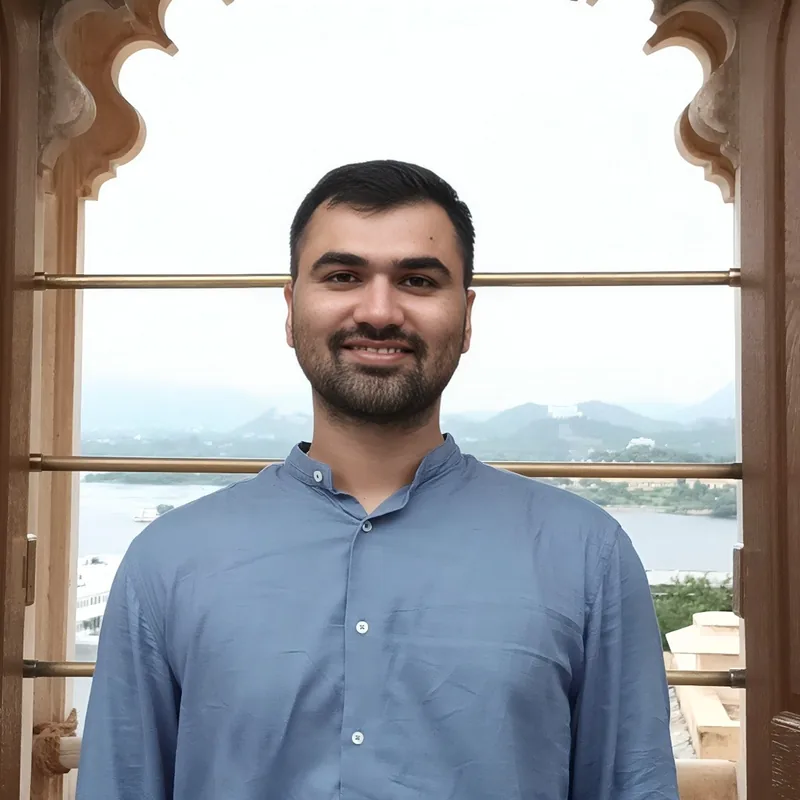
Ala is a BSc degree holder in Biomedicine and is pursuing her master's in clinical neuroscience. Her field of study incorporates Biology, Chemistry and Mathematics – the subjects she's been tutoring for 3 years now. She has experience tutoring AQA A-levels and (I)GCSE syllabi in the aforementioned subjects, improving students' comprehension of the subjects as well as creating effective exam strategies. She helped tutees achieve top grades (A* as well as 9s in GCSE). As an IB graduate, Ala understands the challenges of a rigorous high school curriculum and the struggles of having to manage multiple subjects at a higher level simultaneously. Thus, she ensures sessions with her students are focused and flexible by creating a tailored study plan for each student and preparing for the lessons diligently. She shares her enthusiasm for the subjects and positive energy with the students, making the sessions more enjoyable and friendly.
16
Anuraj S is an experienced Physics tutor with over 7 years of teaching experience, specialising in GCSE and international secondary-school Physics. He has taught students across major exam boards including Pearson Edexcel, Edexcel International (IAL), AQA, OCR, and Cambridge International (CIE), helping students build strong conceptual understanding and achieve their academic goals.
He holds a Ph.D. in Plasma Physics, an Integrated M.Sc. in Physics from the Central University of Rajasthan, and a Bachelor of Education (Gold Medallist, 91%). His strong academic background allows him to explain challenging Physics concepts clearly and connect theory with practical, real-world applications.
Anuraj has extensive experience preparing GCSE students for both content and exam technique. He focuses on understanding the specification, command words, mark schemes, required practicals, mathematical skills, and exam-style questions. His lessons include systematic revision, past-paper practice, identifying common mistakes, and developing the structured approach needed to gain marks consistently.
His teaching style is patient, approachable, and highly adaptable. He first makes sure students genuinely understand the underlying concept before progressing to more challenging questions. Whether a student is struggling with the fundamentals or aiming for the highest grades, he tailors lessons to their individual needs and helps them become confident, independent Physics problem-solvers.

20
Karim T is an accomplished English Language and Literature educator, English as a Second Language (ESL) specialist, and communication professional with a distinguished academic record and extensive experience in international secondary education. His professional expertise is particularly focused on IGCSE, O-Level, and A-Level English Language and English as a Second Language, with a strong commitment to developing students’ linguistic accuracy, communication skills, academic writing, critical thinking, and confidence in using English effectively.
Karim earned his Bachelor’s Degree in Translation with a Minor in Communication from the Arab Academy for Science, Technology and Maritime Transport (AASTMT), graduating Summa Cum Laude as the Valedictorian of his graduating class with a GPA of 3.72 (Excellent with Honors).
His academic excellence was established at an early stage. He graduated from Nefertari British International School under the IGCSE system with an outstanding 9 A*s, a result officially recognized by Egypt’s Central Coordination Office as equivalent to 100%, and graduated as the Valedictorian of his high school class. This achievement made Karim a two-time Valedictorian, having graduated first in both high school and university.
Professionally, Karim has developed substantial experience teaching English Language, English as a Second Language, and English Language & Literature within international secondary-school settings. His teaching experience encompasses students preparing for IGCSE and O-Level examinations, as well as advanced A-Level English Language study. He has worked extensively on developing students’ reading comprehension, writing proficiency, vocabulary, grammar, spoken communication, analytical skills, and ability to communicate effectively for both academic and real-world purposes.
Karim’s approach to IGCSE and O-Level English emphasizes building a secure foundation in language while developing the examination skills required for success. He supports students in mastering comprehension, directed writing, descriptive and narrative writing, summary skills, vocabulary, grammar, sentence construction, and effective written expression. Particular emphasis is placed on helping students understand how language choices influence meaning, tone, purpose, audience, and overall effectiveness.
At A-Level, Karim adopts a more sophisticated and analytical approach to English Language, guiding students toward advanced language analysis, discursive and argumentative writing, linguistic terminology, textual interpretation, and the ability to construct precise, coherent, and well-supported academic responses. He encourages students to move beyond simply identifying language features and instead develop the ability to explain how and why language choices create particular effects and meanings.
His experience also includes teaching within the International Baccalaureate Diploma Programme, where he taught English Language & Literature and Theory of Knowledge. This background has further strengthened his ability to cultivate higher-order thinking, academic writing, independent inquiry, and sophisticated communication skills. He has successfully guided graduating Diploma Programme cohorts through demanding academic requirements while maintaining a broader focus on intellectual development and university readiness.
As an English as a Second Language educator, Karim places particular importance on helping learners become confident, accurate, and independent users of English. His instruction combines explicit language development with meaningful communication, enabling students to strengthen their grammar, vocabulary, reading, writing, listening, and speaking skills while developing the confidence to use English in academic, professional, and everyday contexts.
Committed to continuous professional development, Karim has completed official International Baccalaureate Category 2 professional development workshops in Theory of Knowledge and English B, complementing his broader expertise in international English-language education.
Beyond teaching, Karim’s multidisciplinary background includes research and development, public speaking, strategic communication, and educational innovation. His academic training in translation and communication has given him a particularly strong understanding of language, audience, register, purpose, and effective communication—skills that directly inform his approach to English Language and ESL instruction.
Karim is driven by the belief that effective English education extends beyond examination preparation. His goal is to equip students with the language proficiency, analytical ability, academic confidence, and communication skills necessary to succeed in IGCSE, O-Level, and A-Level examinations while preparing them for higher education and an increasingly interconnected global environment.
42
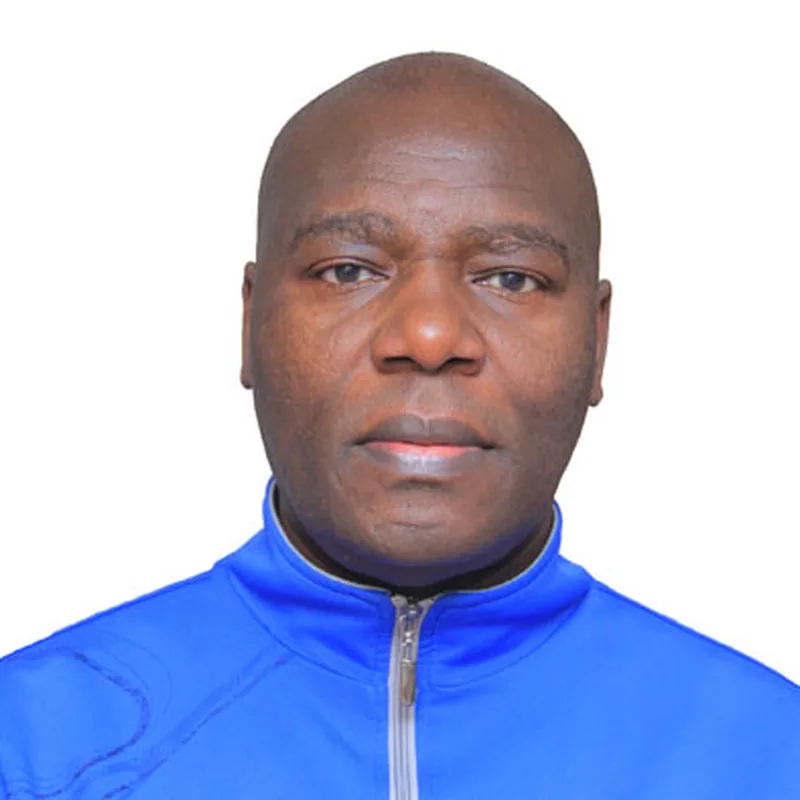
Caleb A is a highly experienced and accomplished Advance Level Chemistry / Physics educator with over 30 years of international teaching experience across the United States, Qatar, China, Kenya and Ethiopia. He is currently teaching Advance Level Chemistry at a leading international school in New York, where he specializes in helping students achieve top results in one of the most challenging high school science programs.
Caleb holds multiple advanced degrees, including a Master of Education and a Master of Science in Information Technology, and has previously served as Head of the Science Department at an international school in Qatar. Throughout his career, he has taught a wide range of curricula mainly A-Level, and IGCSE Chemistry and Physics, giving him a deep understanding of different exam systems and student needs.
Known for his clear explanations and structured approach, Caleb consistently helps students improve their understanding of complex concepts such as organic chemistry, energetics, and equilibrium. His students benefit from targeted exam preparation, data analysis skills, and problem-solving strategies that lead to measurable score improvements and increased confidence.
Caleb’s teaching style is student-centered and highly supportive. He adapts his lessons to suit individual learning styles, using real-world examples, guided practice, and exam-focused techniques to ensure progress in every session. He is passionate about helping students not only succeed academically but also develop a genuine interest in science.

38
Anant is a tutor currently studying Computer Science and Artificial Intelligence at the Hong Kong University of Science and Technology (HKUST). Having completed his GCSEs with exemplary results—securing 6 A*s across 8 subjects, including top marks in Additional Mathematics, Extended Mathematics, Computer Science, Chemistry, Physics, and Economics—he possesses a deep, foundational mastery of the STEM and quantitative curricula. Beyond his own academics, Anant actively builds machine learning models, engages with top-tier quantitative finance firms like Citadel, and brings extensive experience mentoring peers through the rigors of A Level Mathematics and Computer Science. Specializing in GCSE and A Level Math and Computer Science, he uses patient, real-world analogies to break down complex technical jargon. Anant ensures his students feel completely supported, helping them move beyond rote memorization to build true conceptual understanding, exam confidence, and top-tier results.
15
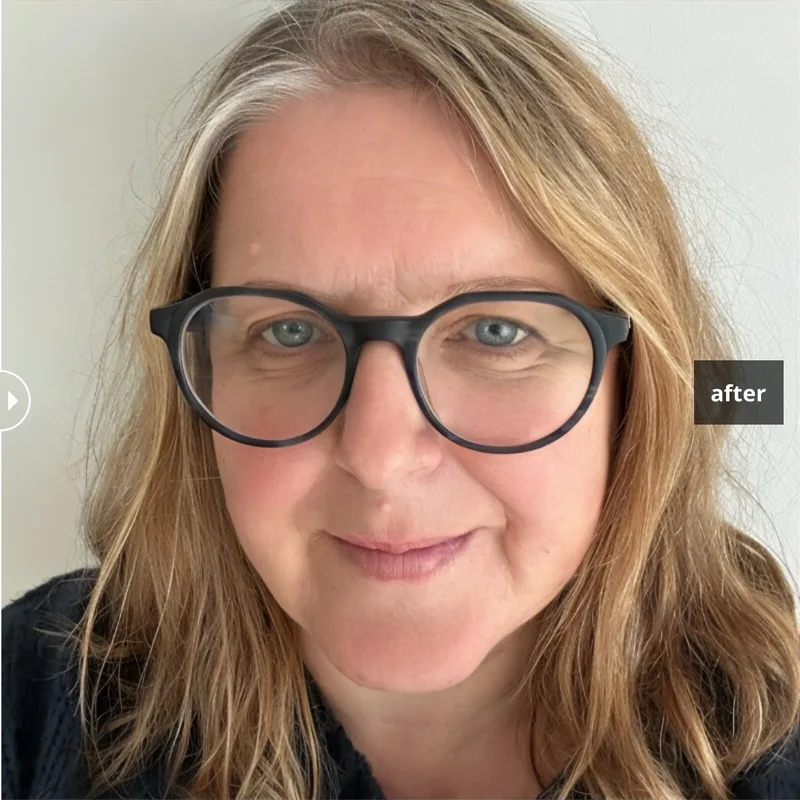
Over the last twenty years I have gained significant classroom and management experience at several State, Grammar and Independent Schools. I have been out of the classroom environment recently but continue to keep up to date with Education Policy and support students away from the school environment via home tutoring.
I am an experienced teacher with a passion towards my subject and have a great desire that all pupils across the ability range are inspired by Science; there is no greater job satisfaction for me than when that inspiration leads to students excelling in examinations or pursuing a career in medicine. As Head of Biology at Kingston Grammar School I managed a team of four experienced teachers- as well as being actively involved in the overall management of the Science department.
I was successful in improving both A-Level and GCSE results year on year. I was responsible for co-ordinating Community Service placements for students in the wider community. I also worked closely with Brunel University with their PGCE programme and was part of a team inspected by OFSTED and I was awarded as ‘outstanding’ in my mentoring work with PGCE students at Kingston Grammar.
Whilst my teaching specialism is Biology I have also taught Chemistry and Physics at key stage three, four and A Level. I have a broad knowledge of the science curriculum and how it fits in to schools academic policies and wider educational policies. I also have a good understanding of International Baccalaureate programs and Vocational courses. I have written schemes of work and working policies for a department as well as full risk assessments for practical work. I also have experience of intake of student new to a school be it a state school or an 11+ or Common Entrance at 13+. I have administered 11+ and 13+ examinations as well as being part of a team of interviewers assessing a student’s suitability for the school.
The tutors you see here are just a selection from our team of hundreds of tutors, please contact our Learning Advisors to discuss tutoring options
Why GCSE Chemistry needs the right tutor
What makes GCSE Chemistry hard
GCSE Chemistry asks students to work at three levels at once: what they can see happening in a test tube, what the particles are doing, and how to write it in formulae and equations. A student who can describe a reaction often cannot yet explain it in terms of electrons, or balance the equation for it, and a single question can move between all three. There is also a large amount of exact recall: tests for ions and gases, colours, reaction conditions and definitions that have to be stated precisely to earn the mark.
Other things that make it hard:
- Mole calculations, concentrations and reacting masses, where the method has to be set out and units carried through
- Writing and balancing equations, including ionic equations and half equations for the top grades
- Explaining properties from structure and bonding, for example why one substance conducts electricity and another does not
- Questions on practical methods such as titration, salt preparation, electrolysis and rates experiments, including errors and improvements
- Six-mark extended answers that need a logically ordered explanation rather than a list of facts
How tutoring changes the outcome
Our Chemistry tutors work from your board's own past papers, mark schemes and examiners' reports, so students learn the exact wording and working that earn the marks. Sessions target where Chemistry marks are actually lost:
- calculations with no working or units, so no method marks can be given when the final answer is wrong
- equations with incorrect formulae or charges, or that do not balance
- explanations of bonding and properties that describe rather than explain, or confuse atoms, ions and molecules
- practical questions on methods, observations and improvements for experiments the student has only read about
What you'll learn in GCSE Chemistry tutoring
Core skills developed
Every GCSE Chemistry specification tests the same progression: knowing the chemistry, applying it, and analysing and evaluating information and experimental evidence. On AQA, OCR, Edexcel and WJEC, the split is about 40% knowledge, 40% application and 20% analysis and evaluation, and OCR and WJEC state that at least 20% of the marks assess mathematical skills. Edexcel International uses the same broad 40/40/20 split. Cambridge puts 50% on knowledge with understanding, 30% on handling information and problem-solving and 20% on experimental skills, all examined in its practical paper, and OxfordAQA adds a fourth objective, selecting, describing and evaluating scientific procedures, worth about 10%. We work through past-paper questions objective by objective, so you can see which skill is costing you marks rather than just seeing a lower total.
- Quantitative chemistry: moles, reacting masses, concentrations and percentage yield
- Writing and balancing formulae and equations, including ionic equations
- Explaining properties and reactions from structure, bonding and position in the Periodic Table
- Practical techniques: titration, chromatography, electrolysis, salt preparation and tests for ions
- Analysing data and evaluating methods, including errors, reliability and improvements
How are students assessed
Chemistry is assessed almost entirely by written exams. AQA, OCR, Edexcel and OxfordAQA set compulsory practicals, but the marks come from exam questions about them, and Edexcel International examines experimental skills in its two written papers. Cambridge examines practical skills in a paper of their own worth 20%: either Paper 5, a hands-on Practical Test, or Paper 6, a written Alternative to Practical. WJEC in Wales is the only board with a practical unit, worth 10%, carried out in school and marked by WJEC. Most courses are linear, with every paper sat in one series at the end, but WJEC is unitised and Edexcel International's modular 4XCH1 lets students sit and resit each unit separately.
- Multiple-choice and short-answer questions: drilled against real past papers for speed and exact terminology
- Calculations and data questions: setting out working so that method marks are kept even when the final answer is wrong
- Practical and six-mark questions: rehearsed and rewritten until each step is linked and an examiner could award full marks
What GCSE Chemistry topics do we cover?
OxfordAQA GCSE Chemistry
Ten sections examined in two papers taken in the same series at the end of the course, in May/June or November. Paper 1 and Paper 2 are each 1 hour 30 minutes and 90 marks, worth 50% each, with structured and open questions, and either paper can assess any part of the specification. There are no tiers, and grades 9–1 are available to everyone.
- 3.1 Atomic structure and the periodic table
- 3.2 Structure, bonding and the properties of matter
- 3.3 Chemical changes
- 3.4 Chemical analysis
- 3.5 Acids, bases and salts
- 3.6 Quantitative chemistry
- 3.7 Trends within the periodic table
- 3.8 The rate and extent of chemical change
- 3.9 Energy changes
- 3.10 Organic chemistry
OxfordAQA's specification overlaps with AQA's UK GCSE Chemistry but adds a fourth assessment objective, the ability to select, describe and evaluate scientific procedures, worth about 10% and weighted more heavily in Paper 2. Its five required practicals, including electrolysis of copper sulfate solution, flame tests and an acid-base titration, are examined in the written papers. Sessions on this board practise procedure questions on every required practical and prepare both papers across the whole specification.
WJEC GCSE Chemistry
WJEC GCSE Chemistry is offered in Wales; Eduqas no longer offers a GCSE in Chemistry in England. The course is unitised. Unit 1 and Unit 2 are each a 1 hour 45 minute written exam worth 80 marks and 45% of the qualification, set at Foundation or Higher tier and sat in the summer series. Unit 3: Practical Assessment, worth 10% (30 marks), is untiered and takes place in school in the first half of the spring term, then is marked by WJEC. WJEC has said the current separate science GCSEs remain available until summer 2031.
Unit 1: Chemical Substances, Reactions and Essential Resources
- 1.1 The nature of substances and chemical reactions
- 1.2 Atomic structure and the Periodic Table
- 1.3 Water
- 1.4 The ever-changing Earth
- 1.5 Rate of chemical change
- 1.6 Limestone
Unit 2: Chemical Bonding, Application of Chemical Reactions and Organic Chemistry
- 2.1 Bonding, structure and properties
- 2.2 Acids, bases and salts
- 2.3 Metals and their extraction
- 2.4 Chemical reactions and energy
- 2.5 Crude oil, fuels and organic chemistry
- 2.6 Reversible reactions, industrial processes and important chemicals
WJEC grades on the A* to G scale used in Wales, not 9 to 1. Unit 3 has two sections: obtaining results in a group (6 marks) and individually analysing and evaluating them under supervision (24 marks). WJEC has amended Unit 3 for students starting the course in September 2026, to follow the practical approach of the new GCSE The Sciences (Double Award); Units 1 and 2 are unchanged. Sessions on this board prepare the analysis and evaluation section of Unit 3 as carefully as the written units.
IAL GCSE Chemistry
Four topics examined in two untiered papers taken in the same series at the end of the course, in June or November. Paper 1 (2 hours, 110 marks, 61.1%) assesses the core content. Paper 2 (1 hour 15 minutes, 70 marks, 38.9%) assesses all the content, including the bold statements with a C reference that go beyond the Science (Double Award). Every student sits the same papers, graded 9–1. Pearson also offers a modular version, 4XCH1, first examined in June 2025: two units, each 1 hour 40 minutes, 90 marks and 50%, that can be sat and resat in any order in June and November.
1 Principles of chemistry
- (a) States of matter
- (b) Elements, compounds and mixtures
- (c) Atomic structure
- (d) The Periodic Table
- (e) Chemical formulae, equations and calculations
- (f) Ionic bonding
- (g) Covalent bonding
- (h) Metallic bonding
- (i) Electrolysis
2 Inorganic chemistry
- (a) Group 1 (alkali metals): lithium, sodium and potassium
- (b) Group 7 (halogens): chlorine, bromine and iodine
- (c) Gases in the atmosphere
- (d) Reactivity series
- (e) Extraction and uses of metals
- (f) Acids, alkalis and titrations
- (g) Acids, bases and salt preparations
- (h) Chemical tests
3 Physical chemistry
- (a) Energetics
- (b) Rates of reaction
- (c) Reversible reactions and equilibria
4 Organic chemistry
- (a) Introduction
- (b) Crude oil
- (c) Alkanes
- (d) Alkenes
- (e) Alcohols
- (f) Carboxylic acids
- (g) Esters
- (h) Synthetic polymers
Because Paper 2 is the only paper that tests the C-referenced content, students who revise only the core lose marks there. Practical investigations are written into the content as specification points in italics and examined in both papers, with experimental skills, analysis and evaluation worth about 20% of the marks. Sessions on this board give the C-referenced content dedicated time and practise questions on every practical investigation.
EDEXCEL GCSE Chemistry
Nine topics examined in two papers sat in May/June of the same year, both at Foundation or both at Higher tier. Paper 1 covers Topics 1–5 and Paper 2 covers Topic 1 and Topics 6–9. Each is a 1 hour 45 minute written exam worth 100 marks and 50% of the qualification, with multiple-choice, short-answer, calculation and extended open-response questions. Students must complete eight mandatory core practicals.
- Topic 1: Key concepts in chemistry
- Topic 2: States of matter and mixtures
- Topic 3: Chemical changes
- Topic 4: Extracting metals and equilibria
- Topic 5: Separate chemistry 1
- Topic 6: Groups in the periodic table
- Topic 7: Rates of reaction and energy changes
- Topic 8: Fuels and Earth science
- Topic 9: Separate chemistry 2
Topic 1, Key concepts in chemistry, is examined on both papers, so formulae, equations, bonding and mole calculations come up throughout. Topics 5 and 9 hold the separate-chemistry content, such as transition metals, alloys and corrosion, and the core practicals include an accurate acid-alkali titration and identifying the ions in unknown salts. Sessions on this board build Topic 1 skills from the start and link each core practical to the questions set on it.
OCR GCSE Chemistry
OCR offers two GCSE Chemistry specifications, and each school chooses one. Both are linear and tiered: students sit two papers at Foundation tier (grades 5–1) or two at Higher tier (grades 9–4), each 1 hour 45 minutes, 90 marks and 50% of the GCSE, all in the same May/June series. Practical skills are examined in the papers, and learners must complete at least eight practicals covering OCR's Practical Activity Groups. We match tutors to the specification code on your exam entry.
Chemistry A (Gateway Science) · J248
- Topic C1: Particles
- Topic C2: Elements, compounds and mixtures
- Topic C3: Chemical reactions
- Topic C4: Predicting and identifying reactions and products
- Topic C5: Monitoring and controlling chemical reactions
- Topic C6: Global challenges
- Topic C7: Practical skills
Chemistry B (Twenty First Century Science) · J258
- Chapter C1: Air and water
- Chapter C2: Chemical patterns
- Chapter C3: Chemicals of the natural environment
- Chapter C4: Material choices
- Chapter C5: Chemical analysis
- Chapter C6: Making useful chemicals
- Chapter C7: Ideas about Science
- Chapter C8: Practical Skills
On Gateway, the first paper of each tier covers Topics C1–C3 and the second covers Topics C4–C6, with C1–C3 assumed and synoptic questions included. Twenty First Century Science teaches chemistry through contexts and splits each tier into a Breadth paper of short-answer questions and a Depth paper with at least two 6-mark extended response questions, both drawing on all eight chapters. Sessions on this board follow your specification's order and, for J258, give the Depth paper's extended answers dedicated practice.
AQA GCSE Chemistry
Ten topics plus a Key ideas section, examined in two papers sat at the end of the course. Paper 1 covers Topics 1–5 and Paper 2 covers Topics 6–10, and Paper 2 can also draw on the fundamental ideas in sections 4.1 to 4.3. Each paper is a 1 hour 45 minute written exam worth 100 marks and 50% of the GCSE, set at Foundation or Higher tier, with multiple-choice, structured, closed short-answer and open-response questions. Students carry out eight required practicals, and questions drawing on them count for at least 15% of the marks.
- 4.1 Atomic structure and the periodic table
- 4.2 Bonding, structure, and the properties of matter
- 4.3 Quantitative chemistry
- 4.4 Chemical changes
- 4.5 Energy changes
- 4.6 The rate and extent of chemical change
- 4.7 Organic chemistry
- 4.8 Chemical analysis
- 4.9 Chemistry of the atmosphere
- 4.10 Using resources
- 4.11 Key ideas
AQA states that sections 4.1 to 4.3, atomic structure, bonding and quantitative chemistry, underpin much of the rest of the course, so weaknesses there cost marks on both papers. Higher tier content is marked HT only throughout the specification, and the required practicals and their content are shared with AQA Combined Science: Trilogy, which makes moving between the courses straightforward. Sessions on this board secure Topics 1–3 early and work through each required practical the way the papers ask about it.
CIE GCSE Chemistry
Twelve topics, with Core content for all candidates and Supplement content for Extended candidates. Everyone sits three papers: a 45-minute paper of 40 multiple-choice questions (30%), a 1 hour 15 minute theory paper of short-answer and structured questions (80 marks, 50%) and a practical paper (40 marks, 20%). Core candidates take Papers 1 and 3 and Extended candidates take Papers 2 and 4. 0620 is graded A* to G and 0971 is graded 9 to 1. Exams run in June and November, with a March series in India for 0620. Cambridge has republished the syllabus for 2029 with no significant changes that affect teaching.
- 1 States of matter
- 2 Atoms, elements and compounds
- 3 Stoichiometry
- 4 Electrochemistry
- 5 Chemical energetics
- 6 Chemical reactions
- 7 Acids, bases and salts
- 8 The Periodic Table
- 9 Metals
- 10 Chemistry of the environment
- 11 Organic chemistry
- 12 Experimental techniques and chemical analysis
Cambridge examines practical skills directly. Paper 5 is a hands-on Practical Test in the laboratory (1 hour 15 minutes) and Paper 6 is a written Alternative to Practical (1 hour). Both test the same experimental skills, both are worth 20%, and notes for qualitative analysis are provided in both, so identifying ions and gases from test results is a regular feature. Your school decides which one you sit. Sessions on this board give the practical paper regular timed practice alongside the theory.
Ready to start?
Tell us the subject, exam board and target grade. A Learning Advisor reviews it the same day.
Why parents trust us
4.9/5 from 312 reviews · used by students at 500+ schools


GCSE Chemistry tutoring for both tiers
Whichever tier you are entered for, we match you with a tutor who knows those papers and the grades they lead to. Not sure which tier is right? Your tutor will help you decide before entries close.
Foundation (or core) tier tutoring
Foundation papers cover most of the same topics without the Higher-only content, and the highest grade available is a 5.
- Secure the core topics, from atomic structure to rates of reaction
- Learn the required practicals, which England’s boards draw on for at least 15% of the marks
- Build confidence with formulae, equations and simple calculations
Higher (or extended) tier tutoring
Higher papers add Higher-only content and open grades up to a 9, but on UK boards a result below a 3 is ungraded.
- Master the Higher-only content, such as moles calculations and half equations
- Multi-step calculations, laid out to earn method marks
- Six-mark extended answers, structured the way examiners mark them
We teach Foundation and Higher for AQA, OCR, Edexcel and WJEC, Core and Extended for Cambridge IGCSE, and the untiered Edexcel International GCSE and OxfordAQA courses.
FAQs
We have answers to your most frequently asked questions. Anything not answered here, please reach out to our team.
Yes. Our GCSE Chemistry tutors teach both tiers on AQA, OCR, Pearson Edexcel and WJEC, and Core and Extended for Cambridge IGCSE. On Foundation, lessons secure the core topics and the required practicals. On Higher, they add the Higher-only content, such as moles calculations and half equations, and the six-mark extended answers that decide the top grades. If your child is between tiers, their tutor will help you choose before entries close.
On AQA, OCR and Pearson Edexcel, Foundation covers grades 1–5 and Higher covers 4–9. A Higher student who narrowly misses grade 4 can be given an allowed grade 3, but below that the result is U. In June 2026 the Higher grade 4 boundary was 43 out of 200 on AQA and 55 on Pearson Edexcel, so it pays to check where your mock marks sit against your own board. Anyone who needs a 6 or 7 for A-Level Chemistry has to sit Higher, while students working below grade 4 are usually safer on Foundation. On Cambridge IGCSE, Core is capped at grade C and Extended runs from A* to G, so a weaker Extended paper still earns a grade; Edexcel International GCSE is untiered. Schools usually decide the tier after mocks, so ask early. Sources: AQA and Pearson.
GCSE Chemistry means the UK specifications from AQA, OCR, Pearson Edexcel or WJEC, while IGCSE Chemistry means Cambridge IGCSE 0620 (0971 on the 9–1 scale) or Edexcel International GCSE 4CH1. The main differences are tiering and practical assessment. The UK GCSEs are tiered and examine required practicals inside the written papers; Edexcel International is untiered, so every grade is open to everyone; and Cambridge has Core and Extended papers plus a separate practical paper worth 20%. The core content of atomic structure, bonding, quantitative chemistry and organic chemistry is very similar on all of them. Universities and sixth forms accept both. The UK GCSE is sat in May and June only, while Cambridge IGCSE and Edexcel International GCSE also run a full November series, which suits students outside the UK and anyone who needs a resit. Read more about online IGCSE tutoring.
Each sixth form and college sets its own entry requirements, so check the prospectus of the one you're applying to. As a guide, most ask for at least a grade 6 in GCSE Chemistry, or 6-6 in Combined Science, for A-Level Chemistry, and selective schools often ask for a 7. Most also ask for a grade 6 in GCSE Maths, because A-Level Chemistry relies heavily on calculations. You need the Higher tier, because Foundation caps the grade at 5. If you take Cambridge IGCSE on the A*–G scale, a grade A is broadly equivalent to a 7 and a C to a 4, the points that were aligned when the 9–1 scale was introduced (GOV.UK grading factsheets), so a requirement of grade 6 usually means a strong B. See A-Level Chemistry.
GCSE Chemistry tutoring with an academic tutor costs from $50 USD (£38) per hour, and packages save 5–15%, which suits steady weekly lessons through Years 10 and 11, then extra past paper sessions before mocks and the summer exams. Pay as you go is invoiced after each lesson, with no lock-in contracts. Professional tutors (qualified teachers and examiners) cost from $75 USD (£56) per hour. See pricing.
Late cancellations and no-shows are charged at half the lesson fee. That applies if you cancel less than one hour before the start time, or don't turn up. You can still change a session time whenever you need to, as long as you give your tutor notice.
Our academic tutors are high-achieving graduates and undergraduates who scored in the top band in Chemistry themselves, and our professional tutors are qualified teachers or examiners with 5+ years' experience. We accept only the top 5% of applicants. You are matched to a tutor who knows your board, so they can spot the calculation types your board repeats, explain bonding and electrolysis clearly, and rehearse every required practical in your specification. Read more about our GCSE tutors and how we select tutors.
Lessons are one-to-one and online, with a tutor matched to GCSE Chemistry, your exam board and your target grade. Each session works on your weakest areas using past paper questions from your own board, whether that is AQA, OCR, Pearson Edexcel, Edexcel International GCSE or Cambridge IGCSE 0620. For Chemistry that usually means mole and concentration calculations set out step by step, balanced and ionic equations drilled until they are automatic, and every required practical rehearsed until method questions are straightforward. See how it works or start with the student application.
Chemistry is often rated the hardest of the three sciences because it combines abstract ideas with calculation. Students need to picture what happens to particles in bonding, electrolysis and rates of reaction, write balanced and ionic equations accurately, and handle moles and concentration calculations, with at least 20% of the marks testing maths skills. Higher tier questions often set the calculation in an unfamiliar context, which is where most marks are lost. Our online GCSE tutoring focuses on exactly those areas.
In summer 2026, 14.7% of GCSE Chemistry entries in England achieved a grade 9 and 47.0% achieved a 7 or above (JCQ), from 159,731 entries. Those figures reflect a strong cohort, because separate Chemistry is mostly taken in triple science sets. Internationally, 22.8% of Edexcel International GCSE Chemistry candidates achieved a 9 (provisional figures from Pearson), and 16.9% of Cambridge IGCSE Chemistry candidates achieved an A* (Cambridge). A 9 needs confident calculations, accurate equations and extended answers that explain observations rather than just describe them.
Grade boundaries are set after each exam series and change every year, so older figures are only a guide. In June 2026, AQA's Higher tier grade 9 boundary for Chemistry was 155 out of 200 (78%), and Pearson Edexcel's was 165 out of 200 (83%). Grade 4 on Higher needed 43 marks on AQA and 55 on Pearson Edexcel. Edexcel International GCSE 4CH1 set grade 9 at 141 out of 180 (78%), or 150 on the alternative R papers used in some time zones, and Cambridge IGCSE 0620's Extended A* threshold was 168 to 175 out of 200 (84–88%), depending on the paper variant. Sources: AQA, Pearson, Pearson International and Cambridge.
There is no coursework, but practical work is compulsory. On AQA you complete eight required practicals, on Pearson Edexcel eight core practicals and on OCR at least eight practical activities, and the written exams then ask about them, for example on method, variables, errors and results. Cambridge IGCSE examines practical skills in a separate paper worth 20%: either Paper 5, a hands-on Practical Test, or Paper 6, a written Alternative to Practical. WJEC in Wales has a practical unit worth 10%, carried out in school and marked by WJEC. See the Cambridge IGCSE Chemistry 0620 syllabus.
GCSE Chemistry is assessed by written exams, with no coursework. On AQA, OCR and Pearson Edexcel you sit two papers of 1 hour 45 minutes, each worth 50%, at either Foundation or Higher tier, all at the end of the course. Edexcel International GCSE 4CH1 is untiered, with a 2-hour Paper 1 (61.1%) and a 1 hour 15 minute Paper 2 (38.9%). Cambridge IGCSE 0620 sets a multiple-choice paper (30%), a theory paper (50%) and a practical paper (20%), at Core or Extended. See the AQA specification.
All GCSE subjects
Ready to find your GCSE Chemistry tutor?
We will find you a tutor in 24 hours and if you are not happy after the first session, we will give you a full refund and find you another tutor for no extra charge.
Resources for GCSE students
Check out our free content about the GCSE