
How It Works
We keep things as simple as possible. Our objective is to make finding a tutor convenient, efficient and effective.
Fill out an online form
Complete an application online which will be received by one of our dedicated Learning Advisors
Get matched with a tutor
Our experienced Learning Advisor will review your application, and match you with the most appropriate tutor based on your application
Tutor makes contact
Once we confirm with the tutor, the tutor will make contact to organise your first session.
Have your first lesson
Our tutors will work around your schedule to organise a session whenever you would like. Only pay for tutoring you have completed.
Two kinds of GCSE tutor
Choose between top-performing recent graduates or qualified teachers. Either way, our matching process finds you a tutor based on subject, exam board, target grade and availability.
Academic Tutors
from $50 USD/hr
Top performing graduates who achieved top grades in the subject they teach.
- We accept only the top 5% of tutor applicants.
- Each tutor is chosen for their academic results, teaching ability, and connection with students.
Relatable role model: work with a tutor who is similar in age and can be a peer
Affordability: academic tutors are more cost-effective than professional tutors
First-hand experience: they sat these papers recently and know what worked
Professional Tutors
from $75 USD/hr
Current or past qualified teachers and examiners with 5+ years professional teaching experience.
- We only select highly experienced, qualified GSCE teachers.
- Every teacher is assessed on their teaching expertise, subject knowledge, and ability to engage students.
Quality assurance: trained and accredited teaching qualifications
Guaranteed track record: years of experience helping students succeed
Subject expertise: deep understanding of content and exam board requirements
Due to our international operations we quote our prices in USD. Pound amounts are an indicative conversion and you will be invoiced in USD.
Academic Tutors
from £37 GBP/hr
Top performing graduates who achieved top grades in the subject they teach.
Relatable role model: work with a tutor who is similar in age and can be a peer
Affordability: academic tutors are more cost-effective than professional tutors
First-hand experience: they sat these papers recently and know what worked
Professional Tutors
from £56 GBP/hr
Current or past qualified teachers and examiners with 5+ years professional teaching experience.
Quality assurance: trained and accredited teaching qualifications
Guaranteed track record: years of experience helping students succeed
Subject expertise: deep understanding of content and exam board requirements
Meet our GCSE Economics tutors
Our team is a combination of GCSE graduates who sat these exams recently and qualified teachers with years of classroom and examining experience.
40
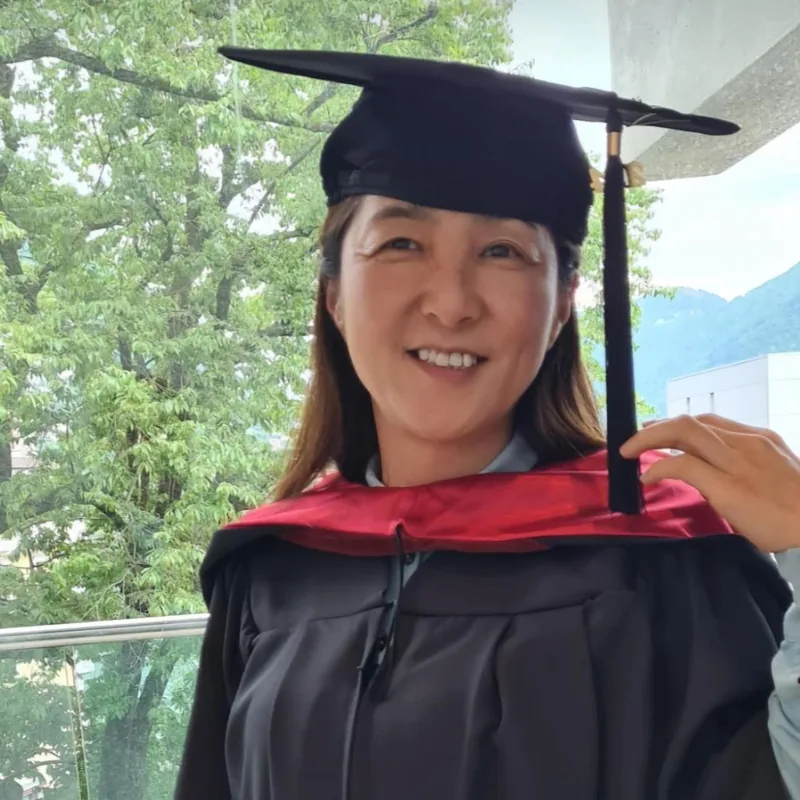
Lili is an experienced international educator specialising in IGCSE and A-Level Mandarin Chinese and Economics, with a strong combination of academic qualifications, professional teaching credentials, examiner experience, and more than 15 years of subject-specific teaching experience. She has worked in international education since 1999, teaching students from diverse linguistic and cultural backgrounds in international school environments.
For Mandarin Chinese, Lili holds a professional teaching qualification and has an academic background in Chinese Language and Literature. She has taught Chinese for more than 15 years and has extensive experience preparing students for international examinations, including IGCSE and A-Level Chinese. She has also served as a Chinese examiner in Switzerland, giving her first-hand understanding of assessment criteria, examination standards, and the skills students need to achieve strong results. Her teaching covers speaking, listening, reading and writing, as well as advanced vocabulary, grammar, cultural understanding, literary analysis, academic writing and examination techniques.
For Economics, Lili holds a Master’s degree in Political Economy of Money and Development and has several years of experience teaching Economics in international school settings. She is familiar with IGCSE and A-Level Economics, including microeconomics, macroeconomics, international economics, economic development, data interpretation, structured responses, essay writing and examination preparation. Her academic background enables her to connect economic theory with contemporary global issues and help students develop strong analytical and evaluative skills.
Lili also holds IB Educator Certificates and has experience with the IB Diploma Programme at both Standard Level (SL) and Higher Level (HL). She is familiar with IB assessment requirements, including examinations, Internal Assessments (IA), Extended Essays (EE), and Theory of Knowledge (TOK). This broader international curriculum experience allows her to support students transitioning between or working across different academic systems.
Throughout her career, Lili has supported students from international schools through classroom teaching, private tutoring, and established tutoring organisations. She is particularly experienced in working with secondary and sixth-form students preparing for IGCSE and A-Level examinations.
Her teaching is highly student-centred and examination-focused. She adapts lessons to each learner’s current level, strengths, areas for development, examination board requirements, and target grades. Alongside subject knowledge, she places strong emphasis on exam technique, analytical thinking, academic writing, independent learning and confidence, enabling students to make measurable progress and work effectively towards their desired IGCSE and A-Level results.

47
Roger achieved 11 A*s at GCSE in the UK and is currently pursuing a degree in Economics at Columbia University and Sciences Po Paris. He tutors GCSE and iGCSE students, with a particular focus on Economics and related subjects. He is fluent in Italian, Spanish and French, and is comfortable working with students for whom English is not their first language. Roger is a rigorous and dedicated tutor who aims to make lessons engaging while building students’ confidence and interest in the subject.

21
With 2 years of teaching experience in the UAE, I have worked with students across different academic levels and learning abilities, specialising in Business and Economics at GCSE/IGCSE and A-Level. My experience includes teaching across the Edexcel International GCSE and International A Level (IAL) curricula, as well as supporting students with different academic goals and examination requirements.
I have extensive experience in lesson planning, exam preparation, past-paper practice, exam-style responses and individualised student support. My teaching approach combines clear concept-building with real-world application, while developing strong application, analysis, evaluation and exam technique. I adapt my lessons to each student’s strengths, areas for improvement and pace of learning.

36
Andra P graduated from Bocconi University with a BSc in International Economics and Management and is now beginning her Master’s in Management at London Business School. She achieved 9 A*s in her IGCSEs and has several years of tutoring experience, particularly in Mathematics, Economics and Geography.
Andra is familiar with the GCSE, IGCSE and A-Level curricula and focuses her tutoring on building strong subject knowledge alongside the exam skills students need to perform at their best. Her lessons place particular emphasis on breaking down difficult concepts, working through exam-style and past-paper questions, and developing effective problem-solving and revision strategies.
She adapts her teaching to each student’s level, syllabus and individual goals, with the aim of making lessons both rigorous and approachable. Andra believes that strong results come from a combination of clear understanding, consistent practice and confidence, and she works to ensure that students feel supported and increasingly independent in their learning.

10
T. Sana is an experienced English and Humanities tutor specializing in supporting IGCSE, GCSE and A-Level students, as well as ESL/EFL learners from diverse international backgrounds, including students from Malaysia, Singapore, India, China, Japan, the UAE, and Saudi Arabia.
She provides academic support in English Language, English Literature, Business Studies, Sociology and Humanities, helping students develop the subject knowledge, analytical skills and exam techniques required for secondary and advanced-level study.
For IGCSE and GCSE learners, T. Sana focuses on reading comprehension, language analysis, structured writing, vocabulary development, grammar, essay planning and effective examination responses. Students receive targeted practice designed to strengthen weaker areas and build confidence in approaching examination-style questions.
For A-Level students, lessons place greater emphasis on critical thinking, textual and contextual analysis, developing arguments, academic writing, evaluation skills and producing well-structured, evidence-based responses. Support can be adapted to the student's syllabus, examination board and individual learning objectives.
T. Sana also has experience supporting IB-style academic work, including essay writing and Extended Essay guidance, with particular attention to research, organization, clarity, critical analysis and academic expression.
Her background in research-based academic writing enables her to guide students in developing coherent arguments, selecting and organizing evidence, improving written expression and approaching extended academic responses systematically.
She is particularly committed to students who require additional time, repetition and structured support. Rather than using a one-size-fits-all approach, lessons are adapted to each learner's pace, current ability and academic goals. Customized lesson plans, targeted practice and engaging activities help students make steady and measurable progress.
T. Sana creates a positive and encouraging learning environment where students can strengthen their foundations, develop effective examination strategies and progressively build the confidence and independence needed for IGCSE, GCSE and A-Level examinations.

24
I am an experienced Economics and Business educator with 9 years of teaching experience, supporting students across A-Level and GCSE Economics and Business Studies. I have extensive experience teaching Cambridge IGCSE and IB curricula, with a strong focus on developing the analytical, evaluative, and exam-writing skills required for A-Level and GCSE success.
I hold a Bachelor’s Degree in International Business from Hochschule Heilbronn, Germany, a Master’s Degree in Public Policy, and a Master’s Degree in Business Communication Management. My academic background includes a strong foundation in economics, business, and public sector economics.
My teaching focuses on critical thinking, exam strategies, past-paper practice, and real-world application. I tailor lessons to each student’s needs and am happy to support students across different exam boards, including AQA, Edexcel, and OCR, by adapting to their specific specifications and assessment requirements.

38
Anant is a tutor currently studying Computer Science and Artificial Intelligence at the Hong Kong University of Science and Technology (HKUST). Having completed his GCSEs with exemplary results—securing 6 A*s across 8 subjects, including top marks in Additional Mathematics, Extended Mathematics, Computer Science, Chemistry, Physics, and Economics—he possesses a deep, foundational mastery of the STEM and quantitative curricula. Beyond his own academics, Anant actively builds machine learning models, engages with top-tier quantitative finance firms like Citadel, and brings extensive experience mentoring peers through the rigors of A Level Mathematics and Computer Science. Specializing in GCSE and A Level Math and Computer Science, he uses patient, real-world analogies to break down complex technical jargon. Anant ensures his students feel completely supported, helping them move beyond rote memorization to build true conceptual understanding, exam confidence, and top-tier results.

28
Andrei holds a Bachelor’s degree in Economics from Erasmus University Rotterdam and has seven years of international school teaching experience, alongside more than ten years of private tutoring experience.
He specializes in Mathematics and Economics, with extensive experience preparing students for international qualifications, including Cambridge (CIE) IGCSE Mathematics and Economics and Pearson Edexcel/AQA A-Level Economics. He has worked with students across a wide range of abilities, from those needing additional support to high-achieving students targeting the top grades.
Andrei has a strong track record of helping students make significant academic progress and achieve excellent examination results, including students attaining A/A* grades at IGCSE and A-Level. His lessons combine thorough syllabus coverage with targeted past-paper practice, examination technique, and a clear understanding of how marks are awarded.

39
Marcus M is an experienced international educator with over 30 years of teaching Economics and Business Management in IB Diploma, A-level and IGCSE programs. He recently taught DP Economics and DP Business Management at the American International School of Kingston, Jamaica, and has previously taught in schools across Asia, Europe, Africa, and South America. Marcus holds an MA in Education from the University of Bath and has served as both a Head of Humanities and DP Coordinator. Since 2021, he has also worked as an IB Examiner for DP Economics. He also has experience teaching A level in both subjects. He taught A level in both UK and HK before switching to IB.His extensive classroom experience, leadership background in, and passion for global learning make him an engaging and effective tutor for students pursuing success in both the IB and A level programmes.
The tutors you see here are just a selection from our team of hundreds of tutors, please contact our Learning Advisors to discuss tutoring options
Why GCSE Economics needs the right tutor
What makes GCSE Economics hard
GCSE Economics looks like a content subject but is marked as a skills subject. Knowing what inflation or a price elasticity is earns only a small share of the marks; most go to applying the idea to the case study in front of you, building a chain of reasoning from cause to effect, and weighing up both sides before reaching a judgement. Students who revise definitions thoroughly are often surprised by how few marks those definitions earn on their own.
Other things that make it hard:
- Demand and supply diagrams that must be drawn, labelled and shifted correctly, then explained in words that match the diagram
- Calculations such as percentage changes, price elasticity, costs, revenue and profit, exchange rates and index numbers, often embedded in a longer question
- Extended answers that need two-sided evaluation and a supported conclusion, not a list of points
- Applying answers to unfamiliar data and case studies, where generic answers that ignore the context lose application marks
- Multiple-choice sections that test precise distinctions, such as a movement along a curve versus a shift of the curve
How tutoring changes the outcome
Our Economics tutors work from your board's own past papers, mark schemes and examiners' reports, so answers are built in the order an examiner awards the marks: knowledge, application, analysis and then evaluation. Sessions target where Economics marks are actually lost:
- diagrams with missing labels, the wrong curve shifted or no link to the written answer
- calculations set out without working, so a single slip costs every mark
- analysis that stops after one step instead of following the chain of cause and effect to its consequence
- evaluations that examiners report as one-sided, generic or missing a final judgement
What you'll learn in GCSE Economics tutoring
Core skills developed
Every GCSE and IGCSE Economics specification rewards a similar progression: knowing economic concepts, applying them to a context, analysing evidence and evaluating to reach a judgement. The weighting differs by board. On AQA, OCR and OxfordAQA, knowledge and application carry 35% each and analysis and evaluation 30%. Edexcel International puts application first at around 48–49% of the marks, with evaluation as a separate objective worth 12–13%. Cambridge gives knowledge and understanding 43% and analysis 47%, with evaluation worth 10% and examined only in Paper 2. We work through past-paper questions objective by objective, so you can see which skill is costing you marks rather than just seeing a lower total.
- Drawing and interpreting demand and supply diagrams, including shifts and new equilibrium points
- Economic calculations: percentage changes, elasticity, costs, revenue, profit and exchange rates
- Reading and interpreting data in tables, charts and case-study extracts
- Building chains of analysis that link a cause to its economic effects
- Evaluating policies and decisions from the viewpoint of consumers, producers and government, and reaching a supported judgement
How are students assessed
Economics is assessed entirely by written exams on every board, with no coursework. All boards set two papers sat in the same series at the end of the course, apart from the Edexcel International GCSE modular route, where the two units can be sat in different series and resat. AQA, OCR and OxfordAQA split the papers into microeconomics and macroeconomics with a multiple-choice section at the start of each paper, while Cambridge puts all its multiple-choice questions in a separate Paper 1.
- Multiple-choice questions: drilled against real past papers for speed and for the precise distinctions they test
- Calculation and data questions: setting out working so that marks are kept even when an earlier figure is wrong
- Extended and evaluative answers: rewritten until the analysis is fully developed and the judgement is supported, as the mark scheme requires
What GCSE Economics topics do we cover?
OxfordAQA GCSE Economics
Eleven topics in two halves, examined in two papers sat together in May/June or November at the end of the course. Paper 1: How markets work and Paper 2: How economies work are each 1 hour 45 minutes, 80 marks and 50% of the International GCSE. Each paper has Section A (48 marks), with 10 multiple-choice questions followed by calculation, short and extended response questions, and Section B (32 marks), with five questions mixing calculations, short and extended responses.
How markets work
- 3.1.1 Economic foundations
- 3.1.2 Resource allocation
- 3.1.3 How prices are determined
- 3.1.4 Production, costs, revenue and profit
- 3.1.5 Competitive and concentrated markets
- 3.1.6 Market failure
How economies work
- 3.2.1 Introduction to the national economy
- 3.2.2 Government objectives
- 3.2.3 How governments manage their economies
- 3.2.4 International trade and the global economy
- 3.2.5 The role of money and financial markets
OxfordAQA follows the same structure as AQA's UK GCSE but is written for international students: questions avoid British-specific terms, and students are expected to use national and global examples from the last 25 years rather than UK policy alone. A November series gives an extra sitting. Sessions on this board build a bank of international case examples and practise the Section B questions to time.
IAL GCSE Economics
Two papers, each 1 hour 30 minutes, 80 marks and 50% of the International GCSE, with a single tier of entry. Each paper has four compulsory 20-mark questions mixing multiple-choice, short-answer, data response and open-ended questions. On the linear route (4EC1) both papers are sat in the same series, in June or November. The modular route (4XEC1) examines the same content as two units that can be sat in any order and resat. The modular route is only available to schools outside the UK.
Paper 1: Microeconomics and Business Economics
- 1.1.1 The economic problem
- 1.1.2 Economic assumptions
- 1.1.3 Demand, supply and market equilibrium
- 1.1.4 Elasticity
- 1.1.5 The mixed economy
- 1.1.6 Externalities
- 1.2.1 Production
- 1.2.2 Productivity and division of labour
- 1.2.3 Business costs, revenues and profit
- 1.2.4 Business competition
- 1.2.5 The labour market
- 1.2.6 Government intervention
Paper 2: Macroeconomics and the Global Economy
- 2.1.1 Macroeconomic objectives
- 2.1.2 Government policies
- 2.1.3 Relationships between objectives and policies
- 2.2.1 Globalisation
- 2.2.2 International trade
- 2.2.3 Exchange rates
Edexcel International weights application most heavily of any board, at around 48–49% of the marks, and its content includes business economics topics such as productivity, business competition and the labour market. Every question is compulsory, so there is no choice to hide a weak topic. Sessions on this board practise applying each concept to the data in the question and work through full 20-mark questions under time.
OCR GCSE Economics
Four sections examined in two papers sat together in May/June at the end of the course. Introduction to Economics (J205/01) covers Sections 1 and 2, and National and International Economics (J205/02) covers Sections 3 and 4. Each paper is 1 hour 30 minutes, 80 marks and 50% of the GCSE. The two papers have an identical structure: 20 multiple-choice questions in Part A, then three questions in Part B, each built on a short case study with short, medium and extended response questions.
1. Introduction to Economics
- 1.1 Main economic groups and factors of production
- 1.2 The basic economic problem
2. The role of markets and money
- 2.1 The role of markets
- 2.2 Demand
- 2.3 Supply
- 2.4 Price
- 2.5 Competition
- 2.6 Production
- 2.7 The labour market
- 2.8 The role of money and financial markets
3. Economic objectives and the role of government
- 3.1 Economic growth
- 3.2 Low unemployment
- 3.3 Fair distribution of income
- 3.4 Price stability
- 3.5 Fiscal policy
- 3.6 Monetary policy
- 3.7 Supply side policies
- 3.8 Limitations of markets
4. International trade and the global economy
- 4.1 Importance of international trade
- 4.2 Balance of payments
- 4.3 Exchange rates
- 4.4 Globalisation
OCR has the largest multiple-choice share of any board, with 20 questions on each paper, and its shorter 90-minute papers leave little time per mark. The specification is built around economic objectives, including fair distribution of income, and around globalisation and its effects on developed and less developed countries. Sessions on this board build multiple-choice speed and accuracy and practise the Part B case studies to time.
AQA GCSE Economics
Eleven topics in two halves, examined in two papers sat together in May/June at the end of the course. Paper 1: How markets work covers Topics 1–6 and Paper 2: How the economy works covers Topics 7–11. Each is 1 hour 45 minutes, 80 marks and 50% of the GCSE. Both papers open with 10 multiple-choice questions followed by calculation, short and extended response questions, and Section B has five questions mixing calculations, short and extended responses.
How markets work
- 3.1.1 Economic foundations
- 3.1.2 Resource allocation
- 3.1.3 How prices are determined
- 3.1.4 Production, costs, revenue and profit
- 3.1.5 Competitive and concentrated markets
- 3.1.6 Market failure
How the economy works
- 3.2.1 Introduction to the national economy
- 3.2.2 Government objectives
- 3.2.3 How the government manages the economy
- 3.2.4 International trade and the global economy
- 3.2.5 The role of money and financial markets
AQA splits the course cleanly into microeconomics on Paper 1 and macroeconomics on Paper 2, but each paper expects you to draw on the whole course. At least 10% of the marks reward quantitative skills, and the contexts are UK-focused, including UK government revenue and spending, UK trade and the role of the Bank of England. Sessions on this board practise Section B data questions to time and build the UK policy examples answers need.
CIE GCSE Economics
Six topics examined in two papers, sat in June or November, with a March series in India. Paper 1 is 40 multiple-choice questions (1 hour, 40 marks, 30%). Paper 2, Structured Questions (2 hours, 80 marks, 70%), has one compulsory 20-mark data question in Section A, based on unseen information about a real economic situation, and three questions from a choice of four in Section B. 0455 is graded A* to G and 0987 is graded 9–1 on the same content and papers, though 0987 is not offered in every administrative zone. The 2027–2029 syllabus moves marks from Paper 2 to Paper 1 compared with earlier years and adds content on economics and the environment.
1 The basic economic problem
- 1.1 The nature of the basic economic problem
- 1.2 Factors of production
- 1.3 Opportunity cost
- 1.4 Production possibility curve (PPC) diagrams
2 The allocation of resources
- 2.1 The role of markets in allocating resources
- 2.2 Demand
- 2.3 Supply
- 2.4 Price determination
- 2.5 Price changes
- 2.6 Price elasticity of demand (PED)
- 2.7 Price elasticity of supply (PES)
- 2.8 Market economic system
- 2.9 Market failure
- 2.10 Mixed economic system
3 Microeconomic decision-makers
- 3.1 Money and banking
- 3.2 Households
- 3.3 Workers
- 3.4 Firms
- 3.5 Firms and production
- 3.6 Firms’ costs, revenue and objectives
- 3.7 Types of markets
4 Government and the macroeconomy
- 4.1 Government macroeconomic intervention
- 4.2 Fiscal policy
- 4.3 Monetary policy
- 4.4 Supply-side policy
- 4.5 Economic growth
- 4.6 Employment and unemployment
- 4.7 Inflation
5 Economic development
- 5.1 Living standards
- 5.2 Poverty
- 5.3 Population
- 5.4 Differences in economic development between countries
6 International trade and globalisation
- 6.1 Specialisation and free trade
- 6.2 Globalisation and trade restrictions
- 6.3 Foreign exchange rates
- 6.4 Current account of the balance of payments
Cambridge is the only board with a whole topic on economic development, covering living standards, poverty and population, and evaluation is examined only in Paper 2, where each Section B question ends with a part (d) marked on two-sided, reasoned discussion. Choosing the right three Section B questions matters too. Sessions on this board practise the Section A data question and part (d) evaluations to time and build a strategy for the Section B choice.
Ready to start?
Tell us the subject, exam board and target grade. A Learning Advisor reviews it the same day.
Why parents trust us
4.9/5 from 312 reviews · used by students at 500+ schools





FAQs
We have answers to your most frequently asked questions. Anything not answered here, please reach out to our team.
GCSE Economics means the UK specifications from AQA and OCR, while IGCSE Economics means Cambridge IGCSE 0455 (0987 on the 9–1 scale) or Edexcel International GCSE 4EC1. All of them cover microeconomics, macroeconomics and the global economy, but the IGCSEs give more weight to international trade and development, and Cambridge puts all its multiple-choice questions into a separate paper worth 30%. Universities and sixth forms accept both. The UK GCSE is sat in May and June only, while Cambridge IGCSE and Edexcel International GCSE also run a full November series, which suits students outside the UK and anyone who needs a resit. Read more about online IGCSE tutoring.
Each sixth form and college sets its own entry requirements, so check the prospectus of the one you're applying to. As a guide, GCSE Economics is not usually required for A-Level Economics, because many schools do not offer it. Most sixth forms instead ask for a grade 6 in GCSE Maths and English, and if you have taken GCSE Economics, a 6 or 7 in it is a strong signal. If you take Cambridge IGCSE on the A*–G scale, a grade A is broadly equivalent to a 7 and a C to a 4, the points that were aligned when the 9–1 scale was introduced (GOV.UK grading factsheets), so a requirement of grade 6 usually means a strong B. See A-Level Economics.
GCSE Economics tutoring with an academic tutor costs from $50 USD (£38) per hour, and packages save 5–15%, which suits weekly lessons through the course, with extra past paper sessions before mocks and the summer exams. Pay as you go is invoiced after each lesson, with no lock-in contracts. Professional tutors (qualified teachers and examiners) cost from $75 USD (£56) per hour. See pricing.
Late cancellations and no-shows are charged at half the lesson fee. That applies if you cancel less than one hour before the start time, or don't turn up. You can still change a session time whenever you need to, as long as you give your tutor notice.
Our academic tutors are high-achieving graduates and undergraduates who scored in the top band in Economics themselves, and our professional tutors are qualified teachers or examiners with 5+ years' experience. We accept only the top 5% of applicants. You are matched to a tutor who knows your board, so they can teach the diagrams and calculations your board repeats and mark extended answers against its levels of response. Read more about our GCSE tutors and how we select tutors.
Lessons are one-to-one and online, with a tutor matched to GCSE Economics, your exam board and your target grade. Each session works on your weakest areas using past paper questions from your own board, whether that is AQA, OCR, Edexcel International GCSE or Cambridge IGCSE 0455. For Economics that usually means drawing and labelling diagrams until they are automatic, setting out calculations so marks are kept, and building evaluative answers that reach a clear judgement. See how it works or start with the student application.
Economics is a new subject for most students, so the first challenge is learning to think like an economist: using supply and demand diagrams, explaining chains of cause and effect, and applying theory to a real scenario. The papers mix quick multiple-choice and calculation questions with long evaluative answers, and the top marks go to students who analyse the case in front of them rather than repeat learned definitions. Students who are confident with percentages and graphs usually settle in quickly. Our online GCSE tutoring focuses on exactly those areas.
In summer 2026, 8.2% of GCSE Economics entries in England achieved a grade 9 and 34.4% achieved a 7 or above (JCQ), from only 7,265 entries, because relatively few UK schools offer it. Internationally, where the subject is far more popular, 12.2% of Edexcel International GCSE Economics candidates achieved a 9 (provisional figures from Pearson), and 20.9% of Cambridge IGCSE Economics candidates achieved an A* (Cambridge). A 9 needs accurate diagrams and calculations, and evaluation that weighs up both sides before reaching a supported judgement.
Grade boundaries are set after each exam series and change every year, so older figures are only a guide. In June 2026, AQA's grade 9 boundary for Economics was 136 out of 160 (85%), with grade 4 at 82 (51%). Edexcel International GCSE 4EC1 set grade 9 at 121 or 122 out of 160 (76%), depending on the papers taken, and Cambridge IGCSE 0455's A* threshold was 115 to 122 out of 150 (77–81%), depending on the paper variant. Pearson Edexcel does not offer a UK GCSE in Economics. Sources: AQA, Pearson International and Cambridge.
No. GCSE Economics has no coursework, practical or speaking assessment on any board, so the whole grade comes from the written papers. Instead of coursework, the papers test applied skills: calculations such as percentage changes and price elasticity, reading data from graphs and tables, and extended answers that analyse a scenario and reach a judgement. Edexcel International GCSE also has a modular route, where the two units can be sat in different series. See the Cambridge IGCSE 0455 syllabus.
GCSE Economics is assessed entirely by written exams, with two papers sat at the end of the course. AQA sets Paper 1 How markets work and Paper 2 How the economy works, each 1 hour 45 minutes and worth 50%, with multiple-choice, calculation and extended questions. Edexcel International GCSE 4EC1 splits microeconomics and macroeconomics across two 1 hour 30 minute papers, and Cambridge IGCSE 0455 sets a 1-hour multiple-choice paper (30%) and a 2-hour structured paper (70%). See the AQA specification.
All GCSE subjects
Ready to find your GCSE Economics tutor?
We will find you a tutor in 24 hours and if you are not happy after the first session, we will give you a full refund and find you another tutor for no extra charge.
Resources for GCSE students
Check out our free content about the GCSE