1,000+ happy customers
Private GCSE Mathematics tutors
We will find you a GCSE Mathematics tutor who will help you get a 9 and boost your confidence.
Currently serving students in
your country!
How It Works
We keep things as simple as possible. Our objective is to make finding a tutor convenient, efficient and effective.
Fill out an online form
Complete an application online which will be received by one of our dedicated Learning Advisors
Get matched with a tutor
Our experienced Learning Advisor will review your application, and match you with the most appropriate tutor based on your application
Tutor makes contact
Once we confirm with the tutor, the tutor will make contact to organise your first session.
Have your first lesson
Our tutors will work around your schedule to organise a session whenever you would like. Only pay for tutoring you have completed.
Two kinds of GCSE tutor
Choose between top-performing recent graduates or qualified teachers. Either way, our matching process finds you a tutor based on subject, exam board, target grade and availability.
Academic Tutors
from $50 USD/hr
Top performing graduates who achieved top grades in the subject they teach.
- We accept only the top 5% of tutor applicants.
- Each tutor is chosen for their academic results, teaching ability, and connection with students.
Relatable role model: work with a tutor who is similar in age and can be a peer
Affordability: academic tutors are more cost-effective than professional tutors
First-hand experience: they sat these papers recently and know what worked
Professional Tutors
from $75 USD/hr
Current or past qualified teachers and examiners with 5+ years professional teaching experience.
- We only select highly experienced, qualified GSCE teachers.
- Every teacher is assessed on their teaching expertise, subject knowledge, and ability to engage students.
Quality assurance: trained and accredited teaching qualifications
Guaranteed track record: years of experience helping students succeed
Subject expertise: deep understanding of content and exam board requirements
Due to our international operations we quote our prices in USD. Pound amounts are an indicative conversion and you will be invoiced in USD.
Academic Tutors
from £37 GBP/hr
Top performing graduates who achieved top grades in the subject they teach.
Relatable role model: work with a tutor who is similar in age and can be a peer
Affordability: academic tutors are more cost-effective than professional tutors
First-hand experience: they sat these papers recently and know what worked
Professional Tutors
from £56 GBP/hr
Current or past qualified teachers and examiners with 5+ years professional teaching experience.
Quality assurance: trained and accredited teaching qualifications
Guaranteed track record: years of experience helping students succeed
Subject expertise: deep understanding of content and exam board requirements
Meet our GCSE Mathematics tutors
Our team is a combination of GCSE graduates who sat these exams recently and qualified teachers with years of classroom and examining experience.

31
Farhana is an experienced Mathematics educator currently teaching at one of Toronto’s leading private schools. She previously served as Head of Mathematics at another school and holds an Engineering degree from Assumption University of Thailand and a master’s degree from Framingham University.
Having completed both GCSE and A Level Mathematics herself, Farhana brings a strong understanding of the curriculum, examination structure, and academic expectations students face. She has experience tutoring GCSE and A Level students and has also taught these programs in a school setting.
Her teaching approach goes beyond simply completing questions. She focuses on helping students understand the mathematics behind each method, develop strong problem solving habits, communicate their reasoning clearly, and approach examinations with confidence and effective technique.
Farhana believes that every student can improve in Mathematics with the right structure, guidance, practice, and encouragement. She has particular experience supporting students who need to strengthen their foundations as well as those aiming for the highest grades.
In addition to GCSE and A Level Mathematics, Farhana has extensive experience teaching senior high school Mathematics, including IB Mathematics: Analysis and Approaches and Applications and Interpretation. She is also an IB Mathematics examiner who assesses Internal Assessments, giving her a strong understanding of mathematical communication, assessment standards, and what distinguishes high quality student work.
Her goal is to help students become confident, independent mathematicians who understand what they are doing, why they are doing it, and how to perform at their best in examinations.

36
Andra P graduated from Bocconi University with a BSc in International Economics and Management and is now beginning her Master’s in Management at London Business School. She achieved 9 A*s in her IGCSEs and has several years of tutoring experience, particularly in Mathematics, Economics and Geography.
Andra is familiar with the GCSE, IGCSE and A-Level curricula and focuses her tutoring on building strong subject knowledge alongside the exam skills students need to perform at their best. Her lessons place particular emphasis on breaking down difficult concepts, working through exam-style and past-paper questions, and developing effective problem-solving and revision strategies.
She adapts her teaching to each student’s level, syllabus and individual goals, with the aim of making lessons both rigorous and approachable. Andra believes that strong results come from a combination of clear understanding, consistent practice and confidence, and she works to ensure that students feel supported and increasingly independent in their learning.

34
I hold a Bachelor’s degree in Economics and Mathematics from IBA, Karachi, where I graduated with a CGPA of 3.72. Since 2016, I have been engaged in teaching Mathematics at the O and A Level, both in-person and remotely.
Over the years, I have developed proficiency in delivering instruction across various international curricula, including:
CAIE (IGCSE & A Level)
Singapore Math
American Curriculum (Algebra, Geometry, Pre-Calculus)
In addition to curriculum-based teaching, I prepare students for standardized tests such as the DSAT (Digital SAT) Math section, and coach students for international mathematics competitions, including IKMC and SASMO.
I have been conducting online classes since 2017 using platforms such as Zoom and Google Meet, and am fully equipped to manage virtual instruction effectively. I am passionate about creating engaging, concept-focused learning environments that cater to diverse student needs.

43
Manoj A is a Mathematics educator with 20+ years of teaching and mentoring experience, specialising in A-Level, IGCSE and international Mathematics curricula. He currently works as an Edexcel A Level Mathematics Examiner with Pearson Education, giving him direct experience of the assessment standards, mark schemes and examination requirements of the Edexcel A Level Mathematics curriculum.
His teaching experience includes A Level Mathematics, Pure Mathematics and IGCSE Mathematics. He has taught IGCSE Mathematics at school level and has worked with students following Cambridge International Mathematics, including Cambridge IGCSE Mathematics (0580), Additional Mathematics (0606) and International Mathematics (0607). He has also undertaken professional development in CIE AS & A Level Mathematics.
His lessons focus on understanding concepts clearly, developing mathematical reasoning and problem-solving skills, and applying these skills to exam-style questions. He adapts his teaching to the student's level—whether the student needs to strengthen foundations, catch up with the course, improve examination technique or work towards higher grades.
As an Edexcel examiner, Manoj brings an additional examination perspective to his tutoring. He understands that knowing the mathematics is only part of succeeding in an examination; students also need to apply appropriate methods, show their reasoning clearly and work accurately under examination conditions.
He has taught and mentored students from the UK, USA, UAE, Singapore, Netherlands, Malaysia, Australia and other countries, giving him experience of working with different educational backgrounds and learning needs.
Over the years, his students have achieved strong results in Mathematics, including A and A grades at IGCSE/A-Level level. His aim is to help students build genuine mathematical understanding and the confidence to tackle unfamiliar problems independently.*

34
Achraf (Ash) is a Mathematics, Physics and French tutor with over 4 years of teaching experience across GCSE, IGCSE, A-Level and Further Mathematics. He has worked with students following major UK exam boards including Edexcel, AQA and OCR, supporting learners ranging from those strengthening core foundations to high-achieving students targeting Grades 8–9 and top A-Level results.
Ash graduated from the University of Bristol with a Master’s in Mechanical Engineering (MEng), giving him a strong academic background in advanced mathematics, mechanics, statistics, modelling and problem-solving. His professional experience also includes work as a Reusable Rocket Engineer and Mathematics AI Trainer, where he developed and reviewed complex mathematical and engineering problems.
His tutoring is structured, exam-focused and highly adaptive. He helps students understand difficult concepts clearly, develop stronger problem-solving habits and improve their exam technique through targeted practice, past-paper questions and step-by-step feedback. He also supports students preparing for Further Mathematics and university admissions-style problem solving, including ESAT-type questions.
Ash has taught students from a wide range of ability levels and focuses on building both confidence and mathematical independence so that students can perform consistently under exam conditions.

30
Ala is a BSc degree holder in Biomedicine and is pursuing her master's in clinical neuroscience. Her field of study incorporates Biology, Chemistry and Mathematics – the subjects she's been tutoring for 3 years now. She has experience tutoring AQA A-levels and (I)GCSE syllabi in the aforementioned subjects, improving students' comprehension of the subjects as well as creating effective exam strategies. She helped tutees achieve top grades (A* as well as 9s in GCSE). As an IB graduate, Ala understands the challenges of a rigorous high school curriculum and the struggles of having to manage multiple subjects at a higher level simultaneously. Thus, she ensures sessions with her students are focused and flexible by creating a tailored study plan for each student and preparing for the lessons diligently. She shares her enthusiasm for the subjects and positive energy with the students, making the sessions more enjoyable and friendly.

20
Karim T is an accomplished English Language and Literature educator, English as a Second Language (ESL) specialist, and communication professional with a distinguished academic record and extensive experience in international secondary education. His professional expertise is particularly focused on IGCSE, O-Level, and A-Level English Language and English as a Second Language, with a strong commitment to developing students’ linguistic accuracy, communication skills, academic writing, critical thinking, and confidence in using English effectively.
Karim earned his Bachelor’s Degree in Translation with a Minor in Communication from the Arab Academy for Science, Technology and Maritime Transport (AASTMT), graduating Summa Cum Laude as the Valedictorian of his graduating class with a GPA of 3.72 (Excellent with Honors).
His academic excellence was established at an early stage. He graduated from Nefertari British International School under the IGCSE system with an outstanding 9 A*s, a result officially recognized by Egypt’s Central Coordination Office as equivalent to 100%, and graduated as the Valedictorian of his high school class. This achievement made Karim a two-time Valedictorian, having graduated first in both high school and university.
Professionally, Karim has developed substantial experience teaching English Language, English as a Second Language, and English Language & Literature within international secondary-school settings. His teaching experience encompasses students preparing for IGCSE and O-Level examinations, as well as advanced A-Level English Language study. He has worked extensively on developing students’ reading comprehension, writing proficiency, vocabulary, grammar, spoken communication, analytical skills, and ability to communicate effectively for both academic and real-world purposes.
Karim’s approach to IGCSE and O-Level English emphasizes building a secure foundation in language while developing the examination skills required for success. He supports students in mastering comprehension, directed writing, descriptive and narrative writing, summary skills, vocabulary, grammar, sentence construction, and effective written expression. Particular emphasis is placed on helping students understand how language choices influence meaning, tone, purpose, audience, and overall effectiveness.
At A-Level, Karim adopts a more sophisticated and analytical approach to English Language, guiding students toward advanced language analysis, discursive and argumentative writing, linguistic terminology, textual interpretation, and the ability to construct precise, coherent, and well-supported academic responses. He encourages students to move beyond simply identifying language features and instead develop the ability to explain how and why language choices create particular effects and meanings.
His experience also includes teaching within the International Baccalaureate Diploma Programme, where he taught English Language & Literature and Theory of Knowledge. This background has further strengthened his ability to cultivate higher-order thinking, academic writing, independent inquiry, and sophisticated communication skills. He has successfully guided graduating Diploma Programme cohorts through demanding academic requirements while maintaining a broader focus on intellectual development and university readiness.
As an English as a Second Language educator, Karim places particular importance on helping learners become confident, accurate, and independent users of English. His instruction combines explicit language development with meaningful communication, enabling students to strengthen their grammar, vocabulary, reading, writing, listening, and speaking skills while developing the confidence to use English in academic, professional, and everyday contexts.
Committed to continuous professional development, Karim has completed official International Baccalaureate Category 2 professional development workshops in Theory of Knowledge and English B, complementing his broader expertise in international English-language education.
Beyond teaching, Karim’s multidisciplinary background includes research and development, public speaking, strategic communication, and educational innovation. His academic training in translation and communication has given him a particularly strong understanding of language, audience, register, purpose, and effective communication—skills that directly inform his approach to English Language and ESL instruction.
Karim is driven by the belief that effective English education extends beyond examination preparation. His goal is to equip students with the language proficiency, analytical ability, academic confidence, and communication skills necessary to succeed in IGCSE, O-Level, and A-Level examinations while preparing them for higher education and an increasingly interconnected global environment.
42
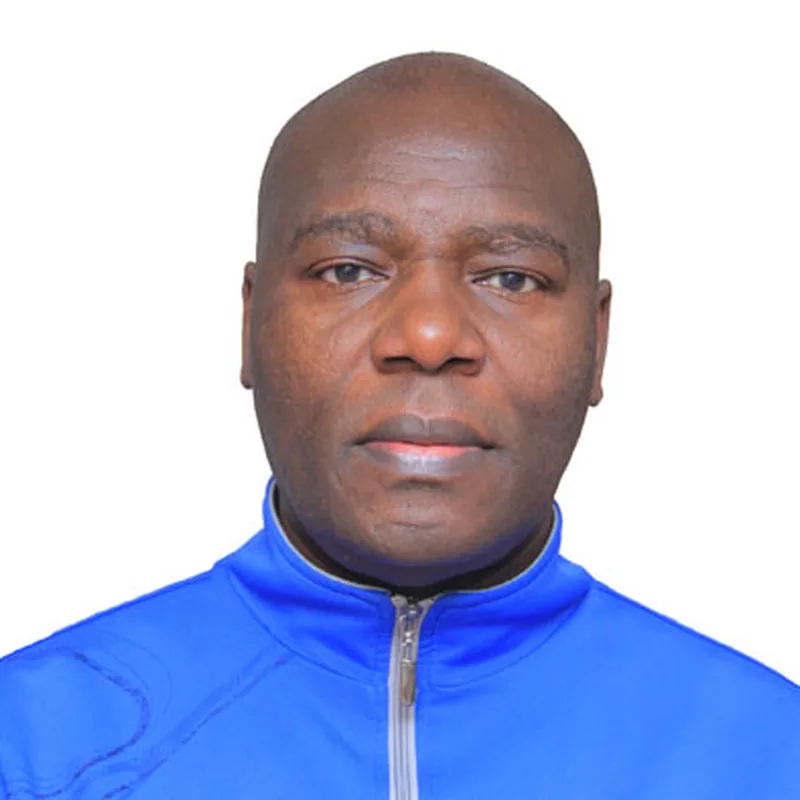
Caleb A is a highly experienced and accomplished Advance Level Chemistry / Physics educator with over 30 years of international teaching experience across the United States, Qatar, China, Kenya and Ethiopia. He is currently teaching Advance Level Chemistry at a leading international school in New York, where he specializes in helping students achieve top results in one of the most challenging high school science programs.
Caleb holds multiple advanced degrees, including a Master of Education and a Master of Science in Information Technology, and has previously served as Head of the Science Department at an international school in Qatar. Throughout his career, he has taught a wide range of curricula mainly A-Level, and IGCSE Chemistry and Physics, giving him a deep understanding of different exam systems and student needs.
Known for his clear explanations and structured approach, Caleb consistently helps students improve their understanding of complex concepts such as organic chemistry, energetics, and equilibrium. His students benefit from targeted exam preparation, data analysis skills, and problem-solving strategies that lead to measurable score improvements and increased confidence.
Caleb’s teaching style is student-centered and highly supportive. He adapts his lessons to suit individual learning styles, using real-world examples, guided practice, and exam-focused techniques to ensure progress in every session. He is passionate about helping students not only succeed academically but also develop a genuine interest in science.

38
Anant is a tutor currently studying Computer Science and Artificial Intelligence at the Hong Kong University of Science and Technology (HKUST). Having completed his GCSEs with exemplary results—securing 6 A*s across 8 subjects, including top marks in Additional Mathematics, Extended Mathematics, Computer Science, Chemistry, Physics, and Economics—he possesses a deep, foundational mastery of the STEM and quantitative curricula. Beyond his own academics, Anant actively builds machine learning models, engages with top-tier quantitative finance firms like Citadel, and brings extensive experience mentoring peers through the rigors of A Level Mathematics and Computer Science. Specializing in GCSE and A Level Math and Computer Science, he uses patient, real-world analogies to break down complex technical jargon. Anant ensures his students feel completely supported, helping them move beyond rote memorization to build true conceptual understanding, exam confidence, and top-tier results.
The tutors you see here are just a selection from our team of hundreds of tutors, please contact our Learning Advisors to discuss tutoring options
Why GCSE Mathematics needs the right tutor
What makes GCSE Mathematics hard
GCSE and IGCSE Mathematics is not mainly a test of remembering methods. On the UK GCSEs, half of the Foundation marks and 60% of the Higher marks go to reasoning and problem solving, and Cambridge gives 50–60% of Extended marks to analysing, interpreting and communicating. Many questions do not say which method to use, so students who can do every topic in isolation still lose marks when a question combines ratio, algebra and geometry in one problem.
Other things that make it hard:
- Non-calculator papers at Cambridge, AQA, Edexcel, OCR, Eduqas and WJEC, where fractions, surds, standard form and long multiplication must be secure by hand
- Algebra that carries more weight at the higher tier: on Edexcel Higher it is 27–33% of the marks
- "Show that" and proof questions where every line of working is marked, not just the answer
- Formulae that are not given in the exam, so they have to be learned rather than looked up
- Accuracy rules: rounding too early, wrong units or an answer to the wrong degree of accuracy can cost the final mark
How tutoring changes the outcome
Our Mathematics tutors work from your board's own past papers, mark schemes and examiners' reports, so working is set out the way examiners award method marks. Sessions target where Mathematics marks are actually lost:
- working left out, so a wrong final answer scores nothing
- premature rounding and accuracy errors in multi-step calculator questions
- unstructured problems where students cannot see how to start
- algebra slips in the final, highest-mark questions on Higher and Extended papers
What you'll learn in GCSE Mathematics tutoring
Core skills developed
The UK GCSEs share three assessment objectives: using standard techniques, reasoning and communicating mathematically, and solving problems. On AQA, Edexcel, OCR and Eduqas, standard techniques are 50% of Foundation marks but only 40% of Higher marks. Cambridge uses two objectives and shifts the same way: techniques are 60–70% of Core and 40–50% of Extended. Edexcel International weights by content instead, with number and algebra 57–63% of the marks, and OxfordAQA splits roughly 60:40 between recalling knowledge and applying it. We use past-paper questions to show which kind of mark you are dropping, not just the topic.
- Fluent number work without a calculator: fractions, percentages, indices, surds and standard form
- Algebraic manipulation: expanding, factorising, rearranging formulae and solving equations and inequalities
- Drawing and interpreting graphs of linear, quadratic and other functions
- Geometry and trigonometry, from angle facts and Pythagoras' theorem to vectors
- Handling data and probability, including interpreting statistical diagrams and calculating combined probabilities
How are students assessed
Mathematics is assessed entirely by written exams at every board, with no coursework. AQA, Edexcel and OCR set three 1 hour 30 minute papers, while Cambridge, Edexcel International, Eduqas and OxfordAQA set two longer papers. Most routes are linear, with every paper sat in one series. The exceptions are WJEC's unitised qualification in Wales and Edexcel International's modular route, where units can be sat in different series.
- Short, routine questions: drilled for speed and accuracy so they bank marks quickly and leave time for the harder questions
- Multi-step problem solving: we practise breaking problems down and writing working that earns method marks even when the final answer is wrong
- "Show that" and proof questions: we model the complete chain of reasoning examiners expect, line by line
What GCSE Mathematics topics do we cover?
OxfordAQA GCSE Mathematics
Four content areas examined in two written papers at the same tier, both sat in the same series. Core students sit Papers 1C and 2C, each 1 hour 30 minutes and 80 marks. Extension students sit Papers 1E and 2E, each 2 hours and 100 marks. Each paper is 50% of the International GCSE, and a scientific calculator is needed for every paper. Core covers grades 1–5 and Extension grades 4–9, with an allowed grade 3. Exams run in May/June and November.
3.1 Number
- 3.1.1 Structure and calculation
- 3.1.2 Fractions, decimal and percentages
- 3.1.3 Ratio and proportion
3.2 Algebra
- 3.2.1 Notation and manipulation
- 3.2.2 Functions, graphs and calculus
- 3.2.3 Solving equations and inequalities
- 3.2.4 Sequences
3.3 Geometry and measures
- 3.3.1 Properties and constructions
- 3.3.2 Mensuration and calculation
- 3.3.3 Transformations, Matrices and Vectors
3.4 Statistics and probability
- 3.4.1 Presentation and analysis
- 3.4.2 Interpretation
- 3.4.3 Probability
OxfordAQA has no non-calculator paper, but its content reaches beyond the UK GCSE: it includes differentiation to find stationary points, and 2 × 2 matrices and the transformations they represent. OxfordAQA has announced a revised International GCSE Mathematics (9233) for first teaching from 2027, with first exams in May/June 2029. Sessions on this board give calculus and matrices dedicated time and practise the questions that get harder towards the end of each paper.
WJEC GCSE Mathematics
Eduqas (England) and WJEC (Wales) offer different maths qualifications. We match tutors to the board on your exam entry.
Eduqas · England
Two written components at the same tier in the same series. Component 1 is non-calculator and Component 2 allows a calculator. Each is 2 hours 15 minutes, 120 marks and 50% of the GCSE. Foundation covers grades 1–5 and Higher grades 4–9, with a grade 3 allowed just below the boundary. Exams run in the summer and November series, with November open only to students aged 16 or over by 31 August.
- Number
- Algebra
- Geometry and measures
- Probability
- Statistics
WJEC · Wales
GCSE Mathematics and Numeracy (Double Award), first taught from September 2025. Three units: Unit 1 Financial Mathematics and Other Applications of Numeracy (calculator, 30%), Unit 2 Non-calculator (30%) and Unit 3 Calculator-allowed (40%). Units 1 and 2 are 1 hour 45 minutes and 80 marks at Higher, or 1 hour 30 minutes and 65 marks at Foundation. Unit 3 is 2 hours and 90 marks at Higher, or 1 hour 45 minutes and 75 marks at Foundation. Units are available in November and summer, and the result is a double grade from A*A* to GG.
- 1. Number
- 2. Algebra
- 3. Geometry and measures
- 4. Statistics and probability
Eduqas sets the longest single maths papers of the UK GCSEs, so concentration over 2 hours 15 minutes is part of the preparation. WJEC is unitised, with a whole unit on financial mathematics set in personal and other real-world contexts, and each unit can be taken at a different tier. Sessions on this board build stamina for the long Eduqas papers or, for WJEC, plan unit entries and practise the financial mathematics questions.
IAL GCSE Mathematics
Six topic areas examined in two written papers at one tier, both sat in the same series at the end of the course. Foundation students sit Papers 1F and 2F, and Higher students sit Papers 1H and 2H. Each paper is 2 hours, 100 marks and 50% of the International GCSE, and a calculator is allowed on both. Foundation targets grades 5–1 and Higher targets grades 9–4, with a grade 3 allowed. Pearson's 2026/27 entry information lists the June and November series. International centres can also take a modular version, with Units 1 and 2 (4WM1 and 4WM2) of 2 hours and 100 marks each, sat in June or November and cashed in as 4XMAF or 4XMAH.
- 1: Numbers and the number system
- 2: Equations, formulae and identities
- 3: Sequences, functions and graphs
- 4: Geometry and trigonometry
- 5: Vectors and transformation geometry
- 6: Statistics and probability
Edexcel International has no non-calculator paper, but the Higher tier goes further than the UK GCSE in places: it includes an introduction to calculus, differentiating integer powers of x to find maxima and minima and to solve kinematics problems. About 60% of each Higher paper is targeted at grades 6–9. Sessions on this board give calculus and functions proper time and build the stamina for two 2-hour papers.
EDEXCEL GCSE Mathematics
Six content areas examined in three written papers, all at the same tier and in the same series. Each paper is 1 hour 30 minutes, 80 marks and 33.33% of the GCSE. Paper 1 is non-calculator, and a calculator is allowed on Papers 2 and 3. Foundation tier covers grades 1–5, and Higher tier grades 4–9, with a grade 3 allowed. Exams are sat in May/June, and the November series is open only to students who were at least 16 on the preceding 31 August.
- 1. Number
- 2. Algebra
- 3. Ratio, proportion and rates of change
- 4. Geometry and measures
- 5. Probability
- 6. Statistics
Edexcel publishes how much each content area is worth at each tier, and the balance shifts sharply. On Foundation, number and ratio are each 22–28% of the marks and algebra 17–23%. On Higher, algebra rises to 27–33% while number falls to 12–18%. A student moving up to Higher therefore needs a big step up in algebra, not just harder versions of the same questions. Sessions on this board weight practice the same way the papers do, with algebra at the centre of Higher preparation.
OCR GCSE Mathematics
Twelve topic areas examined in three written papers at one tier, all in the same series. Foundation students sit Papers 1, 2 and 3, and Higher students sit Papers 4, 5 and 6. Each paper is 1 hour 30 minutes, 100 marks and 33⅓% of the GCSE. Papers 2 and 5 are non-calculator, and a calculator is allowed on the others. Foundation covers grades 5–1 and Higher grades 9–4, with an allowed grade 3 for students a few marks below the 3/4 boundary. Exams run in May/June, with a November series for students aged 16 or over by 31 August.
- 1 Number Operations and Integers
- 2 Fractions, Decimals and Percentages
- 3 Indices and Surds
- 4 Approximation and Estimation
- 5 Ratio, Proportion and Rates Of Change
- 6 Algebra
- 7 Graphs of Equations and Functions
- 8 Basic Geometry
- 9 Congruence and Similarity
- 10 Mensuration
- 11 Probability
- 12 Statistics
OCR packs 100 marks into each 90-minute paper, more than AQA or Edexcel, so pace is a real factor. The non-calculator paper is the middle one, not the first. The specification sets content out in three cumulative columns: Foundation covers the first two and Higher all three, which makes the jump between tiers easy to see. Sessions on this board use the three-column structure to close gaps before the tier decision and practise working at OCR's pace.
AQA GCSE Mathematics
Six content areas examined in three written papers, all at the same tier and in the same series at the end of the course. Each paper is 1 hour 30 minutes, 80 marks and 33⅓% of the GCSE. Paper 1 is non-calculator, and a calculator is allowed on Papers 2 and 3. Content from any part of the specification can appear on any paper. Foundation tier covers grades 1–5 and Higher tier grades 4–9. Exams are sat in May/June, with a November series only for students who were at least 16 on the previous 31 August.
- 3.1 Number
- 3.2 Algebra
- 3.3 Ratio, proportion and rates of change
- 3.4 Geometry and measures
- 3.5 Probability
- 3.6 Statistics
AQA's three papers are equal in length and weighting, so stamina across three exams matters as much as content, and two of the three are calculator papers. Ratio, proportion and rates of change is a content area in its own right, covering compound units such as speed and density, direct and inverse proportion, and growth and decay. Sessions on this board build timed practice across all three papers and treat ratio and proportion problems as core content, not an extra.
CIE GCSE Mathematics
Nine topics, taught at Core or Extended level. Core candidates sit Paper 1 (non-calculator) and Paper 3 (calculator), each 1 hour 30 minutes, 80 marks and 50%. Extended candidates sit Paper 2 (non-calculator) and Paper 4 (calculator), each 2 hours, 100 marks and 50%. Extended content includes all of the Core content. 0580 is graded A*–G and 0980 is graded 9–1, on otherwise identical papers. Exams run in June and November, and 0580 is also offered in March in India.
- 1 Number
- 2 Algebra and graphs
- 3 Coordinate geometry
- 4 Geometry
- 5 Mensuration
- 6 Trigonometry
- 7 Transformations and vectors
- 8 Probability
- 9 Statistics
Cambridge prints a list of formulas in each paper, but not every formula the syllabus needs is on it, and the syllabus notes say which ones must be learned. The Extended content also includes differentiation, which UK GCSEs do not cover. Each tier has one non-calculator paper and one calculator paper, so mental and written methods carry half the grade. Cambridge has published its syllabus for 2028–2030 and states there are no significant changes that affect teaching. Sessions on this board drill non-calculator methods and the formulas that are not given, and build towards the Extended problem-solving questions.
Ready to start?
Tell us the subject, exam board and target grade. A Learning Advisor reviews it the same day.
Why parents trust us
4.9/5 from 312 reviews · used by students at 500+ schools





GCSE Mathematics tutoring for both tiers
Whichever tier you are entered for, we match you with a tutor who knows those papers and the grades they lead to. Not sure which tier is right? Your tutor will help you decide before entries close.
Foundation (or core) tier tutoring
Foundation papers cover the core content, and the highest grade available is a 5.
- Bank the marks on number and ratio, which together carry around half of the Foundation marks
- Timed practice on real Foundation past papers for your board
- Work towards a 4 or a 5, with a clear view of whether moving up to Higher is worth it
Higher (or extended) tier tutoring
Higher papers add harder content and open grades up to a 9, but a result below a 3 is ungraded.
- Build the algebra that carries around a third of the Higher marks
- Multi-step problems and proofs that separate a 7 from a 9
- Stay comfortably above the grade 4 floor, so there is no risk of a U
We teach every board’s tiers: Foundation and Higher for AQA, OCR, Edexcel, Eduqas and Edexcel International GCSE, Core and Extended for Cambridge IGCSE, Core and Extension for OxfordAQA, and WJEC’s unit-by-unit tiers in Wales.
FAQs
We have answers to your most frequently asked questions. Anything not answered here, please reach out to our team.
Yes. Our GCSE Maths tutors teach both tiers on every board: Foundation and Higher for AQA, OCR, Pearson Edexcel, Eduqas and Edexcel International GCSE, Core and Extended for Cambridge IGCSE, and Core and Extension for OxfordAQA. On Foundation, lessons bank the marks on number and ratio. On Higher, they build the algebra and multi-step problem solving that decide grades 7 to 9. If your child is between tiers, their tutor will help you choose before entries close.
On AQA, Pearson Edexcel and OCR, Foundation covers grades 1–5 and Higher covers 4–9, so Foundation caps you at a 5. A Higher student who narrowly misses grade 4 can be given an allowed grade 3, but below that the result is U. In June 2026 the Higher grade 4 boundary was only 63 out of 240 on AQA and 50 on Pearson Edexcel, so a student who is secure at grade 4 or 5 often does better on Higher, especially if they need a 6 or 7 for A-Level. Students working below grade 4 are safer on Foundation. On Cambridge IGCSE 0580, Core is graded C–G and Extended A*–E; Edexcel International Foundation is graded 5–1 and Higher 9–4, with a 3 allowed. Schools usually decide the tier after mocks, so ask early. Sources: AQA and Pearson.
GCSE Maths usually means the UK specifications from AQA, Pearson Edexcel, OCR and Eduqas, while IGCSE Maths means Cambridge IGCSE 0580 (0980 on the 9–1 scale) or Edexcel International GCSE 4MA1. The core content is very similar, but the IGCSEs set two longer papers instead of three, Edexcel International allows a calculator on both papers, and both international versions include some differentiation on their top tier. Universities and sixth forms accept both. The UK GCSE is sat in May and June, with a November resit series only for students aged 16 or over, while Cambridge IGCSE and Edexcel International GCSE also run a full November series, which suits students outside the UK and anyone who needs a resit. Read more about online IGCSE tutoring.
Each sixth form and college sets its own entry requirements, so check the prospectus of the one you're applying to. As a guide, most ask for a grade 6 or 7 in GCSE Maths for A-Level Mathematics, with selective schools usually asking for a 7, and many ask for an 8 if you also want to take Further Mathematics. You need to sit the Higher tier, because Foundation caps the grade at 5. If you take Cambridge IGCSE on the A*–G scale, a grade A is broadly equivalent to a 7 and a C to a 4, the points that were aligned when the 9–1 scale was introduced (GOV.UK grading factsheets), so a requirement of grade 6 usually means a strong B. See A-Level Mathematics and A-Level Further Mathematics.
GCSE Maths tutoring with an academic tutor costs from $50 USD (£38) per hour, and packages save 5–15%, which suits weekly lessons through Years 10 and 11, with extra sessions before mocks and the summer exams. Pay as you go is invoiced after each lesson, with no lock-in contracts. Professional tutors (qualified teachers and examiners) cost from $75 USD (£56) per hour. See pricing.
Late cancellations and no-shows are charged at half the lesson fee. That applies if you cancel less than one hour before the start time, or don't turn up. You can still change a session time whenever you need to, as long as you give your tutor notice.
Our academic tutors are high-achieving graduates and undergraduates who scored in the top band in Maths themselves, and our professional tutors are qualified teachers or examiners with 5+ years' experience. We accept only the top 5% of applicants. You are matched to a tutor who knows your board, so they can advise on the right tier, drill the question styles your board repeats, and mark your working the way an examiner awards method marks. Read more about our GCSE tutors and how we select tutors.
Lessons are one-to-one and online, with a tutor matched to GCSE Maths, your exam board and your target grade. Each session works on your weakest areas using past paper questions from your own board, whether that is AQA, Pearson Edexcel, OCR, Edexcel International GCSE or Cambridge IGCSE 0580. For Maths that usually means timed non-calculator practice, setting out working so that method marks are kept, and a steady move from routine questions to the multi-step problems at the end of each paper. See how it works or start with the student application.
It depends on your tier. Foundation covers number, algebra, ratio, geometry and statistics up to grade 5, while Higher adds harder topics such as algebraic proof, circle theorems, composite and inverse functions and vector proofs. The difficulty is less about any one topic than about problem solving: many questions combine several topics without telling you which method to use, and a third of the marks on the UK boards come from a non-calculator paper. Students also lose marks through arithmetic slips and missing working. Our online GCSE tutoring focuses on exactly those areas.
In summer 2026, 3.4% of GCSE Maths entries in England achieved a grade 9 and 16.8% achieved a 7 or above (JCQ), from 851,268 entries. Almost every student takes Maths, so those figures cover the whole ability range, but even on the Higher tier a 9 needed 87–91% of the marks on the UK boards. Internationally, 21.9% of Edexcel International GCSE Mathematics A candidates achieved a 9 (provisional figures from Pearson), and 18.9% of Cambridge IGCSE Mathematics candidates achieved an A* (Cambridge). Students who reach the top grade rarely drop marks on routine questions and can still solve the unstructured problems at the end of each paper.
Grade boundaries are set after each exam series and change every year, so older figures are only a guide. In June 2026, AQA's grade 9 boundary on the Higher tier was 219 out of 240 (91%), while grade 4 needed only 63 (26%). Pearson Edexcel's Higher grade 9 was 208 out of 240 (87%), with grade 4 at 50 (21%). On Foundation, grade 4 needed 154 (AQA) and 151 (Pearson Edexcel) out of 240, about 63–64%. Edexcel International GCSE's Higher grade 9 was 165 out of 200 (83%), or 171 on the alternative R papers used in some time zones, and Cambridge IGCSE 0580's Extended A* threshold was 162 to 177 out of 200 (81–88%), depending on the paper variant. Sources: AQA, Pearson, Pearson International and Cambridge.
No. GCSE Maths has no coursework, practical or speaking assessment on any board, so the whole grade comes from the written papers. That makes the non-calculator paper especially important: it is worth a third of the grade on AQA, Pearson Edexcel and OCR, and half on Cambridge IGCSE, where Paper 1 (Core) and Paper 2 (Extended) are both non-calculator. Edexcel International GCSE allows a calculator on both papers. Full details are in the Cambridge IGCSE 0580 syllabus.
GCSE Maths is assessed entirely by written exams, with no coursework, and every paper is sat at the end of the course. On AQA, Pearson Edexcel and OCR you sit three 1 hour 30 minute papers at one tier, each worth a third of the grade, and one of the three is non-calculator. Edexcel International GCSE 4MA1 sets two 2-hour papers with a calculator allowed on both. Cambridge IGCSE 0580 sets two papers for each tier: Extended students sit a 2-hour non-calculator Paper 2 and a 2-hour calculator Paper 4, each worth 50%. See the AQA specification.
All GCSE subjects
Ready to find your GCSE Mathematics tutor?
We will find you a tutor in 24 hours and if you are not happy after the first session, we will give you a full refund and find you another tutor for no extra charge.
Resources for GCSE students
Check out our free content about the GCSE