
How It Works
We keep things as simple as possible. Our objective is to make finding a tutor convenient, efficient and effective.
Fill out an online form
Complete an application online which will be received by one of our dedicated Learning Advisors
Get matched with a tutor
Our experienced Learning Advisor will review your application, and match you with the most appropriate tutor based on your application
Tutor makes contact
Once we confirm with the tutor, the tutor will make contact to organise your first session.
Have your first lesson
Our tutors will work around your schedule to organise a session whenever you would like. Only pay for tutoring you have completed.
Two kinds of GCSE tutor
Choose between top-performing recent graduates or qualified teachers. Either way, our matching process finds you a tutor based on subject, exam board, target grade and availability.
Academic Tutors
from $50 USD/hr
Top performing graduates who achieved top grades in the subject they teach.
- We accept only the top 5% of tutor applicants.
- Each tutor is chosen for their academic results, teaching ability, and connection with students.
Relatable role model: work with a tutor who is similar in age and can be a peer
Affordability: academic tutors are more cost-effective than professional tutors
First-hand experience: they sat these papers recently and know what worked
Professional Tutors
from $75 USD/hr
Current or past qualified teachers and examiners with 5+ years professional teaching experience.
- We only select highly experienced, qualified GSCE teachers.
- Every teacher is assessed on their teaching expertise, subject knowledge, and ability to engage students.
Quality assurance: trained and accredited teaching qualifications
Guaranteed track record: years of experience helping students succeed
Subject expertise: deep understanding of content and exam board requirements
Due to our international operations we quote our prices in USD. Pound amounts are an indicative conversion and you will be invoiced in USD.
Academic Tutors
from £37 GBP/hr
Top performing graduates who achieved top grades in the subject they teach.
Relatable role model: work with a tutor who is similar in age and can be a peer
Affordability: academic tutors are more cost-effective than professional tutors
First-hand experience: they sat these papers recently and know what worked
Professional Tutors
from £56 GBP/hr
Current or past qualified teachers and examiners with 5+ years professional teaching experience.
Quality assurance: trained and accredited teaching qualifications
Guaranteed track record: years of experience helping students succeed
Subject expertise: deep understanding of content and exam board requirements
Meet our GCSE Physics tutors
Our team is a combination of GCSE graduates who sat these exams recently and qualified teachers with years of classroom and examining experience.

10
Teaching provides a unique opportunity to shape lives and influence young people towards a responsible future, hence, my passion for teaching. As one with a passion for Mathematics, Physics, Chemistry and Biology, I understand that many students face real challenges grasping the concepts of the subjects. Hence, teaching provides me the avenue to tackle this, while also making a contribution; giving back to the society and also challenging myself towards further growth and development. I have taught since my secondary school days; taking more than 800 students in total; at various levels (on a one-on-one basis, in groups and at mass teaching levels). I have also taught at various educational levels (secondary and tertiary) as well as to a diverse range of student ethnic backgrounds with a very high success rate in student comprehension evinced by their later performance. Having gained significant experience teaching this subject, I have a very broad understanding of what is expected of students writing the GCSEs and A-level exams. I have also prepared students for varying exams including the – 11+, 13+, 16+, and curricula - GCSE and A-levels (Edexcel, OCR, AQA), IB (SL and HL) and Scottish National with excellent results from students - most of my students achieving grades 8 and 9. My teaching success rate has been largely due to my deep and vast understanding of the subject matter, coupled with my calm, interesting and engaging manner of communication that makes even an average and uninterested student develop a desire for Maths and Science. I use diverse teaching-aids, web-resources etc. as necessary."
I hold a First Class honours degree in Chemical Engineering and a Masters degree in Advanced Chemical Engineering from the Imperial College of Science, Technology and Medicine. I am also a UK Qualified Teacher with more than 4000 hours teaching/tutoring experience over a period of 15+ years. This has provided me with diverse experience necessary for tutoring different students' backgrounds with evident successes in the exams. I am hoping to be of help and assistance to any student in need.

36
Shanze is an academic tutor with over four years of experience supporting students across IB, AP, A Levels, IGCSE, and SAT/ACT. She holds a Bachelor of Science with Honors from New York University and has worked with students in US, UK, Canada, and China.
She tutors a wide range of subjects, including Mathematics, English, Biology, Physics, Chemistry, Business and Psychology along with academic writing, research skills, and standardized test preparation. Her philosophy centers on breaking down challenging concepts into steps that feel intuitive, manageable, and genuinely understandable. Many of her students have raised their scores by more than 60%, often surpassing their own expectations.
Shanze also encourages students and parents to think intentionally about academic goals and long term growth. By aligning expectations and creating an open line of communication, she aims to make tutoring a collaborative experience that supports students beyond classroom.

44
Mahesh B is an experienced A Level Physics educator and International Examiner with over a decade of full-time teaching experience. He has taught students from different countries and academic backgrounds, helping them develop a strong understanding of Physics while preparing them systematically for their examinations.
Mahesh teaches Cambridge International (CAIE) A Level Physics and Pearson Edexcel International A Level Physics. His experience with both examination boards allows him to understand the differences in syllabus structure, question styles, assessment requirements and examination expectations. He adapts his lessons according to the student's specific specification rather than using the same approach for every exam board.
Alongside teaching, Mahesh works as a Cambridge International A Level Physics Examiner and Pearson Edexcel A Level Physics Examiner. His examining experience gives him first-hand exposure to mark schemes, assessment criteria and student responses. Having assessed examination answers, he has developed a clear understanding of the areas where students commonly lose marks and the level of explanation, working and reasoning expected in different types of questions.
He brings this examiner experience directly into his tutoring. Students learn not only how to arrive at the correct answer but also how to approach an examination question, show their working clearly, explain their reasoning, use appropriate units and present answers in a way that addresses the requirements of the question.
His teaching approach is centred on understanding Physics rather than memorising formulas. He breaks down difficult concepts into simpler ideas and then helps students apply those concepts through numerical problems, diagrams, real-world examples and exam-style questions. Particular attention is given to topics that students find challenging and to developing the mathematical and analytical skills required for A Level Physics.
A significant part of his teaching involves past-paper practice and examination preparation. Rather than simply working through large numbers of questions, Mahesh encourages students to understand why a particular approach works, identify patterns in questions, recognise common errors and learn from their mistakes. This helps students become more confident when they encounter unfamiliar problems in examinations.
Mahesh also provides individualised one-to-one online tutoring to students worldwide. He has worked with students from diverse educational backgrounds and adapts the pace, depth and teaching style according to each student's needs. Whether a student is struggling with fundamental concepts, looking to improve their examination technique or preparing for high grades, lessons are structured around their individual areas of difficulty.
In addition to teaching, Mahesh has worked as a Physics content developer with Revision Village and Pamoja, contributing to the development of educational and learning resources. This experience has strengthened his ability to explain Physics clearly and create structured, student-friendly learning material.
His online lessons are interactive and highly visual, making use of digital writing, simulations, animations, illustrations and real-world applications wherever they help students understand a concept more effectively. He aims to create an environment where students can ask questions freely, work through problems step by step and develop confidence in their own ability to solve Physics problems.
With his combination of 10+ years of teaching experience, CAIE and Pearson Edexcel examining experience, international tutoring experience and educational content-development work, Mahesh brings both subject expertise and an examiner's perspective to A Level Physics tutoring.
His ultimate aim is to help students understand Physics deeply, approach challenging problems with confidence and develop the examination skills needed to demonstrate their knowledge effectively.

16
I’m Saad A, a passionate and purpose-driven Physics educator with over a decade of experience teaching and tutoring students across the globe. My journey in education has been defined by a deep commitment to student success, both in academic achievement and in developing a genuine love for learning.
Currently, I teach A Levels and GCSE Physics, and over the years, I’ve had the privilege of working with learners from varied backgrounds—online and in some of the finest international schools. My teaching philosophy centers on making Physics relatable, inquiry-driven, and enjoyable. I’ve consistently transformed student performance, helping many learners move from average scores to top-tier grades. More meaningfully, I’ve often been told, and proudly so, that I’m “the teacher who makes students fall in love with Physics.”
This recognition isn't just flattering; it's a reflection of my core belief that learning should be inspiring and empowering. Whether I’m simplifying tough topics in the classroom or facilitating interdisciplinary projects, I strive to create a classroom environment where curiosity leads, mistakes are embraced, and growth is inevitable.
I’ve mentored student teams to success in global competitions, integrated cutting-edge tech tools to enhance understanding, and led initiatives that connect science with real-world problem-solving. From hosting school events with infectious energy to designing assessments that promote self-reflection, I bring creativity, structure, and care into every aspect of my teaching.
To me, education is more than a profession, it’s my passion and my platform to spark change, one student at a time

19
Dr Suresh Kumar is a UK QTS-qualified teacher with 12+ years of international teaching experience, specialising in Cambridge A-Level Physics and Mathematics and Cambridge IGCSE Physics and Further and Extented Mathematics. He provides personalised tuition focused on conceptual understanding, problem-solving, exam technique and examination preparation, with extensive experience supporting students to meet Cambridge assessment requirements and achieve their academic goals. His Differential approach and scaffolded works are tailored to meet the student requirements.

41
I have overall 10+ years of experience teaching various streams, ranging from IGCSE and A level. I teach both Cambridge and Edexcel A level Mathematics. I have thousands of hours of teaching A level and SAT students across the globe with amazing students and parents' feedback. Other than teaching, I use mathematical equations to sketch faces, shapes on geogebra which helps students to relate Math with Art.

18
Samuel has three masters degrees - MSc Energy and Sustainable Management, MSc Advanced Chemical Engineering and LLM International Business and Commercial Law. Samuel's first degree was in BSc Petrochemical Engineering (First Class). Samuel is also a Qualified Teacher in the UK and has been teaching for over 10 years. Samuel also has several years of examining experience, and hence highly specialised and skilled in tutoring students. Samuel had A in mathematics, A in chemistry, A Biology and A in Physics. Samuel has been an A Level Maths and Further Mathematics Examiner since 2024. I tutor A Level and Further Mathematics as well as Chemistry, Physics and Biology.
12
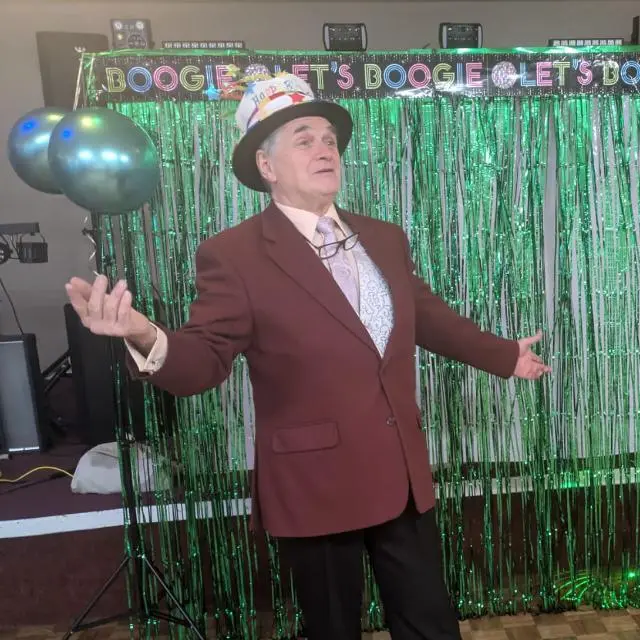
Giles graduated from university with a BSc in Physics and Electronics and later went on to an MA in Education focussing on mathematics and literacy. He worked in electronics and software before moving on to teaching. Now he works mostly as a tutor focussing on inspiring understanding of mathematics at all levels. He have been an examiner for GCE A-level and IAL Maths for 10 years with Pearson Edexcel. Mathematics should be fun, and Giles aims is to inspire interest and understanding of the concepts involved and how they link together. He has a great relationship with his students and gets glowing reviews.

25
Vanessa is an Aeronautical Engineering undergraduate at Imperial College London who demonstrated exceptional academic drive by independently self-studying and completing A-Level Mathematics and Further Mathematics early in Year 12. As one of only 13 students in the UK in her cohort to achieve a perfect sweep of 13 Grade 9s at GCSE, she brings a proven track record of top-tier academic excellence alongside over two years of dedicated tutoring experience. She has successfully guided students across Edexcel, AQA, and more to reach their full potential.
Vanessa adopts a structured, growth-oriented approach, starting with diagnostic feedback to target fundamental concepts before progressing to rigorous exam-style question practice. Empathetic, flexible, and disciplined, she instils confidence and resilience in her tutees while providing out-of-hours support to ensure they always feel fully supported.
The tutors you see here are just a selection from our team of hundreds of tutors, please contact our Learning Advisors to discuss tutoring options
Why GCSE Physics needs the right tutor
What makes GCSE Physics hard
GCSE Physics is where maths meets science. Most questions need a student to pick the right equation, rearrange it, convert the units and give a sensible answer, and then explain what the number means. A student who understands the ideas can still lose most of a calculation's marks through one unit slip, and a student who is confident with numbers can lose marks on explanations that need exact physics vocabulary. The course is also broad, running from forces and circuits to waves, radioactivity and space.
Other things that make it hard:
- Recalling or selecting the right equation and rearranging it under time pressure, with equation provision differing by board
- Unit conversions and standard form, such as kilo, mega, milli and micro prefixes or minutes into seconds
- Reading and drawing graphs, including gradients and areas on distance-time and velocity-time graphs
- Circuit questions that combine series and parallel rules with resistance, current, potential difference and power
- Explaining practical work: variables, sources of error and how to make measurements more accurate
How tutoring changes the outcome
Our Physics tutors work from your board's own past papers, mark schemes and examiners' reports, so students learn exactly how calculations and explanations are credited. Sessions target where Physics marks are actually lost:
- calculations with unconverted units or no working, so method marks are lost along with the answer
- equations recalled wrongly or rearranged incorrectly
- explanations that mix up terms such as energy and power, or current and potential difference
- practical questions on variables, measurements and improvements for the required or core practicals
What you'll learn in GCSE Physics tutoring
Core skills developed
Every GCSE Physics specification tests the same progression: knowing the physics, applying it, and analysing and evaluating data and experimental evidence. On AQA, OCR, Edexcel and WJEC, the split is about 40% knowledge, 40% application and 20% analysis and evaluation, and OCR and WJEC state that at least 30% of the marks assess mathematical skills. Edexcel International uses the same broad 40/40/20 split. Cambridge puts 50% on knowledge with understanding, 30% on handling information and problem-solving and 20% on experimental skills, all examined in its practical paper, and OxfordAQA adds a fourth objective, selecting, describing and evaluating scientific procedures, worth about 10%. We work through past-paper questions objective by objective, so you can see which skill is costing you marks rather than just seeing a lower total.
- Selecting, rearranging and applying equations with correct units and standard form
- Forces and motion: resultant forces, Newton's laws, momentum and motion graphs
- Electricity: circuits, resistance, power and energy transfer
- Waves, the electromagnetic spectrum and radioactive decay
- Practical skills: measuring, recording, plotting graphs and evaluating methods
How are students assessed
Physics is assessed almost entirely by written exams. AQA, OCR, Edexcel and OxfordAQA set compulsory practicals, but the marks come from exam questions about them, and Edexcel International examines experimental skills in its two written papers. Cambridge examines practical skills in a paper of their own worth 20%: either Paper 5, a hands-on Practical Test, or Paper 6, a written Alternative to Practical. WJEC in Wales is the only board with a practical unit, worth 10%, carried out in school and marked by WJEC. Equations are handled differently too: for UK GCSE Physics in England, Ofqual has confirmed that an equations sheet comes with every paper, while Edexcel International lists relationships that students must recall. Most courses are linear, but WJEC is unitised and Edexcel International's modular 4XPH1 lets students sit and resit each unit separately.
- Multiple-choice and short-answer questions: drilled against real past papers for speed and exact terminology
- Calculations: setting out equation, substitution, rearrangement and units so that method marks are kept even when the final answer is wrong
- Practical and six-mark questions: rehearsed and rewritten until each step is linked and an examiner could award full marks
What GCSE Physics topics do we cover?
OxfordAQA GCSE Physics
Eight sections examined in two papers taken in the same series at the end of the course, in May/June or November. Paper 1 and Paper 2 are each 1 hour 30 minutes and 90 marks, worth 50% each, with structured and open questions, and either paper can assess any part of the specification. There are no tiers, and grades 9–1 are available to everyone.
- 3.1 Forces and their effects
- 3.2 Energy
- 3.3 Waves
- 3.4 Particle model of matter
- 3.5 Electricity and magnetism
- 3.6 Generating and distributing electricity and household use
- 3.7 Nuclear physics
- 3.8 Space physics
OxfordAQA adds a fourth assessment objective, the ability to select, describe and evaluate scientific procedures, worth about 10% and weighted more heavily in Paper 2. It also includes topics such as safety in public transport and lenses and the eye, and its five required practicals, from force and extension for a spring to the V-I characteristics of a filament lamp, a diode and a resistor, are examined in the written papers. Sessions on this board practise procedure questions on every required practical and prepare both papers across the whole specification.
WJEC GCSE Physics
WJEC GCSE Physics is offered in Wales; Eduqas no longer offers a GCSE in Physics in England. The course is unitised. Unit 1 and Unit 2 are each a 1 hour 45 minute written exam worth 80 marks and 45% of the qualification, set at Foundation or Higher tier and sat in the summer series. Unit 3: Practical Assessment, worth 10% (30 marks), is untiered and takes place in school in the first half of the spring term, then is marked by WJEC. WJEC has said the current separate science GCSEs remain available until summer 2031.
Unit 1: Electricity, Energy and Waves
- 1.1 Electric circuits
- 1.2 Generating electricity
- 1.3 Making use of energy
- 1.4 Domestic electricity
- 1.5 Features of waves
- 1.6 The total internal reflection of waves
- 1.7 Seismic waves
- 1.8 Kinetic theory
- 1.9 Electromagnetism
Unit 2: Forces, Space and Radioactivity
- 2.1 Distance, speed and acceleration
- 2.2 Newton's laws
- 2.3 Work and energy
- 2.4 Further motion concepts
- 2.5 Stars and planets
- 2.6 The Universe
- 2.7 Types of radiation
- 2.8 Half-life
- 2.9 Nuclear decay and nuclear energy
WJEC grades on the A* to G scale used in Wales, not 9 to 1, and states that at least 30% of the marks assess mathematical skills. Unit 3 has two sections: obtaining results in a group (6 marks) and individually analysing and evaluating them under supervision (24 marks). WJEC has amended Unit 3 for students starting the course in September 2026, to follow the practical approach of the new GCSE The Sciences (Double Award); Units 1 and 2 are unchanged. Sessions on this board prepare the analysis and evaluation section of Unit 3 as carefully as the written units.
IAL GCSE Physics
Eight topics examined in two untiered papers taken in the same series at the end of the course, in June or November. Paper 1 (2 hours, 110 marks, 61.1%) assesses the core content. Paper 2 (1 hour 15 minutes, 70 marks, 38.9%) assesses all the content, including the bold statements with a P reference that go beyond the Science (Double Award). Every student sits the same papers, graded 9–1. Pearson also offers a modular version, 4XPH1, first examined in June 2025: two units, each 1 hour 40 minutes, 90 marks and 50%, that can be sat and resat in any order in June and November.
- 1 Forces and motion
- 2 Electricity
- 3 Waves
- 4 Energy resources and energy transfers
- 5 Solids, liquids and gases
- 6 Magnetism and electromagnetism
- 7 Radioactivity and particles
- 8 Astrophysics
Edexcel International states that the physics relationships listed in its specification will not be provided in the exam, either as given or rearranged, so equations have to be learned. Paper 2 is the only paper that tests the P-referenced content, and practical investigations are written into the content as specification points in italics and examined in both papers. Sessions on this board drill the listed relationships until they are automatic and give the P-referenced content dedicated time.
EDEXCEL GCSE Physics
Fifteen topics examined in two papers sat in May/June of the same year, both at Foundation or both at Higher tier. Paper 1 covers Topics 1–7 and Paper 2 covers Topic 1 and Topics 8–15. Each is a 1 hour 45 minute written exam worth 100 marks and 50% of the qualification, with multiple-choice, short-answer, calculation and extended open-response questions. Students must complete eight mandatory core practicals.
- Topic 1: Key concepts of physics
- Topic 2: Motion and forces
- Topic 3: Conservation of energy
- Topic 4: Waves
- Topic 5: Light and the electromagnetic spectrum
- Topic 6: Radioactivity
- Topic 7: Astronomy
- Topic 8: Energy - Forces doing work
- Topic 9: Forces and their effects
- Topic 10: Electricity and circuits
- Topic 11: Static electricity
- Topic 12: Magnetism and the motor effect
- Topic 13: Electromagnetic induction
- Topic 14: Particle model
- Topic 15: Forces and matter
Topic 1, Key concepts of physics, is examined on both papers, so units, prefixes and standard form come up throughout. The specification lists the equations students are expected to recall, and its eight core practicals range from force, mass and acceleration with trolleys to the specific heat capacity of water and the extension of a spring. Sessions on this board build Topic 1 skills from the start and link each core practical to the questions set on it.
OCR GCSE Physics
OCR offers two GCSE Physics specifications, and each school chooses one. Both are linear and tiered: students sit two papers at Foundation tier (grades 5–1) or two at Higher tier (grades 9–4), each 1 hour 45 minutes, 90 marks and 50% of the GCSE, all in the same May/June series. Practical skills are examined in the papers, and learners must complete at least eight practicals covering OCR's Practical Activity Groups. We match tutors to the specification code on your exam entry.
Physics A (Gateway Science) · J249
- Topic P1: Matter
- Topic P2: Forces
- Topic P3: Electricity
- Topic P4: Magnetism and magnetic fields
- Topic P5: Waves in matter
- Topic P6: Radioactivity
- Topic P7: Energy
- Topic P8: Global challenges
- Topic P9: Practical skills
Physics B (Twenty First Century Science) · J259
- Chapter P1: Radiation and waves
- Chapter P2: Sustainable energy
- Chapter P3: Electric circuits
- Chapter P4: Explaining motion
- Chapter P5: Radioactive materials
- Chapter P6: Matter, models and explanations
- Chapter P7: Ideas about Science
- Chapter P8: Practical Skills
On Gateway, the first paper of each tier covers Topics P1–P4 and the second covers Topics P5–P8, with P1–P4 assumed and synoptic questions included. Twenty First Century Science splits each tier into a Breadth paper of short-answer questions and a Depth paper with at least two 6-mark extended response questions, both drawing on all eight chapters. OCR states that at least 30% of the marks assess mathematical skills. Sessions on this board follow your specification's order and build calculation fluency topic by topic.
AQA GCSE Physics
Eight topics plus a Key ideas section, examined in two papers sat at the end of the course. Paper 1 covers Topics 1–4 and Paper 2 covers Topics 5–8, and Paper 2 can also draw on energy changes and transfers from Energy and Electricity. Each paper is a 1 hour 45 minute written exam worth 100 marks and 50% of the GCSE, set at Foundation or Higher tier, with multiple-choice, structured, closed short-answer and open-response questions. Students carry out ten required practicals, and questions drawing on them count for at least 15% of the marks.
- 4.1 Energy
- 4.2 Electricity
- 4.3 Particle model of matter
- 4.4 Atomic structure
- 4.5 Forces
- 4.6 Waves
- 4.7 Magnetism and electromagnetism
- 4.8 Space physics (physics only)
- 4.9 Key ideas
Space physics and two of the ten required practicals are in GCSE Physics only, not in AQA's Combined Science. AQA provides the Physics Equations Sheet as an insert with both papers in 2027, and under Ofqual's decision equations sheets continue for exams from 2028, when standard-demand questions that only ask students to write down an equation from the sheet will no longer be set. Sessions on this board practise using the sheet in multi-step problems and work through all ten required practicals.
CIE GCSE Physics
Six topics, with Core content for all candidates and Supplement content for Extended candidates. Everyone sits three papers: a 45-minute paper of 40 multiple-choice questions (30%), a 1 hour 15 minute theory paper of short-answer and structured questions (80 marks, 50%) and a practical paper (40 marks, 20%). Core candidates take Papers 1 and 3 and Extended candidates take Papers 2 and 4. 0625 is graded A* to G and 0972 is graded 9 to 1. Exams run in June and November, with a March series in India for 0625. Cambridge has republished the syllabus for 2029 with no significant changes that affect teaching.
1 Motion, forces and energy
- 1.1 Physical quantities and measurement techniques
- 1.2 Motion
- 1.3 Mass and weight
- 1.4 Density
- 1.5 Forces
- 1.6 Momentum
- 1.7 Energy, work and power
- 1.8 Pressure
2 Thermal physics
- 2.1 Kinetic particle model of matter
- 2.2 Thermal properties and temperature
- 2.3 Transfer of thermal energy
3 Waves
- 3.1 General properties of waves
- 3.2 Light
- 3.3 Electromagnetic spectrum
- 3.4 Sound
4 Electricity and magnetism
- 4.1 Simple phenomena of magnetism
- 4.2 Electrical quantities
- 4.3 Electric circuits
- 4.4 Electrical safety
- 4.5 Electromagnetic effects
5 Nuclear physics
- 5.1 The nuclear model of the atom
- 5.2 Radioactivity
6 Space physics
- 6.1 The Earth and the Solar System
- 6.2 Stars and the Universe
Cambridge examines practical skills directly. Paper 5 is a hands-on Practical Test in the laboratory (1 hour 15 minutes) and Paper 6 is a written Alternative to Practical (1 hour). Both test the same experimental skills, such as taking readings, plotting graphs and suggesting improvements, and both are worth 20%. Your school decides which one you sit. Sessions on this board give the practical paper regular timed practice alongside the theory.
Ready to start?
Tell us the subject, exam board and target grade. A Learning Advisor reviews it the same day.
Why parents trust us
4.9/5 from 312 reviews · used by students at 500+ schools






GCSE Physics tutoring for both tiers
Whichever tier you are entered for, we match you with a tutor who knows those papers and the grades they lead to. Not sure which tier is right? Your tutor will help you decide before entries close.
Foundation (or core) tier tutoring
Foundation papers cover most of the same topics without the Higher-only content, and the highest grade available is a 5.
- Secure the core topics, from energy and forces to electricity and waves
- Learn the equations you need to recall, and use them step by step
- Learn the required practicals, which England’s boards draw on for at least 15% of the marks
Higher (or extended) tier tutoring
Higher papers add Higher-only content and open grades up to a 9, but on UK boards a result below a 3 is ungraded.
- Master the Higher-only content, such as momentum
- Rearranging equations and multi-step calculations under time pressure
- Six-mark extended answers, structured the way examiners mark them
We teach Foundation and Higher for AQA, OCR, Edexcel and WJEC, Core and Extended for Cambridge IGCSE, and the untiered Edexcel International GCSE and OxfordAQA courses.
FAQs
We have answers to your most frequently asked questions. Anything not answered here, please reach out to our team.
Yes. Our GCSE Physics tutors teach both tiers on AQA, OCR, Pearson Edexcel and WJEC, and Core and Extended for Cambridge IGCSE. On Foundation, lessons secure the core topics and the required practicals. On Higher, they add the Higher-only content, such as momentum, and the six-mark extended answers that decide the top grades. If your child is between tiers, their tutor will help you choose before entries close.
On AQA, OCR and Pearson Edexcel, Foundation covers grades 1–5 and Higher covers 4–9. A Higher student who narrowly misses grade 4 can be given an allowed grade 3, but below that the result is U. In June 2026 the Higher grade 4 boundary was 67 out of 200 on AQA and 71 on Pearson Edexcel, so it pays to check where your mock marks sit against your own board. Anyone who needs a 6 or 7 for A-Level Physics has to sit Higher, while students working below grade 4 are usually safer on Foundation. On Cambridge IGCSE, Core is capped at grade C and Extended runs from A* to G, so a weaker Extended paper still earns a grade; Edexcel International GCSE is untiered. Schools usually decide the tier after mocks, so ask early. Sources: AQA and Pearson.
GCSE Physics means the UK specifications from AQA, OCR, Pearson Edexcel or WJEC, while IGCSE Physics means Cambridge IGCSE 0625 (0972 on the 9–1 scale) or Edexcel International GCSE 4PH1. The main differences are tiering and practical assessment. The UK GCSEs are tiered and examine required practicals inside the written papers; Edexcel International is untiered, so every grade is open to everyone; and Cambridge has Core and Extended papers plus a separate practical paper worth 20%. The core content of forces, energy, electricity, waves and atomic physics is very similar on all of them. Universities and sixth forms accept both. The UK GCSE is sat in May and June only, while Cambridge IGCSE and Edexcel International GCSE also run a full November series, which suits students outside the UK and anyone who needs a resit. Read more about online IGCSE tutoring.
Each sixth form and college sets its own entry requirements, so check the prospectus of the one you're applying to. As a guide, most ask for at least a grade 6 in GCSE Physics, or 6-6 in Combined Science, for A-Level Physics, and selective schools often ask for a 7. Most also ask for a grade 6 or 7 in GCSE Maths, and many recommend taking A-Level Mathematics alongside, because A-Level Physics is heavily mathematical. You need the Higher tier, because Foundation caps the grade at 5. If you take Cambridge IGCSE on the A*–G scale, a grade A is broadly equivalent to a 7 and a C to a 4, the points that were aligned when the 9–1 scale was introduced (GOV.UK grading factsheets), so a requirement of grade 6 usually means a strong B. See A-Level Physics.
GCSE Physics tutoring with an academic tutor costs from $50 USD (£38) per hour, and packages save 5–15%, which suits steady weekly lessons through Years 10 and 11, then extra past paper sessions before mocks and the summer exams. Pay as you go is invoiced after each lesson, with no lock-in contracts. Professional tutors (qualified teachers and examiners) cost from $75 USD (£56) per hour. See pricing.
Late cancellations and no-shows are charged at half the lesson fee. That applies if you cancel less than one hour before the start time, or don't turn up. You can still change a session time whenever you need to, as long as you give your tutor notice.
Our academic tutors are high-achieving graduates and undergraduates who scored in the top band in Physics themselves, and our professional tutors are qualified teachers or examiners with 5+ years' experience. We accept only the top 5% of applicants. You are matched to a tutor who knows your board, so they can teach the equations you must recall or apply for your board, set out calculations the way examiners award method marks, and rehearse every required practical in your specification. Read more about our GCSE tutors and how we select tutors.
Lessons are one-to-one and online, with a tutor matched to GCSE Physics, your exam board and your target grade. Each session works on your weakest areas using past paper questions from your own board, whether that is AQA, OCR, Pearson Edexcel, Edexcel International GCSE or Cambridge IGCSE 0625. For Physics that usually means calculations set out with equation, substitution, rearrangement and units so that method marks are kept, unit conversions drilled until they are automatic, and six-mark explanations rewritten until each step is linked. See how it works or start with the student application.
Physics carries the most maths of the three sciences: at least 30% of the marks test maths skills, including rearranging equations, converting units and using standard form. Students who are comfortable with algebra usually find it logical, but those who are not lose marks quickly. The other challenge is explaining abstract ideas such as forces, fields and energy transfers in precise language, especially in six-mark questions and questions about the required practicals. Our online GCSE tutoring focuses on exactly those areas.
In summer 2026, 13.8% of GCSE Physics entries in England achieved a grade 9 and 45.9% achieved a 7 or above (JCQ), from 159,630 entries. Those figures reflect a strong cohort, because separate Physics is mostly taken in triple science sets. Internationally, 22.9% of Edexcel International GCSE Physics candidates achieved a 9 (provisional figures from Pearson), and 20.9% of Cambridge IGCSE Physics candidates achieved an A* (Cambridge). A 9 needs accurate multi-step calculations with units, and six-mark explanations that link cause and effect without gaps.
Grade boundaries are set after each exam series and change every year, so older figures are only a guide. In June 2026, AQA's Higher tier grade 9 boundary for Physics was 157 out of 200 (79%), and Pearson Edexcel's was 163 out of 200 (82%). Grade 4 on Higher needed 67 marks on AQA and 71 on Pearson Edexcel. Edexcel International GCSE 4PH1 set grade 9 at 138 out of 180 (77%), or 134 on the alternative R papers used in some time zones, and Cambridge IGCSE 0625's Extended A* threshold was 156 to 165 out of 200 (78–82%), depending on the paper variant. Sources: AQA, Pearson, Pearson International and Cambridge.
There is no coursework, but practical work is compulsory. On AQA you complete ten required practicals, on Pearson Edexcel eight core practicals and on OCR at least eight practical activities, and the written exams then ask about them, for example on method, variables, errors and results. Cambridge IGCSE examines practical skills in a separate paper worth 20%: either Paper 5, a hands-on Practical Test, or Paper 6, a written Alternative to Practical. WJEC in Wales has a practical unit worth 10%, carried out in school and marked by WJEC. See the Cambridge IGCSE Physics 0625 syllabus.
GCSE Physics is assessed by written exams, with no coursework. On AQA, OCR and Pearson Edexcel you sit two papers of 1 hour 45 minutes, each worth 50%, at either Foundation or Higher tier, all at the end of the course. Edexcel International GCSE 4PH1 is untiered, with a 2-hour Paper 1 (61.1%) and a 1 hour 15 minute Paper 2 (38.9%). Cambridge IGCSE 0625 sets a multiple-choice paper (30%), a theory paper (50%) and a practical paper (20%), at Core or Extended. For the UK GCSEs in England, an equations sheet is provided in every paper, while Edexcel International lists equations that students must recall. See the AQA specification.
All GCSE subjects
Ready to find your GCSE Physics tutor?
We will find you a tutor in 24 hours and if you are not happy after the first session, we will give you a full refund and find you another tutor for no extra charge.
Resources for GCSE students
Check out our free content about the GCSE